

FILMS CONTINUED


I am creating a list of my favorite films and the people who made them. So check back often to see what new film I have added. Movie buffs will recognize most of these but their might be a few that you haven't seen or maybe you have never heard of them. If that is the case then I recommend that you take the time to watch them. The rare films I've seen have been on Turner Classic Movies. Unfortunatley these films have never been put out on VHS or DVD but we can hope they will in the future.


"DOUBLE INDEMNITY"


GENRE--Mystery/Crime/Film-Noir

Directed By-- Billy Wilder

Writing Credits-- James M. Cain (Novel), Billy Wilder and Raymond Chandler

Produced By--Buddy G. DeSylva and Joseph Sistrom

Costumes--Edith Head

Make-up--Wally Westmore

Paramount Pictures

Runtime--107 minutes


The list below are the actors on the left and the character they played on the right.

FRED MACMURRAY WALTER NEFF
BARBARA STANWYCK PHYLLIS DIETRICHSON
EDWARD G. ROBINSON BARTON KEYES
PORTER HALL MR. JACKSON
JEAN HEATHER LOLA DIETRICHSON
BYRON BARR NINO ZACHETTI
RICHARD GAINES EDWARD S. NORTON
FORTUNIO BONANOVA SAM GARLOPIS
JOHN PHILLIBER JOE PETERS


Insurance salesman Walter Neff meets attractive Phyllis Dietrichson when he calls to renew her husband's auto policy. The couple immediately are drawn to each other and they begin an affair. They decide to kill the husband for his Life insurance money with a double indemnity claus. Barton Keys is the wily insurance investigator who must sort things out. From the beginning you know neff is dommed. The story is told in flashback.
This is a great film and I high recommend that you add this to your film library.

GREAT LINES


Barton Keys says, "I thought you were smarter than the rest, Walter but I was wrong. You're not smarter, just a little taller."

Neff--"you'll be there too?"
Phyllis--"I guess so, I usually am."
Neff--"Same chair, same perfume, same anklet."
Phyllis--"I wonder if I know what you mean."
Neff--"I wonder if you wonder"


Dick Powell wanted to play Walter Neff but the studio he was under contract to wouldn't allow him to take the role. He was so angry that he tore up his contract.

The Neff character is unmarried but all through the film MacMurray is wearing a wedding band.

The Director Billy Wilder had change the Character Walter Neff's last name from Ness to Neff because he found out that their really was an insurance salesman by the same name and he didn't want to get sued.

Billy Wilder originally filmed an ending where Keyes watches Walter Neff go to the gas chamber.

The scene where Neff and Dietrichson can't get their car started after the murder was added by Wilder after his car wouldn't start at the end of a shooting day.

In the scene where Phyllis is listening at Neffs's door as he talks with Keyes: As Keyes exits into the hallway and Phyllis hides behind the door, the door opens into the hallway which isn't allowed by building codes even back then, but it does give Phyllis something to hide behind and increases the tension.


"LAURA"(1944)


Film-Noir/Mystery/Romance/Crime
Directed by--Otto Preminger & Rouben Mamoulian
Writing Credits--Vera Caspary (novel) & Jay Dratler
Produced by-- Otto Preminger
Music by-- David Raksin
Costume Design by-- Bonnie Cashin
Makeup-- Guy Pearce


CAST

Gene Tierney .... Laura Hunt
Dana Andrews .... Det. Lt. Mark McPherson
Clifton Webb .... Waldo Lydecker
Vincent Price .... Shelby Carpenter
Judith Anderson .... Mrs. Ann Treadwell
Cy Kendall .... Inspector (scenes deleted)
Grant Mitchell .... Lancaster Corey (scenes deleted)
Dorothy Adams .... Bessie Clary, Laura's Maid (uncredited)
Terry Adams .... Woman (uncredited)
Lane Chandler .... Detective (uncredited)
Dorothy Christy .... Woman (uncredited)
Kay Connors .... Woman (uncredited)
John Dexter .... Jacoby, the Artist (uncredited)
Ralph Dunn .... Det. Fred Callahan (uncredited)
Nestor Eristoff .... Man (uncredited)
Jean Fenwick .... Woman (uncredited)
Clyde Fillmore .... Bullitt (uncredited
James Flavin .... Det. McEveety (uncredited)
Lee Tung Foo .... Waldo's Servant (uncredited)
William Forrest .... Important Client (uncredited)
Frances Gladwin .... Woman (uncredited)
Beatrice Gray .... Woman (uncredited)
Kathleen Howard .... Louise, Ann's Cook (uncredited)
Yolanda Lacca .... Woman (uncredited)
Frank LaRue .... Hairdresser (uncredited)
Kay Linaker .... Woman (uncredited)
Gloria Marlen .... Woman (uncredited)
Buster Miles .... Office Boy (uncredited)
Forbes Murray .... Man (uncredited)
Jane Nigh .... Secretary (uncredited)
Aileen Pringle .... Woman (uncredited)
Cyril Ring .... Man (uncredited)
Alexander Sascha .... Man (uncredited)
Harold Schlickenmayer .... Detective (uncredited)
Harry Strang .... Detective (uncredited)
Cara Williams .... Woman (uncredited)


THE PLOT

Detective Mark McPherson investigates the killing of Laura, found dead on her apartment floor before the movie starts. McPherson builds a mental picture of the dead girl from the suspects whom he interviews. He is helped by the striking painting of the late lamented Laura hanging on her apartment wall. But who would have wanted to kill a girl with whom every man she met seemed to fall in love? To make matters worse, McPherson finds himself falling under her spell too. Then one night, halfway through his investigations, something seriously bizarre happens to make him re-think the whole case.

The film was begun by Rouben Mamoulian, but Otto Preminger, who initiated the project as producer and took over the direction, brought on a new cameraman and scrapped all of Mamoulian's footage. The character of Waldo Lydecker appears to be based on the columnist, broadcaster, and "New Yorker" theater critic Alexander Woollcott, a famous wit who, like Waldo, was fascinated by murder. Woollcott always dined at the Algonquin Hotel, where Laura first approaches Waldo.

Darryl F. Zanuck was opposed to casting Clifton Webb because of his known homosexuality, but Preminger prevailed and the 54-year-old Webb, making his first screen appearance since the silent era, was nominated for an Oscar.

The portrait of Laura is, in fact, a photograph done over with oil paint.

The original choice for the role of Laura was Jennifer Jones, who turned it down.


"FOUR DAUGHTERS"(1938)


Genre: Drama/Romance

Directed by: Michael Curtiz
Costume Design by: Orry-Kelly
Produced by: Henry Blanke (associate producer)
Benjamin Glazer (associate producer)
Hal B. Wallis (producer)

Writing credits: Lenore J. Coffee, Julius J. Epstein, Fannie Hurst(novel)

Priscilla Lane ... Ann Lemp
Rosemary Lane .... Kay Lemp
Lola Lane ........ Thea Lemp
Gale Page ........ Emma Lemp
Claude Rains ..... Adam Lemp
Jeffrey Lynn ..... Felix Deitz
John Garfield .... Mickey Borden
Dick Foran ....... Ernest Talbot
Frank McHugh ..... Ben Crowley
May Robson ....... Aunt Etta
Vera Lewis ....... Mrs. Ridgefield
Donald Kerr ...... Earl
Tom Dugan ........ Jake
Eddie Acuff ...... Sam
Joe Cunningham .... Waiter
Wilfred Lucas ..... Doctor
Jerry Mandy ....... Man (uncredited)


PLOT

Musician Adam Lemp and his four equally musical daughters, Emma, Ann, Kay, and Thea, live happily together. Each daughter has an upstanding young man for whom she cares. However, the arrival of a cynical, slovenly young composer named Mickey Borden turns the household upside-down, and romantic and tragic complications ensue. This is Garfield's first major role and he is just great in it. He was born for the camera. The film was remade in the 50's starring Doris Day and Frank Sinatra. While still a good film it's not nearly as good as the original.

Nominated for an Academy Award for Best Picture in 1939.
Nominated for an Academy Award for Best Sound in 1939.
Nominated for an Academy Award for Best Writing,Screenplay in 1939.
Nominated for an Academy Award for Best Director in 1939.
Nominated for an Academy Award for Best Actor in a supporting Role in 1939 (John Garfield)

Realease Date: August 9, 1938


"NOW, VOYAGER"(1942)


Genre: Drama/Romance Directed By: Irving Rapper
Writing Credits: Olive Higgins Prouty (novel), Casey Robinson
Produced By: Hall B. Wallis
Original Music By: Max Steiner
Costume Design By: Orry-Kelly (gowns)
Makeup Department: Perc Westmore
Runtime: 117 mins.
Warener Brothers Picture
Production Dates: April 1942-June 1942 Release Date: October 22, 1942

PLOT

Bette takes the young, insecure girl under her wing and tells her a story - about her old self. It's so sweet and giving. You don't have that awful feeling that you're being forced to make any stupid moral choices. These old movies just give you a really enjoyable time. "Now, Voyager" has got a wonderful, heartbreaking heroine with a completely self-assured performance by Bette Davis. "Now, Voyager" is sweet & touching, accompanied by a stirring, emotional score, and the movie has one of the loveliest endings ever - when Bette talks about the way that happiness can sometimes work out in life.

Memorable Quotes from Now, Voyager (1942)

Mrs. Henry Windle Vale: No member of the Vale family has ever had a nervous
breakdown.
Dr. Jasquith: Well there's one having one now.

Charlotte Vale: Oh Jerry, don't let's ask for the moon. We have the stars.

Dr. Jasquith: Remember what it says in the Bible, "The Lord giveth and the Lord Charlotte Vale: How does it feel to be the Lord?

Dr. Jasquith: Not so very wonderful, since the Free Will Bill was passed. Too
little power.
Charlotte Vale: I'm not afraid. I'm not afraid, mother. I'm not afraid.

Charlotte: A maiden aunt is an ideal person to select presents for young girls.


Charlotte: An architect! I could cry with pride.


Jerry: Are you one of the Vales of Boston?
Charlotte: One of the lesser ones.


Jerry: Is it Miss, or Mrs.?
Charlotte: It's Aunt.


June: Got the shakes, Aunt Charlotte?
Charlotte: Go on! Make fun of me! You think it's fun making fun of me!


Mrs. Vale: Charlotte is no more ill than a moulting canary.


Charlotte Vale: "Some girls aren't the marrying kind."


FILMING LOCATIONS

Boston, Massachusetts, USA
Lake Arrowhead, California, USA

Producer Hal B. Wallis originally wanted Irene Dunne for the lead role, but Bette Davis convinced him otherwise.

The Walt Whitman poem Bette Davis reads (just before leaving Cascades) is "The Untold Want" from Songs of Parting (just 2 lines): "The untold want by life and land ne'er granted / Now voyager sail thou forth to seek and find."

Bette Davis complained about 'Max Steiner' 's Academy Award-winning musical score, saying that it was too intrusive on her performance.

The film is remembered for the scene in which Paul Henreid places two cigarettes in his mouth, lights them, and then passes one to Bette Davis, but it wasn't an original idea - a similar exchange occurred ten years earlier between Davis and 'George Brent' in _Rich Are Always With Us, The (1932)_ .

1943

Won An Oscar for Best Music,Scoring of a Dramatic or Comedy Picture--
(Max Steiner)

Nominated for an Oscar for Best Actress in a Leading Role. (Bette Davis)
Nominated for an Oscar for Best Actress in a Supporting Role. (Gladys Cooper)


"MR. SMITH GOES TO WASHINGTON"(1942)


Genre: DRAMA/COMEDY
Directed: Frank Capra
Writing Credits: Lewis R. Foster(story), Sidney Buchman (screenplay)
Produced By: Frank Capra
Original Music by: Dimitri Tiomkin
Costume Design By: Robert Kalloch (gowns) (as Kalloch)
A Columbia Pictures Film
Runtime: 129 Mins.
Realease Date: October 19, 1939
Filming Location: Washington, D.C., USA


Naive and idealistic Jefferson Smith, leader of the Boy Rangers, is appointed on a lark by the spineless governor of his state. He is reunited with the state's senior senator--presidential hopeful and childhood hero, Senator Joseph Paine. In Washington, however, Smith discovers many of the shortcomings of the political process as his earnest goal of a national boys' camp leads to a conflict with the state political boss, Jim Taylor. Taylor first tries to corrupt Smith and then later attempts to destroy Smith through a scandal.

CAST

Jean Arthur .... Clarissa Saunders
James Stewart .... Jefferson Smith
Claude Rains .... Sen. Joseph Harrison Paine
Edward Arnold .... Jim Taylor
Guy Kibbee .... Gov. Hubert 'Happy' Hopper
Thomas Mitchell .... Diz Moore
Eugene Pallette .... Chick McGann
Beulah Bondi .... Ma Smith
H.B. Warner .... Sen. Agnew (Senate Majority Leader)
Harry Carey .... The Vice President
Astrid Allwyn .... Susan Paine
Ruth Donnelly .... Emma Hopper
Grant Mitchell .... Sen. MacPherson (Privileges and Elections Committee)
Porter Hall .... Sen. Monroe (objecting to frivolity)
Pierre Watkin .... Sen. Barnes (Senate Minority Leader)
Charles Lane .... Nosey newsman
William Demarest .... Bill Griffith (at station)
Dick Elliott .... Carl Cook (at station)
Billy Watson .... Peter Hopper
Delmar Watson .... Jimmie Hopper
Johnny Russell .... Otis Hopper (as John Russell)
Harry Watson .... Hopper boy
Garry Watson .... Hopper boy (as Gary Watson)
Larry Simms .... Hopper boy (as Baby Dumpling)
H.V. Kaltenborn .... Himself (broadcaster)
Erville Alderson .... Handwriting expert (uncredited)
Stanley Andrews .... Sen. Hodges (uncredited)
William Arnold .... Reporter (uncredited)
Sam Ash .... Sen. Lancaster (uncredited)
Edwin August .... Senator (uncredited)
Frank Austin .... Inventor at Smith's office door (uncredited)
Harry A. Bailey .... Sen. Hammett (uncredited)
Wade Boteler .... Family man (uncredited)
Ed Brewer .... Senate reporter (uncredited)
Al Bridge .... Sen. Dwight (uncredited)
Harlan Briggs .... Mr. Edwards (howling citizen) (uncredited)
Tommy Bupp .... Boy cheering for Smith in meeting (uncredited)
Frederick Burton .... Sen. Dearhorn (uncredited)
Ken Carpenter .... Announcer (uncredited)
Jack Carson .... Sweeney Farrell (newsman) (uncredited)
Burr Caruth .... Townsend (uncredited)
Maurice Cass .... Handwriting expert (uncredited)
Allan Cavan .... Ragner (newsman) (uncredited)
Eddy Chandler .... Reporter (uncredited)
George Chandler .... Reporter (uncredited)
Dora Clement .... Mrs. McGann (uncredited)
Edmund Cobb .... Sen. Gower (uncredited)
Dorothy Comingore .... Woman (at station) (uncredited)
Hal Cooke .... Reporter (uncredited)
George Cooper .... Waiter (uncredited)
Jack Cooper .... Photographer (uncredited)
Nick Copeland .... Senate reporter (uncredited)
Anne Cornwall .... Senate reporter (uncredited)
Gino Corrado .... Barber (uncredited)
Maurice Costello .... Diggs (newsman) (uncredited)
Alec Craig .... Speaker (uncredited)
Beatrice Curtis .... Paine's secretary (uncredited)
Dulcie Day .... Senate reporter (uncredited)
Vernon Dent .... Senate reporter (uncredited)
Clyde Dilson .... Reporter (uncredited)
Neal Dodd .... Senate chaplain (uncredited)
Ann Doran .... Paine's secretary (uncredited)
Helen Jerome Eddy .... Paine's secretary (uncredited)
Jack Egan .... Reporter (uncredited)
Douglas Evans .... Francis Scott Key (uncredited)
Eddie Fetherston .... Senate reporter (uncredited)
Mabel Forrest .... Senate reporter (uncredited)
Byron Foulger .... Hopper's secretary (uncredited)
Michael Gale .... Senate reporter (uncredited)
Jack Gardner .... Reporter (uncredited)
Frances Gifford .... Hopper girl (uncredited)
June Gittelson .... Woman (at station) (uncredited)
Mary Gordon .... Woman (uncredited)
Lorna Gray .... Woman (at station) (uncredited)
Harry Hayden .... Speaker (uncredited)
Louis Jean Heydt .... Soapbox speaker (uncredited)
Olaf Hytten .... Hopper's butler (uncredited)
John Ince .... Sen. Fernwick (uncredited)
Lloyd Ingraham .... Committeeman (uncredited)
Frank Jaquet .... Sen. Byron (uncredited)
Dickie Jones .... Pageboy Richard Jones (uncredited)
Eddie Kane .... Reporter (uncredited)
Robert Emmett Keane .... Editor (uncredited)
Donald Kerr .... Reporter (uncredited)
Milton Kibbee .... Senate reporter (uncredited)
Joe King .... Summers (newsman; 'He's just decorating a chair') (uncredited)
Evalyn Knapp .... Reporter (What do you think of the girls in this town?) (uncredited)
Wright Kramer .... Sen. Carlton (uncredited)
Vera Lewis .... Mrs. Edwards (uncredited)
Arthur Loft .... Chief clerk (uncredited)
Hank Mann .... Photographer (uncredited)
Margaret Mann .... Nun with cheering orphan boys (uncredited)
Philo McCullough .... Sen. Albert (uncredited)
Matt McHugh .... Reporter (uncredited)
George McKay .... Reporter (uncredited)
Lafe McKee .... Civil War veteran at Lincolnl Memorial (uncredited)
James McNamara .... Reporter (uncredited)
Robert Middlemass .... Speaker (uncredited)
James Millican .... Senate reporter (uncredited)
Charles R. Moore .... Porter (uncredited)
Gene Morgan .... Reporter (uncredited)
William Newell .... Reporter (uncredited)
Alex Novinsky .... Foreign diplomat (uncredited)
Frank O'Connor .... Sen. Alfred (uncredited)
Frank Puglia .... Handwriting expert (uncredited)
Ed Randolph .... Senate reporter (uncredited)
Jack Richardson .... Sen. Manchester (uncredited)
Russell Simpson .... Kenneth Allen (uncredited)
Walter Soderling .... Sen. Pickett (uncredited)
Harry Stafford .... Sen. Atwater (uncredited)
Wyndham Standing .... Sen. Ashman (uncredited)
Paul Stanton .... Flood (newsman) (uncredited)
Count Stefenelli .... Foreign diplomat (uncredited)
Craig Stevens .... Senate reporter (uncredited)
Carl Stockdale .... Sen. Burdette (uncredited)
Dub Taylor .... Reporter (uncredited)
Ferris Taylor .... Sen. Carlisle (uncredited)
Arthur Thalasso .... Doorman (uncredited)
Fred 'Snowflake' Toones .... Porter (uncredited)
Victor Travers .... Sen. Grainger (uncredited)
Laura Treadwell .... Mrs. Taylor (uncredited)
John Tyrrell .... (uncredited)
Robert Walker .... Sen. Holland (uncredited)
Myonne Walsh .... Jane Hopper (uncredited)
Lloyd Whitlock .... Schultz (newsman) (uncredited)
Dave Willock .... Senate guard (uncredited)
Florence Wix .... Committeewoman (uncredited)

Bitterly denounced by Washington insiders angry at its allegations of corruption, yet banned by Fascist states in Europe who were afraid it showed that democracy works.

To make his voice hoarse for the filibuster scene, 'James Stewart' dried out his throat with bicarbonate of soda. What people do in the name of acting.

Originally, the ending was much, much longer, involving scenes such as Mr. Smith going back to his home state and given a parade (with Saunders), the Taylor machine being crushed, Mr. Smith on a motorcycle and stopping to see Senator Paine, forgiving him and everyone going to see Smith's mother. It was cut after a preview audience's response. Some of the footage can be seen in the theatrical trailer.

QUOTES

Jefferson Smith: You see, boys forget what their country means by just reading The Land of the Free in history books. Then they get to be men they forget even more. Liberty's too precious a thing to be buried in books, Miss Saunders. Men should hold it up in front of them every single day of their lives and say: I'm free to think and to speak. My ancestors couldn't, I can, and my children will. Boys ought to grow up remembering that.

Diz Moore: [into phone] Throw out that last, take this. This is the most titanic battle of modern times. A David without even a slingshot rises to do battle against the mighty Goliath, the Taylor machine, allegedly crooked inside and out. Yeah, and for my money, you can cut out the "allegedly


Senator Joseph Paine: He can raise public opinion against us - if any part of this sticks...


James Taylor: Aah, he'll never get started. I'll make public opinion out there within five hours! I've done it all my life. I'll blacken this punk so that he'll-- You leave public opinion to me. Now, Joe, I think you'd better go back into the Senate and keep those Senators lined up.


Jefferson Smith: [His voice very hoarse] Just get up off the ground, that's all I ask. Get up there with that lady that's up on top of this Capitol dome, that lady that stands for liberty. Take a look at this country through her eyes if you really want to see something. And you won't just see scenery; you'll see the whole parade of what Man's carved out for himself, after centuries of fighting. Fighting for something better than just jungle law, fighting so's he can stand on his own two feet, free and decent, like he was created, no matter what his race, color, or creed. That's what you'd see. There's no place out there for graft, or greed, or lies, or compromise with human liberties. And, uh, if that's what the grownups have done with this world that was given to them, then we'd better get those boys' camps started fast and see what the kids can do. And it's not too late, because this country is bigger than the Taylors, or you, or me, or anything else. Great principles don't get lost once they come to light. They're right here; you just have to see them again!


After Smith is elected senator
James Taylor: I want you to let the ballyhoo boys loose, plan a celebration, and declare a holiday.


"THE PRIVATE LIVES OF ELIZABETH AND ESSEX"


Directed By: Michael Curtiz

Writing Credits: Maxwell Anderson (play), Norman Reilly Raine

Genre: Drama

Produced By: Robert Lord (Associate Producer) and
Hal B. Wallis (Executive Producer)

Original Music By: Erich Wolfgang Korngold

Costume Design By: Orry-Kelly

A Warner Brothers Picture

Release Date: September 27, 1939

Filmed in Technicolor


PLOT

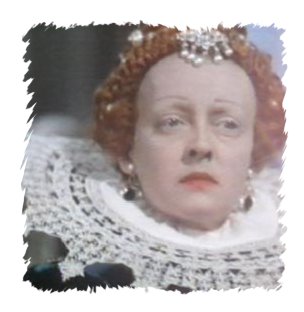
Bette Davis would express a combination of bitterness and disappointment over the Maxwell Anderson play that came to the screen as THE PRIVATE LIVES OF ELIZABETH AND ESSEX. She had lobbied hard for Warner Brothers to buy the rights, certain that, at age 31, it would be her greatest acting triumph to date (quite a prediction from an someone who'd already won two 'Best Actress' Oscars). ELIZABETH THE QUEEN was a Broadway sensation, but the studio was reluctant to gamble on it; the few Hollywood attempts to do royal epics had failed (MARY OF SCOTLAND, with Katharine Hepburn in the lead, and John Ford directing, had been a major flop, and helped the actress gain the title 'Box Office Poison'), and it appeared that only the British could make this kind of film work.

Nevertheless, when your biggest (and most headstrong) female star wants something, you GET it for her, so the rights were purchased, and ELIZABETH THE QUEEN was announced as 'prestige' production to be filmed with Davis as the lead. Then the problems began...

For the pivotal role of Robert Devereux, Earl of Essex, the ambitious lover who nearly costs Elizabeth her crown, Davis wanted Laurence Olivier, who, at 32, had already established himself as one of the finest actors on two continents. Darkly handsome, and renowned for his interpretations of Shakespeare, the future British lord had created quite a stir in Hollywood, aided by the fact that his lover was Vivien Leigh, who'd won the coveted role of 'Scarlet O'Hara' in GONE WITH THE WIND.

Davis had worked with Flynn a year earlier, in THE SISTERS, and it had NOT been a pleasant experience. Prone to playing practical jokes on his co-stars, he took advantage of his classic good looks and natural charm to 'get away' with not knowing his lines and frequent tardiness (he was a world-class carouser and womanizer, away from the camera). Davis, who was always punctual, and knew everybody's dialog, considered him unprofessional, and crude.

But Flynn had become a major star, and the WB, trying to insure ELIZABETH would be a success, overrode Davis' objections, and cast him as Essex...and Flynn immediately demanded a title change. He felt he was as big a star as Davis, and that the film title should reflect his status; so ELIZABETH THE QUEEN became THE PRIVATE LIVES OF ELIZABETH AND ESSEX, despite Davis' protests.

The filming was an unhappy affair. Both Flynn and Davis had difficulties with director Michael Curtiz, resulting in Davis' performance being 'over-the-top', and Flynn's so underplayed that he failed to grasp Essex's character. Co-star Olivia de Havilland, chafing at her supporting role, raced to finish her scenes so she could move over to the Metro lot, and work on GONE WITH THE WIND. Flynn began a series of pranks against Davis that left her fuming, and threatening to kill him. That the film 'worked' at all was a testament to Davis' perseverance, the glorious Technicolor-filmed sets, and Erich Wolfgang Korngold's spectacular musical score.

THE PRIVATE LIVES OF ELIZABETH AND ESSEX garnered mixed reviews for Davis (although she would be praised for how convincingly she portrayed the much older woman), and terrible ones, for Flynn (which would be used against him, whenever he asked for more substantial roles).

Davis would again play Elizabeth, 16 years later, in the British production, THE VIRGIN QUEEN, but she never lost her resentment over the failure of the earlier film.

In a year of 'classics', THE PRIVATE LIVES OF ELIZABETH AND ESSEX would be one of the few exceptions!


To give the illusion of baldness, Bette Davis shaved her head two inches in front to show a high forehead under Elizabeth's red wigs.

The play, Elizabeth the Queen, originally opened in New York on 3 November 1930 with Lynn Fontanne and Alfred Lunt as Elizabeth and Essex. The title of the movie was to be the same as the title of the play, but Errol Flynn protested that he wanted his presence acknowledged in the title. The choice of "The Knight and the Lady" upset Bette Davis, and "Elizabeth and Essex" was a book title already copyrighted. Thus the final unwieldy title was used.

1940 Academy Awards

Nominated for an Oscar for Best Art Direction. (Anton Grot)
Nominated for an Oscar for Best Cinematography, Color (Sol Polito W. Howard Greene)
Nominated for an Oscar for Best Effects, Special Effects (Byron Haskin(photographic) Nathan Levinson) (sound)
Nominated for an Oscar for Best Music, Scoring Erich Wolfgang Korngold(br> Nominated for an Oscar for Best Sound, Recording Nathan Levinson (Warner Bros. SSD)


THE WOMEN (1939)

Directed By: George Cukor
Writing Credits: Calre Boothe Luce (play),Anita Loos & Jane Murfin (screenplay)
Genre: Comedy/Drama
Produced By: Hunt Stromber
Original Music By: David Snell and Edward Ward
Gowns & Fashion Show: Adrian
Runningtime: 133 Min.
A MGM Pitcture
Production Dates: April 25 1939 - July 7 1939
Release Date: September 1, 1939
Filming Locations: Los Angeles County Arboretum & Botanic Garden - 301 N. Baldwin Ave., Arcadia, California, USA

Truckee, California, USA


PLOT

Wealthy Mary Haines is unaware her husband is having an affair with shopgirl Crystal Allen. Sylvia Fowler and Edith Potter discover this from a manicurist and arrange for Mary to hear the gossip. On the train taking her to a Reno divorce Mary meets the Countess and Miriam (in an affair with Fowler's husband). While they are at Lucy's dude ranch, Fowler arrives for her own divorce and the Countess meets fifth husband-to-be Buck. Back in New York, Mary's ex is now unhappily married to Crystal who is already in an affair with Buck. When Sylvia lets this story slip at a country club dinner, Crystal brags of her plans for a still wealthier marriage, only to find the Countess is the source of all Buck's money. Crystal must return to the perfume counter and Mary runs back to her husband. I have to say while I am not a hughe Norma Shearer fan she did make a few films that I enjoyed such as 'THE WOMEN'.

Norma Shearer always seem to come across to me as the Martyred female and always feeling sorry for herself. For this film it was perfect. Joan Crawford is perfect as Crystal. Only Joan could pull this off with class.

QUOTES FROM THE WOMEN

Nancy Blake: You're so resourceful, darling, I ought to go to you for plots.

Sylvia Fowler: You ought to go to someone.

Crystal Allen: He almost stood me up for his wife!!!

Sylvia Fowler: What are you pet?
Nancy Blake: What nature abhors. I am an old maid, a frozen assest.

Mrs. Moorehead: Well. cheer up, Mary; living alone has its compensations. Heaven knows it's marvelous being able to spread out in bed like a swastika.

Crystal Allen: Thanks for the tip. But when anything I wear doesn't please Stephen, I take it off.

Crystal Allen: There's a name for you ladies, but it isn't used in high society, outside of a kennel.


Sylvia Fowler: Mary Haines, don't you have any pride?
Mary Haines: No pride at all!! That's a luxuary a woman in love can't afford

Maggie: The first man who can explain how he can be in love with his wife--and another woman-- is gonna win that prize they're always giving out in Sweden.

Miriam Aarons: A woman's compromised the day she's born!

Mary Haines: I've had two years to grow claws mother! Jungle red!.


Continuity: When Chrystal is taking her bath she smokes a cigarette, which she eventually throws away. However when Little Mary enters the bathroom, Chrystal is again smoking and we never see her lightning this other cigarette.

Sydney's, the beauty salon where the initial action takes place, was named after Sydney Guilaroff, the chief hairstylist at MGM from 1934 to the late 1970s. He was brought to MGM from New York at the request of Joan Crawford.

In addition to its all-female cast, every animal that was used in the film (the many dogs and horses) was female as well. In addition, none of the works of art seen in the backgrounds were representative of the male form.

NORMA SHEARER,
Virginia Grey
Mrs. Stephen Haines (Mary),
Pat (perfume counter clerk)
Joan Crawford,
Ruth Hussey
Crystal Allen,
Miss Watts (Stephen's secretary)
Rosalind Russell,
Muriel Hutchison
Mrs. Howard Fowler (Sylvia),
Jane (Mary's maid)
Mary Boland,
Hedda Hopper
The Countess DeLave (Flora),
Dolly Dupuyster (columnist)
Paulette Goddard,
Florence Nash
Miriam Aarons,
Nancy Blake
Pyllis Povah,
Cora Witherspoon
Mrs. Phelps Potter (Edith)
Mrs. Van Adams
Joan Fontaine,
Ann Morriss
Mrs. John Day (Peggy),
Exercise instructress
Virginia Weidler,
Dennie Moore
Little Mary Haines,
Olga (manicurist)
Lucile Watson,
Mary Cecil
Mrs. Moorehead,
Maggie (Mary's town house cook)
Marjorie Main,
Mary Beth Hughes
Lucy,
Miss Trimmerback, a Notary


MILDRED PIERCE (1945)


updated 10/29/03
Hosted by www.Geocities.ws

1