mandarin: zheng
vietnamese: hap
you can cook almost anything by steaming, and you can also reheat leftovers (often better results than microwaving). and as far as asian cooking goes, steaming is extremely important because in many parts of asia ovens are rare. here are some pointers so you don't have to learn the hard way:
first, you'll need to choose a steaming setup and get the right equipment:
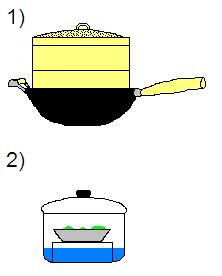
* one setup consists of a bamboo steaming basket resting on top of a wok -- the wok should be about 2 inches wider than the basket in diameter (see fig 1). the advantages to this setup are that some people say the bamboo basket gives some foods (like steamed buns) a slightly better consistency than metal steamers, and it's also nicer-looking if you want to serve your food in the steamer basket. the disadvantages are that the bamboo steamer is harder to clean and maintain than other kinds of steamers, it doesn't tend to last as long, and also boiling water in certain kinds of woks can ruin the shiny metal surface of the inside of the wok if not properly cared for. to clean the steamer basket, scrub the bamboo gently, and if it starts to dry out you can rub a little vegetable oil into it. a bamboo steamer will last much longer if it is well cared for.
* you can also use a metal steamer instead of a bamboo steamer (click here for picture). this is probably the easiest method, and the results are almost identical to using a bamboo steamer. with a metal steamer, you usually buy the whole thing as a set, consisting of a pot (to hold the boiling water), one or more metal steaming baskets, and a metal cover. one disadvantage is that some people feel that metal steamers give a slightly less desirable consistency to foods such as steamed buns and bread, and also there is the possibility of condensation (water) dripping down from the metal steamer lid onto the food (which is usually not desirable, and which doesn't tend to happen with bamboo steamers).
* another setup is simply to use a large pot with a steaming rack inside it (see fig 2). you can buy steaming racks in some asian stores, and maybe in some western stores too.
* alternatively, you can use a rice cooker or electric steaming appliance to steam food. if you have a rice cooker with a steaming basket, you can steam food at the same time you're cooking your rice.
second, depending on what you're steaming you should choose the right method of placing it inside the steamer:
* breads and buns can be placed on squares of wax paper and set directly on the steamer bottom; just peel the wax paper off before eating.
* for dumplings and spring rolls, line the steamer bottom with large cabbage, lettuce, bamboo or banana leaves (or use greased wax paper).
* for foods that are likely to drip or fall through the cracks (such as rice, vegetables, anything liquid, etc.), just put them in a baking pan or heat-resistant bowl (you may have to line it with plastic wrap to prevent sticking) and place the whole pan/bowl in the steamer.
* for the best consistency, some rice dishes are steamed by wrapping the rice in a cheesecloth and placing it directly in the steaming basket.
* however you decide to place your food in the steamer basket, make sure you don't completely block the holes or slots. you need to allow the steam to rise and fill the whole basket.
third, fill the wok or pot with enough water to last the steaming process, but not so much that it will actually get the food wet. then bring the water to a boil and set the steamer and food in place, then cover it tightly. in most cases you should make sure the water is boiling before you begin steaming the food for proper consistency, color and taste.
also make sure the water does not run out during the steaming process. if it does, you'll ruin both your food and your cooking equipment (believe me i have done this more than once).
return to the veggie asia home page