The first documented El Macho in the fossil record was found in 1891 by Barnum Brown. Unaware of the scope of his discovery, and by the lack of bones associated with the site, he mistakenly called it Dynamosaurus. However, it was later reported that another skeleton was found, in 1923, just over the hill from where Brown made his initial discovery. It was the rest of the skeleton! Indeed, it was something completely different than what Brown thought. The heavy skull, the odd limb bones made for an interesting creature.
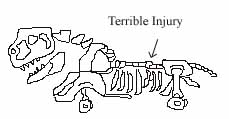
This animal was later dated to be over 65 million years old. Surely, this thing was the supreme predator of it's time.
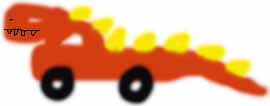
Once it was realized that this was a completely different animal than any other known creature, it was given it's own name, Elmachosaurus orangus, or The macho orange lizard.
The current El Macho is usualy a peaceful grazing animal, weighing in at about a ton and a half. They forage through the underbrush, searching for roots, bulbs and dubloons. They are usualy not a threat to anything, but when mating season comes, the cause irreprable damage to Limestoney Trees (Limstonia arbol imperius). Our solution: KILL THE EL MACHO. If the animal is hunted to extinction, then the Limestoney Trees have a chance to survive.