
The Patchwork Elephant
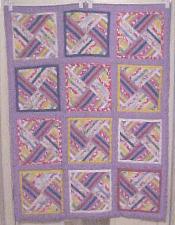 This is my fourth quilting project, a 32 1/2 inch by 42 1/2 inch lap
quilt that I've named "The Patchwork Elephant." I can hardly believe
that I've been working on this thing for nearly a year, but it is
finally finished.
This is my fourth quilting project, a 32 1/2 inch by 42 1/2 inch lap
quilt that I've named "The Patchwork Elephant." I can hardly believe
that I've been working on this thing for nearly a year, but it is
finally finished.
It got its name over time for several reasons. After the third project, I decided that I would try a sampler quilt of several different types of blocks. I quickly discovered that I still hadn't mastered making accurate seams to piece blocks precisely. I had gotten better at cutting the pieces with my rotary cutter, but the seams just wouldn't match properly. My blocks had points askew, points vaguely wandering near the seam lines, points that wouldn't meet at all. This simply wouldn't do, as I was using the seam ripper as much as the sewing machine.
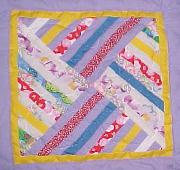 That was when inspiration struck in the form of some articles on strip
quilting posted on the about.com quilting site. I had lots of strips
left over from the third project just begging to be used up in a practice
session. I took my triangular ruler and began sewing the strips
together, carefully measuring them with the lines on the ruler to see
how well the seams matched that perfect 1/4 inch seam. I trimmed the
edges even with the sides of the ruler, finally arriving at a strip
pieced triangle. Three more triangles made and sewn together with a
strip around the outside made the block that formed the pattern for the
rest of the quilt.
That was when inspiration struck in the form of some articles on strip
quilting posted on the about.com quilting site. I had lots of strips
left over from the third project just begging to be used up in a practice
session. I took my triangular ruler and began sewing the strips
together, carefully measuring them with the lines on the ruler to see
how well the seams matched that perfect 1/4 inch seam. I trimmed the
edges even with the sides of the ruler, finally arriving at a strip
pieced triangle. Three more triangles made and sewn together with a
strip around the outside made the block that formed the pattern for the
rest of the quilt.
My seams steadily improved with practice, but I could see this was going to take some time to complete. Well, I'd read that the way to eat an elephant was one bite at a time, so I decided to piece one triangle at a time as my goal. My baby elephant was thus born, much to the delight of my furry quilting assistants. They had a merry time playing with all those strips and investigating the slowly growing piles of triangles and blocks.
Finally the day came when my half-grown elephant was assembled with its batting and backing. Aargh! Crisis! I'd planned to practice my hand quilting by quilting along the seams. That would save me the horrors of marking the quilt, my least favorite part of quilting. I'd happily planned on the pleasant hours of simple straight lines to perfect my quilting stitch. Then as the youngster lay there ready for the first stitch, I realized that it was going to look like it had been attacked by a flock of giant chickens scratching for bugs if I quilted it that way, especially on the solid lavender back.
No, no, no, I thought, I've put too much work into sewing this quilt for that. It deserved better than awkwardly angled lines that would only accent the first irregular seams anyway. What to do now? I started looking through design books for something suitable. Second crisis!
Those colorful triangles were a mine field of seam allowances. Repeatedly pushing a needle through four layers of fabric and a batting was a formidable obstacle. The quilt suddenly increased in thickness and toughness like an elephant hide. Quilt through that? AARGH!!!!
More perusal through library books on lacemaking and graphic designs as well as quilting designs yielded some fairly simple patterns as possibilities, but that quilt top was growing heftier by the day and beginning to resemble a rhinoceros as well. Well, I machine quilted the last one, so maybe I'll finish it that way.
The machine didn't like those seams either. I tried a simple wavy pattern and ended up ripping it out as the machine swerved and bucked along the line. Okay, I'll try a simpler wavy pattern. The machine didn't like that either. Going for a straight line square or diamond pattern wouldn't look much better than the chicken scratching attack, either.
Then came a period of procrastination and frustration. I didn't want to leave this thing as a UFO (that's an unfinished object, for non-quilters) and go on to another quilt, so I kept picking it up and setting it aside to think about it some more. In the meantime, I finished quite a few crocheted doilies from my pile of waiting patterns, telling myself that I was still making good use of my time.
The elephant kept calling the cats, though. They delighted in pulling bits of its batting from around the edges, leaving little bits of fluff floating around the scene of the attack as the poor quilt got rattier-looking with each assault. It deserved better than that, I told myself. It needs its binding to protect the batting before the cats reduce it to a deflated shell, and it should be quilted first.
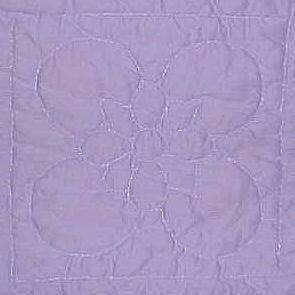 I pulled out a simple pattern from a design book and simplified it
further. I used a polyester batting, so it didn't need to be quilted
closely. Acting on the "eat the elephant one bite at a time" principle,
I marked the quilt with the pattern covering each block with a line of
stitching around the outside of the block and started quilting one
thread length at a time. The closeup shows the pattern with the
contrast enhanced to show the quilting lines better. The stitching
isn't quite that rough on the actual quilt.
I pulled out a simple pattern from a design book and simplified it
further. I used a polyester batting, so it didn't need to be quilted
closely. Acting on the "eat the elephant one bite at a time" principle,
I marked the quilt with the pattern covering each block with a line of
stitching around the outside of the block and started quilting one
thread length at a time. The closeup shows the pattern with the
contrast enhanced to show the quilting lines better. The stitching
isn't quite that rough on the actual quilt.
Sloooooowly the quilting took shape. I learned how to quilt using my index finger and middle finger to push the needle through, as well as using my thumb as I had been doing on the previous projects. I can sort of use my ring finger, too, if necessary. It finally clicked as to how and why most quilting books showed using the middle finger to push the needle through.
That elephant forced me to learn a lot about quilting techniques that hadn't made sense before. Given that our quilting foremothers had to piece small scraps to make warm covers and didn't have the luxury of avoiding quilting over the many seams, it gave me a new respect for the effort that went into finishing the strippy and crazy quilts that saved many a pioneer family from freezing in the winter.
The patchwork elephant now hangs in the place of honor where I gloat over finished projects. I haven't decided what kind of quilt to do next. I have to look through my stash and decide what to make. I'm sure I can finish a full size quilt now, even if it takes a year or more to quilt by hand. I'll tell you one thing, though. I'm going to plan the next quilt right down to the quilting pattern before I start. That's one lesson I'm not going to forget. Elephants have good memories, after all.
Last update: August 21, 2003