The
Regina Project
It’s always a pleasure when you can take an antique work
of art and restore it to its former grandeur. In the case of an antique musical box, the pleasure is
two-fold, as you can enjoy not only the aesthetics of the box but also the music
that it produces. Here are a
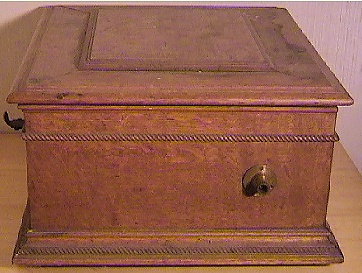
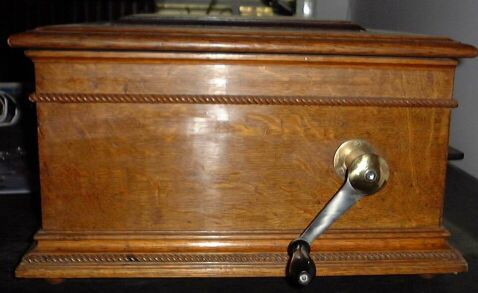
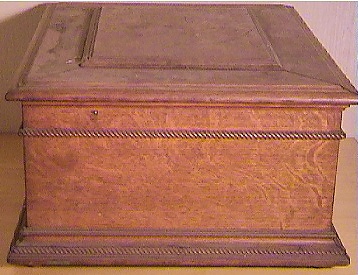
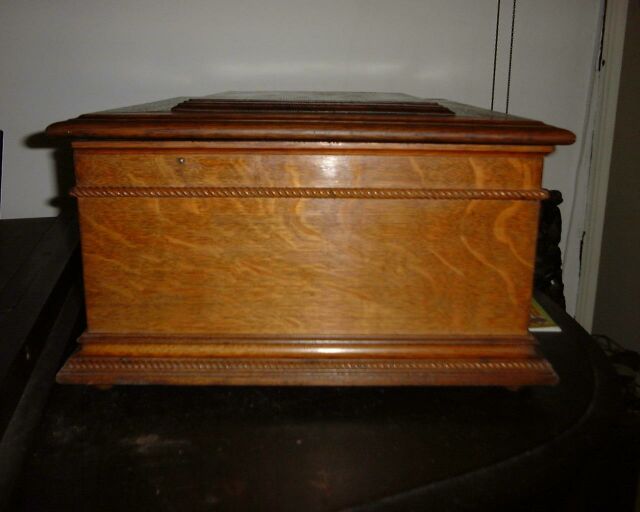
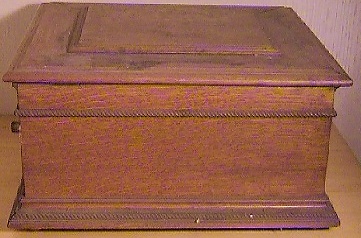
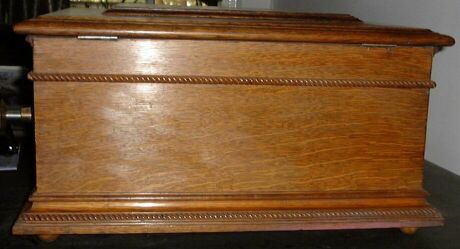
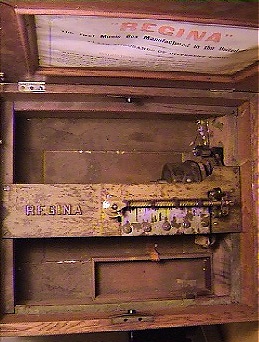
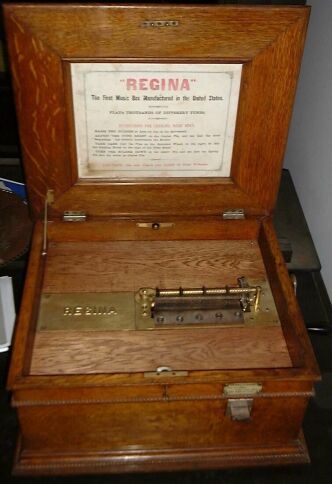
few pictures of my first project, an 1896 Regina single comb box. The left side picture is always the
before picture, the right side is the current. The case did not need to be refinished, but it was very
dirty. A little cleaning and
polish brought out the original glow.
I purchased this box at auction on 27 February 2001. It took me several months to receive it
in Israel. I finished the project
on 3 October 2001, exactly on its 105th birthday.
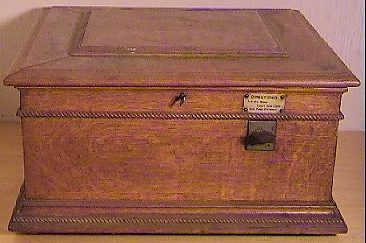
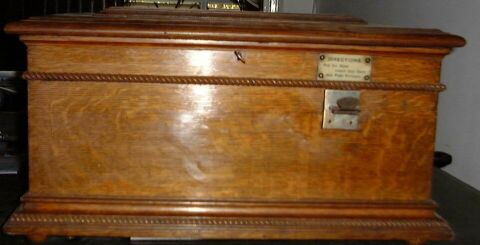
The top, however, as you can see did need a bit more work. The joints were open and the finish was
heavily stained. I sanded it down
and applied a natural finish, similar to the original with very satisfactory
results. I left two scratches in
the finish as they were fairly deep and I would rather leave them than remove
that much wood or fill it. The
bottom I left unfinished as it originally was.
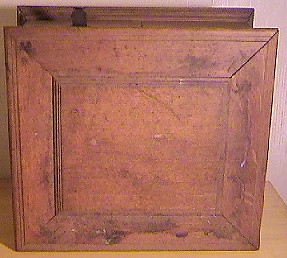
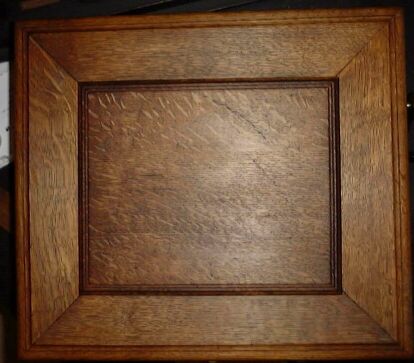
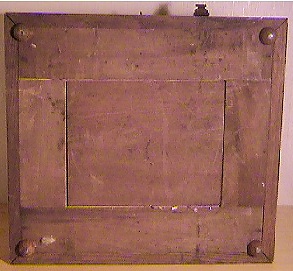
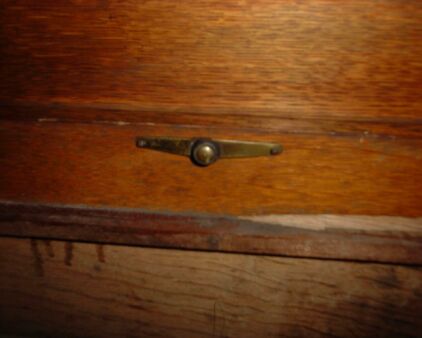
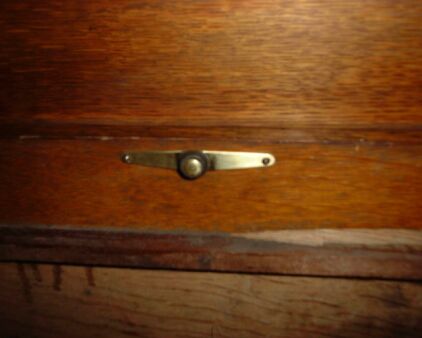
The
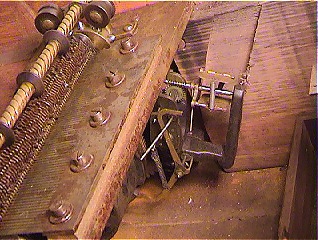
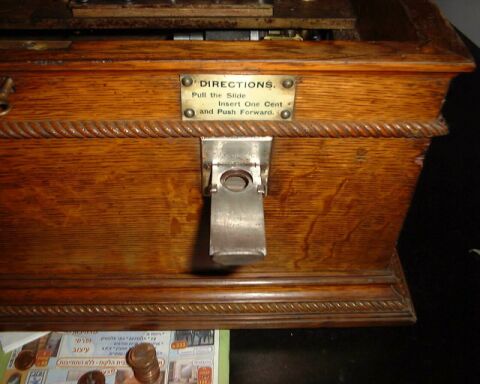
coin slot was rusted shut. I
managed to work it loose which is important as it is operated by a coin
mechanism. Many restorers have
removed the coin mechanism in favor of an on/off lever, as this machine is no
longer in a public house. I prefer
to leave it as it was originally manufactured so the coin mechanism was restored
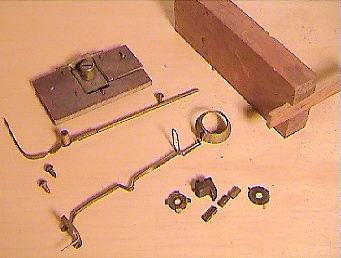
as well. Most of the parts for the
coin-mechanism were present, just disassembled. Figuring out how it worked was relatively simple. I had to make a new counter-weight to
balance the coin-arm, but other than that it was just re-assembly.
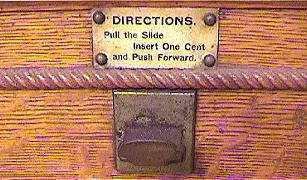
Alas,
here is a tragedy of this machine.
The inside wood pieces had vanished before I received the box. There was only a thin strip of wood
(you can see it in the top right corner of the left picture. The wood I used to replace it has a
different grain cut, as the crosscut oak is no longer readily available. In person, the color appears much
closer but the light reflects on the new wood much brighter than the
original. Here you can see also
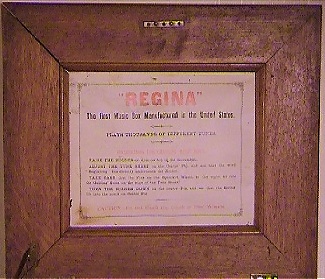
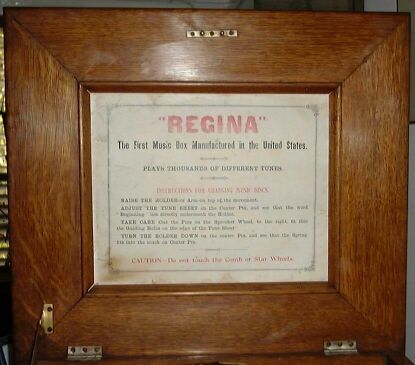
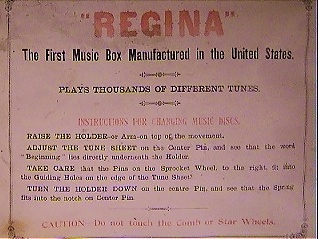
the tarnished bedplate and rusted comb and screws. The instructions are a thin piece of paper that I have
mounted on a thick cardboard backing to protect them.
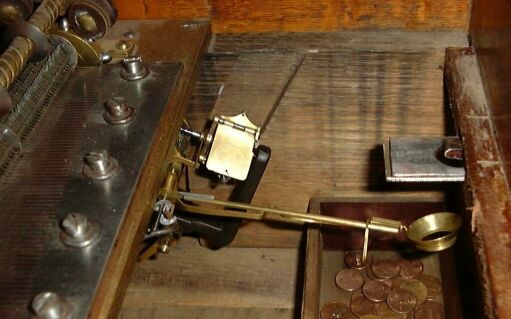
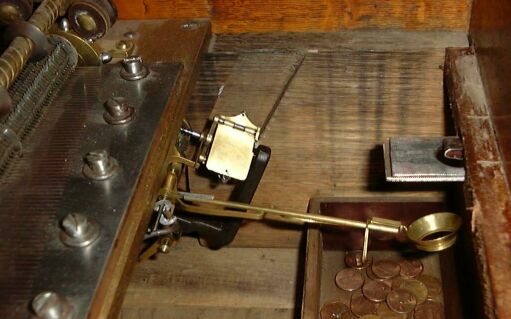
Here
you can see the coin mechanism installed over the coin-box. There are now coins in the box as I use
them to play the music.
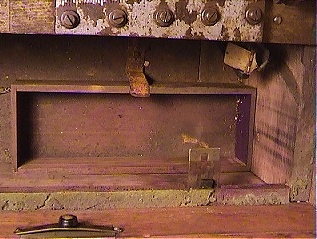
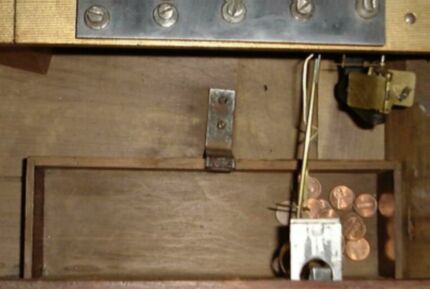
Interior
and exterior parts were carefully disassembled and polished. Even parts that are not visible to the
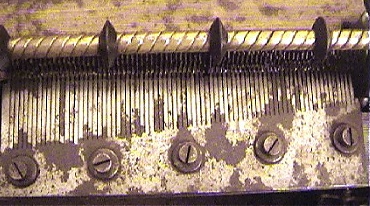
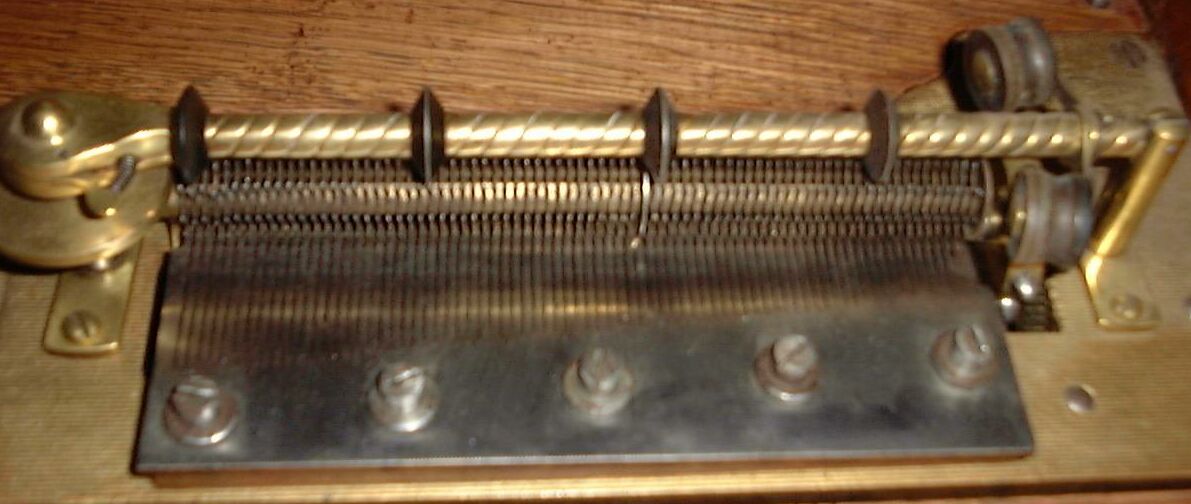
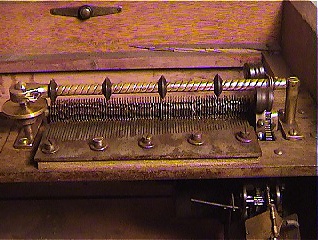
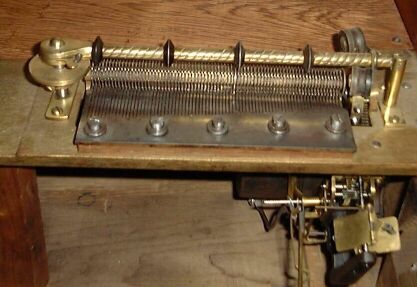
public as they are under the case have been polished. Note how messy the comb was at first compared to how clean
it is now!
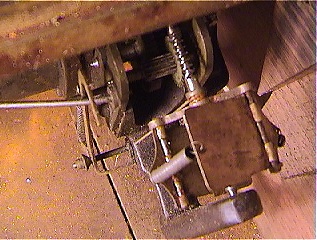
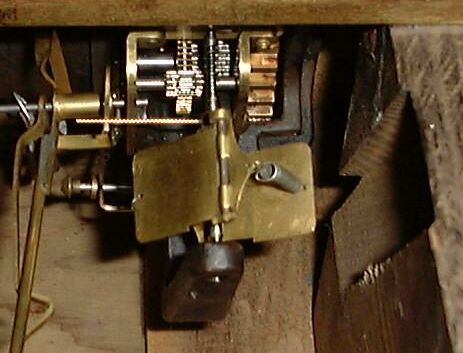
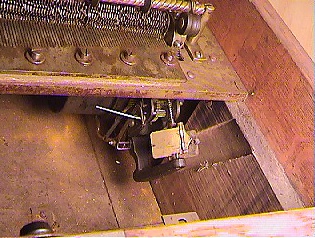
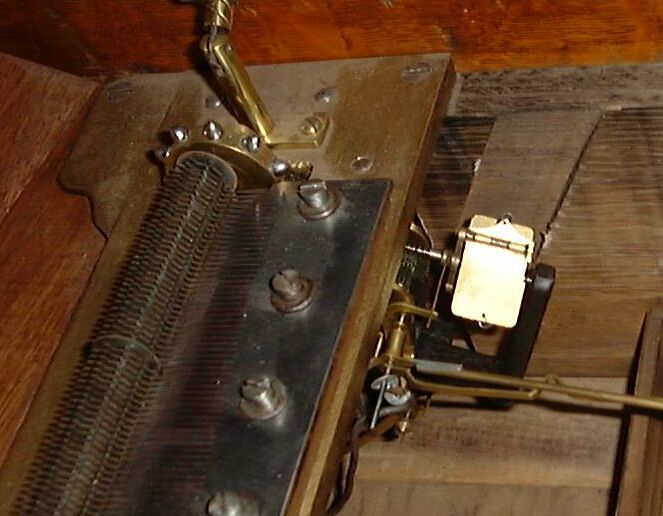
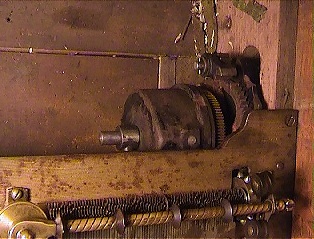
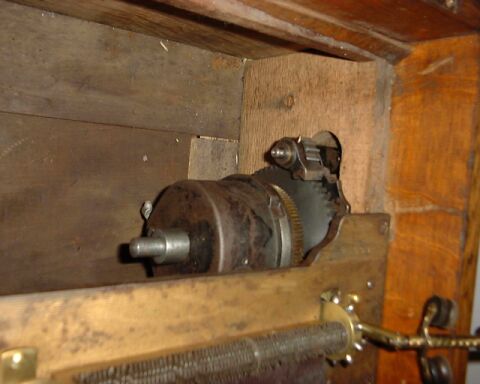
In
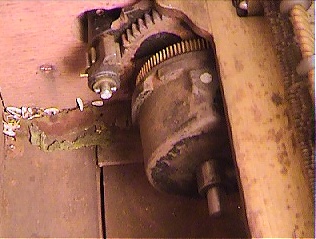
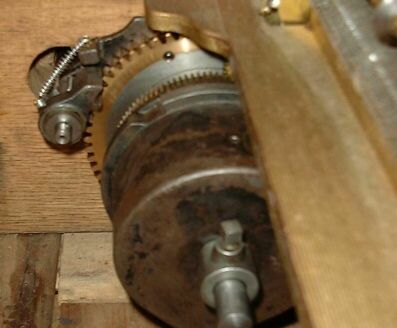
the left picture, you see the original gear for the winding mechanism. There were a few teeth missing. When I disassembled the mechanism to
see what to do with the teeth, I discovered that the gear had entirely broken
apart and was at one time welded together. Whoever tried to repair it had botched that up proper as it
wasn’t even round. Fortunately,
they never got it working again as the welds would have never withstood the
immense pressure on the spring. I
had it rebuilt once but I hadn’t fixed the catch mechanism (you see the small
spring in the right picture?).
When I was winding it, the catch was loose and at the same time the
winding handle slipped, allowing the great tension of the spring to be released
in under a second. This evidently
was what broke the mechanism in the first place as the results were just the
same. I had a new gear manufactured,
this time in brass to replace it.