الموسوعة العربية الطبية المصورة الميسرة
فى النساء و التوليد
لطالبات المدارس الثانوية الفنية للتمريض
الحرق مع الحمل
الجلد
هو الوسط الفاصل بين الأعضاء الداخلية للجسم والبيئة الخارجية ويكون الجلد حوالي
15% من الوزن الكلي لجسم الإنسان.
إن للجلد وظائف حيوية وبدونه لا يمكن أن تدوم الحياة.
وظائف الجلد:
1- مقاومة الصدمات التي يتعرض
لها جسم الإنسان وذلك بسبب المرونة الخاصة التي تتميز بها طبقات الجلد.
2- الجلد ستار يمنع من دخول المواد الضارة إلى داخل الجسم مثل الجراثيم وبعض
المركبات السامة.
3- يمنع الجلد خروج السوائل من الأنسجة الداخلية إلى الخارج إلا تحت ظروف معينة.
4- تنظيم درجة حرارة الجسم:
وذلك عن طريق الشعيرات الدموية والغدد العرقية. ففي الصيف مثلاً حيث ترتفع درجة
حرارة الجو تزداد كمية العرق ويؤدي ذلك إلى تلطيف درجة حرارة الجسم عن طريق تبخر
العرق. أما في الشتاء فعندما تنخفض درجة الحرارة الخارجية تزداد الدورة الدموية
بالجلد وبالتالي تُحفظ درجة حرارة الجسم ثابتة.
5-بالجلد مراكز الإحساس بالألم. وهنا يتجلى الإعجاز القرآني الذي بين ذلك منذ أكثر
من أربعة عشر قرناً إذ تبين الآية الكريمة "كلما نضجت جلودهم بدلناهم جلوداً
غيرها ليذوقوا العذاب". كما أن بالجلد مراكز الإحساس باللمس والحرارة والبرودة
وذلك لوجود شبكة معقدة من الأعصاب والشعيرات لكل منها وظيفة تؤديها.
6-الجلد مركز هام لإخراج المواد الضارة من الجسم، مثل الأملاح الزائدة وذلك بواسطة
الغدد العرقية التي قد تفرز في بعض الحالات أكثر من لترين من السوائل خلال ساعة من
الزمن وذلك تحت ظروف معينة.
7-حماية سطح الجلد والمحافظة على حيويته:
يحتوي الجلد على الغدد الدهنية التي تكون إفرازاتها وسطاً حامضياً يحمي سطح الجلد
من الجراثيم، وبالتالي فإن الغدد الدهنية والعرقية تعمل كمظلة واقية للجلد من
المؤثرات الخارجية.
8-تزويد الجسم بفيتامين د الذي له دور هام على حيوية ونمو أنسجة الجسم المختلفة:
يُخزن فيتامين د بأنسجة الجلد على شكل خامل: وتحت ظروف معينة عند التعرض لأشعة
الشمس (الأشعة فوق البنفسجية) يتحول فيتامين د الخامل إلى مركبات نشطة من فيتامين
د، حيث تمتصها الدورة الدموية وتوزعها على أنحاء الجسم المختلفة.
9-وقاية الجسم من الأشعة الضارة التي قد تؤذي الجلد أو قد تسبب سرطان الجلد. ويتم
ذلك بواسطة الخلايا الملونة الموجودة بخلايا الجلد (خلايا الميلانوسايتس) التي تنتج
مادة الميلانين، وهذه هي التي تعطي الجلد والشعر اللون، لذلك فإن ذوي البشرة
الداكنة أكثر مقاومة لأثر أشعة الشمس من ذوي البشرة الفاتحة.
10-الجلد مرآة الجسم الذي يظهر عليها الصور المختلفة للمؤثرات الخارجية كما هو
الحال عند الخوف أو الفرح أو السلوك الجنسي. وكذلك عند الإصابة ببعض الأمراض
الداخلية التي قد يظهر أعراض لها على سطح الجلد.
C. Obstetric management of the pregnant woman with burns
If it is known that a burned female is pregnant, it is important to establish as
precisely as possible the exact stage of pregnancy at the time of the burn
accident.
This must be based upon the menstrual history and foetal ultrasound examination.
The gestational period is in fact one of the factors determining obstetric procedures (no intervention, protection of pregnancy by tocolithic treatment, induction and/or acceleration of labour).
Other factors are the severity of the burn and foetal viability, which must be confirmed immediately. Such biophysical measurements as foetal muscle tone, limb motion and breathing patterns, placental morphology, and amniotic fluid volume may be visualized in order to assess foetal health
.
With regard to the stage of gestation, foetuses delivered before 24 weeks
generally will not survive, while those delivered after 32 weeks will do well
with modem neonatal intensive care if born without hypoxia or birth trauma.
The most difficult to manage are foetuses of between 24 and 32 weeks' gestational age, where ex utero survival is difficult to predict.
In such
cases, therefore, when pre-term labour occurs, tocolysis procedures are
initiated.
In the light of the findings of Ryan et al. (relative to two patients with
respectively 65% and 70% TBSA bums presenting first-quarter pregnancy who
survived and had full-term deliveries), it was long believed that pregnancy
improved prognosis in the mother. However, the findings of Matthews indicated
that a more advanced state of pregnancy (2nd-3rd quarter) in women with over 50%
TBSA bums had an unfavourable effect unless delivery was immediate, as the burn
created an unfavourable environment for the foetus; in bums in less than 40%
TBSA pregnancy and its continuation had no effect on prognosis in the mother and
every attempt had to be made to interrupt inception of labour if the foetus was
too immature to survive.
Table IV presents a protocol that has recently been proposed. Its
presenters do not suggest that the protocol should be applied rigidly in all
cases but rather that it should be regarded as a useful general guideline.
| ||||||||||||||||||||||||||||||||||||||||||||||||||||||
|
الحرق هو الإصابة الحرارية للأنسجة مما يؤدي إلى تخثر أو تنخر تلك الأنسجة. وهناك عدة مصادر للحرارة وباختلاف تلك المصادر تختلف التدابير العلاجية لهذه الحروق نذكر من هذه المصادر الآتي:
كيف
تصنف الحروق؟ |
يتكون جلد الإنسان من طبقتين رئيسيتين:
1- الطبقة السطحية:
وهي الطبقة الخارجية للجلد
والتي تفصل الجسم عن المؤثرات الخارجية المحيطة به، وسمك هذه الطبقة حوالي 0.2 مم
وبها الخلايا التي تجدد أنسجة الجلد باستمرار وهذه الخلايا تسمى "الكيراتينوسايتس"
وكذلك الخلايات التي تلون الجلد.
إذا نظرنا إلى سطح الجلد بعدسة مكبرة فإننا نلاحظ وجود العديد من المسامات بها. بعض
هذه المسامات يخرج منها الشعر من تحت سطح الجلد وتعتبر كذلك فوهة للغدد الدهنية أما
المسامات الأخرى فهي مخارج الغدد العرقية.
ورغم أن بصيلات الشعر تتواجد نهاياتها بالطبقة السفلية للجلد "الأدمة"، إلا أن
خلايا الطبقة السطحية هي التي تكون بصيلات الشعر. يتصل بكل بصلة من بصيلات الشعر
غدة دهنية على مناطق معينة من الجسم مثل الوجه، فروة الرأس، الصدر والظهر وكذلك على
المنطقة التناسلية.
خلايا الطبقة السطحية للجلد في عملية هدم وبناء واستبدال وتجديد مستمر بواسطة
الخلايا المتخصصة. لذلك فإذا أثر مؤثر خارجي على الطبقة السطحية وتقشرت خلاياها كما
يحدث بعد الإصابات أو الجروح، فإن المنطقة النامية تنشط وتعوض الخلايا القديمة
المستهلكة.
ومن مميزات الطبقة السطحية للجلد كذلك بأن لها المقدرة الكبيرة على التحكم بكمية
الماء التي يفقدها الجلد أو التي يحتفظ بها، فمثلا عندما تنخفض الرطوبة النسبية في
الجو كما هو الحال في المناطق الصحراوية والجافة، فإن الطبقة السطحية تفقد كمية من
الماء أكثر من التي تصلها من الطبقات السفلية للجلد، لهذا يحدث جفاف بالجلد ويؤدي
أحياناً إلى تشقق الشفاه والأكف والكعبين. وبالعكس ففي المناطق الرطبة حيث تزداد
الرطوبة النسبية في الجو، فإن الطبقة السطحية من الجلد تمتص الماء من الهواء الرطب
وبذلك يكون سطح الجلد طرياً وناعماً، ويحدث نفس الشيء بعد الاستحمام.
تختلف سماكة الطبقة السطحية للجلد من مكان لآخر فأكثرها سماكة على الأكف والكعبين
لأن هذه أكثر تعرضاً للمؤثرات الخارجية من غيرها.
الأدمة:
هي الطبقة السفلى من سطح
الجلد وتتكون من ألياف وأنسجة مطاطية سميكة تعطي الجلد المرونة والقوة.
وتحوي هذه الطبقة الأوعية الدموية وشبكة معقدة من الأعصاب المسؤولة عن الإحساس
بالألم، اللمس، الحرارة، البرودة والضغط كما تحوي الغدد العرقية التي تفرز بالإضافة
إلى الماء أملاح الصوديوم والبوتاسيوم ومواد أخرى. وللغدد العرقية دور هام في تلطيف
درجة حرارة الجسم والتخلص كذلك من المواد الضارة.

11ـ للحروق الخفيفة:
يوضع على مكان الحرق قشر التفاح ويتم ربطه بشاش ويتم تغيره يومياً فإنه يساعد على
إلتئام الحرق ويذهب أثاره
| - علاج الحروق السطحية من الشمس : |
يستعمل الجرجير لعلاج الحروق بإستعماله على صورة مرهم الجرجير و يحضر بسحق حزمتين صغيرتين من الجرجير الطازج ثم ملعقة كبيرة من زيت الزيتون ، ثم يصفى المزيج و يستخدم لعلاج الحروق السطحية من الشمس .
لعلاج الحروق فيدهن الحرق بمزيج من مسحوق بذر الحلبة مع زيت الورد حتى تشفى الحروق باذن الله
العسل والجلد:
وفي بعض الدول الأوروبية يقوم الريفيون بربط أماكن الحروق والجروح والتسلخات بأشرطة من القماش المدهون بالعسل.
وأثبتت حادثة واقعية لطفل انسكب عليه كوب من الشاي المغلي أدى إلى التهاب جلد الصدر والبطن، ومع دهانه سريعًا بالعسل المتجمِّد؛ في الصباح بعد الكشف عن أماكن الحرق تبين أن السطح البطني للجسم أبيض عاديّ، كأن لم يصبه شيء مع ظهور فقاعة بحجم حبة العنب في أعلى الصدر ممتلئة سائلاً يبدو أنها كانت قليلة الالتهاب؛ فلم تُرَ، ولم تُدهَن بالعسل، ومع المقارنة بين السطحين تبين المفعول الأكيد للعسل.
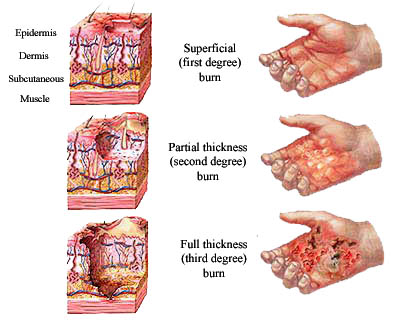
| حروق الدرجة الأولى | الإصابة على سطح الجلد فقط, | إحمرار على سطح الجلد | -الشعور بألم | ويحدث الشفاء في خلال 10-14 يوماً وفي الغالب لا يحدث أي تغير فيزيولوجي للجلد. |
| حروق الدرجة الثانية: | لإصابة أعمق من الأولى | حمرار على سطح الجلد | لشعور بألم
-وتظهر فقاعات |
يحدث تغيرات فيزيولوجية تؤدي إلى تأخر تكوين الطبقة الجديدة من الجلدويحدث الشفاء في خلال 25-35 يوماً. |
| حروق الدرجة الثالثة | تصيب جميع طبقات الجلدوالأنسجة الواقعة تحت الجلد | يبدو مكان الإصابة بني اللون أو متفحما (أسود). قد تبدو الأنسجة الداخلية بيضاء اللون. | ورغم أن حروق الدرجة الثالثة تعتبر حروق خطيرة إلا أن المصاب لا يشعر إلا بألم بسيط نتيجة تلف واحتراق نهايات الأعصاب الحسية | مع تغيرات فيزيولوجية عميقة كما يتم تخريب لخلايا الدم، ويأخذ الجلد اللون البني القاتم. |
الإسعافات الأولية للحروق الحرارية:
*انزع من فوق الجزء المصاب الملابس -الخواتم -الساعة قبل انتفاخ الجزء المحترق
*طالما هناك حرق تكون كلمة السر هى التبريد اى استخدام الماء البارد فى اسعاف
المصاب حيث نقوم بوضع الجزء المصاب لمدة من 10الى 15 دقيقة تحت الماء أو حتى
يختفى الشعور بالالم
فى حالة حروق الدرجة الأولى نكتفى بالتبريد وليس هناك داعى للذهاب للمستشفى ويمكن
استخدام أحد مراهم الحروق من الصيدلية
فى حالة حروق الدرجة الثانية استخدام التبريد-منع ازالة الفقاعات بأنفسنا- تغطية
الجزء المصاب بغيار نظيف حتى لا يحدث التلوث مثل الشاش والذهاب للمستشفى
فى حالة حروق الدرجة الثالثة ينقل المصاب فورا للمستشفى أوطلب الاسعاف مع تغطية
الجزء المصاب بغيار نظيف
الأخطاء الشائعة والتى يجب الحذر منها
لا تضع المراهم أو الزيوت أو معجون تنظيف الأسنان أو فيتامين إي أو الزبدة على
الحروق فهذه تمنع تسرب الحرارة من الجلد وتعمل على تحويل درجة الحرق لدرجة أعلى
لا تستعمل الثلج مباشرة على الجلد حتى لايحدث حرق ثلجى وتلف لخلايا الجلد
ولا تحاول إزالة الملابس الملتصقة بالجلد, قصها من أطرافها.
لا تحاول تنظيف الحروق أو فتح البثور والفقاعات
لاتضع قطن كغطاء على المكان المصاب مباشرة
|
مضاعفات الحروق
Complications
صدمة
الحروق Burn Shock
هناك مضاعفات مبكرة تحدث بعد التعرض للحرق مثل:
كما أن هناك مضاعفات متأخرة تحدث بعد فترة من التعرض للحرق مثل:
العلاج
علاج حرق الدرجة الأولى والثانية (إذا كانت النسبة المئوية للمنطقة المصابة 15% أو أقل عند الكبار أو 10% أو أقل عند الصغار):
علاج حرق الدرجة الثالثة (أو إذا
كانت النسبة المئوية للمنطقة المصابة أكثر من 15% عند الكبار أو أكثر من
10% عند الصغار) باستثناء منطقة الوجه واليدين: |
|
الإسعافات
الأولية للحروق: |
* التقييم:
- تحديد نوع الحرق:
-
حروق من الدرجة الأولي (سطحية): وتتأثر فيها الطبقة السطحية فقط من
الجلد، ويكتسب الجلد فيها اللون الأحمر ويصبح جافاً، ويصاحبه ظهور انتفاخ وتورم،
وغالباً ما يكون الحرق مؤلماً.
- حروق من الدرجة الثانية (جزئية): وتتأثر فيها الطبقة الداخلية والخارجية
من الجلد، ويكون لونه أحمر وتنتشر البثرات علي السطح مملؤة بالسوائل بحيث يظهر
الجلد وكأنه مبلل دائماً عند انفجار هذه البثرات. وهذه الحروق مؤلمة وتحدث التورم
وتترك آثاراً علي الجلد.
-
حروق من الدرجة الثالثة (كلية): تدمر كل طبقات الجلد بما فيها الخلايا
التحتانية والدهون والعضلات والعظام
والأعصاب، ويظهر مكان الحرق باللون البني أو الأسود أما الأنسجة الداخلية فتأخذ
اللون الأبيض وتكون هذه الجروح مؤلمة للغاية أو لا يشعر بها الانسان علي الاطلاق
في حالة تدميرها لنهايات الأعصاب التي توجد علي سطح الجلد . غالبا ما يصاحبها (
حولها ) حروق مؤلمة من حروق الدرجة الثانية تهدد حيا ة الانسان وتتعرض للعدوي .
- تحديد مدي خطورة
الحروق:
- هل تسبب مشاكل في التنفس في
حالة وجود حروق حول الأنف أو الفم.
- منتشرة في أكثر من جزء في الجسم.
- مدي تأثر مناطق الجسم المختلفة به: الرقبة - الرأس - الأيدي - القدم -
الأعضاء التناسلية.
- هل المصاب بالحرق طفل أم شخص بالغ مع تحديد نوع الحرق.
- تحديد مصدر الحرق:
كيميائي - كهربائي - نووي - نتيجة إنفجار - تعرض للشمس.
- تحديد
نسب الإصابة لكل عضو من أعضاء الجسم لمعرفة درجة الحرق:
- الكبار:
- الرأس = 9%
- الذراع اليمني = 9%
- منطقة الجذع الأمامية = 18%
- منطقة الأعضاء التناسلية = 1%
- منطقة الجذع الخلفية = 18%
- الرجل اليسري = 18%
- الذراع اليمني = 9%
- الرجل اليمني = 18%
-
الأطفال:
- الرأس = 9%
- الذراع اليمني = 9%
- منطقة الجذع الأمامية = 18%
- منطقة الاعضاء التناسلية = 1%
- منطقة الجذع الخلفية = 8%
- الرجل اليسري = 13,5 %
- الذراع اليسري = 9%
- الرجل اليمني = 13,5 %
-
تحذيرات:
- يعتمد العلاج علي نوع الحرق.
- تسبب الحروق الكهربائية جروح تظهر علي أنها سطحية في حين أن
الأنسجة الداخلية تكون قد تدمرت تماماً بالداخل.
- يتأثر الاطفال تحت سن 5 سنوات، والكبار فوق سن 50 سنة بالحروق بدرجة أكبر لأن
طبقة الجلد الخارجية لديهم رقيقة.
- يعاني الاشخاص الذين لهم مشاكل صحية من حروق شديدة الخطورة وخاصة إذا كان هناك
نقص في التغذية - مشاكل متصلة بالقلب أو الكلي أو ممن تعرضون لمصدر الحرق فترة
طويلة لعدم إمكانية الهرب بسهولة منه.
-
بروتوكول الاسعافات الأولية للحروق:
- إبعاد الشخص عن مصدر الحريق علي الفور.
- يتم وضع ماء بارد علي الحروق الحرارية وبكمية كبيرة ويشرط ألا تكون مثلجة.
- إذا كان ناتجاً عن القار يستخدم الماء البارد مع عدم إزالة القار.
- مراقبة التنفس لأن الحروق تسبب انسداد في ممرات الهواء لما تحدثه من تورم (عند
حدوث حروق في منطقة ممرات الهواء أو الرئة).
- لا يستخدم الثلج أو الماء المثلج إلا في حالة الحروق السطحية الصغيرة.
- بعد هدوء الحرق ووضع الماء البارد عليه، يتم خلع الملابس أو أية أنسجة ملامسة
له، أما في حالة التصاقها لا ينصح علي البته إزالتها.
- يغطي الحرق بضمادة جافة معقمة لإبعاد الهواء عنه.
- لا تحتاج الحروق البسيطة إلي عناية طبية متخصصة حتي التي توجد بها بعض البثرات
ويتم التعامل معها علي أنها جروح مفتوحة تغسل بالصابون والماء، ثم يتم وضع مرهم
مضاد حيوي عليها تغطي بضمادة.
- أما بالنسبة لجروح الدرجة الثالثة أي الجروح الخطيرة فهي تحتاج عناية طبية
فائقة، وفيها لابد من استرخاء المريض ويتم رفع الجزء المحروق فوق مستوي القلب إن
أمكن.
- الحفاظ علي درجة حرارة الجسم، لأن الشخص المحروق غالباً ما يتعرض إلي الإحساس
بالبرودة.
- استخدام الأكسجين وخاصة في حروق الوجه والفم.
- اللجوء
إلي الطبيب:
- يتم اللجوء إلي الطبيب في:
- كل حالات حروق الدرجة الثالثة.
- الحروق التي توجد حول الأنف والفم.
- كافة الحروق الخطيرة التي تهدد حياة الإنسان.
- حروق الدرجة الثانية والتي تكون الأماكن المتأثرة في الجسم تفوق نسبة 5%.
- الحروق التي تعرض المصاب
للعدوي.
maternal outcome unaffected by pregnancy
fetal outcome
<20% BSA burn: no effect
>30% BSA burn: increased risk of preterm labour
>40% BSA burn: high risk of fetal death
>50% BSA burn: consider elective cesarean section if fetus is still viable
initial resuscitation unchanged
Severe burn injury in pregnancy in Northern Nigeria
C. M. Chama and H. U. Na'Aya
Abstract:
A total of 21 cases of severe burns in pregnancy managed at the University of Maiduguri Teaching Hospital, Maiduguri, over a 10-year period, spanning January 1991-December 2000 inclusively were reviewed. The pregnancy loss was 92·9%, with the pregnancies spontaneously terminated within 10 days of sustaining the injury. Maternal mortality was 47·6% with sepsis as the most common cause of death. It is advocated that viable pregnancies should be terminated as soon as the mother is resuscitated following severe burn injury. Prophylactic systemic antibiotics should be given to minimise the development of sepsis. Patients are best managed in the obstetrics ward during the first 2 weeks of injury. A multidisplinary approach is encouraged in managing cases of severe burns in pregnancy.
Nineteen pregnant women with burn areas ranging from 6 to 92% of the total body surface area were treated at the US Army Institute of Surgical Research between 1951 and 1974. A review of these cases led to the following observations and conclusions: 1) Pregnancy does not alter the maternal outcome after thermal injury. 2) Maternal survival is usually accompanied by fetal survival. 3) If the gravida's injury is lethal, the pregnancy will usually terminate spontaneously prior to her death. 4) Obstetric intervention is indicated only in the gravely ill woman whose complications (hypotension, hypoxia, or sepsis) jeopardize the life of the fetus. 5) A better understanding of the complications of major burns and the care available in modern burn units should improve the prognosis for burned pregnant patients
Burns In Pregnancy.
Obstetrical & Gynecological Survey. 54(11) Supplement:131-137, November 1999.
Polko, Lisa E.; McMahon, Michael J.
Abstract:
Pregnancy complicated by a thermal injury must be aggressively managed to
provide a favorable outcome for the mother and her developing fetus. The MEDLINE
database was used to search for English-language papers published after 1980 to
evaluate the classification, complications, and treatment of thermal injuries in
pregnancy. Additional sources were identified through cross-referencing. We
reviewed these sources with particular attention to classification,
complications, and treatment options. The incidence of serious thermal injury in
pregnancy is low. Maternal and perinatal mortality increases significantly when
greater than 50 percent of the total body surface area is burned. However,
pregnancy does not seem to alter maternal outcome, and maternal survival is
often accompanied by fetal survival. The delivery of a term infant is likely
when the mother recovers from a thermal injury, and there is no evidence of
fetal jeopardy or labor in the first week postburn. Acute management of thermal
injuries in pregnancy is essential for maternal and fetal well-being.
Obstetrical management should be individualized.
(C) 1999 Lippincott Williams & Wilkins, Inc
Discussion
All five pregnant women with burns were resuscitated using the Parkland formula with alterations adjusted to individual needs and changes in the intravascular volume. Gynaecological advice and treatment were immediate and continued throughout the patients' treatment. All the patients received tocolytic drugs.
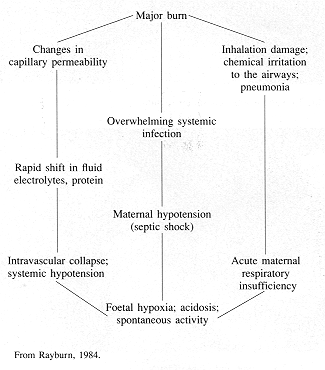
All metabolic changes of the burn disease are enhanced by the hypennetabolic state of gestation. There is also an increase of the intravascular space in pregnant women of up to 40% in volume. Extreme care should therefore be taken to initiate resuscitation therapy as soon as possible, since the mother's intravascular space is in equilibrium with the amniotic fluid. Resuscitation should be vigorous to prevent intrauterine death of the child due to loss of amniotic fluid.
Special care should also be taken regarding the position of the patient in order to prevent:
restriction of the respiratory moments and pulmonary atelectasis;
pressure on the large veins which combined with clotting will lead to venous thrombosis.
Absorbable local antiseptic or antibacterial agents should be avoided, specially when the TBSA burned is extensive.
Conclusion
The burn disease has serious consequences for the pregnant woman. There is an increase in morbidity and mortality in the mother and fetus, and the normal termination of gestation is endangered.
Burn injuries during pregnancy appear to be a larger problem in economically developing countries like Iran where burns are more common in females. As most burns in pregnant females are unintentional, there is clearly an opportunity for prevention by teaching pregnant women in the antenatal care clinic, for example, to avoid contact with kerosene for cooking and heating and to apply proper first-aid measures, such as prompt cooling of the burn with cold water, to reduce the depth of the injury should a burn occur
 |
Thermal Burn Medications Analgesics For thermal burns doctors will prescribe analgesics for pain control to ensure that the patient is as comfortable as possible. Morphine sulfate, Demerol and Vicodin may be prescribed. These analgesics are prescribed for severe pain. Nonsteroidal Anti-inflammatory Agents These are used for the relief of mild to moderate pain. Ibuprofen (Advil, Motrin) is usually used for initial therapy, but other options such as Naproxen, Ansaid, and Anaprox may be prescribed. Topical Antibiotics Topical antibiotics are used to prevent infections and bacteria growth. Neosporin is used to treat minor infections and is applied to the skin 1 to 3 times a day to the affected areas. Silvadene is a topical cream that is used for more severe burns. Silvadene is a sulfa medicine used to prevent and treat bacterial or fungus infections. Silvadene should be applied using a sterile technique to affected areas and the areas should be washed before applying. Avoid applying Silvaden to the face and it should not be use in newborns, infants younger than 2 years or in late pregnancy. Chemical Burn Medications Though medications play a limited role in the treatment of most chemical burns topical antibiotics, calcium and magnesium salts may be used. After decontamination is performed a standard IV fluid and narcotic therapy is administered. Antibiotics Silvadene is used for dermal burns and is useful in the prevention of infections in second or third degree burns. It should be applied to skin once or twice daily and all previous medication must be removed before applying each new dose. Erythromycin ointment (Bacitracin) is used to prevent infections following ocular burns. Analgesics Morphine, and Acetaminophen are prescribed for pain management and may be used for sedation which beneficial for patients who have sustained injuries to their eyes. Nonsteroidal Anti-inflammatory Agents Advil, Motrin Ansaid, Naprosyn and Anaprox are anti-inflammatory agents used to control mild to moderate pain. Electrical Injuries When treating electrical injuries hydration is the key to reducing morbidity. If muscle damage is severe an osmotic diuretic will be administered. Fluids Lactated ringers are used for fluid resuscitation. It is an isotonic and has volume restorative properties. They are administered using an IV and should be stopped if pulmonary edema develops. Osmotic Diuretics Mannitol is an osmotic diuretic which is not significantly metabolized which passes to through the glomerulus without being reabsorbed by the kidneys. It is used to restore and maintain urinary output. Scar Treatment Medications Mederma is a topical gel used to reduce the visibility of scars. The gel should be rubbed into the scar 3 to 4 times a day for 3 to 6 months for burn scars. Cica-Care gel sheets are made of a silicone gel and they are
designed to flatten and soften scars. These sheets are self adhesive and one
sheet can be for up to 28 days. |
بخاخ جديد يزيل آثار الحروق على الجلد
لندن ـ من نيغيل هوكس ـ المحرر الصحي *: يمكن للمرضى الذين يعانون من حروق الحصول على جلد جديد بعد رشه ببخاخ مثل الطلاء.
وسيتم تقديم هذه الطريقة التي تم تطويرها في أستراليا إلى بريطانيا الأسبوع المقبل في سلسلة من الندوات الخاصة بالجراحين.
الجلد الجديد ـ الذي يتم تكوينه من خلايا مأخوذة من أجزاء تالفة من جسم المريض ـ يمكن عمله بسرعة، وأرخص وأسهل في الاستعمال، من طبقات الجلد التي تتم زراعتها والمستخدمة حاليا.
ويمكن أن تقلل هذه الطريقة من آثار الندوب ويمكن استعماله في مناطق الجسم التي يصعب فيها القيام بنقل أنسجة الجسم إليها مثل أخمص القدم وتحت الذراع وكف اليد. وقد تم علاج أكثر من 1200 مريض باستخدام هذه الطريقة في أستراليا ولكن حفنة منهم جربوها في بريطانيا.