All it takes is just a bit of effort and time
Your dream can come true but like most things in life, you have to work at it. First and foremost, many flowering plants do not bloom throughout the year. So, one has to be careful with the selections.
There is also a need for regular pruning and other forms of maintenance like proper watering and fertilisation.
In short, popping into a nursery and transporting all the lovely flowering plants you see back to your garden does not guarantee that it will soon or eventually look like the nursery.
Still, the good news is that Malaysia has many, both native and imported, flowering shrubs that flourish year-round.
If you drive through the city of Kuala Lumpur, you will notice loads of Lagerstroemia shrubs lining Jalan Parlimen. This plant thrives well even in our harsh climate and the polluted air. Why? Ironically, the pollution creates an environment which is not friendly for insects.
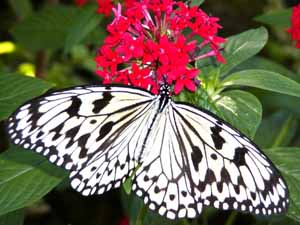
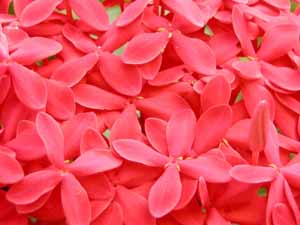
Other plants that do well in our climate include the Orleander, Cassia biflora, Hemenocallis, Peacock flower, Ixora and Mussaenda - thus their popularity.
However, if these are just too common for your taste, consider a more exotic range as suggested below by Bukit
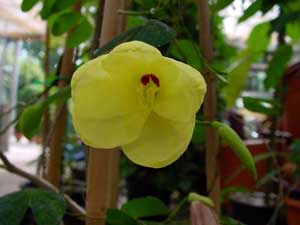
 Bauhinia tomentosa
This lovely small tree or shrub grows up to 3m. Offers abundant yellow blooms.
|
|
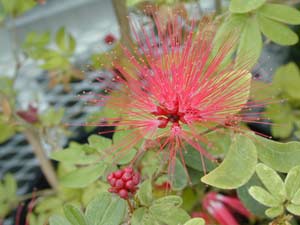
Calliandra sp
A large shrub that provides red flowers several times a year.
|
|
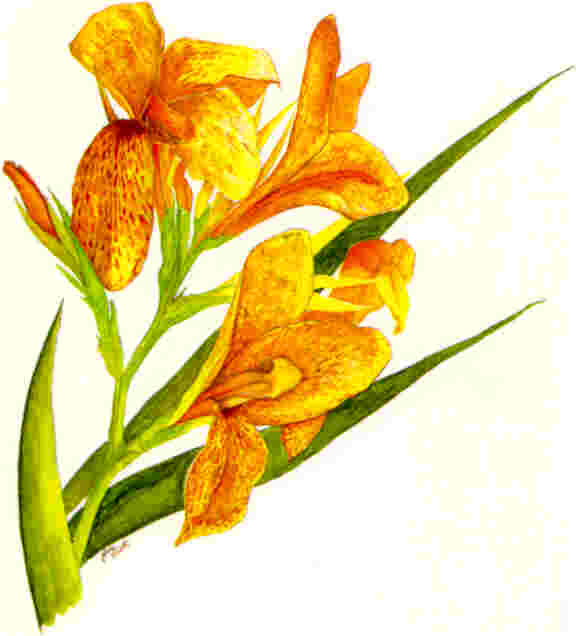
 Canna
CannaIts flowers come in yellow, white, orange, pink, red or a combination of any two of these colors. Fertilize it with 1/2 a handful of processed chicken dung every fortnight and water it every day. You will also need to dig up the whole area every two years for replanting.
 Canna
Eastern flower
Canna
Eastern flowerA new species and its white blooms can be seen throughout the year. Easy to maintain but requires sufficient nutrients. A handful of processed chicken dung (available at nurseries) and 1/5 handful of flowering fertiliser every month should do the trick.
Jacobina spThis species needs light but not direct sunlight in order to grow well. It will constantly product flowers if pruned regularly.
Pseuderanthum andersonniiA blue variety of the common Pseuderanthemum species. It flowers constantly and adores the sun.
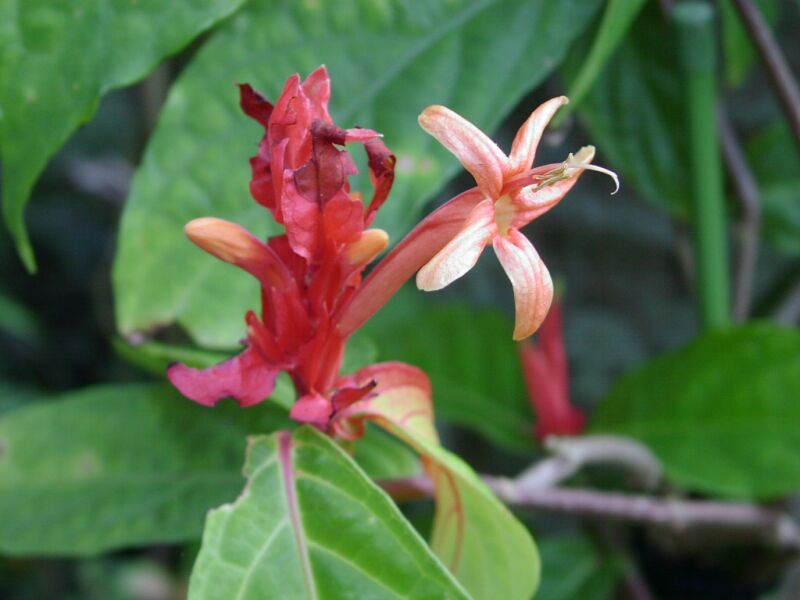
Russelia equisetiformisThis shrub offers red, white or pink flowers but it needs sufficient moisture and fertilisers. To keep the flowers coming, water it every morning and provide it with a handful of processed chicken dung every month. When signs of wilting emerge, use the rejuvenating pruning technique to get rid of old branches and make way for new ones.
|
|
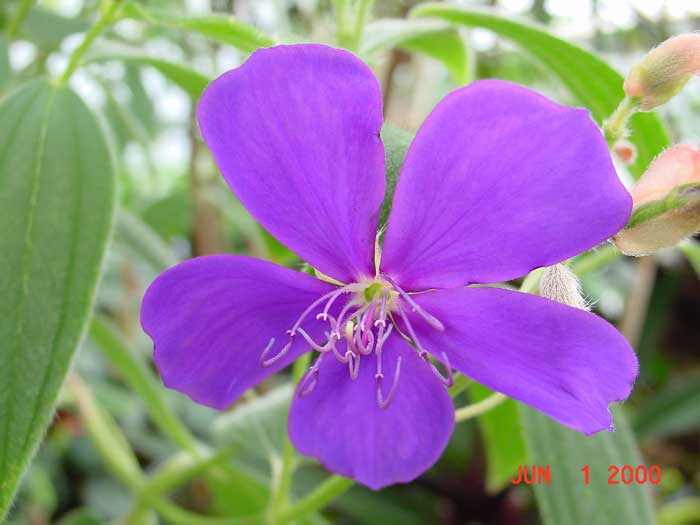
Tibouchina
It flowers all year round and its royal purple flowers stand out,
especially if planted in large numbers. It needs the sun and
well-drained soil.
|
|
Ruellia colorata
Does well in a sunny environment but must be pruned once or twice a year
to keep it compact and bushy. Once you have pruned the plant, apply 300g
of processed chicken dung per sq meter to enhance foliage growth. Once
the foliage is well developed, add a handful of flowering fertiliser to
encourage flowering.
|
|
Pruning
When your plants start to wilt, you know it's time to prune them. Most
plants flower on newly-formed branches, not the old ones. Use the
"rejuvenating pruning" method, also known as renewal pruning - remove the
older and larger branches at the level required. This will create more
space, light and air for new branches to develop and therefore encourage
flowering. Fertilising
Although most organic fertilisers are sufficient for flowering plants,
consider adding the NPKMg compund fertiliser to stimulate flowering.
Generally, inorganic or artificial fertlisers like NPKMg contain N (nitrogen
for foliage growth), P (phosphorus for root development and enhancing the
strength of the plant during its early stages of growth) and K (potassium for
fruit and flower development).
When choosing flowering/fruit inducing fertilisers, go for those with a high
percentage of K. Fertilisers with a high percentage of N or even NPK
(15:15:15 ratio) encourage foliage and general growth while those with a
higher percentage of P improve the strength of branches and help root
development. Check
the label on your fertilisers for the recommended quantity to be used and
frequency. Do not overfertilise your plants or they will have brittle
branches or bad root development, making them vulnerable to being uprooted by
strong wind.
Never over- or under-water your plants. Symptoms of over-watering
include uneven foliage/leaf growth and rotting roots while under-watering can
cause plants to wilt. A wilting plant has enough energy to survive but
not to flower. So, it is extremely important for you to ask your
nurseries about your plants' watering needs. Plants
need well-drained soil at all times. To improve drainage, you can add
perlite or vermiculite (artificial soil). However, Nicole recommends
these only for pots and planter boxes. Perlite and vermiculite improves
the overall structure of the soil and its drainage ability, and reduces the
weight of the soil.Adding on
If
you wish to add a flowering plant to an existing plant bed, follow these
instructions: Dig a hole in the soil at least 50cm deep, and at least
two-thirds bigger than the root ball of the plant or the pot. (A root
ball is the ball of soil around the roots wrapped in burlap or a synthetic
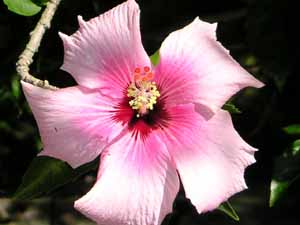
material and tied with twine or wire.) For shrubs like HIbiscus or
Ixora, the hole must be a minimum of 45cm by 45cm. Remove the excess
soil, add well-composted organic matter and coarse river sand. This will
improve drainage and water retention. Add organic fertiliser in the
mixture plus half a handful of slow-release fertiliser. Water the hole
before you plant the new shrub. Keep plant in moist condition.