


Up until the mid-fifteenth century, Koreans widely used Chinese characters for written communication. However, since Chinese isn't phonetic, which makes it difficult to learn and accurately represent many pure Korean words. several problems began to emerge among Koreans.
In response to the growing number of problems, King Sejong (�������) of the Chosun Dynasty ordered a group of scholars to create a language that would suitably match spoken Korean and be easier for more than just the aristocracy to learn.
What these scholars game up with is one of Korea's greatest cultural achievements. The alphabet they created, called Hangul (�ѱ�) now, is one of the few alphabets in the world that's invention was so deliberate in nature. It has changed and evolved a little bit over the years, but remains very much the same as it did over half a century ago.
Written and spoken Korean language became a symbol of nationalism among Koreans; so much in fact the Japanese attempted to eliminate it during their occupation of the peninsula in the early twentieth century.
It's a beautiful and complex language, yet remains highly organized. Once rated the second hardest language for English speakers to learn, the number of Anglo-Saxon Americans who speak hankookmal (�ѱ���) is very low. I feel honored and privileged to be among those who do.
�� - g/k �� - k �� - kk
�� - n
�� - d/t �� - t �� - tt
�� - r/l
�� - p/b �� - p �� - pp
�� - j �� - ch �� - jj
�� - s �� - ss
�� - m
�� - *
�� - h
�� - a �� - ya
�� - oh �� - yoh
�� - oo �� - yoo
�� - eo �� - yeo
�� - ae �� - yae
�� - e �� - ye
�� - eu
�� - ee
Dipthongs (combinations of simpler vowel sounds)
�� - wee
�� - euee
�� - wah
�� - weo
�� - wae
�� - oe
�� - we
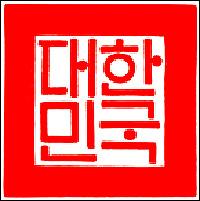
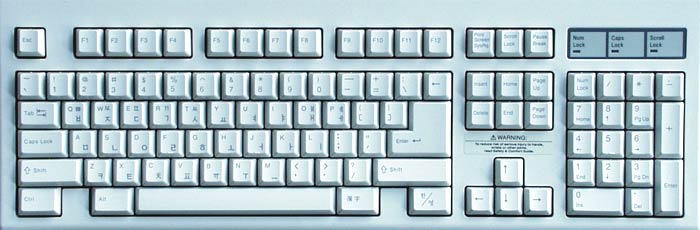
eg: �� + �� = �� (First syllable) �� + �� + �� = �� (Second syllable) ��+ �� + �� = �� (Third syllable) �� + �� + �� = ��(Fourth syllable). The word then would be ���ѹα� (daehanmeenkook,) a combination of the 4 syllables or 11 letters.
The placement of the letters in the syllable start in the left hand corner like a grid. The first letter is placed in upper left, second in upper right, third in lower left, and fourth in the lower right.
eg: (1)�� + (2)�� + (3)�� + (4)�� = �� (dalk or chicken)
The character spaces, in words deriving their roots from Chinese, generally have their own specific meaning as well as the combined meaning of all the syllables together.
eg: �� (een, which means person) + �� (doh, which means road/path/street) = �ε� or sidewalk.