 |
|
|
|
|
|
|
|
|
|
|
|
|
|
|
|
|
|
|
|
|
|
|
UFO |
|
|
|
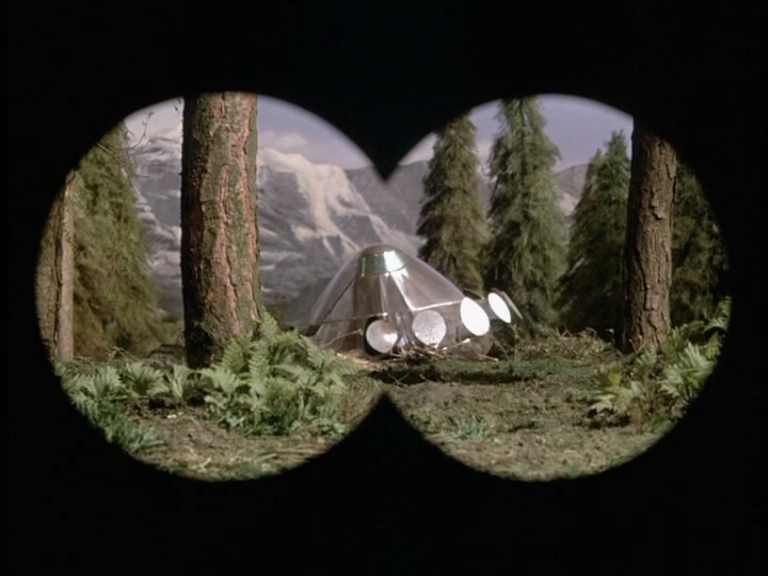
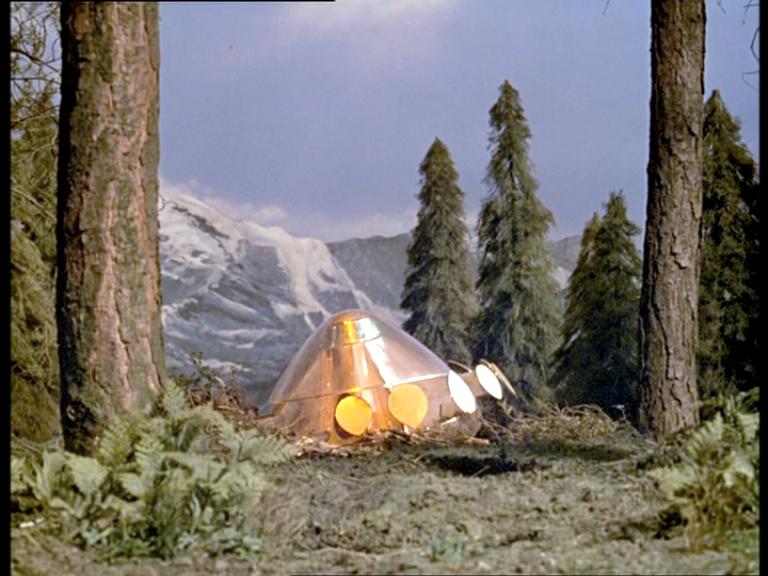
Below is the well known crash landed UFO from Computer Affair.The UFO model was designed by special effects supervisor Derek Meddings.There were many variations of this model constructed around the same basic design.Derek Meddings always conceived of the Flying Saucer to be of something you never quite sure of what you were looking at.A blurred, spinning,flashing,strobing object with ethereal qualities.He took his concept from all the reports and sightings of UFO's from the 1950's and 60's.He also included within it the ability to change shape,hue and colour.At times it almost appeared to be a different object from what you thought you'd previously seen.I think this emphasised the ingeniousness of its design.However without the input of the superb lighting cameraman Harry Oakes (someone hardly ever mentioned in books about UFO) Derek Meddings and his team could not have produced the undouted brilliant effects they did.
|
|
|
|
 |
|
|
 |
|
|
|
|
 |
|
|
 |
|
|
|
|
|
|
 |
|
|
|
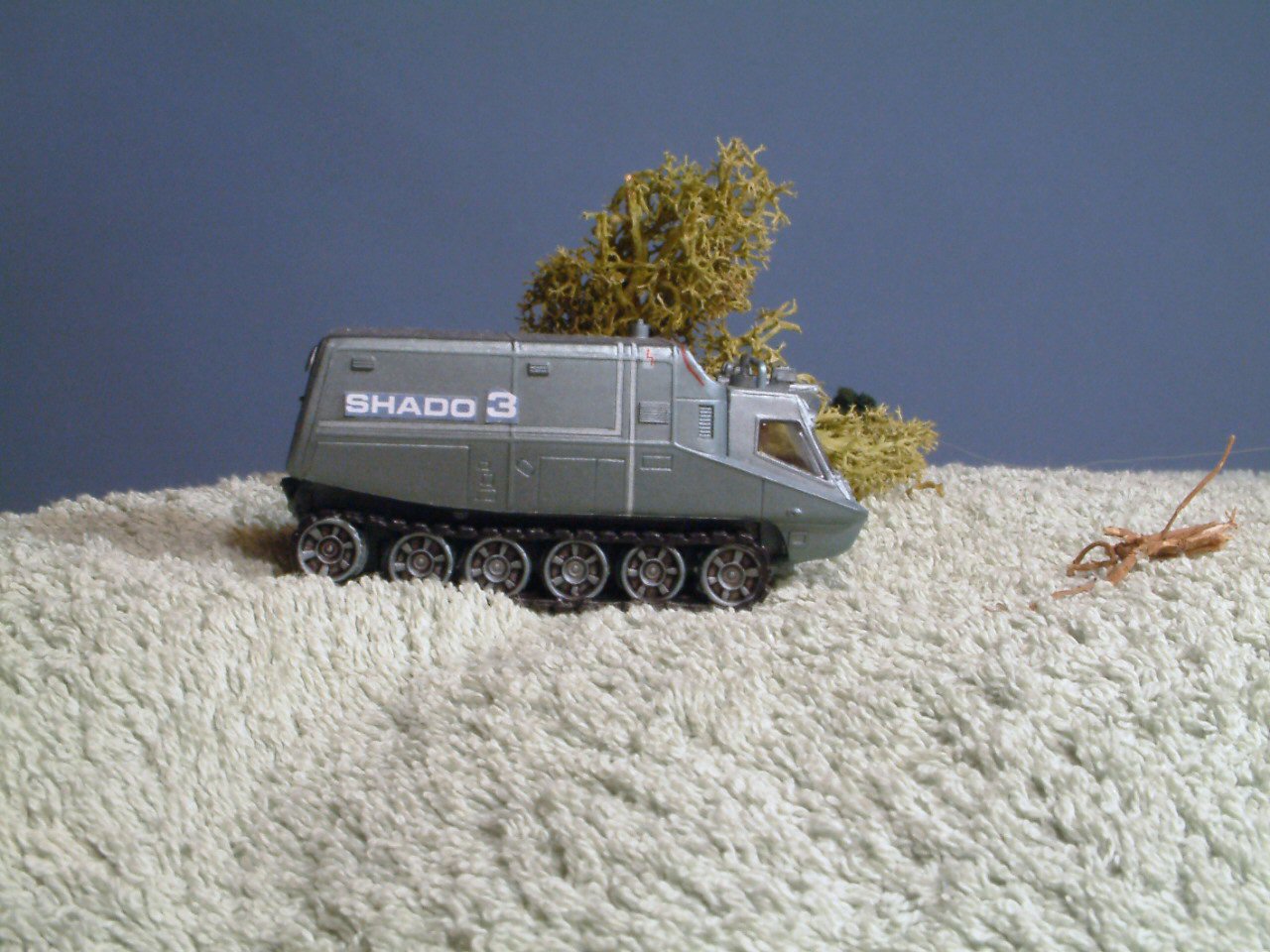
Shado Mobile 3 closes in on UFO |
|
|
|
|
|
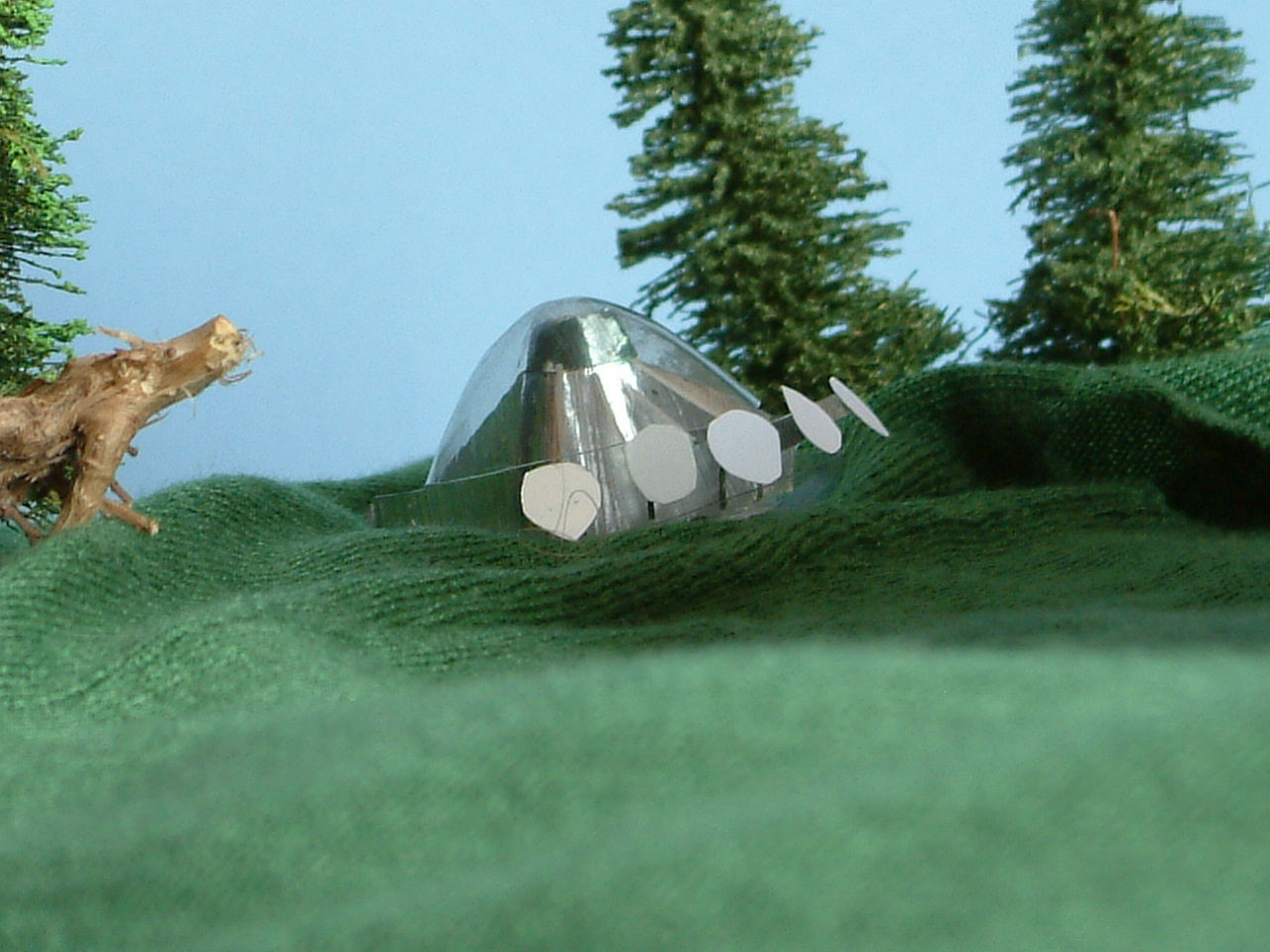
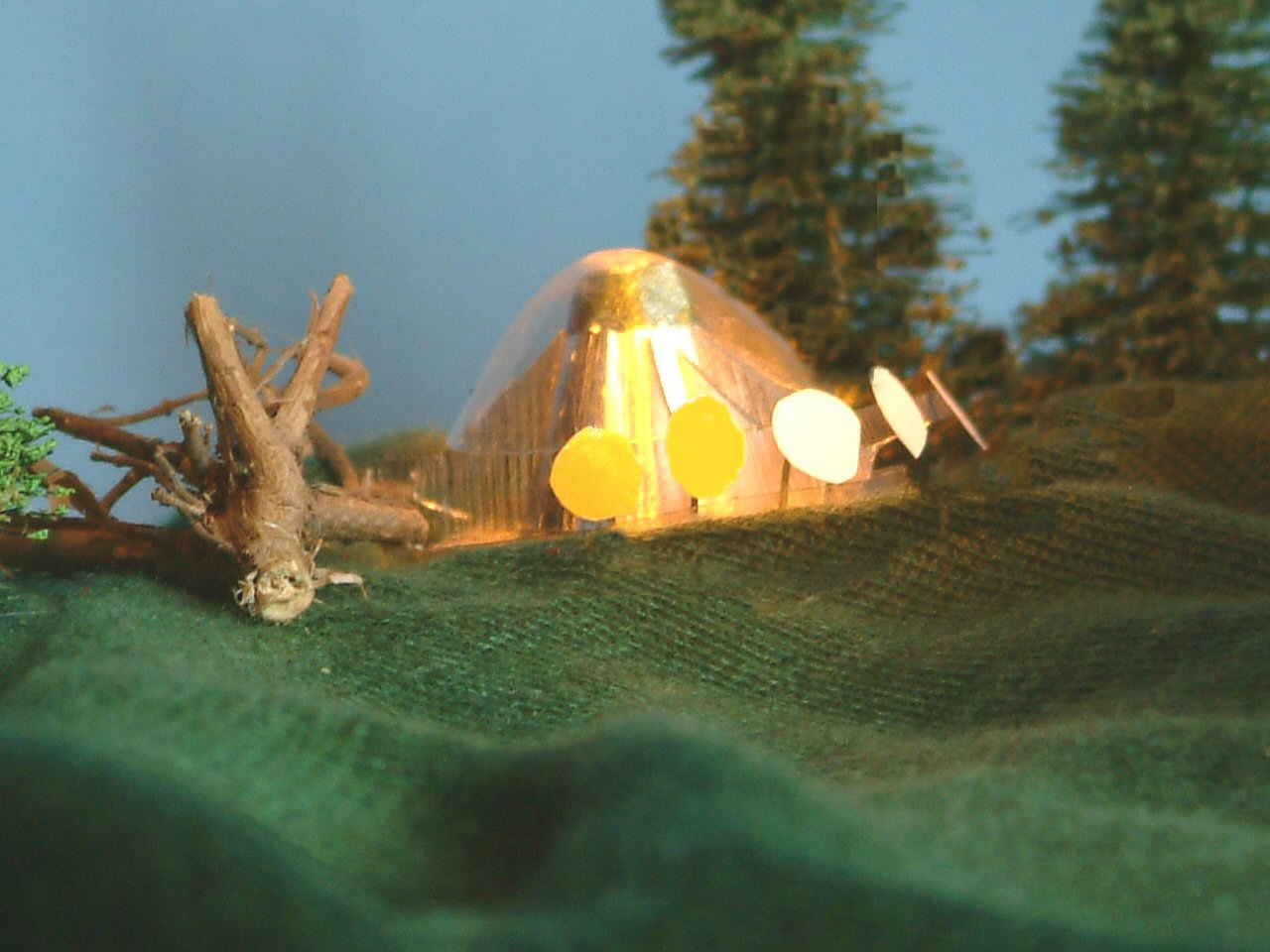
Bear in mind the terrain is only representative.The model itself was made according to the miniature UFO model instructions on the SHADO and FABGEAR websites.Anyone who has been looking at this website over the last few months will know that I have been trying to re-create the various Model UFO effects from the series produced by Derek Meddings and his team.These interpretations, and the one on the next page are the first .I am taking each effect in order.As the crash landed UFO is first to be seen (in the title sequence) I have concentrated on that effect first.Next will be the well known spinning UFO that moves toward the camera (again in the title sequence).
The representations were acheived fairly straightforwardly,with daylight coming in through
a large bay window in a spare bedroom.However the alien craft was difficult and fiddly to get into exact position in terms of profile and best lighting.But after completing the set up once it would be fairly easy to re-produce the effect again.
Flags (coloured paper or card) was used to reflect light back onto the disks,so as to make them stand out.
A small model is being used (50mm diameter) due to a practical problem called the space,size lighting ratio.Which is a technical way of saying that everything needed to be
slimmed down to cater for the use of simple lighting setups (daylight,reflectors and domestic lamps) and the amount of room available.Given a larger model of say over 3 ins in diameter the amount of space and additional light required to produce the same effect would increase dramatically.Over the page this concept is explained in a little more detail.
|
|
|
|
Home |
|
Next |
|
|
|