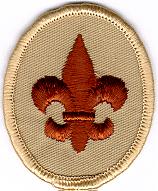
SCOUT
SCOUT
1.Meet age requirements. Be a boy
who has completed the fifth grade or is 11 years old, or has earned the
Arrow
of Light Award but is
under 18 years old.
2.Complete a Boy Scout application
and health history signed by your parent or guardian.
3.Find a Scout troop near your home.
4.Repeat the Pledge of Allegiance.
5.Demonstrate the Scout sign,
salute,
and handshake.
6.Demonstrate tying the square knot
(a joining knot).
7.Understand and agree to live by
the Scout Oath or promise, Law, motto, and slogan, and the Outdoor Code.
8.Describe the Scout badge.
9.Complete the pamphlet exercises.
With your parent or guardian, complete the exercises in the pamphlet
How
to Protect Your Children
from Child Abuse: A
Parent's Guide
10.Participate in a Scoutmaster
conference.
Turn in you r Boy Scout application and health history form signed by
your
parent or guardian,
then participate in
a Scoutmaster conference.
TENDERFOOT
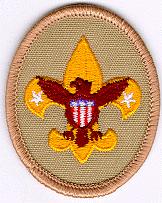
The requirements for the Tenderfoot Scout rank were revised effective April 1, 1999.
NOTE: These requirements may be worked on simultaneously with those
for Second Class and First Class; however,
these ranks must be earned in sequence.
1.Present yourself to your leader, properly dressed,
before
going on an overnight camping trip. Show the camping
gear you will use. Show the right way to pack
and carry it.
2.Spend at least 1 night on a patrol or troop campout.
Sleep in a tent you have helped pitch.
3.On the campout, assist in perparing and cooking one
of your patrol's meals. Tell why it is important for each patrol
member to share in meal preparation and
cleanup,
and explain the importance of eating together.
4.
a.Demonstrate how to whip
and fuse the ends of a rope.
b.Demonstrate you know how
to tie the following knots and what their uses are: two half hitches
and
the tautline hitch.
5.Explain the rules of safe hiking, both on a highway
and cross-country, during the day and at night. Explain what to do if
you
are lost.
6.Demonstrate how to display, raise, lower, and fold the
American flag.
7.Repeat from memory and explain in your own words the
Scout Oath, Law, and slogan.
8.Know your patrol name, give the patrol yell, and
describe
your patrol flag.
9.Explain why we use the buddy system in Scouting.
10.
a.Record your best in the
following tests: Pushups, Pull-ups, Sit-ups, Standing long jump, 1/4
mile
run/walk.
b.Show improvement in the
activities listed in requirement 10a after practicing for 30 days.
11.Identify local poisonous plants; tell how to treat for
exposure
to them.
12.
a.Demonstrate the Heimlich
maneuver and tell when it is used.
b.Show first aid for the
following:
Simple cuts and scratches,
Blisters on the hand and foot,
Minor burns or scalds (first degree),
Bites and stings of insects and ticks,
Poisonous snakebite,
Nosebleed,
Frostbite and Sunburn
13.Participate in a Scoutmaster conference.
14.Complete your board of review.
NOTE: Alternate requirements for the Tenderfoot rank are available
for
Scouts with physical or mental disabilities if they meet the criteria
listed on page 6 of the 1995-97 Boy Scout Requirements book. No. 33218
(See article entitled: Alt. Reqs.for Tenderfoot Second Class and
First Class Ranks)
SECOND CLASS
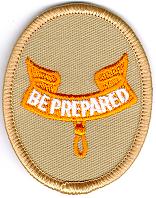
The requirements for the Second Class rank were revised effective April 1, 1999.
NOTE: These requirements may be worked on simultaneously with those
for the Tenderfoot and First Class ranks;
however these ranks must be earned in sequence.
1.
a.Demonstrate how a compass
works and how to orient a map. Explain what map symbols mean.
b.Using a compass and a
map together, take a 5-mile hike (or 10 miles by bike) approved by your
adult leader
and your parent
or guardian.*
(* If you are
using a wheelchair or crutches, or if it is difficult for you to get
around,
you may substitute "trip" for "hike" in this
requirement.)
2.
a.Since joining, have
participated
in five separate troop/patrol activities (other than troop/patrol
meetings),
two of which included
camping
overnight.
b.On one of these campouts,
select your patrol site and sleep in a tent that you pitched.
c.On one campout,
demonstrate
proper care, sharpening, and use of knife, saw, and ax, and describe
when
they should be used.
d.Use the tools listed in
requirement 2c to prepare tinder, kindling, and fuel for a cooking
fire.
e.Discuss when it is
appropriate
to use a cooking fire and a lightweight stove. Discuss the safety
precedures
for using both.
f.Demonstrate how to light
a fire and a lightweight stove.
g.On one campout, plan and
cook over an open fire one hot breakfast or lunch for yourself,
selecting
foods from the four basic
food groups.
Explain the importance of good nutrition. Tell how to transport, store,
and prepare the foods you selected.
3.Participate in a flag ceremony for your school,
religious
institution, chartered organization, community, or troop activity.
4.Participate in an approved (minimum of 1 hour) service
project.
5.Identify or show evidence of at least 10 kinds of wild
animals (birds, mammals, reptiles, fish, mollusks) found in your
community.
6.
a.Show what to do for
"hurry"
cases of stopped breathing, serious bleeding, and internal poisoning.
b.Prepare a personal first
aid kit to take with you on a hike.
c.Demonstrate first aid
for the following:
Object in the eye
Bite of a suspected rabid animal
Puncture wounds from a splinter, nail, and fish hook
Serious burns (second degree)
Heat exhaustion
Shock
Heatstroke, dehydration, hypothermia, and hyperventilation.
7.
a.Tell what precautions
must be taken for a safe swim.
b.Demonstrate your ability
to jump feetfirst into water over your head in depth, level off and
swim
25 feet on the surface, stop, turn
sharply, resume
swimming, then return to your starting place. **
(** This
requirement
may be waived by the troop committee for medical or safety reasons.)
c.Demonstrate water rescue
methods by reaching with your arm or leg, by reaching with a suitable
object,
and by throwing lines
and objects.
Explain why swimming rescues should not be attempted when a reaching or
throwing rescue is possible, and explain
why and how
a rescue swimmer should avoid contact with the victim.
8.Participate in a school, community, or troop program
on the dangers of using drugs, alcohol, and tobacco, and other
practices
that could
be harmful to your health. Discuss your
participation
in the program with your family.
9.Demonstrate scout spirit by living the Scout Oath
(Promise)
and Scout Law in your everyday life.
10.Participate in a Scoutmaster conference.
11.Complete your board of review.
NOTE: Alternate requirements for the Second Class rank are available
for Scouts with physical or mental disabilities if they meet the
criteria
listed on page 6 of the 1995-97 Boy Scout Requirements book. No. 33218
(See article entitled: Alt. Reqs.for Tenderfoot Second Class and
First Class Ranks)
FIRST CLASS
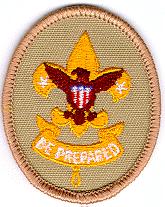
The requirements for the First Class rank were revised effective April 1, 1999.
NOTE: These requirements, and those for Tenderfoot and Second Class
may be worked on simultaneously; however
these ranks must be earned in sequence.
1.Demonstrate how to find directions during the day and
at night without using a compass.
2.Using a compass, complete an orienteering course that
covers at least 1 mile and requires measuring the height
and/or width of designated items (tree, tower,
canyon, ditch, etc.)
3.Since joining, have participated in ten separate
troop/patrol
activities (other than troop/patrol meetings), three of
which included camping overnight.
4.
a.Help plan a patrol menu
for one campout - including one breakfast, lunch, and dinner - that
requires
cooking. Tell how the menu
includes the
four basic food groups and meets nutritional needs.
b.Using the menu planned
in reqirement 4a, make a list showing the cost and food amounts needed
to feed three or more boys and
secure the
ingredients.
c.Tell which pans, utensils,
and other gear will be needed to cook and serve these meals.
d.Explain the procedures
to follow in the safe handling and storage of fresh meats, dairy
products,
eggs, vegetables, and other
perishable food
products. Tell how to properly dispase of camp garbge, can, plastic
containers,
and other rubbish.
e.On one campout, serve
as your patrol's cook. Supervise your assistant(s) in using a stove or
building a cooking fire. Prepare the
breakfast,
lunch,
and dinner planned in requirement 4a. Lead your patrol in saying grace
at the meals and supervise cleanup.
5.Visit and discuss with a selected individual approved
by your leader (elected official, judge, attorney, civil servant,
principal,
teacher)
your constitutional rights and obligations
as a U.S. citizen.
6.Identify or show evidence of at least 10 kinds of native
plants found in your community.
7.
a.Discuss when you should
and should not use lashings.
b.Demonstrate tying the
timber hitch and clove hitch and their use in square, shear, and
diagonal
lashings by joining two or more
poles or staves
together.
c.Use lashing to make a
useful camp gadget.
8.
a.Demonstrate tying the
bowline knot and describe several ways it can be used.
b.Demonstrate bandages for
a sprained ankle, and for injuries on the head, the upper arm, and the
collarbone.
c.Show how to transport
by yourself, and with one other person, a person:
from a smoke-filled room
with a sprained ankle, for at least 25 yards.
d.Tell the five most common
signs of a heart attack. Explain the steps (procedures) in
cardiopulmonary
resuscitation (CPR).
9.
a.Tell what precautions
must be taken for a safe trip afloat.
b.Successfully complete
the BSA swimmer test. *
(* This
requirement
may be waived by the troop committee for medical or safety reasons.)
c.Demonstrate survival
skills
by leaping into deep water wearing clothes (shoes, socks, swim trunks,
long pants, belt, and
long-sleeved
shirt). Remove shoes and socks, inflate the shirt, and show that you
can
float using the shirt for support. Remove
and inflate
the pants for support. Swim 50 feet using the inflated pants for
support,
then show how to reinflate the pants while
using them for
support. *
(* This
requirement
may be waived by the troop committee for medical or safety reasons.)
d.Withe a helper and a
practice
victim, show a line rescue both as tender and rescueer. (The practice
victim
should be
approximately
30 feet from shore in deep water.)
10.Demonstrate scout spirit by living the Scout Oath (Promise)
and Scout Law in your everyday life.
11.Participate in a Scoutmaster conference.
12.Complete your board of review.
NOTE: Alternate requirements for the First Class rank are available
for Scouts with physical or mental disabilities if they meet the
criteria
listed on page 6 of the 1998 Boy Scout Requirements book. (No. 33218)
STAR
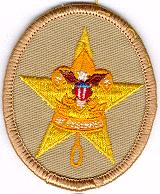
The requirements for Star Scout rank were revised effective April 1, 1999.
1.Be active in your troop or patrol for at least 4
months
as a First Class Scout.
2.Demonstrate scout spirit by living the Scout Oath
(Promise)
and Scout Law in your everyday life.
3.Earn six merit badges, including four from the required
list for Eagle. *
(* The required list for Eagle has 15 merit
badges in 12 categories. Any of the 15 may be used for this
requirement.)
4.While a First Class Scout, take part in service projects
totaling at least 6 hours of work. These projects must be
approved by your Scoutmaster.
5.While a First Class Scout, serve actively 4 months in
one or more of the following positions of responsibility (or carry out
a
Scoutmaster-assigned leadership project to
help the troop):
Boy Scout troop. Patrol leader, assistant
senior patrol leader, senior patrol leader, troop guide, den chief,
bugler,
scribe, librarian,
historian, quartermaster, junior assistant
scoutmaster, chaplain aide, instructor, or Venture crew chief.
Varsity Scout team. Captain, cocaptain,
program
manager, squad leader, team secretary, librarian, quartermaster,
chaplain
aide,
instructor, or den chief.
6.Take part in a Scoutmaster conference
7.Complete your board of review.
LIFE
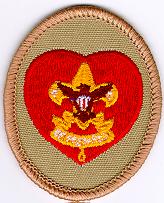
The requirements for Life rank were revised effective April 1, 1999.
1.Be active in your troop or patrol for at least 6
months
as a Star Scout.
2.Demonstrate Scout spirit by living the Scout Oath
(Promise)
and Scout Law in your everyday life.
3.Earn five more merit badges (so that you have 11 in
all), including any three more from the reqired list for Eagle.
4.While a Star Scout, take part in service projects
totaling
at least 6 hours of work. These projects must be approved
by your Scoutmaster.
5.While a Star Scout, serve actively 6 months in one or
more of the positions of responsibility listed in requirement 5
for Star Scout (or carry out a
Scoutmaster-assigned
leadership project to help the troop).
6.Take part in a Scoutmaster conference
7.Complete your board of review.
EAGLE
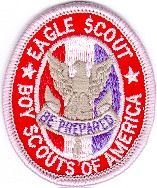
The requirements for the Eagle Scout rank were revised effective April 1, 1999.
1.Be active in your troop or patrol for at least 6
months
as a Life Scout.
2.Demonstrate Scout spirit by living the Scout Oath
(Promise)
and Scout Law in your everyday life.
3.Earn a total of 21 merit badges (10 more than you
already
have), including the following:
a.First Aid
b.Citizenship in the
Community
c.Citizenship in the Nation
d.Citizenship in the World
e.Communications
f.Personal Fitness
g.Emergency Preparedness
OR Lifesaving*
h.Environmental Science
i.Personal Management
j.Swimming OR Hiking
OR Cycling*
k.Camping, and
l.Family Life.
(* You must choose only one merit badge listed
in items g and j. If you have earned more than one of the badges listed
in items g and j,
choose one and list the remaining badges to
make your total of 21.)
4.While a Life Scout, serve actively for 6 months in one
or more of the following positions of responsibility:
Boy Scout troop. Patrol leader, assistant
senior patrol leader, senior patrol leader, troop guide, den chief,
scribe,
librarian, historian,
quartermaster, junior assistant Scoutmaster,
chaplain aide, instructor, or Venture crew chief.
Varsity Scout team. Captain, cocaptain,
program
manager, squad leader, team secretary, librarian, quartermaster,
chaplain
aide,
instructor, or den chief.
5.While a Life Scout, plan, develop, and give leadership
to others in a service project helpful to any religious institution,
any
school, or your
community. (The project should benefit an
organization other than Boy Scouting.) The project idea must be
approved
by your
Scoutmaster and troop committee and approved
by the council or district before you start. You must use the Life to
Eagle
Packet, BSA
Publication No. 18-927, in meeting this
requirement.
6.Take part in a Scoutmaster conference.
7.Successfully complete an Eagle Scout board of review.