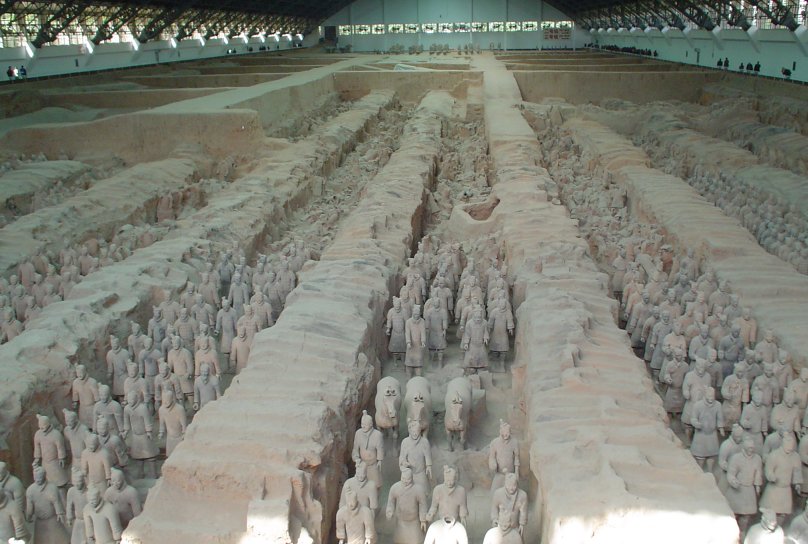
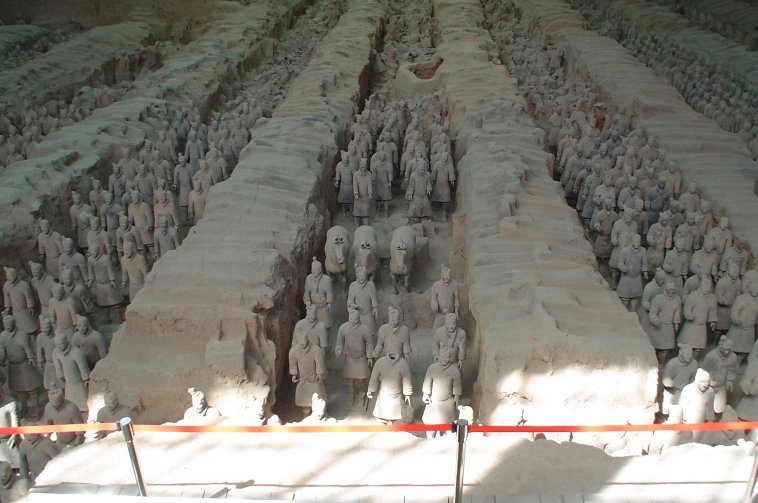
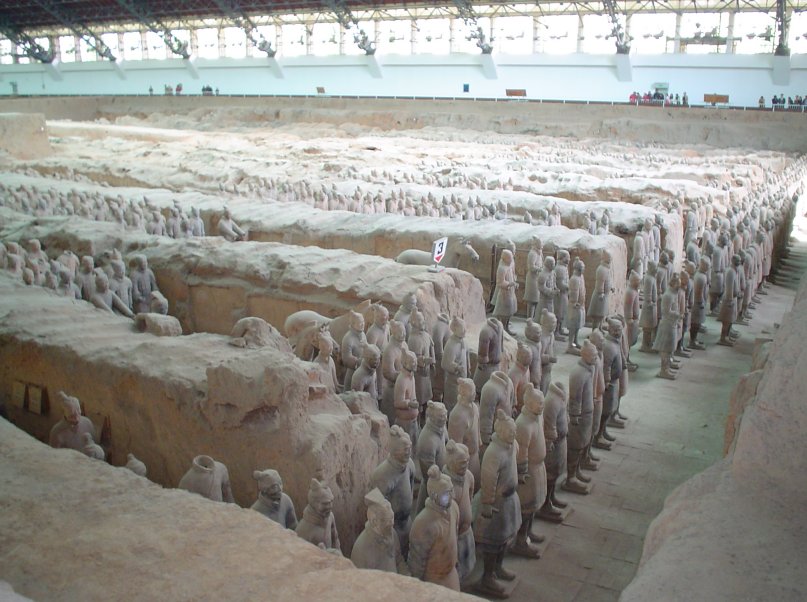
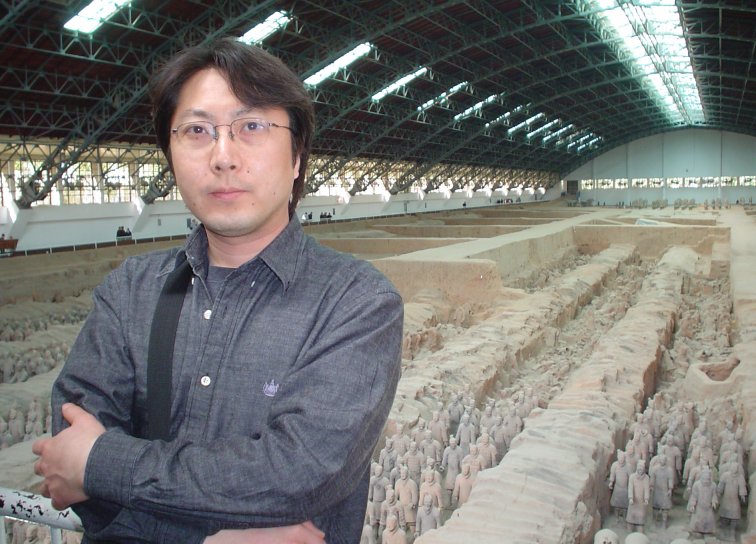
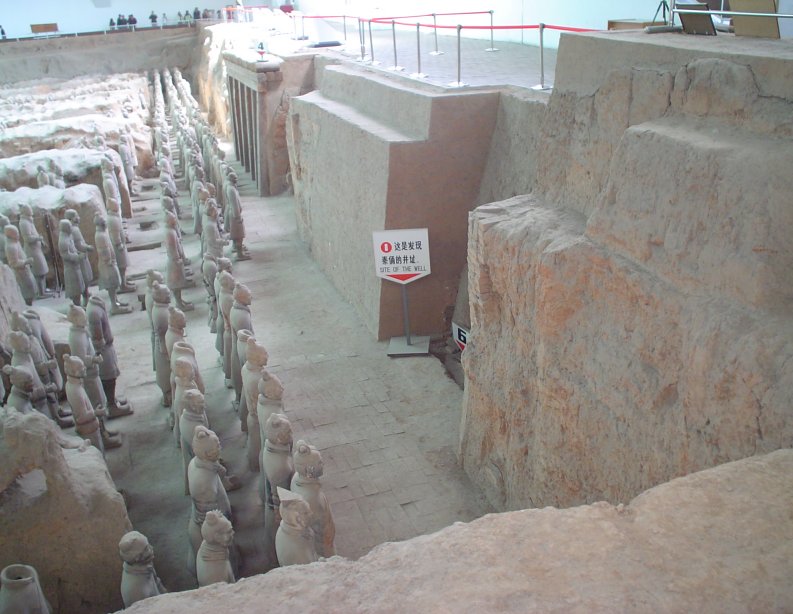
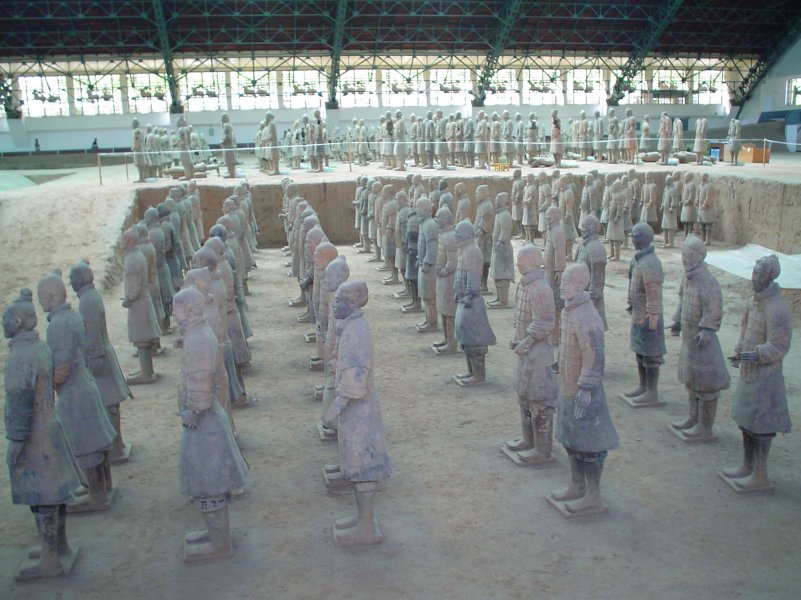
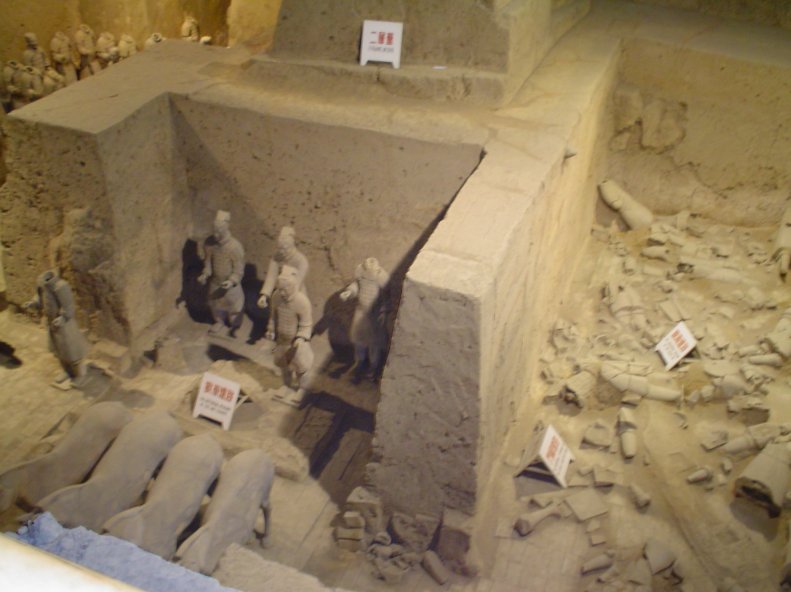
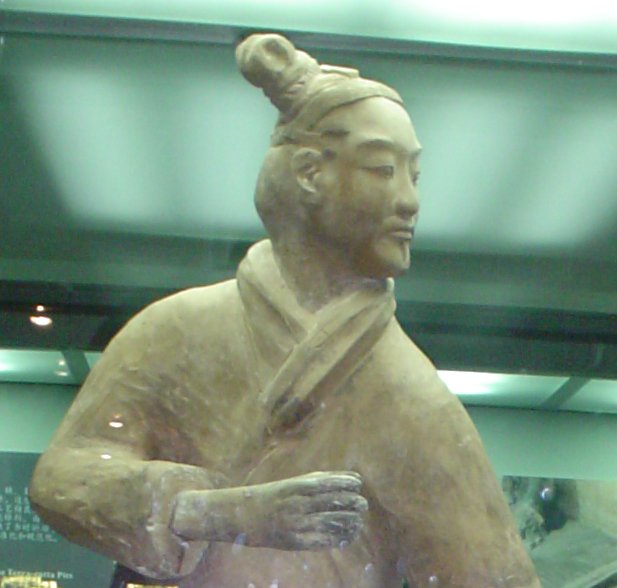
The 2,000 year old Terracotta Warriors were discovered in 1974 by a farmer digging a well. I can't remember the man's name, but we saw him in the souvenir shop signing books. The pit he discovered measures about 210m by 60m (read "friggin' huge"), and is home to 6,000 life-size figures (warriors and horses). They all have unique faces, too, which makes them appear even more real. They were also originally painted, but the paint oxidized when the site was excavated.
In 1976, two more pits were discovered, one containing 1000 figures and the other 68 figures. That's a total of 7,068 figures... but archaeologists believe there are probably more of these dudes still underground!
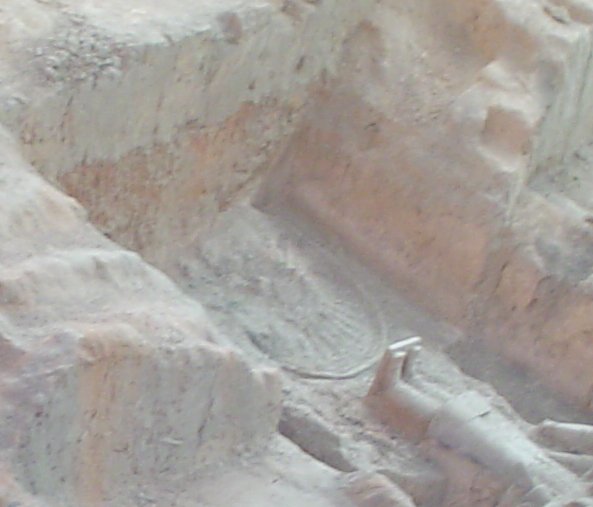
The thick walls between each row of warriors exist because these were originally underground tunnels covered with logs and straw mats (you can still see where the logs used to rest on top of the walls). You can also see wheel imprints, indicating that these guys also had some wooden chariots down there with them.
From what I have read, the Warriors were constructed for Emperor Qin Shihuang to protect him in the afterlife.
The Terracotta Warriors
Some of the warriors were holding weapons at one time. That's why their hands are curled.
Archaeologists couldn't find all pieces to each figure. That's why some warriors have no heads.
Here's one of the archaeologists. (Just kidding)
The sign says "Sight of the Well." That's where the farmer made his discovery.
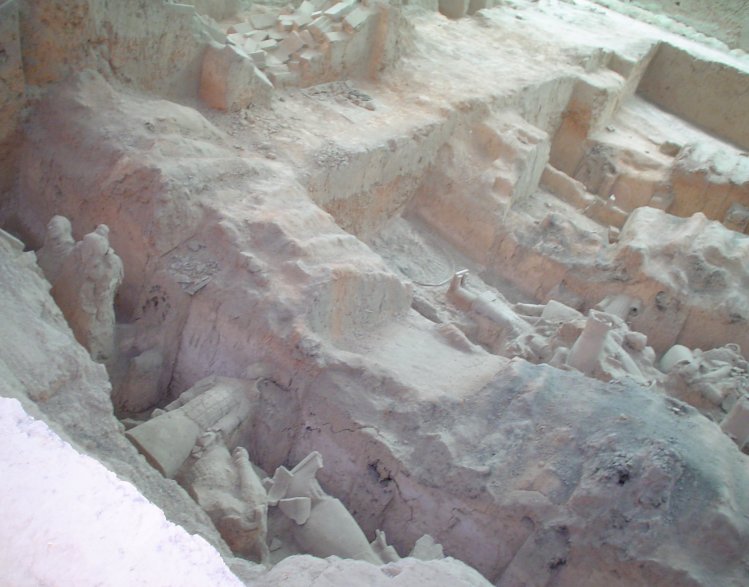
The figures were originally found smooshed, and not all of them have been put back together.
Can you see the imprint of the chariot wheel?
One of the smaller pits
This warrior was inside a glass case in the museum. He is called "The Standing Archer." Here you can see a close-up of what the warriors' faces looked like.
The Tomb of Qin Shihuang
The emperor who ordered this army to be built was buried about 1.5km west of the Terracotta Warriors site. His name was Ying Zheng (Qin Shihuang, which means "First Emperor of the Qin Dynasty," was just his title), and he died in 210 BC.
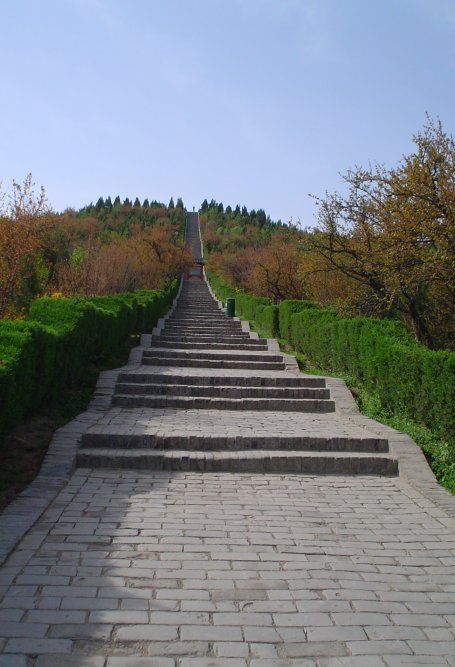
Tourists can visit the mound where the emperor is buried, but it isn't possible to go into the tomb itself. Why? First of all, they say it's boobie-trapped with arrows and other things set to kill anyone who enters the tomb. Secondly, if archaeologists are not careful about how the tomb is opened, its contents will likely turn to dust upon exposure to the air. Realiable accounts of what's inside the tomb indicate that we would find gold and silver statues, ceilings lined with pearls, and many other incredible treasures. When the emperor was buried, he would have taken with him everything he'd need in the afterlife. Unfortunately, to this day, science has not come up with a method of getting in there.
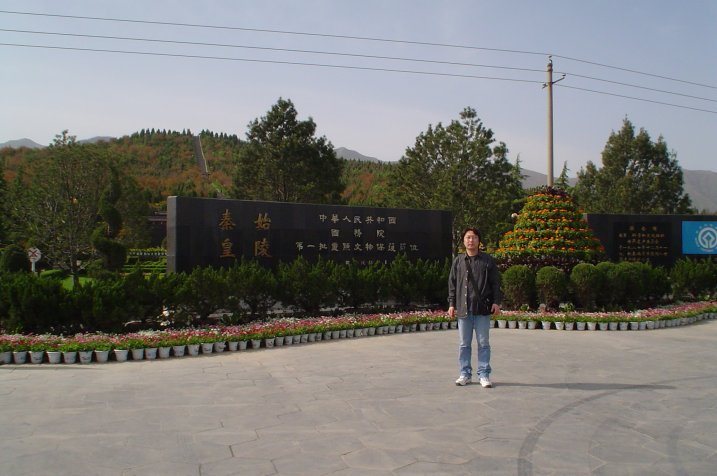
Sangho stands by the entrance
Steps leading up to the top of the mound
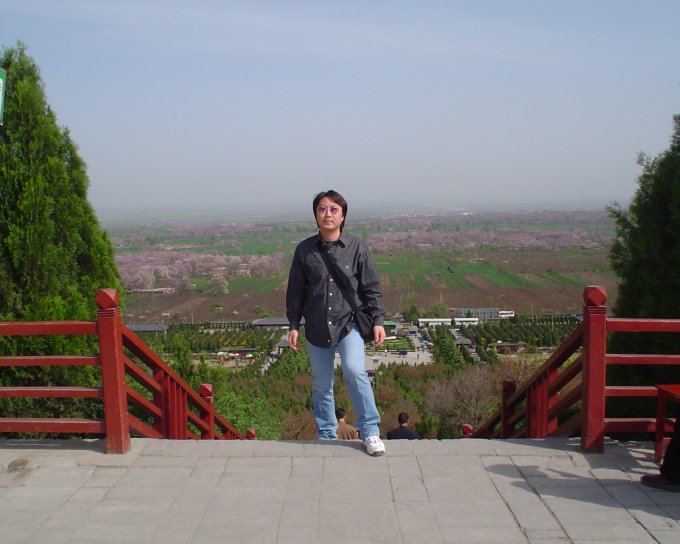
Sangho reaches the top
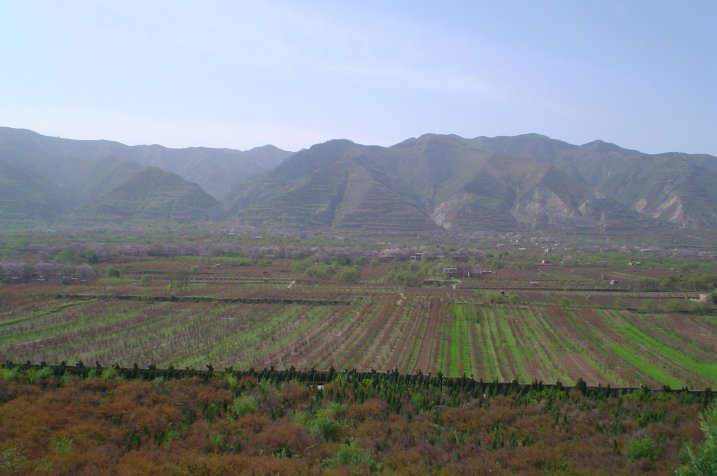
View of the Black Horse Mountains from the top of the mound