Visual Society Presentation
John Fiske's "Shopping for Pleasure: Malls, Power, and Resistance"
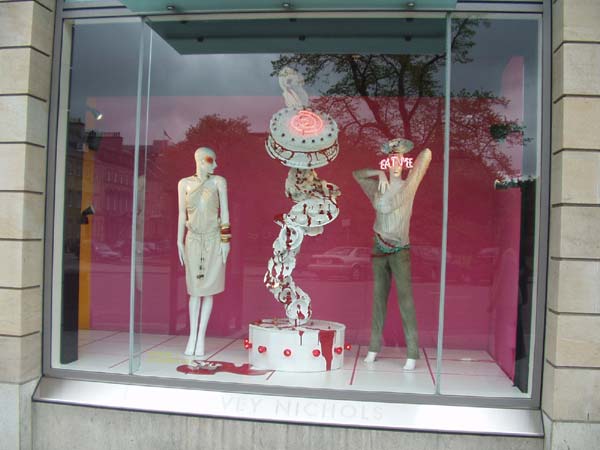
This Harvey Nicholls window display is typical of the "upper class" presentation of the commodity. Sparse but artistic decoration highlight the unique nature of the commodities being offered, and the store is not visible through the window. This mode of presentation offers a "consumer utopia" where the consumer gains individuality, is placed "in the spotlight," as it were, by the consumption of the proffered commodity.

This shop window is directed instead towards the middle class. This window does not place emphasis on the commodity itself- rather, the consumer is meant to buy into the idea that the purchase of a commodity (in this case the bathing suit) will make him part of a desirable group (i.e. physically attractive men). This is typical of the particular "consumer utopia" pitched to the middle classes... the idea that one might have the individuality of wearing a slightly different bathing suit, but will still fit in to a larger group of individuals with similar taste and values. The difference between displays aimed at the middle class vs. the upper class is, as Fiske says, "in theatrical terms, the difference between lighting the star and lighting the chorus line" (326).

This third shop window is typical of a shop on the lowest level on the consumer food chain. This window of a typical grocery or card shop pitches a simple and very accessible bill of goods... a pleasurable food experience of the most universal kind, combined with the warm, fuzzy feelings associated with valentines day. The shop behind the window display is fully visible, further highlighting the shop's universal accessibility.