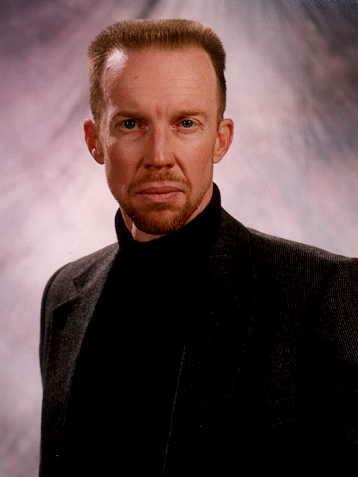
April 2006
(Simply Absorption, Rejection, and Addition By Zion Hawkins)
Think back before you started training; when you were provoked,
you got angry. Your muscles tightened, and your fists clenched. Then,
you swung your arm, momentum and velocity carried your arm and force
caused a collision. You were guided by instinct. When you first got
into training, you were told to "stand like this", "put your foot
here", and to "punch like this". So, then, you were guided by system.
However, in martial arts, there must be a sense of freedom. A
conditioned mind is never free. Conditioning limits a person within
the frame work of a particular system. Art reaches its highest
potential when it lacks self consciousness, so freedom is discovered
once one loses concern over what impression he is trying to make, and
allows instinct to move him, guided by purpose.
"When one is not expressing himself; he is not free." � Bruce Lee.
To be complete in martial arts, one must combine instinct with
purpose. The martial art Jeet Kune Do does this.
Jeet Kune Do was developed in 1967 by the late Bruce Lee. Jeet
Kune Do (JKD) "The Way of the Intercepting Fist ", was designed to
break away from traditional styles and systems.
"Most traditional instructors say, `Well, two hundred years ago it
was taught like this, therefore�' you know? To still maintain that
type of attitude, you've had it! I mean, you will never grow because
learning is a discovery thing; it's a constant discovery thing.
Whereas if we follow the old method, it is a continuous repetition of
what was being handed down several hundred years ago." � Bruce Lee.
Classical forms tend to dull one's creativity, and obstruct your
sense of freedom. You no longer "be", you merely "do".
Having "no way as way", JKD is not a style, but a system into
which any number of styles may be incorporated to suit the
practitioner's particular needs and wants.
" Jeet Kune Do favors formlessness so that it can assume all forms
and since Jeet Kune Do has no style, it can fit in with all styles.
As a result, Jeet Kune Do utilizes all ways and is bound by none and,
likewise, uses any techniques or means which to serve its end." -
- Bruce Lee.
Jeet Kune Do isn't limited by attachments, confinements,
partialization, or complexities. To understand JKD, you should throw
away all ideals, patterns and styles; in fact, you should throw away
the very concepts of what is or isn't ideal for Jeet Kune Do.
" Empty your mind, be formless, shapeless, like water. Now you put
water into a cup, it becomes the cup. You put water into a bottle, it
becomes the bottle. You put water into a teapot, it becomes the
teapot. Now water can flow, or it can crash! Be water, my friend" �
Bruce Lee.
Allow me to clarify. Some people like Tae Kwon Do, however, not
everyone is suited for Tae Kwon Do. If a Tae Kwon Do practitioner
wants to learn to grapple and throw his or her opponent, what then?
That person would have to learn a grappling art. So then they learn
Judo. Now, they have all the techniques for striking (TKD) and
techniques for grappling ( Judo). But do they truly need every
technique presented? One aspect of JKD is simply to simplify.
"Don't be like the potter who adds on technique; instead, be like the
sculptor who hacks away to reveal the essential." � Bruce Lee.
"The art of Jeet Kune Do is simply to simplify. Jeet Kune Do avoids
the superficial, penetrates the complex, goes to the heart of the
problem and pinpoints the key factors. Empty your cup that it may be
filled; become devoid to gain totality." � Bruce Lee.
Having totality means being capable of following "what is",
because "what is" is constantly moving and changing. If one is
anchored to a particular view, one will not be able to follow "what
is". "When there is freedom from mechanical conditioning, there is
simplicity." � Bruce Lee.
A true Jeet Kune Do artist absorbs what is useful, rejects what is
useless, and adds what is his own. Take the martial artist mentioned
above, they use Tae Kwon Do for striking and Judo for grappling; but
only the techniques of each art that suit that person.
"I think the highest state of martial art, in application must have
no absolute form. And, to tackle pattern A with pattern B may not be
absolutely correct. I feel that a martial artist should not be
limited by one form. That will produce the wrong idea, thinking that
certain pattern will achieve the same result in fighting as in
practice." � Bruce Lee.
Once you absorb what is useful, reject what is useless, and add what
is your own, you break away from traditional styles and thinking.
Once you do this, you become formless, and while formless you adhere
to no set way of thinking, constantly growing and learning, one
strives to be complete, not only as a martial artist but as an artist
of life.
"The classical man is just a bundle of routine, ideas, and tradition.
If you follow the classical pattern, you are understanding the
routine, the tradition, the shadow � you are not understanding
yourself." � Bruce Lee.
"Understanding oneself happens through a process of relationships�
understanding comes through feeling, from moment to moment" � Bruce
Lee.
"Truth is relationship with the opponent; constantly growing, living,
never static." � Bruce Lee.
"To know thyself is to be in action with another person." � Bruce
Lee.
"Knowledge is fixed in time, whereas, knowing is continual. Knowledge
comes from a conclusion, while knowing is a movement."�Bruce Lee.
"Truth is relationship with the opponent; constantly growing, living,
never static." � Bruce Lee.
"There is no fixed teaching. All I can provide is an appropriate
medicine for a particular ailment." � Bruce Lee.
By
Zion Hawkins
May 2006
The Stick/ Blade Combat & Health Pt. 1 By Eric Harris
I have a great a great deal of respect for all those who are students of the blade and swordsmanship out there. However some people would say that sword has place in modern fighting, having a stick or double sticks is a lot more practical. When is the last time you saw someone carrying a sword on the street? The art of Escrima can be useful to a swordsman simply because they are interchangable. The same principles that a swordsman is taught are also taught to an Escrimador (A practioner of Escrima) For example I've sparred with several of my friends who are accomplished swordsmen and I've held my own and at times I even win. Swords are illegal to carry on the street, however sticks are not why do you think Police officers and other law enforcement personel use them ?A lot of swordsmen often use flashy moves that would not be effective in a street fight. Many Escrimadors of today have have forgotten that Escrima/Kali started as a blade art. The late Pressor Remy Presas Sr. was one of the greatest Escrima teachers on earth and he was able make the transition in the blink of an eye. His legacy continues under the watchful eyes of his family and instructors such as Datu Worden and countless others. My personal experiences with Escrima has improved my quality of life. I suffer from a limited range of motion and fine motor skills. I could barely hold a drinking glass for years with my hands aching. Slow repeated practice of Escrima and blade arts over the past 7 or 8 years has helped increase that as well as my co-ordination. My day to day living and combat skills have been enhanced thanks to Escrima and now I hope to pass the benefits on to others.
By,
Eric Harris
June 2006
The Stick/ Blade Combat and Health Pt. 2 by Dustin Piper
My name is Dustin Piper I am 24 years old. I have a mild case of Cerebral Palsy, or CP. I have limited to no use of my right hand. Therefore, I'm Left-Handed. I'm also visually impaired. I've been practicing Escrima about four years. I first met Eric Harris back in mid 2002 when I was a student at The Roosevelt Warm Springs Institute for Rehabilitation. I was bullied by a few students so I enrolled in Eric�s Black-Talon Escrima program. I wasn�t sure if I�d be able to do it because I had done another martial art and it didn�t work for me. Eric taught the basic self defense strikes and blocks as well (if necessary). I picked up Escrima very quickly. Eric was surprised at how fast I learned it. He also taught me how to use my cane as if it was an Escrima with the same strikes and blocks. The cane was a little more difficult to use because it was longer, but I learned how to use it. Therefore, I feel that Black- Talon Escrima is a very effective art. If I can do it, anyone can.
By,
Dustin Piper
July 2006
Stick/ Blade Combat & Health Pt. 3 By Laura Gaskin
I have been a student of Black Talon since early 2004. I was born with epilepsy and a learning disability. I had never taken a martial arts class nor done any type of fitness program. I receive a workout plan every week via email that Eric designed specifically for my needs. I have a concentration as well as a confidence problem so Eric began by teaching me meditation He is an awesome meditation teacher. The meditation techniques I have learned from Black Talon have helped me to control my anger and other emotional issues. I listen to soothing music everyday during my meditation session. Black Talon is also an amazing cardiovascular workout. Every punch and/or kick as well the running and flexibility training gets my blood pumping like never before. As a woman I am seen by criminals as an easy target, but Black Talon prepares me if a situation arises.
By,
Laura Elizabeth Gaskin
August 2006
Street Attacks and Street Protection By Eric Harris
World renowned Jeet Kune Do instructor and street-fighting guru Paul Vunak once said, �When you are faced with a violent opponent and imminent physical danger, you should hit first and make it count." Katas and forms have no place in a street fight and will usually get a person seriously injured or killed. In violent or deadly situations an attacker often strikes quickly. The victims of such attacks often freeze up with fear of them or their families being killed. A person being attacked must strike with the same viciousness and speed. Attackers count on fear being instilled in their targets, but if their targets fight back they�re the ones who end up cowering in fear. WingTsun and Jeet Kune Do and Aikido training teach how to redirect an attacker�s force in a quick manner without having to use brute power. The Black Talon system uses many of the same principles. As a Private Investigator I often meet the victims of violent crimes after the fact and many of them say, �I wish I could�ve fought back!� The truth is in most confrontations the first strike is usually the last strike. If that first strike is fast and to a vital area of the body it will stop an attack cold. However some additional strikes may be necessary to neutralize the attacker. I urge everyone who reads this to go seek a self defense system that works in today�s society.
By,
Eric Harris
September 2006
Overcoming Fear in a Self-Defense Situation by Sensei J. Richard Kirkham B.Sc.
How do you overcome fear in a self-defense situation? Basically you don't, you learn to use the fear instead. Making it a tool that you shape not allowing fear to control you. All fine and dandy, but how do you go about learning how to use fear?
Let's examine what fear is. Fear is an emotional response to stimuli either eternal or internal. Fear has certain physiological responses.
Increased heart rate
Increased respiration
Introduction of epinephrines into the body which constrict capillaries, increase strength and increase speed.
There are various mental responses to fear
Freezing up. Not being able to move at all though your mind may be telling to run, block, fight!
Anger. Anger and fear are very closely related. A reaction to fear of anger will at the very least help you to survive better than freezing up, but it could also inhibit your thought processes and get you killed.
Trained reaction to fear. Your body relaxes, your mind focuses. Adrenaline increases your strength and speed making you a very dangerous individual.
I've personally spent a long time studying fear and it's various physiological and psychological effects on individuals. I've developed a very good method of dealing and working with the fear response, which directly and indirectly over the years has saved my life from avoiding car collisions to defending my life.
There are two different ways of training to use fear.
1. Place yourself in life threatening situations on a regular basis.
This method has the disadvantage of ending your training career at an early start.
2. Place yourself in life threatening situations on a regular basis mentally.
This method has the advantage of extending your training career while at the same time possibly saving your life.
Many martial artists spend their lives learning to block and strike. Going through situation after situation. Attacks from the front attacks from behind, from the side, multiple attackers.
Some martial artists don't even practice these scenarios. Assuming the same defensive reaction from the front will work from the side and from attacks from behind. Some martial arts instructors when asked "what if" by their students will simply say, "just don't put yourself in that position". If that were the answer there would be no need to take self-defense at all. Just don't put yourself in that position.
For those martial artists who do practice situational self-defense training, many of you are not allowing for the mental aspect of a physical attack.
Mental preparedness for a physical attack, I believe, is even more important than the physical side of preparing for an attack. Why do you think it is that a trained martial artist would fear a seasoned street fighter (weird term). Because the street fighter has been in real fights. The few tricks he's picked up to win a street brawl have actually been executed by him under the mental stress of a life and death situation Most martial artists, fortunately, have not had this misfortune.
My Method of Emulating Fear
Let's look back at the physiological effects of fear once again.
Increased heart rate and respiration are two major physiological responses to fear.
A tensing of voluntary muscle groups is another, more so in the untrained individual.
If you emulate these three physiological responses to fear, you will be on your way to emulating it mentally as well.
So first a slight tension of voluntary muscle groups. Now increase your breathing. Short shallow breaths are best to emulate this physiological response.
Now to The Mental Aspect
You need a padded up live partner. For this drill I would often take an air shield and tie it to the front on an advanced student.
You need to have enough mental control to remember to strike only the air shield of your partner.
Now your partner must do some acting as well. He/She must look both in the face and body language as though they intend to hit you and hurt you. Even emulating the foul language you might hear from an attacker in an attempt to intimidate you would help.
Now you put it in your mind that your partner is not your partner. He's a stranger that intends on doing you harm, mugging you, raping, beating you senseless and unless you defend yourself and hit this !@#$ just as hard as you can and don't get hit yourself that's just what's going to happen.
Start with a prearranged attack and counter-attack, but, put it out of your mind that you actually know what's going to happen. Feel the fear and tension before the attack, then block or evade like you mean it, like your life depends on it and counter-attack (eventually at the same time naturally). Takes turns doing this with your partner. Be careful not to get so carried away you hurt him. Remember it's his turn next.
Now from here perform the same mental and physical preparedness and move to my one step sparring variations you can find in my printable ebook Bringing The Martial Artist Out from Within. Continue to strike just the air shield for now.
Now put some pads on and remove the air shield. Do one step variations again. Same mental stress of a real situation, but strike anywhere and pull the technique so you don't hurt your partner.
The combination of striking the air shield full contact and pulling the techniques on your partner when striking anywhere help prepare you both mentally and physically to strike full contact anywhere on your attacker, under the stress of a life threatening situation.
Ready to Become More Dangerous?
Start again with all of your self-defense drills. Emulate your fear for at least 10 seconds to put yourself in a life-threatening mental attitude.
Now consciously relax your muscles. Make your breathing slightly faster than normal to emulate a threat, but make it deeper as well as if you were trying to control rapid breathing.
Now start again and add a mental aspect to begin working with your fear and stress. Begin again with your drills and this time take your fear and turn it into anger. It's not the final solution yet, but it will give you a better chance of survival than being frozen in place solid.
Turning fear into anger takes practice, but isn't that hard to accomplish. As I said earlier the two emotions are very similar. Basically this can be accomplished with an example such as this;
Instead of, "Oh my gosh, this stranger wants to hurt me!"
You change it to something like, "WHAT!? THIS SCUMBAG LOWLIFE WANTS TO HURT ME! I'LL SHOW THIS !@#$!"
Now add your rapid breathing to this and slight muscular tension and remember YOU'RE ANGRY!
Now do your steps to relax and attempt to control your breathing while remaining angry.
After you can successfully emulate anger whenever you want to now take your final step.
Start again with your self-defense drills. Follow all of my above steps, but now empty your mind! Void it of emotion. Let your well trained reflexes from various scenarios take over guided by subtle consciousness and thought. You may need to practice a meditation exercise for this which you can find in my printable ebook Step by Step Learn Internal Energy Strikes with the bonus section Taking Strikes and Coming Back for More.
You must be careful not to hurt your partner during any of these drill phases. Don't forget other scenarios as well adding the fear factor to them as well.
With shoes
Without shoes
Street clothes on
Small space
Large space
Those of you who have read my printable ebook Solo Martial Arts Drills, when you do your 10 minute workout, do you always make sure you have enough room and everything is out of the way? Always? Why? Is that the way it will be if a burglar enters your home.
"Just a minute I have to move this chair"
Do you ever grab a nearby "weapon" (a shoe, a belt, whatever) and begin using it as part of your training?
Think think think.
The more situations you can think of the more you will be ready for as many situations as possible both mentally and physically. To a slightly smaller degree, you can also apply your fear training to your solo drills training as well.
This training method, when done properly, will take a lot out of you. I do not recommend using this method all of the time, but definitely put it in your training schedule and practice the method on a regular basis.
Enjoy,
Sensei J. Richard Kirkham
October 2006
WHERE�S THE JUSTICE ? BY ERIC HARRIS
I�d like to take this month to discuss the plight of World -famous bounty hunter, Duane �Dog� Chapman and his family. Dog, his son Leland and his brother Tim were taken into custody by U.S. Marshals early Thursday, September 14, 2006 in connection with charges stemming from their 2003 arrest of convicted serial rapist, Andrew Luster. Luster drugged and raped countless young women throughout his reign of terror and he would intimidate his victims. He took the most sacred and precious gift away from these young ladies, their innocence. Andrew Luster is no man, he�s scum in its lowest form. What is the world coming to when a man who does those unspeakable acts to women can use wealth and bloodlines to evade the justice system, but the man who�s man enough to bring the bastard back and uphold the law gets busted? The federal government charged Duane and his associates with Deprivation of Liberties, which in layman�s terms means they violated Luster�s civil rights�� In my opinion Andrew Luster lost his civil rights when he violated those young ladies in such a vicious manner. Dog was able to do what the vast resources of two governments could not. If Duane and his associates are convicted for capturing this punk this will be a great miscarriage of justice. SET THE DOG FREE!!!!!!!
By,
Eric Harris
November 2006
Rape Prevention Tips By Luis & Melissa Rivera
Rape is the fastest growing crime in the world today with the US as the country with the highest number of incidents. One of every four women that attend college has been either raped or suffered from an attempted rape. A woman is raped, at a minimum every minute. On average, 1,871 rapes occur every day, however, 85% of all rapes are never reported. It is believed that the number of rapes in the US may be as high as 500,000 per year. These acts of violence are perpetrated against women of all ages (no woman is too young or too old for a rapist). In fact three out of five rapes that occur are against women under the age of 18, while three out of every ten victims are under the age of 11. The frightening part is that of all the rape incidents only 22% are actually done by strangers, while friends, acquaintances and or members of the victim�s family perpetrate the other 78% (usually at someone�s home vs. a dark alley).
As mentioned above, these violent crimes are seldom reported to the authorities. According to rape victims, the reasons for not reporting a rape are as follows; nothing could be done about it (43%), it is a private matter (27%), afraid of how the authorities would respond (12%), it wasn�t important enough (12%). To a victim, the toll of a rape is not limited to the physical aspect of it. 31% of the women that experience this crime will develop Post Traumatic Stress Disorder or PTSD. A woman that has been raped is 8.7 more likely to commit suicide than victims of other crimes. TELL SOMEONE ABOUT IT !!!
The Twelve Commandments of Rape Prevention
1. Stay Alert; be aware of your surroundings and the environment.
2. Any man is a potential rapist.
3. Family, friends and acquaintances are most likely to rape.
4. Exhibited self-confidence is often the best rape prevention.
5. Alcohol consumption figures prominently in rape-drink sparingly.
6. You have the right to dress as provocatively as you please, drink as much as you want, and go wherever you like with whom ever you please. However, all the attention you�ll get by doing this will make you a likely rape victim.
7. Use the two-person rule, �Travel in Pairs.�
8. If you feel ill at ease call the POLICE, or a trusted friend. Trust your intuition, if a guy feels wrong to you, stay away from him.
9. Move through well-lit areas. Rapists hate them, as they don�t want to be seen or recognized.
10. Hang around places where there are people around. Rapists don�t stand a chance with a crowd as witnesses.
11. If assaulted make as much noise as possible get away from the rapist and run away as fast as you can.
12. Whether you decide to resist a rapist is an intensely personal decision that no one can second-guess. There could be situations where you might decide not to resist and allow someone to rape you. It�s your call, and there should be no guilt associated with that decision �You can survive a rape.� Survival is the primary consideration. However, YOU MUST REPORT IT IMMEDIATELY !!
Situational Awareness, Counter-Surveillance, and Safety
(At Home, in the Car and on the Streets)
Situational awareness is been aware of your surroundings and if threatened, to take appropriate actions. Look around and notice people. However, understand that a rapist does not have a diabolic face or a tag that makes him easy to detect or identify. A rapist looks just like any other cat on the streets, always looking for an easy prey. Therefore, the first teaching point on how not to become a victim of a rapist is not to look like an easy target. Body language is very important �Look and act confident.� Again, the bad guys would go for someone that looks like a victim rather than someone that looks like they can and will put up a fight.
If you believe that you are been followed, go to a safe location immediately. Places where you can find a Police Officer such as hospitals, police stations, and government buildings. If a Police Officer cannot be found, ask security personnel to call one. When driving, have your key ready before you walk to your car. If you are shopping, use a shopping cart, and do not approach the car with so many bags in your hands that you cannot see what is going on around you. Check the inside of the car before getting in; keep the doors of the car locked and the windows up. If you have to open a car window, do not open it more than necessary to either get some fresh air in the car, or to talk and or exchange documents with someone. If someone manages to get inside the car, get out and run to the nearest safe location or populated place. However, know where you are running. Don�t help the bad guy by running into a dead end. Make sure to have at least � tank of gas at all times and do not pick up hitchhikers. If you would not stop to pick-up a stranger, you should not stop to help one either? If you see someone in distress on the road, call 911. Let the people that get pay to help them earn their money.
There are many other things you can do to detect if someone is following you either on foot or vehicle. Johnny Walker, the American naval officer convicted of spying for the former Soviet Union, asked his handler for surveillance detection training (he was concern with the FBI following him). His Russian handler in turn advised him to read the �The French Connection,� a book written by Robin Moore. The book is based on the largest narcotics seizure of all time in 1962. In 1971 director, William Friedkin made it into a movie with the same name. Both the movie and the book depict commonsense surveillance detection techniques.
On Foot. In the movie the French Connection, two cops followed the bad guy �Alain Charnier� through Manhattan. Charnier casually does some Window Shopping. He made some Casual Stops along the way, entered the �Rolando Maia Flowers� flower shop and continued to move through a subway station. He went to Grand Central Station and stopped to get something to drink at a fast food stand.
Let�s analyze Charnier�s actions along his stroll through Manhattan. He stopped and did some window-shopping along the way; Charnier used the reflection of the store windows to observe or look for anyone following. Charnier entering the flower shop and stopping for a drink at the train station; by been observant of others, he was able to see people that arrived to the location with him, or soon after. This allowed him to observe their behavior and their actions while at the location (Potential Bad Guys may display unusual behavior such as staring or quickly looking away). He was also able to observe their reaction when he left the flower shop. By doing these things, Charnier began to determine that he was in fact been followed.
Bottom line is that by simply heightening your sense of awareness, and with a little ingenuity, you can detect if someone is in fact following you.
On Vehicle. Detecting if someone is following you by vehicle can also be accomplished while in the conduct of daily routines. For example, if you stop at the bakery on your way home, you can detect someone that is following you by simply observing the actions of vehicles that arrive at the location with you or soon after. Keeping an eye out for the actions of other vehicles during turns, traffic lights, �U�-turns, etc. will assist in the detection of potential Bad Guys.
Grant it, some of these encounters may be just pure coincidence. However, if you suspect that the activities observed might be a BAD GUY following you, then these activities should be treated as such. It is important to remember that an individual that you have observed in multiple occasions may very well be a potential rapist.
Other family members may be able to assist in determining if you in fact are been followed. On the way home, call a family member, have him or her look out the window as you approach the house and try to identify anyone that may be following you. The same applies for when you are leaving the house. When at home, keep doors and windows locked as well as the shades drawn; this will make it hard for the bad guys to determine if you are alone. A pip-hole at the front door is a good thing to have as well as having dead bolts and door jamming devices. Keep the house well lit outside at night and do not let the children answer the door. Do not hide the keys out side the house. If you are leaving the house for a few days, leave the keys with a neighbor. Have him or her turns the outside lights on at night and takes out the garbage on pick-up days. Keep your TVs on a timer, this way it will be harder for the bad guys to figure out if there is or isn�t anyone at home. Install a Security Alarm System. And last but not least, have a male voice message in the answering machine vs. the nice polite female voice that comes with most machines.
Psychological Escape Ploys
Since women are in general physically weaker than men, you must utilize a different kind of strength� USE YOUR INTELLIGENCE! Many women have actually escape rape by outsmarting their assailants. Since someone known to the victim commits must rapes, psychological ploys may be more effective in such circumstances.
Examples:
1. Claim that you are secretly HIV positive or infected with any other STD.
2. That you are recently pregnant and that you fear for the fetus.
3. Suggest a later rendezvous.
4. Suggest that the children might wake up or that you are expecting a relative or someone to arrive soon.
5. Suggest a change of location; this can buy you some time to attempt to cool him off
And have him reconsider.
6. Never threaten him with going to the police. In the contrary, tell him that if he let you
Go, you�ll forget the entire thing ever happened.
�THE LIMIT IS YOUR IMAGINATION�
It is important to understand that ploys are not guaranteed to work. However, you would not know unless you try.
�YOU DO WHAT YOU MUST DO TO SURVIVE�
Even if it means giving in!!!
Weapons
It is important to realize that all the preventive measures in the world may not be enough to deter a determined rapist. Therefore, it is very important to be prepared for the worst �IF YOU PREPARE FOR THE WORST, THE REST IS GRAVY.�
The worst-case scenario would be that you have to confront the rapist. If you decide that you are going to stand your ground and resist, then your response must take him out of commission long enough for you to escape. We�ve already said that women are in general physically weaker than men, that you must utilize a different kind of strength� YOUR INTELLIGENCE! There are some things you should consider in order to even the odds.
Some people recommend Noisemakers like Whistles and or Air Horns. I believe these items are useful, however, not violent enough to discourage a rapist, especially if he is armed. These items must be complemented with tools that can actually cause physical harm and or pain to the attacker. Non-lethal weapons such as irritants like Mace and Pepper Spray or specially designed weapons like the �Travel Wrench Key Ring� are highly recommended. The Travel Wrench was invented by �Mr. Kelly S. Worden.� It was design after the �Barrio Knife� of Philippine and Indonesia Martial Arts. However, unlike the knife, you can carry this low profile key ring anywhere and still deliver an attack with the same devastating effect as the knife.
Other items that can be used are edge weapons such as small pocketknives or even a credit card (the edge of a credit card will cut just as well as any edge weapon especially when used against the neck and or throat area). A heavy hairbrush, small mirrors, combs and the antenna on your cell phone (goes right into the assailants� eye) can also be utilized as weapons.
Of course, you�d have to be able to get to these items in order to use them. This is why you must also learn how to use the natural weapons of your body. These natural weapons when employed with enough force and speed against the vital points of the body are as effective as the aforementioned ones. It is your life you are fighting for! Therefore, every single blow you deliver must be delivered with the intent to harm, the person that is trying to harm you. The following are some of the Vital Points:
1. Temple 6. Neck 11. Kidney 16. Inner thigh
2. Eyes 7. Collar bone 12. Liver 17. Knee
3. Nose 8. Heart 13. Hip joint 18. Calf
4. Lower jaw 9. Solar Plexus 14. Groin 19. Shin bone
5. Ear 10. Floating ribs 15. Outer thigh 20. Ankle
Example of Self-defense techniques:
The assailant grabs the victim by the neck in an attempt to force the victim into submission. The victim grabs his wrists to relax his grip kicks the bad guy between his legs.
She quickly brings her head down and underneath the attacker�s arm while simultaneously sliding away from the wall. She attacks the assailant�s knee with a downward kick and runs away from him yelling rape as loud as she can.
The assailant throws the victim to the floor, jumps on top of her and begins to strangle her. The victim pushes the assailants� right arm with both of her hands (out away from her neck)
The victim grabs the assailants� wrist with her left hand, throws her right arm over and around his arm just above the elbow, and grabs her left wrist. With one swift motion the victim (without releasing the grip on the assailant�s arm) swings her upper body towards his head while throwing her left leg over the assailant�s back dislocating his shoulder.
The information in this article is the result of formal training, personal experience in security operations and in-depth research. The techniques and materials discussed in it have proven to be effective. However, it is not the intent of the authors to create a false sense of security for the reader. It is impossible for anyone to guarantee that the information provided in this article could prevent people from becoming a victim of a determined individual or criminal. What it can do is provide the reader with general understanding and information from which to develop procedures and measures that may help make the individual or individuals a less desirable target to the criminals.
By,
Luis & Melissa Rivera
December 2006
VIOLENCE, PASSIVITY AND THE WARRIOR�S MIND
You Cannot Achieve Great Skill Without Mastery Of The Mind
� Copyright Richard Ryan 2006
�The true warrior is neither too passive or too aggressive nor bound by
the chains of such extreme emotions. He simply is what he is responding
to the events around him like an echo in perfect harmony.�
By Richard Ryan
The Japanese have a saying that "the fastest swords are seldom drawn�
and I have found this to be true in the world of martial arts. Some of
the most dangerous human beings on the planet are also some of the
nicest, humblest and most gentle people you will ever meet. People like
Lamar Davis, Kelly Worden, Dana Abbott and Walt Lysak have an
incredible capacity for destruction yet such people often demonstrate
extreme levels of self-control, especially in conflict situations.
Almost in contradiction to their chosen field of endeavor they view the
use of force as the very last option, not the first. They are true
warriors who prefer not to make war. Not because they can�t, but
because they abhor senseless violence. You would think that such people
would seek out every opportunity to demonstrate their superior fighting
skills but actually the reverse is true.
Why is this so? Well put simply, it is because the process of mastery
(of any martial art) demands a high price of all those who travel the
path and this price changes a person on a fundamental level. Mastery of
the arts of war requires a kind of personal epiphany. One cannot reach
great levels of skill without a great deal of self-discipline,
self-control, introspection and a serious amount of personal
enlightenment. Master martial artists must learn to face the demons of
the human condition; fear, anger, ego - and all must be brought under
the control of the self. The bottom line is that true mastery comes
with a high price and cannot be achieved without the subjugation of
ones own emotions, weaknesses and dark side.
The Violent Warrior
�The true warrior is not violent without reason and just cause. On the
contrary, the reverse is often true. The level of ones skill can often
be ascertained by the drop in ill temper.�
Many people believe that the martial arts are synonymous with violence.
For some martial artists, this certainly is true. Some people use
martial arts to dominate others or to placate fragile egos and personal
insecurities. They make themselves feel superior by learning how to
physically crush or hurt other people regardless of the justification
for their actions. These people are not true martial artists but thugs
and bullies who just happen to be learning new and better ways to beat
people up. Such people rarely ever achieve a high level of mastery and
no matter how skilled they become and they will always have an
�Achilles heal� that will bring them down.
It always amazes me when I come in contact with someone who believes
that violent and aggressive tendencies make them more of a man (or
martial artist). You know the type, the guy who is constantly boasting
of his abilities, always picking fights or telling others that he would
kill this or that person if they ever �got into it.� He�s the guy that
always takes advantage of the weaker or less experienced. In training
or sparring they take every opportunity to administer a beating to
lesser opponents and make sure everyone sees it.
When faced with someone of equal or superior skill they will often back
down or cheat to gain the edge. This type thrives on fear and
perception of their reputation. Often their whole identity is caught up
in how tough or dangerous other people think they are.
Take that away from them or put them on the receiving end of a beating
and their whole psyche tends to crumple. This is because psychologists
have determined that otherwise normal people (barring the mentally ill)
who are overtly aggressive and people who are extremely submissive or
passive are both suffering from the same thing � fear! They both have
the exact same problem, deep down; they are both insecure and afraid.
They just have different ways of dealing with their fears.
The passive personality becomes introverted and submissive while the
other becomes extroverted and aggressive. I actually feel more sorry
for the volatile type because they usually don�t have a glimmer of
understanding of the reasons why they are so violent and aggressive,
when all they would have to do is pop open a high school psychology
book to understand that overly aggressive behavior patterns [in
otherwise normal people] point directly to problems with the very fears
and insecurities that they are so desperately trying to hide from
others.
�Violence without reason and justification is the game of thugs and
bullies.�
The Passive Warrior
Another extreme aspect of personality that some people have to deal
with is the passive mindset. A passive person is the exact opposite
of an aggressive person often exhibiting meek and extremely introverted
personality traits. When taken to the extreme such people become more
like �sheeple,� who rarely, if ever confront situations head on. You
may have met this type also in the martial arts. They are the ones that
get often get lost in the esoteric aspects and are drawn to the
practice of arts which emphasize mysterious powers such as Chi or Ki
(although they seldom ever offer to demonstrate such superhuman
abilities).
On the surface there is nothing wrong with such things and it is
certainly better than the guy who just likes to hurt people for his own
amusement. The fact that you read RCO magazine indicates that you're
probably not this type. But passive attitudes can and do become just
as much a problem in the mastery of the arts as do overtly aggressive
tendencies. Passivity breeds hesitation and indecision under pressure
and can lead to less than desirable training practices which can lead
you far off the path to mastery of reality-based fighting arts. Passive
personality traits tend to avoid conflict and often train with less
realism than their more aggressive counterparts by avoiding conflict
and competition in favor of more �passive� interactions.
Taken to an extreme, passive attitudes may include person�s doubts as
to whether or not they would really do whatever they must to survive.
In doing so you're setting yourself up for indecision in a crisis.
Passivity that leads to indecision is a luxury a warrior cannot afford.
The bottom line is that as a warrior you must be willing to use
violence to stop violence if necessary. There can be no hesitation
created by passivity and no psychological or moral conflict with the
use of force when necessary.
The Zen Warrior
The truth is that people who have true skill need not boast of their
abilities nor be modest to a fault. They don�t need to feed their egos
by dominating others physically nor do they hesitate to use force when
necessary and prudent. Mastery of the martial arts demands a kind of
centering of personality. They simply are what they are. No shows, no
games, no gimmicks �the genuine article.
In fact, it is my belief that great levels of skill can only be
achieved by adopting a Zen-like �neutral mindset� neither too
aggressive nor too passive. You neither seek violence nor shy from it
if it becomes necessary. You accept whatever may come without,
prejudice or judgment. You are in control of yourself and you're
willing to do whatever is necessary to solve the problem - be it though
action or inaction.
Often the mark of a great martial artist is his (or her) calmness of
mind regardless of the situation. Under duress the true master is
ruthlessly calm and calculating. Extremes in emotion or attitude are of
no use to the master martial artist. Your goal as a martial artist
should be to learn how you can balance the extremes of passivity or
aggression in your own personality because mastery is actually the
ability to reflect anything that happens on the battlefield (or in
life) without the bonds of emotional or psychological extremes.
Extremes create negative thoughts and emotions, which in turn create
self-defeating behaviors and keep you from achieving your full
potential. Without mastery of the self - your ego, your emotions, a
martial artist will never be able to push beyond the normal limits of
mind and body. Some people call this the development of �the spirit" of
the martial arts for whatever connotations that that word conjures up.
Those who have paid the price and traveled the path tend to agree that
the true value of the martial arts lies in the elusive mastery of and
development of the self. This spirit can only be found in a heart free
of the grip of negative and destructive emotions because such emotions
are a double-edged sword, which ultimately will destroy the user and
prevent the very thing they seek. The martial art then becomes a tool
of self mastery which allowing for the subjugation of ones fears and
emotions and ultimately leading to a kind of personality centering,
self acceptance, self knowledge and even� dare I say it� inner peace.
By Rich Ryan
About The Author : Richard Ryan is one of the nation�s leading authorities on martial arts, self-defense and tactical weapons training. His programs
represent a lifetime of research and development, with the singular
focus on practical application in real-life situations. Mr. Ryan is a
longtime advocate of the scientific approach to self-defense and his
methods are characterized by their realism, effectiveness and the ease
at which they can be learned and applied. Recognized as an innovator
and master of hand-to-hand and weapons combat, he has designed and
implemented unique tactical survival programs for numerous S.W.A.T.,
special operations teams and law enforcement agencies. A former
professional bodyguard, Gunsite firearms training center Instructor,
ASLET Instructor (American Society of Law Enforcement Trainers) and
U.S. Marksmanship Academy Instructor, Mr. Ryan has vast experience in
all areas of personal protection and is renowned for his comprehensive
knowledge of martial arts, firearms and self-defense.
The Dynamic Combat Method� is the innovative, exceedingly effective,
reality-based fighting art that Mr. Ryan founded and refined over the
past several decades. It forms the foundation for his teaching. A
comprehensive �personal survival system�, Dynamic Combat addresses all
aspects of violent confrontation, from verbal self-defense and
confrontation management to use of lethal force in the most extreme
curcumstances. He has developed unique insights into the techniques and
mechanics of fighting as well as the psychological and behavioral
aspects and has developed a reputation as one of the world�s top
martial artists.
NOTE: This article is given by permission to Eric Harris for
publication on his website.
January 2007
DESTINY, WALKING THE PATH LAID FORTH
By Datu Kelly S. Worden
As a martial artist and teacher, I am approached by a multitude of diverse people from all lifestyles intrigued by the path I have chosen to live. In retrospect, I�m not sure if I had much to do with my current state of being. After years of endless pondering, I honestly feel that the fighting arts somehow chose me. Surely, the raw essence of the martial arts can be defined as a developmental path to self-defense. I have always believed, without indecisiveness, that that meant protecting me, and those around me, from the devastating harm that can result from acts of raw violence. Strangely though, in all its challenges, confusion, and brief moments of glory, my study of the martial arts has evolved into a way of life. This path of unlimited potential has been driven by an inner consciousness to seek self-acceptance and a sense of perfection through physical challenges. Without question, the challenges in the physical realm are a path to becoming a warrior. I am sure that I am not alone in those universal experiences of adolescence through adulthood of not wanting to be intimidated or abused, physically or mentally.
When infancy ceases to be acknowledged by the individual and we begin our unconscious efforts to rebel and resist domination, our warrior blood is born and the transformation of self-preservation begins. Truly, this realization is imperative for personal growth as a warrior and individually transcends the limitations set forth by social guidelines of education. Survival instincts are cultivated by fear and emotional disparity. Formal education has little to do with facing the reality of pain or the mental anguish associated with violently implemented pain. The powerful urge to question or confront uncontrollable circumstances that are unacceptable or even detrimental to one�s existence is a distinction known only by the natural born warrior, while others succumb to domination and compliance.
Labels can be attached to children with unacceptable attitudes, at least those who question authority or adults. Terms such as bad boys, misfits, delinquents, troublemakers, and punks all fit the bill when describing young people who disagree or confront ideals accepted by a broad spectrum of society. I could be wrong, but it has been my observation that many of my colleagues who walk the path of the warrior were also labeled and categorized in this derogatory manner. Possibly, this paradox of behavior is nothing more than an effort to demonstrate individuality and uniqueness through blind spontaneity. Although the evolution of such attitudes leads to walking a fine line between right and wrong, knowing some aspects of both offers insight into making critical choices that affect the ba lance of life. Rebellion is one of the many components that establish the path into warrior hood. I do not think there is a distinct method to describe or define the question, �what is a warrior?� To many, the answer is in the warrior�s very presence and energy. Expressions such as �he walks the walk� is one to which many can relate and attest in describing the warrior when the excrement hits the fan!
One thought that does pass by my bruise-riddled brain cells is the fact that few can be self-appointed into the warrior society. Chances are if an individual pounds on his chest and proclaims his status as a warrior, he is probably just a wannabe with an exaggerated sense of self-worth. In many ways the brotherhood of warriors is an elite class of men and the path to acknowledgement, as such, is the acceptance awarded by those who really do walk the walk and not just talk the talk. Those are men who have sacrificed a life of socially perceived stability and sought a life of inner consciousness, address ing life�s issues with an intuitive recognition of values, moral justice, and equality for the weak. Surely this higher value of life and honor did not come without great sacrifice. Acknowledging men of action and those who sacrificed so we could live is an aspect of the path that burns, yet breathes like a living entity within every warrior�s soul. At the risk of sounding presumptuous, I believe it is safe to say that �those who have passed on before us become spiritual guides and integral shadows in the reflections of our souls� sharing in our very existence. In the physical realm of life the warrior may appear to be standing alone, but within the essence of spirit and brotherhood a warrior is never alone.
Spiritual awareness is the final stage of the warrior life force, the path of which undoubtedly begins within the parameters of physical challenge, although this is not a material personification. It is a path of self-realization, a path that distinctly demonstrates superiority of character. An ability to persevere and temper the spirit to refinement is much like the tempering of Damascus steel: It is layered, hammered and forged from the very core elements that form the earth and have sustained man from the beginning of time.
The �Five Elements� of the Chinese offers a lens through which the Warrior can view and apply the physics of existence to his life: earth, wind, fire, water, and wood. In a purely martial arts perspective, the practitioner seeks to embrace physical, mental, and spiritual growth as developmental phases in the search of his own soul. He adheres to the premise �no limits or boundaries� while leaving no stones unturned. A warrior is raw in the most primal state of being, yet beyond the physical challenges set before him, he is a cultured human being who emerges and faces a quagmire of paradoxes. He is aware of all life�s layers: hunger, pain, disparity, happiness, compassion, resentment, achievements, failure, obsession, defiance, love, hate, and war. Through the rigors of challenge and conquest, this understanding of the nature of the beast and the distinction that separates man is imperative for growth into the society of the warrior. Stead forth a warrior confronts the anguish of physical battle through a personal and internal conflict. He justly seeks an eye for an eye, but does so from the deepest part of his soul, only finding consolation in values and ethics that have spanned centuries. Humbly, the warrior becomes self-realized through an inspired sense to cherish all living things, and he only judges another man if he has walked in his shoes. The naked truth, do unto others before they do unto you, your family, or your country, is his axiom of life. He does not grapple with it through his emotions. Rather, his sense of it is cultivated by his primal instinct of right or wrong. He stares fiercely into the eye of the tiger during that epigrammatic moment of truth. Few men control or manifest their own destiny without walking this path of moral conviction. Through the rigors of challenge and conquest, understanding what separates man from the nature of his inner beast is imperative for growth into the societ y of the warrior.
My introduction to the warrior path may have been nothing more than the multiple ass-whoopings I received after school, in the alley behind the Dairy Queen drive- in. The alley was a frequent hangout for all the local thugs and it was just a spit spray from Stewart Junior High School, my Alma Mater. A simple stroll down the alley was the equivalent of a challenge for those seeking change or recognition as being a cut above the rest. Yeah, I thought I was a tough little S.O.B. I started boxing when I was eight years old and for the most part, I survived scuffles and confrontations with little effort.
Things changed after hitting junior high school. I venture to say that life was seldom if ever �really good�. It�s the often heard �poor white boy story.� I fought constantly. I was poor, relatively small for my age, and because I did not have many clothes, I was the target of humiliatio n. In countering verbal attacks, I would physically strike out in retaliation and became withdrawn from the same social scene of which many others aspired to be part. I didn�t really understand my situation. It was just my way of life as I knew it. Thus, fighting and rebellion became a simpler solution and much easier to personally control than interaction or social compliance.
I am often asked as to who inspired me to the path of survival and later into the realm of warrior-hood. Looking back, there were many men who stood out in the crowd and paved the way. First and foremost was my dad (the old man) and later my older brother who through great pain and undaunted spirit, tempered the ground on which I walked. My old man was a disabled veteran from WWII with six kids and no real way to improve a life that was swept away in the turmoil and sacrifices of war. He was leathered and scarred by a life that was no doubt filled with more anguish and disparity than anything I or my generation of street urchins may have experienced. I reflect and wonder why he never shared his shadowed life, love, or compassion with me. What he did share nonetheless was an ass whooping every time I stepped out of line�a very thin line, one I couldn�t even see. Without question, it was his way and his gift of preparing me for a destiny of self-realization; the realization that a man can only depend on himself, and that he must face his own path, head on. These were hard lessons from a hard man, indeed. He taught me to fight for every grain of rice, every grain of respect, and every moment of tranquility in a life filled with violence and confusion. Bittersweet was the taste of intimidation, pain, humiliation, defeat, and my own blood. Yes, even more so was the essence of vanquishing in a back alley street fight. What he instilled was warrior spirit; things he himself learned through blood, sweat and tears. No matter the logic or reasoning, every day was a new lesson in survival. In reality, survival of the street culture was something I lived to exploit and endure.
Today, lessons of life experienced in my past still balance on a fine line between social consciousness and the darkness of street survival. I like the saying, �You can take the kid off the street, but you can�t take the street out of the kid.� Without a second�s thought, I attest this to be true. In reality, one slip in judgment, even today as an adult, could sever my spirit like a double-edged sword. Life is about fine lines and those lines are borders that separate success and failure in all endeavors. One trip in either direction creates change, good, bad or indifferent; it is all a form of evolution. 8 years old to 51 years old, my years of training in a multitude of comprehensive martial arts systems have culminated and refined my determination and rebellion into a finely functional approach to �hand-to-hand� tactical technology. Years ago, I named this system, the �Natural Spirit Way�.
Presently, I train mature civilian, police, and military operatives in a collaboration of personal protection options. Sophisticated simplicity describes the control tactics, lethal empty-hand striking, threat response imp act weapons, and down and dirty street fighting, which are based in raw and primal survival concepts. Additionally, the underlining edge of the system is balanced by man�s oldest weapon, the knife! Centering on the �art of the knife� constitutes a moral challenge that transcends the physical realm of what is generally accepted as mainstream martial arts in today�s society. In refining the inordinate power of the blade, one cultivates the warrior mindset while stimulating growth through confronting one�s own fears. This includes facing the brutal realities and sobering impressions that develop a sophisticated consciousness through technical methodology in deceptive strategies, facilitating the lethal power of the blade. In facing this challenge of self-realization, one grows in the understanding of supreme accountability that can be instilled by training in edged steel. Discipline, self-control, confidence, as well as unsurpassed technical skill can be cultivated. These are serious attributes that create emotional balance and symmetry while imparting the warrior spirit.
Without question, in my view a prepared society is a polite society! Rarely does the brandishing of edged steel not distress a man. This is a key factor any man must face when aspiring to manifest his destiny with edged weaponry. Indigenous to many cultures, knife-craft is customarily refined and spiritually tempered. Sadly, few truly comprehend the art, science, or principles of edged weapons as a way of life. Thus, developing knife skill for combative application is a life-long study of tempered sophistication, geared to challenge the very core of each individual�s physical, mental, spiritual, and emotional balance. Studying blade-craft can literally dominate one�s existence, through the science of primal instincts, physical movement, and human response. All preconceptions are dissected and become realized strategies, executed without fear or hesitation. Knife science is addressed in an intellectual perspective within the Natural Spirit, and it is truly a privilege to have been accepted and trained by a master instructor in the lethal �Art of the Blade�.
Gross motor movements are introduced to hone specific patterns of offensive and defensive entry lines. Warrior-knowledge incorporates a collaboration of personal protection options. Direct and evasive physical maneuvers, including explosive striking techniques, are driven by psychological strategies and are cultivated components essential to the business of recognizing and dealing with the threat of imminent danger. Tactical expertise in impact and edged-weapons such as staff, baton and knife covers the spectrum from defensive civilian concepts, such disarms and controlling techniques, to high-level security missions utilizing vital killing point tactics for sentry or threat abolition.
Although I am not a firearm-qualified instructor, I insist that my civilian students study and refine firearm skills to further balance all potential threats of conflict engagement. Of course, law enforcement officers and military personnel rely on f irearms as the foundation of their tactical defense skills. Therefore, their spectrum of balance within the warrior arts is accentuated through impact and edged weapon skill development. This is not a methodology of engagement that I instruct or entrust to anyone who is not socially balanced, serves the people as a law enforcement officer, is militarily qualified, and already breathes life as a Natural Spirit warrior. Simplified and direct, my goal is to increase each individual�s intestinal fortitude while honing attributes through instinctual or neuromuscular response training. Efficiency of movement predicates and maximizes the Natural Spirit warrior�s functional skills. Weapon acquisition techniques, deployment, angle of entry, comprehension of anatomical targets, and knowledge of improvisational alternative weapons are all conducive of a trained fighter, who is compelled to conquer at all costs. Few martial training methods tap primal killer instincts as does the power of the blade. The knife cultivates the warrior mind set with a progression of lethal force skills both offensively and defensively. What is evident immediately when training in the Natural Spirit Way, is the true fact that a good offense is the best defense. There is little room for error in knife combative training, mentally or physically.
Today, many practitioners place a majority of their training in grappling due to the success of NHB, �no holds barred,� events viewed on television. Sadly, even military men have been drawn into this fallacy. In reality it takes nothing more than a traditional boot knife used in military training and theatres throughout WWI, WWII, Korea, as well as in the jungles of Vietnam, to kill or maim a grappling strategist during a physical engagement. This is not only true in military combat, but also in the rough and tumble streets during inner city conflicts. The knife is man�s oldest and most reliable weapon of personal defense. Warriors are survivalists and rarely depend on one strategy or martial arts system to save their lives. Common sense needs to be cultivated and is as important as technical skill. A word to the wise�do not be fooled into believing life and survival is about fair fighting or glorified cultural styles that claim to be �reality-based� yet create deception. I openly tell the men I train �We are American, and we are not bound by cultural glorification of martial art styles.� Simply put, use what works. Additionally, only foolish men would believe a fight for ideals, religion, life, freedom, or country is going to be fought without weapons that produce injury. Prepare for the worst and pray for quick resolution with minimal loss.
As it can be seen in all martial concepts, terminology is a distinct factor of the cultural relationship relative to style and strategic methodology. In reality, there is little value in being force fed the cultural ritualistic ideals when our only real goal is to become tactically proficient. Spanish, European, and Asian martial defense forms have survived for centuries and are now practiced worldwide. In many ways those defensive methods have integrated or blended into hybrid systems with little or no cultural boundaries.
This is a distinct factor with the U.S. Special Forces Edged and Impact Weapon Combative Skills, which I instruct. My professional opinion dictates that U.S. Special Forces soldiers have earned the right to be called Warriors. It is my duty as a combatives instructor to share every aspect of tactical skill that I have learned, absorbed, or developed, specifically for neutralizing a multitude of threat levels.
There is an old motto that historically speaks the inevitable truth about steel: live by the sword, die by the sword! Blade warriors eventually accept this axiom as a verity of life on the path they have chosen to walk. Although it is not necessary that one die in a �lethal encounter�, it is crucial to face that prospect within the combat itself. Another axiom in a knife fight is this: Expect one man to depart this life and the other to bleed; both will be cut. This is ano ther verity that many not �cut from the cloth� of the warrior choose to ignore. Though it is said ignorance is bliss, one cannot hide behind the shimmer of steel. Only a mediocre practitioner or fool would try to deceive the honorable brotherhood of warriors through false proficiency in edged steel. Honestly, with one look into a deceptive eye by a serious blade-player, the game would be up. The high art of steel is not an arena for those in blind pursuit of glory.
All too often, I hear the vocal pomposity of judgment coming from some silver-spoon fed piss ant, whose only connection to street survival is an old Starsky and Hutch rerun. With a great air of authority, men dependent only on the ability to protect themselves or family members by a 911 call to authorities actually question the lucid study or need for any adept technical skills of physical defense. Facing the mystical image of knife-reality and the development of efficient skills requires a deep examination of our own mortality, which is a challenge few willingly accept. Even those refined in firearm deployment chatter off, �If I see a knife, I�ll just shoot the guy!� Reality illustrates all too often that a warrior�s covert, silent draw of a concealed fixed blade at close range will dominate the engagement with little or no admonition, nearly every time. Edged steel equalizes physical stature, age and even gender.
A friend and great man of military status once told me, �If you love your family, teach them knife, and no one can touch them.� Of course, there are exceptions to all situations, as anyone can covertly assault and dominate even the best-prepared warrior. However, the remaining fact is that training in edged steel can cultivate an indomitable spirit. Additionally, that knowledge and skill transforms a simple # 2 pencil into a lethal tool of self-preservation. Knife tactics offer the potential to create a transformation of almost any object, such as a screwdriver, dinner fork, or a sliver of wood, into a tool of tactical efficiency. This is an accurate description of the power in man�s oldest weapon; an inevitable truth in steel and the high art of the blade. A simple tool for primitive survival, the knife�s capability has developed over centuries by countless cultural influences in order to �feed, clothe and protect� man -- the warrior -- from harm�s way.
ABOUT THE AUTHOR: p> A hometown street kid from the inner city streets of Tacoma Washington, Kelly S. Worden found his path in life through fighting. Once introduced to the martial arts, training became a way of life for him. Martial art styles were only a vehicle used to seek freedom in self-expression and personal fighting development.
Within martial arts training several men were inspirational in guiding Mr. Worden�s visions into reality, especially Edward Lewis, Jesse Glover and Professor Remy A. Presas. The list of teachers and associates is much longer but those men provided key elements in Mr. Worden�s development. It was truly Remy A. Presas who set Datu Worden on the path of being an educator of the martial arts, an effort that earned him the coveted title �Datu Of Modern Arnis� in 1988. He was the first American to receive the coveted title from Remy A. Presas.
Mr. Worden is currently contracted to develop and instruct the U.S. Army 1st Special Forces Combative Hand-to-Hand Training Program at Ft. Lewis Washington.
Additionally Datu Worden is a world recognized seminar instructor, instructional video author, knife maker and designer, developer of the Impact Kerambit Travel Wrench self-protection tool and instructional book/DVD, radio talk show host, and gym owner of Natural Spirit Int�l.
Contact Kelly S. Worden at www.kellyworden.com or by e-mail at [email protected]
A street kid from the inner city streets of Tacoma Washington, Kelly S. Worden found his path in life through fighting. Once introduced to the martial arts his life evolved completely around martial arts training as a way of life. Martial art styles were only a vehicle used to seek freedom in self expression and personal fighting development.
Within martial arts training several men were inspirational in guiding Kelly S. Worden�s visions into reality, Edward Lewis, Jesse Glover, and Professor Remy A. Presas. The list of teachers and associates is extremely longer but those men listed provided key elements in Kelly S. Worden� development. It was truly Remy A. Presas that set Worden on the path of being an educator of the martial arts, that effort earned Kelly S. Worden the coveted title �Datu Of Modern Arnis.� Kelly S. Worden was the first American to receive the coveted title from Remy A. Presas in 1988.
Kelly S. Worden is currently contracted to develop and instruct the U.S. Army 1st. Special Forces Combative Hand to Hand Training Program at Ft. Lewis Washington.
Additionally Kelly S. Worden is a world recognized seminar instructor, instructional video author, knife maker and designer, developer of the Impact Kerambit Travel Wrench self protection tool and instructional book/DVD, Radio Talk Show Host, and Gym Owner of Natural Spirit Int�l.
February 2007
WOMEN AS TARGETS - DEFEATING THE THREAT
By Kelly Worden and Laura Worden
When my husband was out of town on business recently and my daughter was at Grandma's house, I found myself alone (and not in New York). We live in Tacoma, Washington one of the West Coast's most violent cities. We had just moved into our new house in a nice neighborhood, and I wasn't really worried about anything happening. We had been living in a condominium for several years, and I had established certain everyday patterns. A false sense of security was one of them. Knowing that the neighbors were within earshot somehow made me feel more secure when my husband was away. He and I had discussed leaving his pistol with me on this recent trip to Portland, Oregon. Like most families, we run on separate schedules. While I was out shopping, he was heading out. He had decided that he should take his pistol with him since he was driving on the freeway in an unfamiliar area. He had written me a note, but I didn't see it right away and was unaware of his decision. Later, I decided to take a peek into the special hidden cabinet, knowing it would surely stabilize any insecurities I had about being alone. With the evening's news of violence, crime and bad weather in the background, that little peek turned into a wide-screen shocker! My husband's pistol was gone! A dry, empty feeling rushed through me. My mind was racing, visualizing everything, but nothing. Lying in bed, the nightly news reminded me of our violent society, the image of me and a Calgon bath commercial, relaxing after a hard day's work, disappeared.
Suddenly - I could hear a creaking noise from the staircase. It sounded like footsteps. My heart pounded. I could see myself standing in front of a group of women telling them that most rapes occur in your own home! What was supposed to be a heavenly evening alone was turning into a night of hell. Trying to stay calm, I slowly rolled out of bed and grabbed the short stick on the floor. With white knuckles, I gripped the thick rattan and crouched, springloaded, in the corner. Shadows were coming Through the doorway. My mind flashed. "I don't understand. I did the right things." l locked and checked the windows and doors five times, or was it six? I called my parents to let them know I was staying alone for the night and assured them I would be okay. The house was secure and our new dog, Crystal, was with me. Crystal? Just then, in the shadows, "What's that sound? Dog tags? Crystal! You scared the hell out of me, but I'm glad you're here." Sleep wasn't too easy to come by, and I got off lucky that night. But, knowing that someone else was probably becoming a victim reaffirmed my commitment to teach other women about awareness and protection. By the way, I didn't tell my husband that the dog slept in his spot that night. � Laura Worden
Love at first knee - When I met Laura, my wife to be, I couldn't believe the part of town she worked in. Nice buildings and offices, but "Shifty" and "Shady" hung out in the alley 24 hours a day. I was concerned about her safety and it was natural to start Laura into the self-defense scenarios that we did in our school demonstrations. Fourteen years later, Laura is now writing and teaching in the scenarios. She is a senior instructor at Natural Spirit Int'l, specializing in women's personal protection. She confides. "I don't have all the answers." If we need additional assistance, we have professional advisers in several fields of personal protection to guide us.
Take a second. Think of a women's self-defense class. People who are not in the know probably visualize the women's bridge club, giggling and karate-chopping the air in designer sweat suits. Someone who may have seen a class ten years ago will remember that Judo throws and hammer fists were a woman's main line of defense. Times are changing! Women are really concerned, and they have the right to be!
Prepared for Shopping - "Hey, honey. You got everything? Car keys, chemical spray, fist load, stun gun, your 9mm handgun? "Oh, don't forget your Delica Clip-lt! Oh yeah, while you're at the store, could you pick up some popcorn and look for that new Clint Eastwood movie?" Hey guys, I bought my wife a new breakaway purse, fanny pack, shoulder holster and a new inner-thigh mounted Tanto for Christmas. Then I asked her what she wanted for her birthday. She replied, "A registration form to attend the next Personal Protection Handgun Course. By the way, I'm always low on Chanel No. 5 perfume." A woman of the '90s? Yes And if you're in love, you should provide her with defensive options and specialized training to better assure her safety in today's world.
� Kelly & Laura Worden
March 2007
The Bowie Knife - A Short History
By Jeffrey Dane
The whereabouts of the knife James Bowie had with him in the Alamo, and which he would have used to defend himself during the last moments of his life, is unknown - and forever lost to posterity even in the literal sense. We'll never know if it was taken by a Mexican soldier, or if it was destroyed with Bowie's remains in the funeral pyre in which the bodies of the Alamo defenders were ordered burned. Among other historical fields, this one has been plowed so often, each furrow being turned so many times, that expecting "the" Bowie knife to turn up now might be comparable to finding an ancient Greek ceremonial dagger lying loose somewhere in the Parthenon today. Still, there are some who believe a certain unusual, distinctive knife may have been one of those made for and owned by James Bowie himself.
J.R. Edmondson's article, "The Brass-Backed Bowie," appeared in two successive issues (January & February, 1993) of Knife World Magazine. Reading almost like a Stephen King thriller, the article is positively riveting and assumes edge-of-your-chair "Twilight Zone" characteristics with nearly cinematic, Hitchcock-like overtones. It discusses the extraordinarily shaped and massive Bowie knife owned by California artist, blade collector and fellow Bowie historian Joseph Musso. The weapon is pictured in the article with the studio prop knife used in the Alan Ladd film, The Iron Mistress, based on the book by Paul Wellman. Though the handsome prop knife is unusually large, Musso's brass-backed Bowie is even larger: the blade itself is almost 14 inches long, making the weapon effectively a small sword - which is how Bowie's knife has been described.
The Knife World article offers some very convincing evidence that the knife was made ca. 1830 - interestingly, just when Bowie was in the prime of his life - very possibly by James Black in Washington, Arkansas. The initials JB appear on part of the quillon. While the letters could represent the maker's initials, some believe that the knife may have been made for and owned by James Bowie himself. Conjecture may be fruitless but it's still fascinating.
Though we'll never know for certain if Musso's weapon is literally a Bowie knife, there are those who share a common view about it - a common feeling. Rather singular and historically almost unique of shape, positively frightening of configuration and monstrous in its size, there is an undefinable mood about it which is, in a word, unsettling, as though it has some hidden story to tell, if only it could speak. Inanimate, the weapon has no life of its own - but it seems to have a very distinctive and almost palpable presence, which can be sensed even in its photographs. This cannot be "explained." It can only be felt.
This Musso knife matter is problematic - but the fact remains that if it was Bowie's own blade, it represents its own cumulative past. Do those who conclude it was James Bowie's knife believe it because they wish to? It may be so, but that it might have belonged to and been used by James Bowie is a possibility - unprovable, but there - with which we're still faced, and it must be if not "accepted" then certainly considered.
It's also worth noting that even in person the nearly-full-size reproductions of this piece (from Atlanta Cutlery's Museum Replicas in Conyers, Georgia) don't prompt the same kind of intensity of personal reaction as does even a photo of the actual Musso knife. We react differently when we see George Washington portraits by contemporary artists (including Gilbert Stuart, whose rendering of our first president graces countless schoolrooms and all of our dollar bills), and then visit New York's Pierpoint Morgan Library to gaze upon the 1785 life-mask by Jean Antoine Houdon: predating the photographic era by more than half a century, the mask is the most accurate, realistic rendering we have of Washington's physical features and represents him effectively as he actually looked at age 53. Since history doesn't exist solely on the basis of written documents and official decisions, these are not merely anecdotal comments but distinct possibilities: in essence, even in its photo we may be looking at the blade of James Bowie.
* * * * * * * * *
THE BOWIE MYSTIQUE
Some people, like Melville, van Gogh, and Alamo commander William Barret Travis became legends posthumously. Others, like Beethoven, Brahms, and Bowie had already reached nearly iconic status even during their own lifetimes. Bowie lived so long ago that the distance of time renders the contradictions and confusion about him almost impenetrable, and his reputation, evidently even in his own day, precipitated the creation of a historical petri dish in which the culture of The Adventurer grew and flourished. He became a legend so early in American history that the records are congealed with invention, fiction and fantasy, creating nearly insurmountable obstacles to the human features behind the mystique, if not clogging access to the man altogether. The results of his existence have become so profound they're almost intangible, though today towns bearing his name exist in Arizona, Colorado, Maryland and Texas (which also has a Bowie County); San Antonio itself has its own Bowie Street, and there is Bowie Creek in Mississippi.
Bowie's impact corresponds to the then-new and unprecedented early 19th-century views characterized by the Romantic era's perceptions of historic greatness. It could apply to almost every significant person who attained fame in life or after, but it seems to apply especially to Bowie as an American legend. He foreshadowed by decades the wild west and its own individual and collective legends, still in our consciousness today as the subject of countless books, and with the western film having been a Hollywood staple for decades. (It was precursored as early as 1903 by the 10-minute-long film, "The Great Train Robbery," made not in Wyoming but in New Jersey, and the plot of which was suggested by an actual train holdup - in Wyoming - on August 29, 1900, in which members of Butch Cassidy's group were involved).
Romantic notions of history evolved during Bowie's era; the image of the independent and self-sufficient man was then respected and in some cases even enhaloed, with The Adventurer and the aura that surrounded him an object of reverence, and his persona being seen by some as something bordering on divinity. (It's even more profound in the case of the composers, whose handwritten manuscripts, inert but still very much alive, can now bring a veritable fortune at auction). This was the Romantic view - "romanticized" now but quite real then. James Bowie was one of those responsible for the fostering and impetus of the 19th-century Romantic sentiment in the United States.
We tend to admire those we can't emulate but would like to. We also tend to invest martyrs with heroism and heroes with martyrdom. Those who left life prematurely, at whatever age, prompt the most intriguing conjectures. Bowie's adventurous life and martyr's death at the Alamo exemplify this. As the knife bearing his name has become emblematic of him, his name and the very concept of the Alamo have become indelibly linked, if not altogether fused. His 40-year existence contributed as much to 19th-century legend as to the depiction or representation of historical fact. Like most in his era, locale and circumstances, Bowie was a man of action more than of words, yet whatever written records he left reveal if not literary gems then certainly an enviable degree of awareness, observation, and clarity of mind.
We live in an era where some amazing things are often taken for granted. The Whitehead Memorial Museum in Del Rio, Texas, displays an unusual and very telling artifact: a large, sealed jar of earth from the Alamo grounds in San Antonio. That the soil was rescued and preserved soon after the final siege in 1836 bespeaks a revealing degree of reverence for what occurred at dawn on that Sunday, March 6th, and is a clear indication of the momentous significance with which the event was seen even then, certainly by the unnamed person who salvaged and saved that soil.
The sense of the Alamo's historical standing was perceived also by another, not so anonymous man. "... If they overpower us, we fall a sacrifice at the shrine of our country, and we hope posterity and our country will do our memory justice.. ." Thus wrote William Barret Travis from the Alamo itself on February 25, 1836, when the siege had already been underway for two days. That he used the word "shrine" in his dispatch, long before the Alamo became so known as a national symbol, seems very noteworthy - the more so, as his letter predates the realization that the defenders were to fight literally a losing battle. Indeed, "Remember the Alamo!" became a rallying cry even at San Jacinto, a mere six weeks after the Alamo fell.
One man who paradoxically did not grasp the Alamo's importance to posterity was none other than Antonio Lopez de Santa Anna y Per�z de Lebr�n. In his memoirs, written late in his life, he made only passing reference to that Bexar incident - but even a comment he made soon after the siege was very revealing: "It was but a small affair" (to which one of his officers responded, "Another such 'victory' and we are ruined"). Santa Anna's statement not only shows us his own view but reminds us of a similar situation in antiquity: the paucity of information in ancient Egyptian writings about the Israelites leads scholars in that field to deduce that the Exodus was then perceived by the Egyptians merely as a nuisance border incident.
The historical consequences of what happened there thirty three centuries ago, and more recently in Texas, are now matters of historical record.
Had photography appeared only twenty years earlier, we might have had a photographic image of Beethoven. Though we do have one Bowie portrait that was painted from life (by George Peter Alexander Healy) and which gives him a rather fierce look, had the camera been around even ten years sooner, we might have an actual photo of the already-famous Bowie or even of former congressman Crockett. Most of us are just passing through history. James Bowie and the knife that bears his name ARE history.
What's most obvious, by its nature, often escapes our attention, so it may be worth noting that James Bowie and the other Alamo defenders were as alive then as we are today.
JEFFREY DANE is a historian, researcher and essayist whose writing on various subjects appears in the USA and abroad in several languages, and in both print and online publications. He's a contributor to several volumes by various authors. He's seen by some as being overly confrontational and therefore a real idealist, and by others as being insufficiently engaged and thusly an ideal realist. Both views have merit. He favors those who can see something for its own intrinsic worth and gauge it on its own merits, viewing it (and hopefully accepting it) for what it is. He dislikes those of the "know-it-all" mentality, whose personal dissatisfaction and venting masquerades as "constructive criticism." As a historian, if he had a choice of experiencing any single event in the recent history of the world, it would be the siege and fall of the Alamo ( but, he freely acknowledges, "Only as an observer, not as a participant").
April 2007
Bowie, A Perspective By Jeffrey Dane
"Bowie is debatably one of the most misunderstood of the Alamo defenders."~~J.R. Edmondson
This observation by Western historian and author J.R. Edmondson is not only perceptive but enlightening, and seems to hit the proverbial nail on the head: even if only indirectly, it invites thought from the Western history devotee and investigation by the historian.
Behind the otherwise ordinary objects we find the revealing or persuasive stories about James Bowie with their specific anecdotal richness. Throughout the more than sixteen decades since his death, these tales have only deepened his mystique and persona. Bowie was a Texan not by birth (he was Kentucky-born) but by adoption - just as Beethoven and Brahms were not Austrian (they spent their adult lives in Vienna) but German-born.
Some have claimed Bowie was a rowdy trouble-maker, a sot, a swindler, had shady business dealings, and that he might have been among the least admirable of the Alamo defenders. Others say he had a noble character; that he developed a kind of cultivation that belied his modest beginnings; that he was kindly and pleasant with strangers who, having heard of him, approached him to make his acquaintance; that he was actually courtly with women; and that he had that elusive quality of charisma - impossible to define, difficult to explain, hopeless to imitate, but very easy to recognize.
It's also been suggested that he would come to the aid of defenseless men - without solicitation. Though they're exceptional, there are such men, and an unusually distinctive, enviable and benevolent trait like this would be remarkably revealing of a person's character.
Because he may have been far above us in some ways doesn't mean he had to be far above us in every aspect of general daily virtue. Like us, he had a full set of human weaknesses, and the personal frailties to which he was subject make him more, not less, of a human being. He may have been all of those things, and more - a colorful, multi-level nature precludes black & white judgements and two-dimensional descriptions. The preference, the very understandable human tendency in all of us, is to believe that his most positive attributes are what shaped the truest features of James Bowie's real nature.
________________________________________
As a boy, Freud's disciple Theodor Reik recalled having passed Johannes Brahms on a Vienna street. Composer Igor Stravinsky, also as a youth, remembered actually seeing Tchaikovsky at a concert. Both youngsters lived long lives respectively into the sixth and seventh decades of the twentieth century. Conceptually, there might now be some living centenarian whose grandfather could have known James Bowie, or at least been in his presence and spoken with him.
This very real possibility increases the size and strength of the links in the chain that binds us to the world's history generally, to American history specifically and to Texas history in particular, but the bottom line is that Bowie's era is beyond the recall of any person alive today. With total lack of proof in some matters and conflicting accounts in others, it's a given we'll never have definitive answers to many Alamo questions - and by extension, to the resolution of some Bowie particulars. (His marriage to Ursula Veramendi is documented but baptismal records for his "children" are elusive). Edmondson, a known authority on the subject of Bowie, wrote, "There are so many wonderful legends enshrouding him, but you almost have to take a Bowie knife to cut through the mythology to find the real man." We can be certain only of this: there are many things of which we just can't be sure.
In keeping with the nature of legends, contradictions about Bowie are legion. In dispute even now is whether the idea or design for the Bowie knife originated with James or his brother Rezin, and even the family name itself has two different pronounciations (BOO-ee and BOW-ee). It seems the former is the correct one, as indicated by the different phonetically written renderings of it by others in his era - before the age of mass media coverage and when standardized spelling wasn't yet the norm. The name is written in Mexican documents (wrongly spelled but phonetically right) variously as "buey" and "buy," and even as early as 1837 an Alabama law, rendered in English, regulated the sale and use of "booey" knives. Inquiries of ten different historians and scholars - in any field - can net twelve different findings, and the researcher is often handicapped by a rich assortment of obstacles.
The passage and changes of time yield transformations. The Vienna building where Brahms lived for his last 26 years was demolished ceremoniously on April 3, 1907, exactly ten years after he died there. According to old Alamo plans and maps, Bowie's quarters (in the Low Barracks, now long gone) were located near what is now part of the vest-pocket park on Alamo Plaza, at the right as one faces the front doors of the Chapel. Aside from a few artifacts, all that remains of the Veramendi Palace are an old photograph of it and the actual front doors (through which Bowie himself passed), exhibited today in the Alamo's Long Barracks Museum. Bowie himself could walk about with his sheathed blade on his belt, but today one should not do the same even in the most outlying areas of the American West.
When we're dealing with someone of historic tradition and folklore, it can be difficult going beyond simple documentation, even if it's abundant. Many Alamo questions are still unanswered and will forever so remain, but one that prompts contention among historians and scholars, and the academics, involves those whose claim of a historic Alamo connection has no documentation. The fact is that history isn't composed solely of official decisions and descriptive records, and that absence of evidence is not evidence of absence. Parenthetically, and by way of comparison: I knew Leonard Bernstein when I was a student - but that he might never have "documented" this by mentioning my name in his letters does not mean that I didn't know him.
There's also no historical documentation that James Bowie ever killed anyone fighting in a duel per se. This may initially seem at odds with legend but should also lay to rest some Bowie questions and sharpen the focus of historical perspective, even if only slightly.
Anyone can report facts and reveal a mere shadow rather than the substance of a subject - but piercing the armor and entering the sanctum of personality and character is another matter. Our personal reports, about others or about ourselves, are subjective almost by definition and certainly by nature. The ideal researcher's goal is to revise not history but only the perspective and perception of it.
JEFFREY DANE is a historian, researcher and essayist whose writing on various subjects appears in the USA and abroad in several languages, and in both print and online publications. He's a contributor to several volumes by various authors. He's seen by some as being overly confrontational and therefore a real idealist, and by others as being insufficiently engaged and thusly an ideal realist. Both views have merit. He favors those who can see something for its own intrinsic worth and gauge it on its own merits, viewing it (and hopefully accepting it) for what it is. He dislikes those of the "know-it-all" mentality, whose personal dissatisfaction and venting masquerades as "constructive criticism." As a historian, if he had a choice of experiencing any single event in the recent history of the world, it would be the siege and fall of the Alamo ( but, he freely acknowledges, "Only as an observer, not as a participant").
May 2007
Back to Back Backcutting
(A Brief Word on the Masterstroke of the Comtech Knifefighters)
By J. A. Keating
Ah, the dreaded and deadly motion known as the "backcut" is our topic today. While every aspect and motion of using a knife in your personal defense is viable, there is one motion which stands out over all others. That motion is called the backcut and it is often associated with the particular edged weapon known as the bowie knife. I am going to share some random thoughts on this action with you. Let's see where it takes us. Although, the motion of the backcut can be done with any weapon, including canes and swords, it is the bowie knife that truly adds the dash of awe to this dynamic action. This is due to the bowies deadly design. It is part weight displacement and part configuration that makes the bowie such a devastating weapon. But, alas the secrets of a bowie knife's design must wait for another time. The subtle secrets of swinging the great bowie in a tight prescribed arc is what is at stake here. In particular the BACKCUT. The backcut motion is much like casting a small rock net for fishing purposes. Or another analogy might be tossing a lariat. With a knife one makes a brisk, slightly overhand snap at the wrist to complete a backcut motion. It's really not all that difficult. Let me explain in greater detail about the pro's and con's of backcutting.
You see this enveloping action of "tossing a net" over your adversary is a clever way to describe to you whats really being done when a backcut occurs. Think about it for a moment, a backcut traverses a line that few other strokes follow. By that I mean how it transcibes it's arc. Yes, it can follow a variety of lines or angles. Many people only think the backcut may be done on he downward diagonal (#1 ) plane. Humbug... limited thinking is all that is. Hmm, so questions still arise, how is it done and more importantly, why is it done in such a manner?
Ok, here's the scoop amigos! Nearly every cut and blow that is commonly encountered in knife fighting, knife training and tactical knife defense are done in a repelling manner. The cut in effect "knocks" the opponent away from you. The backcut works on the opposite line! The backcut does not repel, it impels! And in saying that I'll remind you that more things in nature follow this path than not. Meaning a backcut is a "catspaw" motion. A viscious swipe that is part tear, part puncture and all pain! The action comes back toward you in it's path. You must allow for this to happen, move your body and legs aside, clear a path by using proper footwork. A backcut is a "whole-body" action, not just something done with the arms.
Knowing how to articulate the limbs and your body in conjunction with your footwork greatly adds to the backcuts power and deception. Backcuts are ideal motions when you seem to be in an inopportune position. And Bang! Outta nowhere comes this short-arc, blindingly fast, super powerful and unsuspected action! And through it all you remain protected and always ready to move thanks to this prime action of close quarter superiority.
................................................................................................................
When an adversary attempts to cut you, often one is taught to counter the move by cutting the attackers weapon bearing limb. This is called "defanging the snake" in some methods of knife play. It works well and follows a path of common sense and tactical opportunity. But in doing so your own hand also becomes subject to the same damaging cut. If you instead use a backcut your hand is automatically protected. In one case the hand leads and in the other case where a backcut is employed it is steel which leads and that is what you want. That is instant, automatic success with a minimization of threat to you merely via proper blade alignment. Plus doubling your speed, power & deception as well!
It is favored because of this deceptiveness. Yes, containing a definite "trick-phase" which throws off the adversaries sense of timing the backcut often does it's damage totally unseen by the opponent. It is felt, not seen, it is that elusive and it is this quality that has become it's deadly trademark. A well delivered backcut encompasses both defense and attack in one. Thats unique unto itself, eh? When the backcut needs a back up, a helper or an aid to cause a tactical distraction; it calls upon the timed thrust. It spans distance with deceit, footwork and elastic use of the torso. The thrust opens the gates for the backcut to enter or vice versa. The powerful flip of the wrist on delivery of the backcut causes torque and moves your knife / hand / arm connection into another, safer space. (keep that elbow slghtly bowed upward too) Without spatial awareness and relativity to act upon, the enemy becomes lost. This in turn breeds fear and panic, a backcutter stays calm, he plans his work, then works his plan. The backcut comes in from an angle few suspect, like a jet fighter emerging from the sun, it is hard to see. And once it is seen, it is even harder to get out of it's way. An even mix of backcutting and well placed, well timed thrusts make for a simple, yet effective defensive profile that even a busy person can maintain. The well executed backcut takes advantage of natural "blindspots" as does the timed thrust. In fact, much like a bird in flight, a swiftly done frontal thrust can slip into a backcut with no telegraphing at all. The backcut not only strikes it's target 99% of the time, but it also removes the guard and any other attempts toward combativeness. They "git bit" good!
A Multi-Stroke Action
Many people think that there is only one backcut. This is both true and yet not entirely accurate either. Indeed the backcut is always done with the swag of the bowie knife. And it is always reticulated. So in that sense, one action does dominate. But when using the backcut action one can apply it on any of the diagonal, horizontal or vertical planes of motion. This aspect flings open the doors to creativity and offers us a wide array of options on how to make the backcut into a technique that can answer any attack, any time. To get even more sophisticated one must seek out my own Comtech Bowie Knife training. In this training you are shown how backcuts work in pairs or teams. This simple, yet very critical aspect of bowie knife / backcutting combat can bring
victory to your door. Remember, properly done backcuts will always work in pairs. It is via this double-up method that one can immediately begin gaining the upper hand in a fight or sparring match. There are eight backcuts taught in my Comtech Bowie methodology. They follow a "logic chain". They work in harmony for your defense. (Survival is primary, bringing harm to others is secondary to survival). In my method of knife play the knife is cast as a lifesaving tool. Not as a weapon of destruction. An old saying goes thusly: "One sword keeps another in it's sheath". And so it is today! Knowing about personal defense and security just makes sense.
Perhaps the most widely known of the pair attacks is the diagonal line lead-in combined with the horizontal line abdomen attack. Playing the shortened arc and changing it's line rapidly turbocharges the double-up attack using a spiralling action as an elevator to access targets which the adversary considers to be "safe".
Ha ha ! It is those "he'll never hit me here" attitudes that eventually do get them hit, often at the final bell. Two short, semi-circular, whipping actions done with your bowie knife and the deed will be done. From there, back away and use distance as your weapon. They will bleed out, run away or stop fighting....
Another surprising aspect about the backcut action is its incredible ability to generate massive power in a very brief amount of space and time. Think of it this way, give me the "thumbs up" sign, ok, now as swiftly as you can give the "thumbs down" sign (turn your thumb from upright to pointed at the floor). In essence, there is the backcut, you have just performed one of the quickest actions the human body can make. Within this simple roll-over motion is the principle of torque and combined with the weight of your bowie knife (inertia) you create a vortex of edged energy that is nothing less than awesome in its science and horrific in its effect. (keep that elbow bowed a little dammit) Ideal fighting fare for those knife men with limited time to practice! High Performance Hijinx !
A backcut can be a snapped strike (hit and pull back) (witik) or it can be driven through the target. (Lobtik) Each action has its place. I prefer to use snapping backcuts when I employ a folder instead of a fixed bladed bowie knife. In such an instance the folder is held edge up. The blade cannot close then by accident. It is then rolled in backcut fashion using the primary edge to strike with (versus the false edge or backside of the blade as with the bowie knife).
Conclusion
Other than with the Bowie knife and within my own Comtech curriculum of training the backcut is rarely seen. It exists today mainly in the study of classical saber fencing. This art is found on many of todays most elite college campuses masquerading as a sport. Foil and epee do not employ the backcut, only the saber does. One may look therein to discover more about the backcut if the desire to learn so leads you . Since my inclusion of the backcut into the public domain of
combative awareness their have been many pretenders who have come forth. Each claiming to have the "right" way of doing a backcut. Ha Ha ! Largely lost in their own illusion of grandeur, the now deem themselves fit to mislead others down their dismal trail of bumbling, frontiersman style mayhem. But, the realm of the knife is like fire, it is self cleansing. La Kaa La Raa La Muu, "Through fire, all things are renewed" this is known. And the fire always comes.....
The Backcut is worthy and wicked of your attentions. It turns the tides of terrible situations. It makes you master and madman all in one fell swoop of the blade.
Train intelligently, safely and responsibily..... Fight hard, humanely and maturely. Thanx !
June 2007
The
American Bowie Knife
Proud Symbol of Freedom and Power
Part I
By Pete Kautz
There is no knife more etched in the national consciousness of America than the bowie knife. It is a symbol of individual power and freedom, of fighting for a just cause against all odds, and of the noble traditions of fencing and dueling. Though Jim Bowie never taught anyone to fight "just like him", we know that tens of thousands of Americans carried Bowie knives "back in the day" and fought all kinds of ways with them. Some schooled, some not, but the Bowie knife is its own teacher, though an unfogiving one.
There were many schools which taught the Bowie knife along with other arms, found in such places as men had need of them. In cities like New Orleans there was a long heritage of Masters at Arms; professional fighters who could teach a man to duel and to defend their life on the streets. One must realize that the 19th century was a dangerous time. If you were poor, there was no social safety net of welfare. You were either a criminal of some kind, or effectively a slave to your job to eek out a meager subsistence (sadly, in many ways no better than today). Either way you were probably armed, angry, and a real danger when intoxicated, which was not an uncommon way for people to block out the pain of their lives (again, much like today).
The open carry of the Bowie knife, either alone or with a pistol, was quite common, and gentlemen out for an evening would sometimes be required to "check their tools" at the door of a theater or party along with their coats! What made people at the time nervous was not the open carry of weapons, but their concealed carry. It was made a crime to carry a Bowie knife or pistol concealed, as they felt it showed that you had bad intentions. Exceptions to these laws were made for travelers far from home, who it was felt had more need of a "hidden helper".
Open carry of weapons was considered a man's right in the 19th century, and it was felt that an armed society was a polite one as well. Pistols and Bowie knives were to some extent another fashion accessory for men in the period, and were just another thing a person might wear, even if they didn't have the skill or heart to use them. Others took pride in their skills in using them, and may have had different knives or pistols to wear with different outfits. Cassius Macellus Clay referred to his one Bowie knife as his "Fancy dress-up Bowie." Still, when pressed by circumstance, American's are a tough people and "do not go quietly into that dark night."
To the American mind, fighting for your life was an act not only allowed by their faith, but it was an act almost required in response to one who would murder you. To allow a bad person to simply murder you was akin to suicide as far as sins go. Just as it was believed that you would not go to Heaven if you committed suicide, to allow yourself to be murdered was considered near as the same. That meant that for the salvation of your soul, you must fight back under such circumstance. In Thorpe's classic book The Bowie Knife there is a story which I think help illustrate this point succinctly. He tells us of a preacher who marries a young couple and gives the husband a bible and a Bowie knife. He tells him that the bible is for the salvation of the family's souls, and the Bowie knife for their physical salvation (the defense of his wife)!
To the 19th century mind, the Bowie knife was considered almost more deadly than a pistol. It was said that a pistol might misfire, or the shooter may miss the target, but that a Bowie knife in skilled hands was certain death. Though some people today are quick to chime in with sayings like "Don't bring a knife to a gunfight", in the 19th century it was "Don't forget to bring a knife to a gunfight!"
Now, let us examine the methods that were employed with the Bowie knife. The professionals who taught in the day were often trained fencing masters or military men. They were swordsmen who applied their skills to this big American knife. Other great knife fighters were self-taught, learning whatever "tricks" they could through the school of hard knocks. The problem there being that the Bowie knife is an harsh mistress, and there were street brawlers missing hands from it's gentle steel kiss.
One can only imagine the great skill in fencing that a master like Don Jose "Pepe" Llulla had. He survived 30 duels and numerous other encounters in his
long career as one of New Orleans most famous teachers. His skills with the Bowie knife are legendary. He learned his art on the sea, the street, and in the salle' of Maestro L'Alouette. "Pepe" was also a crack shot, able to shoot eggs of the top of his son's head at 20 paces, and clearly skilled in less than lethal means as he served as a bouncer in a sailor's bar prior to his apprenticeship with Maestro L'Alouette.
One important idea from fencing to understand from the beginning with the Bowie knife is the dual concepts of range and time. Every action that you make takes time, and your opponent thus has time to counter if you are slow. To better understand this concept, we will examine 4 Ranges and George Silver's 3 True Times and how this relates to range, defense, and attack.
Close Range
The closest range allows for an attack using only the Time of the Hand. This is simply executing an attack with the extension of the arm. If you are so close to the opponent that you can hit him by just extending your arm, then you are using the Time of the Hand. You are in danger of being hit before you can react at this range, however, so you do not want to stay in this range unless you have some other control of the man.
Middle Range
The middle range allows for an attack employing the Time of the Body. This is the extension of the arm followed by a turn of the shoulders and flexion of the front knee to gain distance in the attack. Since you have to do two things to hit from this range, it is easier to perceive the threat and counter from this distance.
Long Range
The long range allows for an attack using the Time of the Foot. This attack starts with an extension of the arm, a turn of the shoulders, and then a step with the lead foot to gain maximum reach. Since one has to do three things to come in and hit from this range it is the easiest to see coming and defend. Still, when used with the non-telegraphic, point-oriented delivery of fencing this attack is powerful and surprisingly quick.
Extended Range
The extended range is the open fight, when the people are not close enough to immediately strike. You have maximum time to moniter the opponent as he enters from this range, which ideally would let you stop-thrust him. A danger in maintaining this range is that it will eventually force an aggressive opponent to charge, which can be mutually deadly if you are caught flat-footed. You want to stay mobile and keep the threat on him as you work from here. At this range the Bowie knife may be thrown or other weapons employed. There are many period references to throwing the knife, and the simple underhand throw using the large Bowie delivers a powerful and accurate punch from this range.
Now that we have a better understanding of the Times and ranges, it is important to learn them for your own build and specific weapon. Each man's range will vary slightly, and the man who knows his ranges will be able to exploit the subtle differences that others may not perceive. The fencing master knows when he is 1/4" inside his range, and when he is 1/4" too far out. This allows him to use range as a defense and mobility to lure his adversary into position for a deadly "snipe." Train your eyes to judge the distance for each of the Times and you will have a combat skill that will not fade with age.
July 2007
The American Bowie Knife
Proud Symbol of Freedom and Power
Part II By Pete Kautz
Swordplay was a major influence on the handling of the Bowie knife, as we have stated in part one of this article. Now, we will examine some of the specific skills from classical Western fencing that carry over to the large knife.
One of the first things that becomes apparent when training with the Bowie knife is that, unlike training with small folding knives where one can more freely attack the weapon hand, with the long Bowie knives you must deal with an opponent's weapon before you can reach his hand. If a practitioner is in a correct on-guard stance with the Bowie knife, it will force their opponent to "deal with the steel" first. Having a Bowie knife with a large working cross-guard will also help to protect your hand against the cut, and this principle was still being taught in America into WWII.
The cross guard on the Bowie knife is a Western convention on fighting knives back to the cruciform sword guards of the Middle Ages. The correct use of the guard, or quillions (the French term), prevented an opponent's blade from cutting along your blade and striking your hand. This was both a passive protection from a correct on-guard stance, or could be used actively when parrying with the blade. With an "S" or "U" shaped guard, these same parries could turn into traps and disarms. The wide guard can also make grabs to the weapon wrist more difficult. Sometimes in attempting a grab at speed one will accidentally ram their palm into the quillion, and though this does not sound like much, one of our people got a 1/4" deep hole in their palm from a rounded brass guard. Used aggressively, the guard can do a lot, especially in conjunction with the grabbing-hand!
Now, since we can come into contact with our opponent's blade before we can come into contact with his flesh, one common strategy adapted from fencing is the use of a beat. This is an attack onto the man's weapon to move it off-line to expose his vital targets. The beat can be done in a number of ways, and in simple or compound series. John Styers summarized the beat as "knocking the man's weapon aside so you can kill him", a simple yet extremely clear description.
The beat may be done with the flat, spine, or blade of the Bowie knife. Each type of beat will have a slightly different effect. The use of the blade to parry and beat was the reason that so many early Bowie knives had a brass strip running along their spine. This brass strip helped to absorb the shock of impact, which might otherwise break a knife made from a hard metal like a file steel. Some authors have maintained that the brass strip would "catch" another blade as it cut into the soft metal, but I do not believe this to be the case.
To maximize the use of this brass strip, some stylists preferred to wield the knife edge up in what we refer to today as a "mountain man" grip. This grip, similar to what might be used for skinning, allowed for the use of the spine in direct, hard, saber-style parries. These could also be powerful beats which could break a knife or knock it from a man's grasp. If one had to defend against other weapons with the Bowie knife, such as a club, rifle-butt, or tomahawk, this unorthodox grip allowed for a stronger defense in active blocking.
One special type of beat is the Glissade. This is a small sword technique in which a beat is delivered to the opponent's blade with a gliding forward pressure. The attack following the Glissade is one continuous movement.
August 2007
The
American Bowie Knife
Proud Symbol of Freedom and Power
Part III
The Derobement or Disengagement
By, Pete Kautz
Another skill from Western fencing which is used with the Bowie knife is the Derobement, or the Disengagement. This technique is a circular evasion away from the attacker's blade and onto a new line, and can be used offensively or defensively. Like other fencing based principles, it will be more easily applied with large knives than pocket knives, though an expert can apply it with their empty hands as well, and this technique was adopted by Bruce Lee as a core principle of his Jeet Kune Do.
This is not surprising, however, as the successful use of the Disengagement is predicated on having sensitivity to the opponent's movements which was something Bruce clearly had in abundance. This is the fencing equivalent of chi-sao and trapping hands kind of work, and if one does not have blade sensitivity then their techniques will be robotic and unworkable at full speeds, just like with other trapping range skills. The Disengagement is also seen in elements of the JKD Single and Progressive Indirect Attacks (SIA / PIA).
Offensively, the Disengagement can be used after any beat or contact on the opponent's blade. As the opponent presses back into your blade, trying to close the line your beat has opened, you circle with the pressure and strike him on another line. The transition can be from high line to low line, from inside line to outside line, or any mix and combination of the above. Experts are capable of using multiple Disengagements in a single attack as need requires. Like trapping in general, however, a Disengagement is only used when it is needed. One does not look to use them any more than one looks to trap. If a simple attack will work, it is preferred over any more complicated technique.
Defensively, the Disengagement removes your weapon from the line of the opponent's attack and sets up your counter attack. When seeing these techniques in pictures it is easy to image a counter to them, but when done at speed these techniques can fool the eye and are not as easy to counter as it might appear from still images. This all comes down to sensitivity and timing; one must avoid the attack and instantly counter on the open line. Not the easiest of skills, but one of the true art, and a worthy one to aquire.
In training, it is important that you and your partner are protected so you can practice them safely and realistically. In these pictures were are in ACW kit with live steel, but in actual training you should have at a minimum a good 3-weapon rated fencing mask and some kind of safe training knife that you can comfortably hit your partner with...a lot. If you are not really trying to hit them, it will hold them back from really learning. (Just remember that in every drill the roles will reverse and they will be the one dishing out the lumps at some point.) If you don't have safe training blades, then you are putting the brakes on your ability to gain advanced skills.
Though this seems a common-sense way to train, many people do not understand it. They seem to feel that once you don a fencing mask and take up a flexi-dagger or other safe Bowie trainer that somehow you are now "competeing" or doing a sport. These people are "missing the jet-boat" so to speak, in that having the mask and safe weapon are to let you train safely, yet in an environment of constant real threat and contact. This is about training and developing specific skills at high speed, not simply random sparring. It is about mutual growth and real-time learning, not who won or lost by some rules.
September 2007
The
American Bowie Knife
Proud Symbol of Freedom and Power
Part IV
The Traveler's "Take Anywhere" Bowie
By, Pete Kautz
As I have traveled and taught seminars on the Bowie knife across the country, many people have asked about the practicalities of carrying such a large weapon. Some have felt that it was impossible or impractical to do. While I do not advise anyone to carry any weapon (that is a personal decision), I can say that it is certainly possible to do so.
One answer to this problem is to find a sheath maker who understands the big knife and how a proper carry system can make it possible for even a small woman to conceal a large knife. One leading expert in this field is Mike Sastre of River City Sheaths. His rigs can make even a large Hell's Belle or Southern Comfort Bowie disappear under a T-shirt and shorts, as improbable as that might sound. If you carry any kind of blade, then check out Mike Sastre's work - you'll be glad you did!
Another answer to the problem of carrying a Bowie knife is simply to look beyond the rigid definition of the weapon, and seek other objects which may be used to accomplish the same goals. Remember, the True Art is conceptual and not limited to the weapon. There are many objects in the environment that can act as a substitute Bowie in the hands of a skilled warrior, some obvious and some less so. Here we will describe a simple Bowie knife "stand in" that could serve in a pinch perhaps for today's worried air traveler.
To create our "Faux-Bowie" we will use simple, invisible items. In a time when people are on such an alert, there is no reason to cause yourself problems by the carry of an illegal weapon, such as when traveling by air. The guard at the gate doesn't know you from Adam, and just because you know you're a "good guy" he has no reason to believe you are anything other than a dangerous nut! People who tempt fate by sneaking along weapons are only asking for trouble, and I do not mean at the hands of terrorists.
The two things you will need to have are a magazine of some kind (preferably one with a square spine, not a folded and stapled spine) and a few dollars in quarters. On a plane, they give you 2 suitable magazines in your seat-pocket (you know, that "Award-
winning Attach� magazine") so if you forgot your own, you are still in luck. The one thing I would recommend for you who bring your own is not to bring along a military, gun, or martial arts magazine. If your carry-on is searched, you will have a lot less explaining to do with a copy of "Women's Sports and Fitness" or "Wired" than with the latest issue of "Combat Handguns", "Soldier of Fortune", or "Knives Illustrated."Send the right message - to the general public, a pretty girl is a better "message" than violence!
Next, open the magazine to the middle, and lay a row of quarters along it. If the magazine is the stapled type, go over a page or two and the quarters will hold in place better. You can get away with as few as 4 quarters or as many as the magazine can hold. The more you add, the stronger overall the magazine becomes. If you load the whole length of the spine with quarters, you will be amazed at how strong it becomes (try and bend it!) Experiment on your own with longer magazines. How could this be adapted to a newspaper?
Now, roll the magazine tightly from the spine (or "fold" as the case may be) and you are ready to go. You could tightly wrap a rubber band or hair-tie near either end for more strength, or tape it if you had time. This is a powerful thrusting weapon that can also be used for some impact applications. You will find that it is quite easy to break a pine board or two with a thrust from this simple tool. The end of the magazine can give a large oval shaped "paper-cut from Hell" so as always, use discretion in self defense. If force was unwarranted, it would be considered against you as a weapon.
Wrap the other arm for protection or grab a seat flotation cushion, and fight from there!
Wear a backpack "backwards" (i.e. on your chest) for an improvised body armor.
Though this is clearly not the kind of fight stopper that a large Bowie knife (top) or even a small folder (bottom) are, in expert hands this "paper knife" can be quite effective. Remember, you are not like a cartoon character hitting a bad guy on top of the head with it, which would be ineffective. The skills and strategies with the Bowie knife remain, just modified as need be for the tool.
One simple test I have for anyone who doubts the effectiveness of this tool, is simply to put on a fencing mask and spar with a pair of these. You will quickly learn that they just are bad news to be hit with, though clearly less deadly than a real Bowie knife. They will cut up exposed flesh and their weight and leverage enable them to pack a wallop on the edge which can break bones
in the hand and cause a disarm; they are also quite "stout" on a thrust to any part of the body. These are "not a toy", and should be treated in a professional manner, with respect.
October 2007
The
American Bowie Knife
Proud Symbol of Freedom and Power
Part V
The D-Guard Bowie
Pete Kautz
The large knife was used for many purposes in early America, both martial and civilian. Bowie knives that were used on the frontier were more often employed as tools in everyday life than weapons. It was joked that a frontier Bowie knife should be "sharp as a needle, have an edge like a razor, chop wood like an axe, and be wide enough to paddle a raft with." It should be the all around tool for survival in the woodlands.
The D-Guard Bowie, however, is a design best suited for martial application.
The D-Guard style of Bowie was a pure fighting knife most commonly seen in the South during the American Civil War. This style has not often been replicated in American knives since. The W.W.I brass-knuckle trench knife is pale in comparison to either of these authentic ACW Bowies from the War Museum down in Virginia.
Perhaps the weapon most like the D-Guard Bowie, and familiar to many martial artists is the Southern Chinese Butterfly Sword (as used in Wing Chun and other arts). These have the same characteristic hand protection and top trapping guard, although the D-Guard Bowie has a slimmer and longer blade profile than most Butterfly Swords. The D-Guard Bowie also has a top cutting edge, which most Butterfly Swords do not.
The D-Guard Bowie serves as much as a psychological aid in combat as a physical one. The great Captain Fairbain said about the Smatchet (a large combat knife suited to the British sensibilities)
"The psychological reaction of any man, when he first takes the weapon in his hand, is full justification for its recommendation for use as a fighting weapon. He will immediately register all the essential qualities of a good soldier - confidence, determination, and aggressiveness."
The D-Guard Bowie is the same way as a fighting knife. With the sorts of close-quarters fighting and deployment that the military does today, wouldn't it make more sense to give ground troops back-up weapons like this? Weapons that are intimidating to the foe, inspire confidence in the soldier and are powerful as hell in a fight!
November 2007
HOW TO CHOOSE THE "RIGHT KNIFE" FOR YOUR LIFESTYLE
By J. A. Keating
Golly gee, the eternal struggle between fixed blade and folder
continues unabated. Which is best? Which is the most practical?
I guess there are no easy answers in this dilemma. The real truth
exists in knowing who you are and what your life actually requires.
Cut out all notions of fantasy and ego based thoughts when you set out
to discover that "perfect knife". Avoid trends in the
cutlery-tactical-martial industries. These trends are nothing more than flash and
glitter to part you from your money and if finding the right knife is truly
the goal then be aware of these short-lived trends.
My advice to you is this: stick with a tried and true design. A proven
and trusted style of blade design combined with quality craftsmanship
is a sure winner over any of these silly, exotic "trendy" knives.
SIZE: Comfort counts! Size is not that important in knife
functionality. Smaller units are easier to carry, hide or explain away. Big units
draw attention and create fear in others who see them. Environment
figures in too. A large knife seen in a ranch type setting is not out of
place. But, in a bank, retail store etc this may be viewed as
"over-the-top" or even dangerous by some.
Yes, perception is part of the big knife x small knife tug-o-war. If
you are seen with your knife, then have the perception of others (those
who see you) in mind. Make this element work for you, not against you -
it's all in how you prepare for this eventuality in advance. A small
unit (Spyderco Cricket) can pass muster damn near anywhere. But, that
Benchmade AFCK you so treasure may not be as easy to play off.
Comfort counts too. Small units are not difficult to have upon your
person all day long. Heavier - larger units can wear on you and also
your
clothing. Wear spots - holes and such can occur because the large knife
simply has the bulk and weight to act as a corrosive agent to clothes,
car seat and furniture. This is not conjecture; I have seen this.
In the fixed versus folder world there is also the choice of carry
options: Meaning do you use a clip to carry the knife or a sheath of some
type? Each has their upsides and downsides. Just understand there is no
"best" � it is all about YOUR needs. What your lifestyle demands from
you must also guide our blade choices. The mechanic might go for the
sheath knife (fixed or folder) due to the work and environment he's in.
A bank clerk may go with a small clip knife due to where he is working
and the clothing restrictions he must adhere to.
Every one of us has a different agenda of the knife stuff. Meaning some
collect knives and admire them. Other people will have knives strictly
in the capacity of weapons. Some may carry a knife solely for utility
reasons. Their work or life dictates they have a knife, but just for
"chores". So each person has their own reasons for carry.
I ask you honestly, does your knife fit your life? Like clothing, a
knife should "fit" its owner�s lifestyle and personality. Know thyself
and know thy knife, wisdom dwells therein.
TWO KNIVES: Should you carry more than one knife? Many people do. I am
one of them. For various and sundry reasons I always carry two (2)
knives when possible.
Some people might say this is too much hardware. It depends on what you
perceive you need. A fixed blade can be "backed up" by a smaller
folder. Sure the fixed blade knife offers some security from lock failure
etc. but a folding knife is usually more than enough knife in many
instances. I am not here to recommend this knife over another. This article
is about you making that decision in a wise, mature, reality based
manner.
Too much of our cutlery and tactical gear is influenced but marketing,
trends and outright lies. Stay with a conventional design, a good
company or maker and go forward. You will be far better off than if you go
with a fad or trend - they will soon leave, you will then be prime
targets for the next fad they invent to induce you to purchase another knife
(that ya don't need).
To have a production knife is ok for some folks. Others due to ego or
necessity need a custom knife. Neither offers any real differences to
the end result obtained. Sure, a few points of interest will be noticed
between finish or fit, but generally speaking the entire production
knife versus the custom knife controversy is moot. It's an aspect that the
industry wants to force upon you. This keeps you off your mark,
undecided. Controversy sells items and magazines! It is pure manipulation of
your wallet friend.
I love custom and production knives, but I also know my own head and
refuse such manipulative crap and it's influences upon me.
Well, to conclude this article let us gravitate to the distilled
essence of the whole thing: The mission or purpose is to get a knife that
really works for your needs. One that fits your daily existence. A knife
that reflects some of your personality and values (in the good sense).
Keep the unit discreetly out of the way and out of sight no matter where
you are. It is best this way. Your knife is your friend and can help
you through a thousand tough spots. But, get into the wrong side of
knife carry and usage and it can be a vehicle to disaster or death,
You hold the keys to the future. Choose wisely!
I caught this article on Master At Arms James A. Keating's website www.Jamesakeating.com and thought I'd share it. Enjoy
December 2007
COMTECH ADVANCED KNIFE:
An "In-Close Dose" to Ponder
By J. A. Keating
A Big Keating Greeting to This Meeting !
Howdy all ! Many are the ways of the path of steel. Regarded as myth and rumor less than twenty years ago, now the schools of the blade flourish once again as in days of olde. Such is my dream realized and the path I carved out true. I profess that the longer range methods based upon some form of fencing are by far easier and faster to learn.The truth there is that only one hand is required to wield the weapon. It is lithe-grace and evasion mixed with fire-hot attacks and setups at this range. As far as the close quarter methods of blade work go I profess that they are harder to learn and take more time to absorb. In close-quarters it is checking hand, upper forearm control, sensitivity and flow. Niether of the two ranges are what we'd call "superior". Both ways-methods are needed in ANY encounter where steel is going to be present. To be solely a long range guy or ONLY a close range fanatic is so backward ! You can have it all friend ! Prescribe to nothing (styles, schools, etc) save the realities of the range yer in and the specifics of the spate itself ! "Favorite" anything's that people often get attached to sometimes get them killed. It makes you too limited, too specialized to that "favorite thing" you are comfortable with. It creates a narrow base. Be skilled in many ways, have knowledge that's broad-based. Know how to make anything that falls into your hands into something your enemies will dread and then fall dead.
Keep an elevated mental perspective riding shotgun over the entire mix of mayhem that is now called "YOU" lest the charm and the heady-appeal of being a real knife-man ends up getting your romantic badass self killed. (Think Zorro and his sword - But instead see Al Bundy
armed with a spork). The mottoe for the modern man of steel today is simple: BE COOL ! Meaning stay calm, leave that knife be, smile and shift your weight, but at all costs be cool. Yeah I hadda explain that one otherwise there are some knife people who'd be combing their greasy hair, wearing blue suede shoes and dark sunglasses attempting to be "cool" cause Uncle Jim tolt'em to ! Oops ! No, no, fool, NOT that one, the OTHER cool ! Ha Ha Ha ! OK, let's move on and cease the vitrolic frolic ! We're hunting for metallic meat and this lad's hungry for more. C'mon, jump in and follow along with me, there's plenty to go around.
Sumbrada Range - In-Close / The Dynamics
For everything there is a reason, for everything there is a season. So true ! Taking this knowledge and running with it we come up with nothing less than the list of critical components needed for successful close quarter knife training and fighting. In other words what season are you in? What's needed to win this conflict? At the top of my critical component list is the ever-faithful checking hand ! The mano of surprise that's known as the "live hand" is my recommendation to invest in learning about. And to those upon the path of steel there is nothing more valuable than this strong, deceptive ally to have fighting upon one's side. TIMING, oh my how I could write about timing ! For hours and hours I could expound upon timing, for therein lie many secrets and truths. The LIVE HAND needs timing to be victorious. To enter a swirling sea of sharped steel objects and come back out of it unscathed is to possess true timing. To do so and then inflict pain upon, take control of and eventually vanquish the foe is also part of the live hand - checking hand duties. Oh yeah, a multi-function doozy of a tool that really works. Hey, in the Comtech method it's why we add a dose of Wing Chun and Silat hand skills into the mix. It continues to sophisticate the live hand well past the standard stuff taught in most Kali and Arnis schools. Rememeber, broad based knowledge and abilities that blend and cross-train well together are the keys to personal training dynamite. Let's get on with more insider tips about
getting your two mitts up to speed for knife play !
The hand itself is where we begin your education, hand-palm, back of the hand, fingers, grip. Get used to employing those parts of the hand in the early stages of Sumbrada, Hubud, Punyo Sumbrada and pallasoot. These exercises teach us the crucial timings, the placements and the pressures required to steal victory from steel. Yeah sure, you must also know the knife related parts of those drills too! Ha Ha ! Of course, done at the right timings. Remember, that's what this is about eh? I've met several people who can do the drills quite well; but, only as done with the actions of the knife, the checking hand work is weak! Sometimes non-existent even! So it appears that some people focus too much upon the knife rather than on the creation of a balanced blend of equal abilities from either side. Balance, timing, rhythm and coordination. These things to seek are good and proper. They work for you through-out your life in many ways.
Their cultivation is what the wise player of the knife seeks.
And remember gang, deal with low-line attacks with a palm up check and the high-line attacks with a palm down check. This is important, the positionings of the hand as per the line of in-coming attacks are taught, ingrained and mastered via the drills and exercises I mention in this article as well as being covered in many of my current DVD's! Checking hand skills revolve around this palm up or down key principle. For more on these aspects of the checking hand come see me and let's train or find a qualified teacher that can help you sort this shit out. Either way, it's learn or burn baby! The better you are the better the chances you'll survive.
Be trained or be chained.
As we move up and into another yet closer range of play we come in to the realm of the lower forearm.
Mainly the back side of it, the meaty top side, yeah that part!
From the wrist up to about mid-forearm is our new area of contact. No longer the hand(s). This manner of checking requires some cool body mechanics and some real sensitivity. but man, when you get this under control, it works and gives you a real advantage over others in the lethal killing range of close quarter knife. You may get cut pilgrim, but by God they'll get worse! Adding some Pikiti Tirsia counter knife passing into the mix really sophisticates things even more. It focuses upon this area of contact more-so than other drills. Play about with it some, have fun - relax and by all means don't play fast or furious when training. FLOW... a steady eddy rhythm of motion that is niether too fast or too slow. Smmooooth, think smooth ! Play on playah !
The Kali "Thrusting Triangle" exercise from Kali is another checking hand drill that increases skill rapidly. Plus it has value on the street immediately. Double benefits.
This drill can be compounded nicely by adding other components to the existing shell. Grip aspects can be dealt with, half beat strikes can be entered in time, disarms can be sought.. etc, all via the Thrusting Triangle drill matrix. Yes, have this in your arsenal of skill building trix that help you grow and to know the flow.
The Body and it's Actions
The knife or the live hand cannot succeed without one another in the close interval realm. This we know. These two aspects together cannot survive without the addition of certain motions of the torso, legs and hips. These actions (body mechanics) are accomplished by first bending the knees. Then practice swaying the torso (spine) side to side, leaning back and hollowing out the lower body area. Similar to what boxers do, but done more dramatically one might say. This material should go with the live hand and knife skills because it is the stuff masters are made of. Impossible saves, daring strikes and real control come from having your body (torso) in leaque with your knife and checking hand pressures. This of course connects to footwork and the different methods therein etc... Soon we will be past the topic all together and into something related, yet totally new. So these areas will wait for another time for discussion.
Lastly for this segment I must tell you that in such hi-speed close quarter ranges I want you to always use your
peripheal vision. Look slightly away from the action, use the outer rings of your eyes to see the nearly invisible motions that hi-speed combat promotes. This trick is one that many hunters know about. They use it at night or in low-light conditions. You see movement better, particularly you see high-speed movement better when using your eyes in this way. And for us that's a plus! Practice "Magic Eye" (the childrens books) to get your vision abilities sharper for the close quarter knife encounter that I hope you never have! These books get you into a way of alternative vision like nothing else out there. Valuable they are to the knifeman of today. We learn from many sources, we never stop learning, if you do stop in this business of the blade, you die.
Pressures, Surging, Effortless Power
OK, from our work we now have many sensations, sensitivity and intuitive tactics that aid our technical abilities. Contact is part of the CQB Knife territory. This is all about sensing pressures aka "intent". Then "reading" that intent and being one step ahead of the other guy comes next. Oh yes, it's a real skill. It can be yours. If you already have it, then it can be rediscovered in a new way. One of those "new ways" I speak of is the employment of surging power. You see, the internal arts use this type power in situations where a conventional blow wouldn't be effective or appropriate. Usually this is done in close proximity with the opponent.
Ah yes, therein lies the "connection".
When checking hand or the forearm contact points are employed a surge of power can be expelled via those contact points. By surge I refer to a type of shudder or shiver. This is done explosively - anyone who ever knew of the great Chen Man Cheng (Tai Chi) and his ability to literally "blast" people off their feet knows what I mean. Many Tai Chi teachers can do this, so it isn't some arcane secret technique. All it takes is some practice and getting a knack for how it's done. Then adding it into the already existing mix. By an act of your will, you simply begin doing it in training, when appropriate, in time, in flow. Soon that shocking blasting power will be yours. Indeed, now the live hand truly gets more sophisticated as per our plan! What a surprise it is to see such skills blossom so quickly.
Hey Man, Get a Grip !
The checking hand (live hand) must be fast, well timed, in flow and sensitive to change. But it also needs strength. Yes, good old fashioned grip strength. Hand power that is used to catch and control an opponent must be deft, sure and dog bite strong! A product called the "SZABALL" from Laci Szabo is an ideal way to get such grip power. http://www.szaboinc.com The talon-like hand ability is really cool when used to sort of "sweep down" upon the opponenets wrist and BAM! They are caught in a vise-like grip from hell, from there, well ... end the fight mate! What else?
Never attempt to catch a swiftly moving limb with outside edge of the hand... fast things defy being caught when you try to snag'em in that way. Instead, use the inside part of your arm, this produces a thumb-side catch. And lucky you, in this way one can indeed catch and control a swiftly moving limb! Whether the boxers jab or the knife man's slash you will catch their limb. This inside line, thumb catching method is from Kung Fu. I demonstrate this very thing in a skill developing drill in one of the upcoming "Train at Home" solo series DVD's that Pete Kautz and I recently shot while on location. It's a cool little drill that really helps you get the hang of it. Now your level of "fast" just got "faster" all because of this wee bit O' knowledge about using the thumb to snag a punch versus the little finger side to try and snag it. In the world of lethal force, KNOWLEDGE IS POWER. Never forget that, you know the old gunman's sayiing ? OK, it goes like this: "bullets don't save lives, tactics do" A true saying it is !
OK, one last item I might mention that even further sophisticates the knifeman's live hand abilities is the employment of an advanced gripping method. This one takes a bit of practice, but oh man is it worth it! The surprise on peoples faces when they encounter this amazing grip is always funny to see. In some forms of Kung Fu it is known as "que sao" (Cue-sow), it is also seen in Kenpo as part of their signature hand. Aikido recognizes this technique as one of the Master's favorites known as "Yonkyu" and they add a twist to it making it even more painful. (Hell, I even used the Que Sao hand as part of my logo for my *ACE programs
*Accelerated Combat Efficiency) !
Why not try making this hand position now? Make a normal palm heel strike, curl all fingers into a fore-knuckle fist (leopards paw), now extend the index finger and slightly hook the thumb. That's it ! Ya know I don't expect you to glom onto this stuff immediately. It takes some getting used and practicing. Get some hands on training via a reputable teacher, it helps ! This unique hand skill uses the palm side of the index finger knuckle as the pressure point to focus the power that makes adversary's wince in pain. Those who've encountered my own skills with this unique grip during knife training sessions have felt this odd power and know of it's veracity as a viable venue of vengence via the live hand skill base. Again, this is an odd thing, but it's not really that rare of technique at all as you can see. Many styles share the same secret and they express it in many ways. Some similar and some differently. Express your own way too and ya gotta remember that "it's sharp out there baby!"
So play it smart.. and be cool !
Conclusion: Some Extra Tactical Insights
In conclusion, in order to help you gain a bit more tactical insight I shall list a few aspects you can ponder over. Small stuff really, but each one layers in well with whats already been covered. In training apply the checking hand lightly. Always be able to goose it up and hit harder. But, not in training ! Know the positions, is your hand turned inwardly exposing the little finger side only. Good if it is, that is a great way to check safely. If it's more like a conventional "grab", where the thumb and index finger are leading then use caution. Yes, you must do this to catch their wrist - if that is your goal. But if it is not, then you run the risk of having your thumb broken under a heavy, powerful attack. KNOW the difference and purposes behind the hand positions, adjust to each as you see fit. Once in a while try to break rhythm, change up. Move to out range and then back, restarting whatever the drill you were doing. It will add a "fight-like" dimension that was not there before.
Do this as you get better, but not initially.
From the outset, designate which person will be doing this next exercise (Uke or Tore) . Basically set forth who wins and who loses. Now, begin an interactive drill where both knife and checking hands are in play. Now, the "winner" gets to smoothly break flow and execute a finishing move. Foot traps, levers, knife or strikes are all allowed in this short burst of movement. Now, the rolls reverse, the other side gets their turn to execute a flow of motion. This begins the integration of "rehearsed flow" with "real flow"... free form. The eventual goal being to "free-form" more and more, like real life - an impromptu explosion - dealing with the unknown successfully.
Ok, I hope this article has provided some insight and knowledge into the CQB knife realm. And for those players seeking "edge-ucation" - who are smart enuff to grasp what I have written may this knowledge carry you far. Keep studying, keep at it, just flow. Over the years I have been in this racket I met un-educated Knife Masters, but I have never met a knife-master who was not INTELLIGENT - even the unschooled ones!
Be smart, be deadly, show mercy and always be cool !
Always,
Jim Keating
January 2008
The Bowie knife (Author Unknown)
Jim Bowie and the Bowie knife have almost become synonymous. In the early 1800's it was common place for men to carry a knife as a sidearm but it wasn't until 1830 that the famous Bowie knife was made that forever carved a niche in history for Jim Bowie
The actual making of the Bowie knife was a progression of knife designs. The first knife was claimed to be designed by his brother Rezin in Avoyelles Parish in .Louisiana and made by a blacksmith Jesse Clift in order to protect his younger brother from some of the company he was keeping
This knife was referred to by many as Bowie's butcher knife that was used at the Sandbar Fight. Another rendition of the story according to Jim's older brother John was that a blacksmith named Snowden, made a hunting knife for Jim which was used during the duel. Either way the prototype and the legend had begun
In 1827 the famous duel occurred across from Natchez, Mississippi on a Mississippi River sandbar. As a second in the duel, Bowie found himself in the middle of the ruckus armed with a butcher knife. In the events that followed Bowie found himself badly beaten, shot and stabbed but before him laid one man cut to ribbons and another one disemboweled
In 1830 in Texas, Jim Bowie armed with the famous Bowie knife made by James Black, was attacked by three men hired to kill him. The stories flourished as Bowie wielded the heavy knife against his attackers. In the end, one man was almost beheaded, another was disemboweled and the third had his skull split open
The original Bowie knife was two inches wide and a quarter inch thick with the blade being about 12 inches long. The back of the blade had a soft metal inlaid to catch the opponent's blade during a scrape. Razor sharp was the top edge of the clip point. In order to protect the hand a brass quillon was in place
At the Alamo, Jim Bowie had his trusted Bowie knife. As the Alamo was overrun by the Mexican army, Jim Bowie laid on a cot in the Low Barracks with his Bowie knife and pistol at hand. Tales exist that before he was killed that he took out nine of the oncoming soldiers. In the end, the bowie knife lost the capital B but its' fame has continued to grow. The original Bowie knife was never found
February 2008
Kajukenbo History Author Unknown
Kajukenbo was founded in 1947 at Palamas Settlement on Oahu, Hawaii. It developed out a group calling themselves the "Black Belt Society", which consisted of black belts from various martial arts backgrounds who met to train and learn with each other. This was the beginning of an evolutionary, adaptive style designed to combine the most useful aspects of the arts.
There are five men credited as founders of Kajukenbo, and it is from their respective arts that Kajukenbo draws it's name.
Meaning: "Long life" "Happiness" "Fist" "Style"
Philosophical
Meaning of Kajukenbo: "Through this fist style one gains long life and happiness."
Kenpo emerged as the core around which this new art was built. Although uncreditted by name, other influences included American Boxing (Choo was Hawaiian Welterweight Champion) and Escrima (Emperado also studied Kali and Arnis Escrima).
In the late 1940's, Palamas Settlement was a violent area and fist-fights or stabbings were commonplace. From this environment, the founders of Kajukenbo wanted to develop an art that would be readily usefull on the street. As they trained and fought in and around Palamas Settlement, the founders of Kajukenbo quickly gained reputations as formidable street-fighters. In 1950, Adriano Emperado, along with brother Joe Emperado, began teaching the new art in an open class. They called the school Kajukenbo Self Defense Institute (K.S.D.I.).
The emphasis during training was on realism - so much so that students routinely broke bones, fainted from exhaustion, or were knocked unconcious. Nevertheless, the reputation of this tough new art drew more students and Emperado opened a second school at the nearby Kaimuki YMCA. Soon Emperado had 12 Kajukenbo schools in Hawaii, making it the second largest string of schools at the time. John Leoning, who earned a black belt from Emperado, brought Kajukenbo to the mainland in 1958. Since that time, Kajukenbo has continued to flourish and grow.
From it's beginnings, Kajukenbo was an ecclectic and adaptive art. As time has passed, Kajukenbo has continued to change and evolve. Currently, there are a few distinct, "recognized" branches of Kajukenbo: Kenpo ("Emperado Method" or "Traditional Hard Style"), Tum Pai, Chu'an Fa, Wun Hop Kuen Do, and Gaylord Method. In addition, there are numerous "unrecognized" branches, including CHA-3 and Kenkabo. While this may be confusing for an outsider, it is the essence of the art. Students are not required to mimic the teacher, but are encouraged to develop their own "expression" of the art.
March 2008
To mark the 2nd anniversary of this site and our company I wrote the following poem :
My Warrior�s Creed By Eric Harris AKA The Panther
A true prays for peace, prepares for war. We never go looking for trouble, but we are also ready if it emerges from the shadows. We defend the innocent and stand turth and justice. We come all walks of life, some born to fight the good fight others are forged in the enternal boundless flames of life that baptise us daily with every step we make and every breath we take. The true power of a warrior can only be measure by his or heart and clarity mind and soul.
April 2008
Jim Bowie & FMA By Eric Harris AKA The Panther
I have often wondered if the legendary Jim bowie knew and or used any filipino martial arts system. We know he learned a few european techniques from his father such as sabre fencing. This is evident b/c history speaks of his use of the backcut with his massive knife. We also know that Mr. Bowie traveled the world before his death at the Alamo in March of 1836. I don�t think it�s that big a leap to see how Jim Bowie could have seen the arts of the phillipine islands and began using them himself in the old west. I read somewhere once that Mr. Bowie would cut an attacker�s weapon hand before they could strike. This is clearly a technique known as defanging the snake which Filipino Martial Arts. I have a student of the Filipino blade arts for a little over 10 years now and I�ve been able to use both sabre fencing along serveral bolo knife and filipino martial arts techniques with my Bowie knife. It�s difficult to pin down what methods Jim Bowie may have picked up in his adventures b/c most of what we know about him is clouded in mystery and legend, but one thing is for sure Bowie was a true master of the blade. His legacy lives on in the hearts of all who weld the blade. Mentors like Master at Arms James A. Keating, Datu Kelly Worden as well as Pete Kautz and others are all modern incarnations of Mr. Bowie in my estimation who have open my eyes and bridged the gap between historical Bowie, filipino martial arts and the bladed arts of today.
May 2008
Overcoming Fear By Eric Harris AKA The Panther
If someone experiences a traumatic situation they tend to shut down and shut others out. Victims of such situations tend to freeze up from fear. It is important that victims know that THEY DID NOTHING WRONG !!!!! When a sicko attacks it's their karma comes back 10 fold. Fear is an attackers most powerful weapon, more powerful than any gun or knife! Attackers start mentally attacking their marks or victims long before things get physical. I teach my students to conquer fear because once one conquers fear, shame or self-doubt they can conquer any attackers. I have a motto : "Once you get the mind then you get the behind !!!" Attacker's prey and depend on fear, but if that fear is taken away the tide turns in our favor and they begin to fear us. When a victim of an attack shuts down and begins to live in a shell it still gives an attacker power over them this must end, victims must continue living life and take proper precautions so they aren't victimized ever again, don't stop living. We must not be paralyzed by fear and channel the fear to strike back for justice and what's right!!!!
June 2008
The two conquests
By Angel Postigo
Suddenly, the ascent they had begun at the beach, finally ended. Thousands of miles behind, their guides had led them to cross between those two volcanoes, the Popocatepetl and the Iztacihuatl. Standing in the snow, those iron men and their heraldic horses had that spectacle at their feet: beyond this wooded spot of splendid beauty, far beyond, into those mountains, a wide green valley was extended, and in the center the lakes shined like silver, and above the islands and the banks, those citadels with plazas and wide roads, the high roofs of its temples upon splendid hand-painted pyramids, and the woods and great fields full of exotic plants that enlightened those magic days of autumn. For the first time, western men looked at that wonderful landscape, as if painted on the evening air, and their eyes glowed as they contemplated the plain and remembered the gold and sacred feathered presents they had been offered as a plead to retire, to stay away.
Cortes and his soldiers had started the advance to that plain, to Tenochtitlan, and the battles were about to begin. The great lord of the empire, Moctezuma II, intelligent and educated man, though deeply superstitious as most of his people, knew that his kingdom had come to its end. The news had spread as a desperate scream: Quetzalcoatl has returned, the Serpent God that promised to return in the year one, Acatl (1519), the prophecies are fulfilled now, the white-skinned bearded God has returned. Moctezuma knows a battle against a God is impossible, he has to have the help of other gods in order to save his nation.
Being Cortes an extremely skillful politician and warrior, he perceives the rivalries between the different towns, and above all, the exacerbated hate against the Mexicas and their Aztec empire.
Cortes returned to Tenochtitlan, not before suffering a defeat known as the Sad Night, when fallen and surrounded he was spared as many soldiers thanks to the tradition of not killing the enemy, just defeating them to take some prisoners for the ritual sacrifices. According to the number of prisoners, those warriors, Eagle men and Jaguar men, ascended in their military ranges. They were true conquerors who went further their frontiers of Guatemala, but their conquest had seeded rancor against the Aztec empire. Their armies were the best armed and trained. They had a regular troop, Yaoquizquel, and a lower but considerable number of noble warriors, Pipiltin, who belonged to a society known as the Eagle men, Quauhtin, and Jaguar men, Ocelomeh. Their elegant clothing had the skins of those felines and the feathers of those sacred birds. They were the sons of nobles who went to the Calmecac to receive military and cultural education, they learned astronomy, rhetoric, poetry, but above all, religion, and their status was well established, and how they could ascent according to their bravery, but above all, to the number of prisoners caught in battle. The Tlamani were the ones in charged of guarding the prisoners. This noble warriors, elegantly dressed, had as their main weapons the Macuahuitl, a kind of long club with sharp obsidian points, a round shield made of leather named Chimalli, an arc known as Tlauitolli, and a throwing spear, Atlatl.
As he walks through many different spots of this empire, Cortes realizes the situation. In some places he has battles, but in others he comes to agreements easily, accomplishing an alliance in the first year of his arrival, and after establishing the Villa Rica de la Vera Cruz. One of the alliances was with the Zapoteca people, and afterwards, with others oppressed by the Aztec empire, the Texcocanos, the Huejotzincas and the Totonacas.
Cortes starts his first march towards Mexico, Tenochtitlan, on August 16th, 1519, towards the heart of the empire. He has only 400 Spanish soldiers, 15 horses, 3 canons, but the amazing number of 13,000 Totonaca warriors, and others from other alliances.
Meanwhile, on August 10th of the same year, five ships set sail from Sevilla, Spain, in search of new routes, sailing to the Pacific Ocean. From these ships, only one returned to the old continent. Don Fernando de Magallanes, captain of the expedition, dies on April 27th, 1521, with many of his men; the place of his death, a small island called Mactan, in the archipelago that later would be named Filipinas, in honor of Felipe de Second, King of Spain. A noble and chief of this island, Lapu Lapu, with his Mandirigma warriors, armed with their Kampilan, Sibat, Olisis, and their devastating fighting techniques, were able to resist that first battle. Thanks to the huge number of Filipino warriors, that first attempt of conquest was stopped.
In that same year, 1521, in the beginnings of January, Cortes has duplicated his number of warriors in Mexico after his first incursion and defeat. Thanks to his new, more powerful allies, the Tlaxcaltecas, who built those 12 canoes that Cortes needed for the final assault to the Tenochtitlan islet, on April 16th, the Spanish and native armies entered Xochimilco, close to the great Tenochtitlan, being this the final battle. On August 13th, Cuautemoc, the last Aztec emperor, is taken prisoner, thus ending the war and starting the real conquest of Mexico.
Time has passed, and the relationship between the nations of Mexico and Filipinas seems forgotten, but both nations were conquered by the same culture, by the same religion.
With the need of knowledge and investigation of the different Filipino combat systems, their structure and origin, we have found interesting data that came from important libraries of Spain, a country where these two nations were connected, not only by the Nao de la China, that Spanish ship which set sail in Manila, Filipinas, and passed through certain spots of the far East till it reached port in Acapulco, Mexico; those trips lasted from 1565 to 1815, and while they lasted, these two nations interchanged merchandize, traditions and combat strategies.
Many were the conquering expeditions that the Spanish crown sent from the new continent harbors, many set sailed from Mexico, in ships built by the hands of old allies and Aztec slaves. One of this expeditions, the one captained by Ruy Lopez de Villalobos, set sail in 1542, arriving to Luzon, Filipinas, in 1543, and among the troops there were the first mixed-blooded people. Despite the 24 pages document that the Real Audience of Mexico gave to Captain Legazpi, in which codes, rules and behavior norms were specified, and we can read in them that �it won�t be allowed in any case that natives, blacks, men or women, married or single, go on board of these ships�, we know it was not like that.
It was Miguel Lopez de Legazpi, setting sail in 1564 from Navidad harbor in the State of Jalisco, Mexico, and with his mixed-blooded troops, who accomplished the colonization of the Filipinas islands, and established spots like the Villa del Sant�simo, Nombre de Jesus and the Villa de San Miguel, today Cebu City.
In 1566, the San Geronimo galleon arrives, and the rout is established. In 1567, 2100 Spanish conquerors and Mexican soldiers, those previous allies, all under the orders of the King, arrived to Cebu and built San Pedro harbor and fortress, which became the spot of commerce with Mexico and also the protection spot against native rebellions, thus starting the true conquest of the Filipinas, and followed the conquest of the rest of the islands, Panay, Masbate, Mindoro and finally Luzon.
Thus the events took place. Those once allies, confronted each other for the conquest of these islands, face to face, first as enemies, then as conquerors. The Spanish people and the tribes of the Filipinas interchanged, during those many encounters, their culture and combat strategies, hence a theory we will leave for further investigation: that the combat arts of the American natives and mixed-blooded were confronted in a moment in history, and the ones they came to know first were those of the Filipino combat.
By Angel Postigo
July 2008
Is �KALI� appropriate to describe an indigenous blade based Filipino Martial Arts?
By Talibung Antike
True blooded genuine Eskrimadores in the island Panay from the coastal plains to the hinterlands of Aklan, Capiz, Iloilo and Antique who are mostly if not all are World War II underground guerrilla fighters pitted their craft using �Talibungs�, �Sanduko� and �Ginuntings� against the Japanese soldiers� �Katana� swords and Bayonets in hand to hand combat when they ran out of bullets. One will never hear a word �Kali� from any of them that alludes to fighting whether unarmed or armed confrontation where sticks, spears, or bladed weapons are used. It should be noted that the word �Kali� in the major languages of Panay and Negros (Hiligaynon and Kiniray-a) means �to dig� which refers to a farming or harvesting activity when one has to dig something from the ground like: �to dig camote=kali camote�, �dig peanuts=kali mani�, �dig gabi=kali gabi�. The word in itself has no reference to fighting at all whatsoever. All these veteran fighters and war survivors refers to their craft as �Eskrima, or the act of �Eskrimahay� which refers to skirmish, a confrontational exchange of blows/attacks, offense/ defense- it may be used outside the context of physical combat, as in �eskrimahay ka tinaga� which means a fierce verbal exchange, and may also refer to the use of weapons like: �baston, talibung, binangon, ginunting, sanduko, lantip, sanggot, espading, daga, lugod, bahi, bugsay, tungkod, yaming, tuwang-tuwangan, garab, kaw-it, hal-o, etc�. The experts and practitioners of these indigenous martial arts systems are either called �Eskrimador� or �Bastonero� not �Kalista�, �Kalidor� nor �Kalinero�.
The claim that the word �Kali� came from the Muslim chieftains that established a colony in Kalibo, Aklan � (sometimes cited as the origin of the name �Kali�) is very wrong and has no historical basis at all.
The official history of Kalibo on record states that, Kalibo is a town in Aklan, founded by settlers from Malaysia who came with Datu Bangkaya (The Muslims had never been successful in conquering Panay Island despite relentless attempts even during Spanish times). Upon the arrival of the Spaniards, Madianos (Madyanos) is the primitive Pre-Hispanic name of Kalibo. It was found to be the first place in Aklan with houses grouped together, the inhabitants thereof, already having some form of political organization.
How Kalibo got its present name was because of a mass Christening of One Thousand (1,000) natives in �Madianos� in May, 1566, by a Spanish priest, who came with Adelantado Don Miguel Lopez de Legaspi. One thousand (1,000) is written in the Aklan dialect as �ISA KA LIBO�, �SANG LIBO�, and in order to commemorate and perpetuate this historical fact, the name �Calibo�, a contraction derivative of these three words in the Aklan dialect, was given to the town instead of �MADIANOS�. From year 1566, �CALIBO� was the official name used up to about 1929. Upon the recommendation of the Committee on Geographical Names, the official name �KALIBO� was finally adopted.
If Kali as a blade based fighting system is to be alluded to the word �Kalis�, it is even farther from the true meaning of the Hiligaynon word �Kalis�. �Kalis� in Hiligaynon and Kiniray-a is a verb which means �to scrape off� and if used as a noun it refers to the straight edged wooden or bamboo slat used to swipe the excess grains being measured. The word �Kalis� is a measuring device or activity to ensure accuracy of measurement where the excess are scraped off or leveled out or �kalison� using a �kalis� before counting it as one full unit volume. Traditionally the grains or farm produce like: rice, corn, monggo, sugar, salt, beans, etc are quantified based on traditional volumetric measuring containers like: �ganta or gantangan� (25 gantas = 1 sack), wooden box �panega� (3 panegas=1 sack), �tabig�, and �tabungos�.
(Note: The use of kilograms in measuring plant or farm products is a relatively recent development when the Philippines adopted the metric system during the 1980s)
Hence, based on the aforementioned elucidations the use of the word �Kali� parallel with Arnis and Eskrima in Filipino Martial Arts if it has to be used at all is absurd and very etiologically inappropriate. Example: you �Kali� your opponent! That would mean �you DIG your opponent!� or say: Lets practice �Kali� that would mean �Lets practice DIGGING�
If you KALI your opponent, you DIG your opponent! So he must have been buried, must have been dead a long time ago or a victim of a land slide! That would be the most absurd FMA indeed!
The languages used in Negros Island are �Hiligaynon� (most of Negros Occidental close to Panay Island) and �Bisaya or Cebuano� (Negros Oriental close to Cebu Island). These languages are influences brought by migrants from both islands as workers in the Haciendas of Negros mostly owned by the Hacienderos who are landed elite migrants from Jaro, Iloilo City. If there is no KALI in Cebu Island nor in Panay Island, then claiming KALI as indigenous blade based fighting arts of Panay Island brought to Negros Island is one of the greatest frauds that ever plagued the Filipino Martial Arts History and Martial Arts World as a whole.
It is high time to �KALI� deeper= to �DIG� deeper and ferret out the �TRUTH� about �KALI� as clearly it has no rightful place in the Filipino Martial Arts World historically and etiologically.
This is a big challenge to the well meaning Filipino Martial Arts enthusiasts, avid practitioners, scholars, researchers & historians to start retracing back and DIG deeper into the true Filipino Martial Arts History�. there are still lots to DIG out (KALI) into the open here in PANAY island� the center of the PHILIPPINES.
Welcome to Panay Island PHILIPPINES!
August 2008
The Secrets Behind the Arnis Sinawali Movement
By Guro Mel Balberde
Sinawali is the art of double stick striking of Arnis. It is called Sinawali because of its intricate movements that resemble the weaving pattern of the sawali � the bamboo splits woven for walling and matting which is very common in the islands of Panay which is believed by other historians to be the origin of Escrima or Arnis de mano because the ten Boronean datus landed and settled in Panay in the 13th century.
People were amazed when they witnessed our exhibition using doble-baston or double stick because its movements are very entertaining. When I began teaching Arnis in the school where I was employed as secondary school teacher, I observed that my students are very interested in learning the Sinawali form of striking. Then I realized that this is a better way to begin our training. Later on I was able to discover and learn many variations of Sinawali striking and adapted twenty four patterns in our system of training. I also found out that there are hidden techniques beneath the intricate movements of the two sticks.
Now I would like to share this knowledge to all the people who are interested to learn the Filipino Martial arts. Here are the advantages of learning the Sinawali or the art of double-stick striking.
Advantages of learning and practicing the art of sinawali:
1.
Sinawali is good form of aerobic exercise therefore it promotes good health.
2.
Double �sticks coordination exercises are good aerobic exercise. This can be practiced with a background of music. Its rhythm consist of 4/4, 2/4, � time signature. It is also to use ethnic music as a back ground. You can even choreograph movements to create an Arnis dance. Practicing Sinawali with or without a partner is indeed interesting and calorie-burning form of exercise.
3.
It develops dexterity to the practitioner. In the world of martial arts, it is good to use proficiently your both hands whether in defensive or offensive movements. It will develop good hand coordination. Training with weapons in your hands facilitate good hand coordination and timing.
4.
It also helps strengthen the arms and legs. Sinawali practice is coupled with footwork thus strengthening the legs also.
5.
Sinawali offers variety of empty hand fighting techniques. There are hidden empty hand techniques found in the sinawali movements. An arnis expert should know how to interpret, practice and apply them in an empty hand encounters.
In our system we practice four, six, eight, and ten counts Sinawali patterns. We begin by practicing simple movements then progress to more complex patterns. When a student has already learnt the more complex patterns he is taught to apply the movements as both defensively and offensively. In this stage of his training he or she must know already how to choreograph sinawali movements to compose a creative anyo or form using doble- baston or double sticks.
Sinawali patterns offer a variety of empty hand techniques. In fact, if you analyze the movements of the hands in the tapi-tapi system of empty hand training, you will notice that the same movements in the sinawali patterns are used in the tapi-tapi drills. And by using your imagination and creativity you can integrate elbow strikes, knee kicks, head butts and locking techniques in your tapi-tapi drills. This is the basic principle in the Arnis system. The stick is just an extension of your hand without it you can still use your hand as weapon by applying the movements you have learnt from the patterns of the Sinawali.
September 2008
Who is a True Master?
By Talibung Antike
By definition, a master is a person in power, having a high rank, authority and control over somebody or subjects under his/her rule. A master may be somebody who has a very high degree of expertise in his field of specialization, consummate skill and power that commands respect and admiration of his/her peers. A Master may be somebody so influential and powerful that subjects his followers a surrender of their will to his control.
By definition, it is no wonder why lots of people now a days gives so much fuss bout being called or accorded a rank of a Master or Grand Master.
We can glean from the definition that being Master is relative. Relative in the sense of criteria and point of reference as a basis of comparison. Hence, it is not simply something that a paper or certificate can attest for people to see and to feed your ego. You may be a master only in a certain field of specialization or in a certain system under certain rules, but you can be a novice in another area, subject or under a different criteria. Why? Nobody has the monopoly of skill, the knowledge, wisdom, strength and power. You may be the best of the best, undefeated, most decorated, the greatest, with all the most and �EST in the past or today. But as history told us, in all probability.. tomorrow, in the coming months, next year, or in the next decades� eventually, somewhere.. somebody else will take away that crown of glory from you and you will end up defeated. (In Filipino street lingo, we say it: �isang bala ka lang!� you�re only good for one bullet)
Who is a true Master then? A true master is somebody who is able to transcend enough in truly knowing himself, that he is able to conquer his need of attention, need of adoration and praise, conquer his pains and fears, even fear of sickness, starvation, bankruptcy and inevitable death. A true Master is somebody who has come to the realization that only God has the monopoly of the greatest skill, the ultimate power, knowledge and wisdom. A true Master is somebody who realized that everything he has is from GOD and he has nothing to boast about himself. A true Master is somebody who has come to the realization that life is fleeting, we are just on a temporary assignment. A true Master is somebody who has come to a realization that in this world of uncertainty, ESKRIMA is not to rule, to maim, to hurt nor to kill but to help build bridges of peace, harmony, joy and friendships, not walls of animosity, isolation and misery. Traditional Filipino ESKRIMA is grounded on the law of man�s survival against violence, injustice and oppression. But the relevance of true �ESKRIMA� in our present time is to skirmish against man�s greatest enemy which is SELF, and that means to bring healing, restoration of human dignity and health as well as prolongation of Quality LIFE. It is of greater challenge now in our generation than our great forebears have faced in the past because it is easier now to kill than to HEAL.
Let that be our common and ultimate quest mga ESKRIMADORES�to be a TRUE MASTER! May GOD Bless us all in that quest� ?
