Price Fixing Conspiracies
When a few large firms dominate an industry it is called oligopoly.
Examples are car manufacturing, breakfast cereals, airlines, long distance
phone service, and car tires. Economists worry about the possibility
of price fixing in oligopoly. Price fixing is a form of collusion
in which several firms get together and agree not to compete and instead
establish some kind of price coordination. This collusion is illegal
in most cases, but that does not mean it can not occur. The "kinked
demand curve" model shows us the difficulty encountered when firms in oligopoly
act independently (do not coordinate or collude in any way). Distrust,
price warfare and attempts to gain at the expense of the other firm are
all promoted by the interdependence between firms in oligopoly.
Collusion may be the way out.
Electrical Equipment
One famous case involved a carefully planned collusive scheme in the
electrical equipment manufacturing industry. Major firms, including
General Electric (GE) and Westinghouse were ultimately prosecuted, and
high level executive ended up in jail. It worked like this.
When a power company, such as Con Edison in NY, was planning to build a
new facility they solicited bids from the equipment makers. The said,
in effect, ‘submit a sealed bid saying how much will you charge us for
the following list of equipment’ (generators, etc.). They then chose
the lowest bidder. But the suppliers got together and formed a ‘bidding
ring", whereby they met and decided by a complex random process who would
be the "low" bidder on a particular job. The idea was to share
the business "fairly" over the long haul. The low bidder would actually
submit a high bid, but would inform the others of their bid, and they would
agree to bid even higher. Profits were greatly enhanced and the problem
of competition was eliminated. They were very careful to cover their
tracks, using pay phone for communication between the firms and holding
their meetings in out of the way places where they wouldn’t be seen.
They got caught when company records revealed that people from each company
had put in expense claims for their trips to these out of the way places.
The coincidence was too much and that blew the lid off. When the
case was tried in court the country was incensed (in the end, it was the
power consumers who were being ripped off) and the companies were disgraced
and suffered major penalties.
Airlines
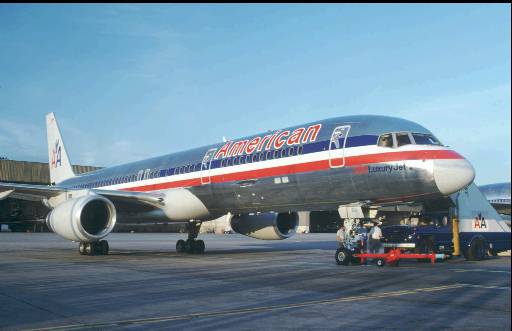
More recently, in the 1980s, a collusive scheme that never got off
the ground showed another, simpler, means of price coordination.
At a time when airlines were literally killing each other with aggressive
price cutting tactics, the President of American Airlines got sick of it
all and decided to take the bull by the horns. He called up his then
major rival, the President of Braniff Airlines (Braniff ultimately went
out of business) and made a proposal. Here’s the conversation that
was later revealed in a tape recording.
Robert Crandall (American): I think it’s dumb as hell … to sit
here and pound the (expletive deleted) out of each other and neither one
of us making a (expletive deleted) dime … We can both live here …
and there’s no reason that I can see, all right, to put both companies
out of business.
Howard Putnam (Braniff): Do you have a suggestion for me?
Crandall: Yes, I have a suggestion for you. Raise
your goddamn fares twenty percent. I’ll raise maine the next morning.
… You’ll make more money and I will too.
Putnam: We can’t talk about pricing.
Crandall: Oh (expletive deleted), Howard. We can talk about
any goddamn thing we want to talk about.
In this case, because Putnam did not accept the proposal, and because
of technical issues involving Crandall’s exact wording, the government
could not prove a case of collusion against American, and Crandall and
his airline escaped penalties.
click here to go on to another related article:
Life Cycle in Oligopoly?