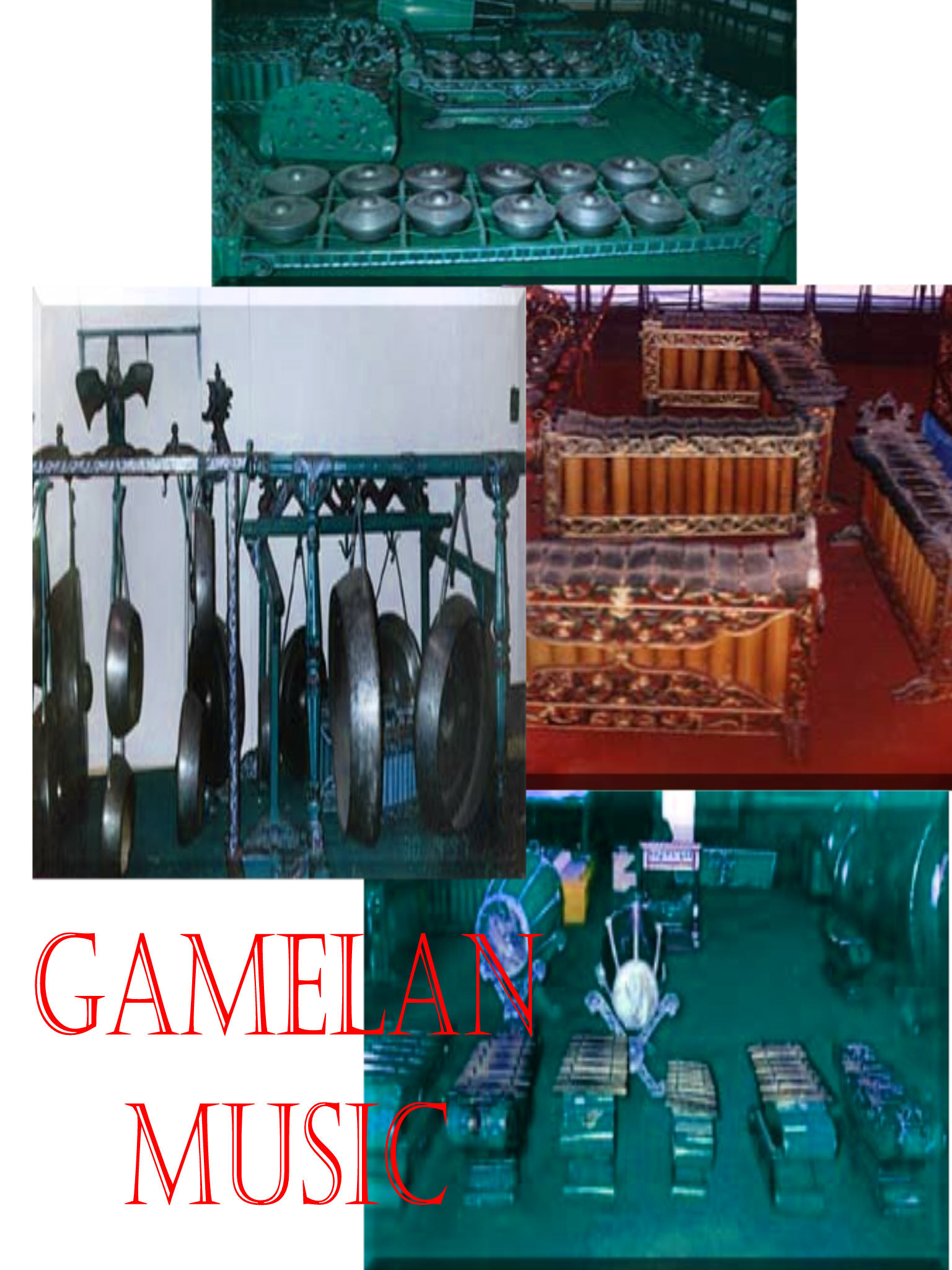
No one knows exactly when the first gamelan orchestra came into being. Metallophones (bronze, brass or iron percussion instruments) dates from prehistoric times, and the manufacture of bronze gongs and drums is associated with the Dong San bronze culture that is thought to have reached Indonesia from Indochina in the 3rd century Bc. Since then large bronze gongs have formed the heartbeat of this distinctive music, with a deep and penetrating sound that can be heard for miles on a quiet night. The term gamelan derives from gamelan old Javanese word for handle or hammer, as most of the instruments in the orchestra are percussive. The interlocking rhythmic and melodic patterns found in gamelan music are said to originate in the rhythms of the lesung- the stone or wooden mortars used for husking rice. Others ascribe the patterns to the chanting frogs in the rice fields after dusk or the wonderful cacophony of roosters crowing at dawn. Vocal parts in an ensemble became popular in Java in the 19th century, but it is now common to have soloists as well as a chorus female (pesinden) singers seem to be more popular but the sound of voices is regarded merely as another element in the overall texture of the orchestra, and the singing is not necessarily given prominence over the instrumental parts. Lyrics are only rarely understood, as they were normally composed in an archaic or literary language. Also, they become lost as they are woven in to the overall fabric of the music. Appreciation of the music often requires concentration. Gamelan music is comparable to only two things moonlight and flowing water. It is pure and mysterious like the first and ever-changing like the second. Since 1893, when Claude Debussy first heard a Javanese ensemble perform at the Paris International exhibition. the haunting and hypnotic tones of the gamelan have fascinated the west. This music has been sensitively studied by scholars, and is now indisputably recognised as one of the most sophisticated musical arts. In Indonesia, gamelan music has always been the sound of everything civilised. Aside from the classical beauty of gamelan music, Indonesia's other music forms have a part to play in the social scene: The popular dangdut, Keroncong Jaipongan the meditative Degung and Sudanese and Batak pop. Keroncong the first major folk music, Was originally associated with the towns lowlife but later gained respectability when it was adopted by the film industry during the 30s. The unmistakeable to-and-fro beat of dangdut is heard all over the country. Essentially dance party music, it is usually accompanied by blasting ballad vocal. The percussion based Jaipongan started in Bandung in the 1960s and is also a popular dance music. By tiazT elephant braindose |
 |