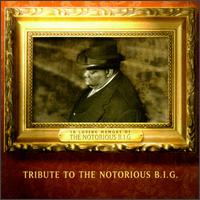
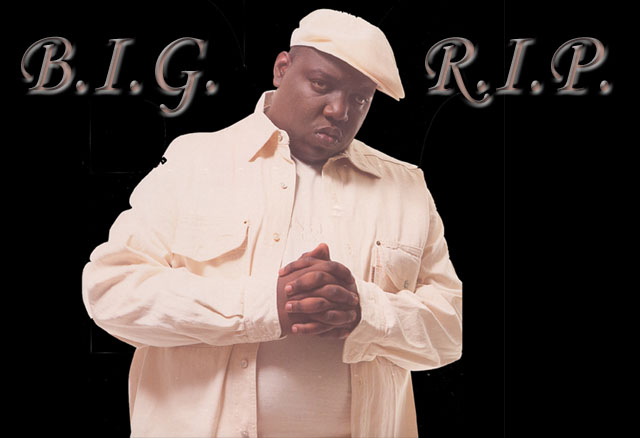
Born Christopher Wallace, May 21, 1972, in Brooklyn, NY. Died March 9, 1997, in Los Angeles, CA
Hip-hop may have been born and raised in New York, but for several post-N.W.A. years, the faraway West Coast was the genre's commercial center, with California rappers from Ice Cube and Dr. Dre to 2Pac and Snoop Doggy Dogg earning more attention and, of course, money than their Rotten Apple counterparts. In 1993 and 1994, though, a new wave of New York MCs helped shift the spotlight back to the East by ending the left coast's commercial domination of rap. Leading the charge was Notorious B.I.G., a 6-foot-3, 300-(or-so)-pound former drug dealer with a big, booming, marble-mouthed voice who first appeared on the Mary J. Blige album What's the 411?--The Remixes. Although B.I.G.'s first three big singles of his own were the gold-selling daydream "Juicy" and the platinum loverman-hustler anthems "Big Poppa" and "One More Chance," other songs on his debut, Ready to Die, were less happy, covering everything from stickups to beatdowns while also exploring B.I.G.'s rare-for-rap feelings of vulnerability and self-worthlessness. On the closing track, "Suicidal Thoughts," B.I.G. even commits suicide after declaring "When I die, fuck it, I wanna go to hell/'Cause I'm a piece of shit, it ain't hard to fuckin' tell" and noting that "my mother wish she got a fuckin' abortion." The confused, thumping, occasionally tortured album became a critical and commercial smash, one of New York rap's first multimillion-sellers in several years. Following the success of his debut, B.I.G. never left the spotlight, making high-profile appearances on hit albums by everybody from Total, 112, and Jay-Z to Junior M.A.F.I.A., R. Kelly, and Michael Jackson. He also made headlines as one of the key players in the media-driven East-West rap rivalry, which heated up after his former friend 2Pac accused him of being somehow involved in a shooting and robbery of 2Pac in New York in 1994. Anticipation of B.I.G.'s sophomore album, Life After Death, was high, but soared through the roof when the rapper was murdered outside of a music-industry party in Los Angeles shortly before the record's release. Eerily, the double-album featured grainy photos of B.I.G. standing in a graveyard and, as with the debut, showed a rapper who was obsessed with his own death. But the chart-topping, slickly produced album was generally much happier in tone than Ready to Die, with B.I.G. no longer dreaming about success (a la "Juicy"), but celebrating it. Although the recording closed with the bitter (and ironic) "You're Nobody (Til Somebody Kills You)," B.I.G. had known otherwise, becoming one of the most celebrated and successful rap stars of the 1990s while earning a spot in the genre's history books as one of the key players in the resurgence of New York rap. |