Railroad routes run about 22,000 kilometers of Japan. Japan Railways Group and private companies
operate these routes. Main bridges and
tunnels carry trains that link the four major islands. Railways in Japan are efficient means of transportation
since they operate according to tight schedules and they arrive exactly on
time.
Major cities
are served by full sophisticated, clean metro subway systems. Tokyo has the largest system. The Shinjuku station in Tokyo is the
nation’s busiest subway station with over 2 million people passing through it
each day. During rush hours the trains
are packed! At these special times
there are pushers called oshiya who force travelers in the trains so the doors
can close. Upcoming stations are announced
on loudspeakers to help people on the trains.
Maps of stations are displayed in trains too. Smoking is not allowed on trains. It’s rude to spread out one’s legs or sleep on someone’s
shoulders.
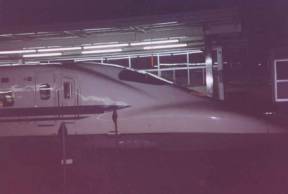
Electric
powered Shinkansen bullet trains operate at speeds up to 240 kilometers per
hour on a special track.
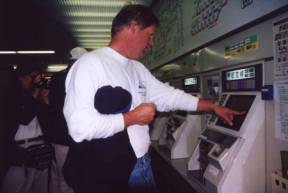
Subway tickets and tickets for local trains are sold by ticket
machines. After putting your ticket in
the automatic ticket gate the gate will open and you can take your ticket and
go onto the tracks to catch your train.
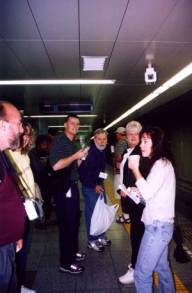
The floors
of trains and subways have yellow bumps that lead to the tracks. These direct blind people to the exact place
to catch a train.
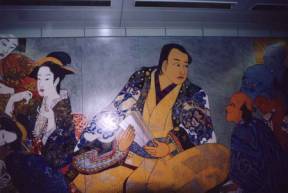
There is no
graffiti but you can see some beautiful paintings like this one.