Ref: 138branch-Min02Dec.doc
MINUTE
138th
Donaldson�s
College, Edinburgh -
Sederunt: M Bancroft M McDonnell R
Brownlee W Hutcheon S Boucher J Hepburn G Dick H McCrea K Heatley J Varney J
Davis G Millar J Conway N Elliott L Elliott M Hinchliffe G Macnab D Cawkwell B
Pill D Forfar I Wilson N Olliver B Byrne B Stainton P Morrison M Scott-Smith S
Page A Reid J McCraith A Dick N Doherty B Holmes R Walker G Lyall A Sharman R
Lovering K Lloyd A Milne V Stewart
Apologies: Liz Young, David Sinclair,
Neal Robertson, Peter Quill, Chris White, Marion Johnstone, Barry Davies, Roddy
McLean
1.0������ CHAIR: R Lovering took the Chair and outlined the usual safety requirements.
2.0������ GUEST SPEAKER
Michael McDonnell
� Road Safety Manager,
� Management of Occupational Road Risk
(MORR)
Michael was introduced to the
members as the Road Safety Manager �
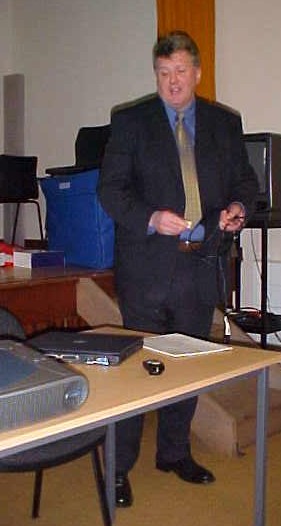
Michael started by
apologizing for the absence of Roger Bibbings, who was scheduled to deliver
this paper, but he had provided Michael with the presentation such that the
content should be the same. He then indicated that he was sorry the format of
the afternoons meeting had had to be swapped around, but it was to enable him
to collect his son from school in Airdrie at
RoSPA�s Mission�
�RoSPA�s mission is to enhance the quality of life by
exercising a powerful influence for accident prevention� � This Michael was not the easiest of missions to
fulfill because RoSPA had no official authority � they could not enforce
anything and had to work hard to get the message across.
They have had some limited
success in terms of getting the message across with respect to road safety. The
key elements of road safety which they were addressing were �
-
Bad driving (and
it is a sad fact that if the members in the room had been asked if they were
good� or above average drivers, most
would say they were, which is statistically impossible)
-
Mobile phone use
in motors, and is it likely that before too much longer we shall see
legislation banning the use of hand-held mobile phones in vehicles
-
Managing
Road Casualties
The
total numbers within GB of fatal and serious injuries sustained per year has
steadily been falling since the 1981/85 such that the figures for 2001 are some
39% less killed and 50% less seriously injured. However the numbers at = 3,443
killed & 37,099 seriously injured in one year are still far too high and
the statistic show that in Scotland we tend to average at 10 accidents per day
= 1 fatal and 9 seriously injured.
Estimates
of Occupational Road Accidents show 800 to 1000 deaths pa (�at work� road
users) and if we assume the same 10% ratio for
The
estimated cost of at work accidents and illness (excluding road accidents) is
between �14.5 and �18.1 billion. At work road traffic incidents may add to that
bill by �3.7 billion to society and �2.7 billion to employers. There is
therefore a strong business and safety case for doing something about road risk
conditions.
Risk level ��
RoSPA�s
figure for the degree of risk being faced by occupational road risks has been
questioned in the past but the figure speak for themselves when you consider
the annual average probability of an occupational fatality as follows:-
Deep sea fishing ������������������������������������� 1
in 750
Quarrying������������������������������������������������ 1
in 5,500
Construction�������������������������������������������� 1
in 12,600
Agriculture���������������������������������������������� 1
in 16,800
Service Industries������������������������������������ 1
in 242,000
Car driving (25,000 miles per year)���������� 1 in 8,000
Unfortunately
for the majority of people, the most dangerous thing they do while at work is
drive on the public highway
Whilst
the greatest cause of fatality for the under one year is related to genetics
& congenital issues, between the age of 1 year and 39 years accidents are
the greatest cause of mortality, and between the ages of 39 and 49 accidents
runs a close second to heart and cancer conditions.
This
level of risk would not be acceptable for any other form of transport, be it
sea rail or air, and this is one of the reasons behind RoSPA�s drive to achieve
a reduction. This reduction started through MORR initiatives in 1996/7 with a
Guidance book being issued in March 1998 and a number of Focus groups have
followed on.
WRRSTG
HSE/DETR
� Work Related Road Safety Task Group (WRRSTG) includes the TUC, CBI, RoSPA,
Local Authorities, Road Safety bodies, etc. has initiated a national debate
which is continuing.
The
intention is to get the CAR SEAT recognized as a place of work, and then
employers may start to manage the risk on the road as part of H&S at the
workplace.
Once
this stance is accepted the following list will then be included in their
activities as being �at work� for larger percentages of their time =
Commercial
vehicle driver; Sales staff; Service engineers; Delivery drivers; Social
workers; Emergency services; Local authority staff; Bus & coach drivers;
Voluntary workers; Motorcycle couriers; Pizza delivery; Police; Paramedics;
Government officials; Teachers; At-work-pedestrians; etc, etc.,
The Legal Context
There
are two sets of law �
HSW Act
(safe systems of work), MHSW Regs (risk assessment, management systems) � all
these are enforced by the HSE/Las but not on the road
Road
Traffic Acts, Highway Code, Construction & Use Regs. Etc � these are
enforced by the Police who are concerned mainly with the driver behavior.
RoSPA
see this as the employers failing in their duty of care.
When
you consider the causes of accidents (or as they prefer to call them CRASHES)
of �at work� drivers so many of them can be followed back to the employers
system and practices =
Inappropriate speed ����������������� >
pressure / attitude
Inattention��������������������������������� >
distractions / fatigue
Falling asleep���������������������������� >
inadequate sleep
Close following������������������������� >
congestion
Drink / drugs����������������������������� >
stress
Adverse weather����������������������� >
poor journey planning
Vehicle defects�������������������������� >
poor maintenance
Bad driving������������������������������� >
over confidence
What is business doing?
Mostly
� nothing
Some
provide driver handbooks, briefings, licence checks, penalties/incentives,
crash data analysis, driver assessment and training
-
BUT �Managing
Occupational Road Risk is NOT driver training
MORR means
� developing a risk management approach
i.e.
putting in place policies, people, and procedures to work the problem
Simplified approach
Review
risk factors of � Journeys, Vehicles, and Drivers
Journeys
Distances,
Road types, Adequate/inadequate time, Adequate/inadequate breaks, Traffic
densities, Pedestrian densities, Night or day, Weather conditions
Vehicles
�Fit
for purpose�, High/low performance, Adequate maintenance, Crash resistance,
Additional safety features, Driver ergonomics, In-car distractions (e.g.
mobiles)
Drivers
Age,
Experience, Attitude, Stress, Fatigue, Health/fitness, Accident/enforcement
history, driving competence.
Risk control
RoSPA
offer the �Erica� approach = Eliminate, Reduce, Isolate, Control, Adapt.
These
may include such actions as �
Tel-conferencing/email,
Change/mix mode, Reduce journey mileages, Reduce hours/distance, Optimize
schedules, Plan safer routes, Avoid adverse conditions, Specify safer vehicles,
Ensure maintenance Assess driver fitness, Reduce distractions, Alcohol/drug
policies, Prioritize driver training.
These
will be supported by �
Training
for managers, Information, guidance & supervision, Monitoring,
Crash/near-hit reporting/investigation, Emergency procedures, Personal safety,
Awards/incentives, Performance targets/timescales.
In-house
standards are needed for �
Speed,
Fatigues, Night/adverse weather driving, Vehicle specs/maintenance, Driver
fitness. Drugs, Alcohol, Mobile phones, Driver competence
Summary
MORR is
the �Dream ticket� � everybody wins
-
employees, their
families, other road users, the business, the insurers, emergency services, the
NHS & the Treasury
Are we judged by what we do?
����������������������� OR are we judged by what we failed to do?
Think � Road Safety AT WORK
3.0������ MINUTES OF PREVIOUS
MEETING (Oct 2002)������ Agreed a
true record � proposed by J McCraith, seconded by A Dick.
4.0������ MATTERS
ARISING �- District now officially
recognized.
5.0������ CORRESPONDENCE
5.1������������������ Letters/Email/Fax���������
Programme of CPD courses (including those in
Edinburgh) now published.
New Corporate Identity Brochure published.
Railway SG Committee having networking meetings -
Bristol/Manchester/Leeds as well as London in 2003
Scottish Parliament Transport & Environment
Committee (belatedly) sought IOSH views on Building (
�����������������������������������
5.2������ Membership:��� 751 Branch members from a national total of
26106 - rise in our case is due to new members - still have 21 non-payers.
����������������������������������� 309
Corporate��� �������� 256 Associate��� ��������� 89 Tech SP
����������������������������������� 186
Construction �������� 159 Public Service ������ 98 Environmental
45 Offshore ���������������� 38 Healthcare�������������� 20 Fire Risk management���������
5.3������������������ Events:
IOSH Conference and Exhibition 2003: SECC Glasgow
23-24 April
5.4������ Others
Scottish Borders Safety Forum Newsletter
Fife Chamber of Safety Minutes + Programme 2002-2003
Extra copies of CDM Scotland presentation made at
last meeting
6.0������ BRANCH
EDUCATION DEVELOPMENT ADVISOR - Liz Young.
Liz not
present but reminded those doing TechSP by portfolio that deadline is 31 Dec.
7.0������ SPECIALIST
GROUPS
7.1 ����� PUBLIC SERVICES - Marion Johnstone. Nothing to report
7.2������ CONSTRUCTION - Roddy
7.3������ FIRE RISK MANAGEMENT - Dave Sinclair was not present but he
reported:
The Fire Risk Management
SG� Seminar at Old Trafford had been very
good and a report would appear in the SHP.
Acetylene cylinders:
guidance was not yet finalized.� Present
guidance did not refer to an exclusion zone as such. An assessment was
necessary within 200m taking into account all factors and then an exclusion
zone might need to be set up � this could well be less than 200m.
7.4������ HEALTHCARE - Martin Scott-Smith. Nothing
to report
7.5������ ENVIRONMENT -
7.6������ OFFSHORE - Tam Boyd - Nothing to report.
7.7������ RAILWAYS - Need a representative.
7.8������ CONSULTANCY - Derek Cawkwell. �Nothing to report.
7.9������ SAFETY SCIENCES - Steve Boucher. Nothing
to report.
7.10���� TELECOMMUNICATIONS � need a representative .
8.0������ FORTH-TAY
DISTRICT REPORT�
8.1������ Official Status confirmed by HQ.
8.2 ����� Branch Exec discussing formalities of
adopting District Constitution
8.3������ Brian Pill: the District Executive were
very proud and happy that the District was up and running.� The February meeting would be the first official
AGM and HQ officer Hazel Harvey would be attending.� The District Executive planned to continue with
5 meetings a year � they felt this was the correct level at the moment.
9.0������ MEMBERS ITEMS
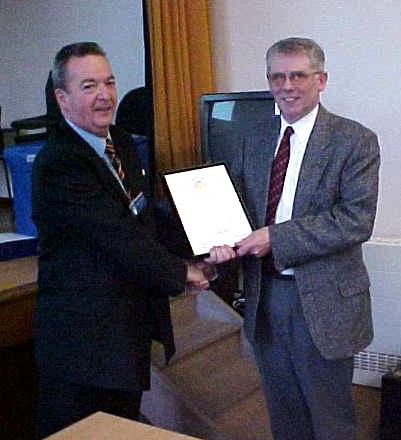
9.1������ Presentations of Certificates etc
����������� 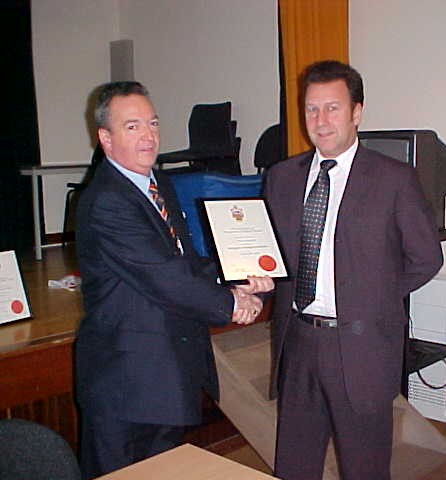
Registered Safety Practitioner - S Boucher
����������� 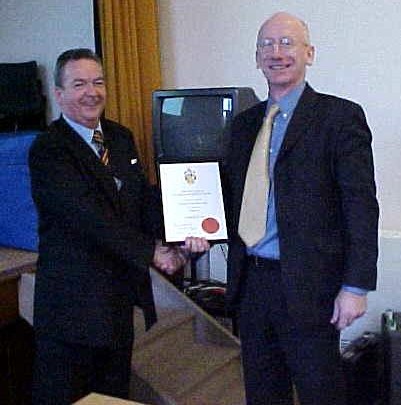
Corporate Member - A Walker
����������� 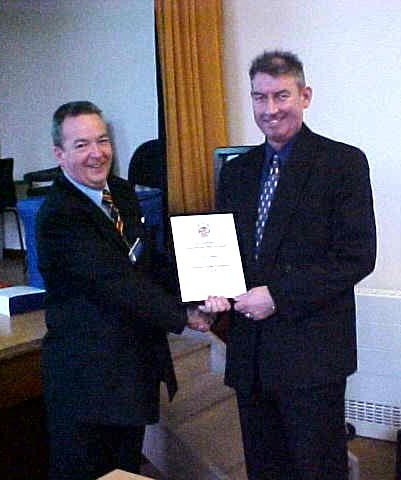
Tech SP - J Varney
����������� 
Tech SP - J Hepburn
����������� 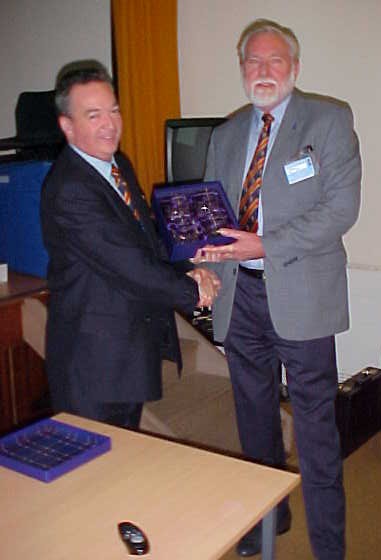
Appreciation - B Pill � Brian
received a set of crystal glasses marking his services to IOSH over many
years.
9.2������ Report of Branch Officials Conference -
Andy Sharman
Andy reported he had
attended this two day conference at HQ with Max. It had given him a really good
understanding of what HQ did for the members and the multifarious activities
tat went on.� There had been a variety of
presentations plus some workshops and useful networking.
It was useful to note that
only 400 professional bodies have Royal Charter.� This underlined the credibility of IOSH and
places us on same standing as these other Chartered bodies.� IOSH HQ are now looking to develop this
further.
The new corporate identity
had been presented.� This will be
introduced gradually.
Of the syndicate exercises,
the one on encouraging more members to attend Branch meetings had been very
useful. He outlined some of the ways other Branches did things and the Exec had
started to look at some ideas.
9.3
Members� Presentations:
Neil Doherty reported on
using Working Positively in Perth & Kinross Council. They had found the CD
useful for part of it. 10 questions had been sent out anonymously in Human Resources
as a pilot scheme.� He presented the results
of the survey.
For the second stage, there
had been 55 questions linked to the original 10.� The survey form now asked for the section to
be identified but apart from that was still anonymous.� Following the survey they produced a stress
management plan.� In fact no-one claimed
they were suffering stress but the plan was needed to complete the exercise.
����������� Working
Positively was user friendly.� They now
had a benchmark for future and they will extend this to other departments.
����������� 9.4������ Brian Pill said this would be his last
Branch meeting � he was now definitely retired. He thanked everyone for their
support both in terms of his work within IOSH and professionally during the
aftermath of Dunblane.� He was encouraged
by the recent and future IOSH events in
10.0���� ANY OTHER BUSINESS
Kevin
Lloyd commented that the IOSH Seminar and Dinner at Murrayfield had both sold
out and the events had been well received.�
The Branch noted its thanks to all those who had made the day such a
success including IOSH HQ personnel.
11.0���� DATE OF NEXT MEETINGS
11.1���� BRANCH
MEETING�
January 9: Emergency Planning - Do We Need It: Ian Hogarth,
Scottish Borders Council
11.2���� DISTRICT
MEETING -
Thursday 6th February: Team Based Learning from
Accidents: Mr Norman Stevenson � Group Safety, Health and Environmental Manager
�
12������� CLOSURE
Branch
Secretary