Close this window to return to the previous page

137th Edinburgh Branch Meeting

Donaldson’s College, Edinburgh - Thursday 10th October 2002

Sederunt: V W Stewart R McLean J Hepburn D Forfar S Whitfield G Dick J R Davis K Cook E Cook G Millar A Gregory J McCraith G Macnab L Young K Llyod D Duff M Johnstone D Sinclair C Wilmott J Conway M Brockle D Atkinson C White M Bancroft R Lovering J Davidson B Pickering B Sweeney N Elliott M Scott-Smith P J Colquhoun G McGeorge M Hinchliffe L Elliott A Milne S Boucher A Reid I O’Neill J Smith B Anderson G Lyall G Williams Apologies: Andy Sharman, David Brown, Brian Pill, Neal Robertson, Bob Stainton, Russell Brownlie.

1.0       CHAIR:

Richard Lovering took the chair.  Safety instructions were given including signing sederunt.  Those present reminded not to use numbered parking spaces

2.0       MINUTES OF PREVIOUS MEETING (Sept 2002)

The Secretary confirmed that hard copies were now being sent out to those who had requested them. The minutes were approved as a correct record – proposed by Marion Johnstone, seconded by Jim McCraith.

3.0       MATTERS ARISING - none.

4.0       CORRESPONDENCE

4.1                    Letters/Email/Fax         

From the Grange: 

HQ intend to run CPD courses next year in Edinburgh – a useful development.


4.2        Membership:     736 Branch members from a national total of 25651 - annual rise due to non-payers paying (still 22 in our case)

                                    301 Corporate               258 Associate               86 Tech SP

                                    183 Construction           158 Public Service         95 Environmental

45 Offshore                  38 Healthcare               19 Fire Risk management          

4.3                    Events:

Environment SG: the safety practitioner and environmental management: The Grange 28 October

National IOSH AGM: 15 November 2002: Murrayfield.  H&S Seminar 0845am - 3pm, followed by AGM followed by IOSH Dinner/Presentations including Royal Charter/Ceilidh.

4.4        Others

Borders Safety Forum Newsletter

Fife Chamber of Safety

5.0        BRANCH EDUCATION DEVELOPMENT ADVISOR - Liz Young reported on recent meeting of BEDAs  at HQ – copy appended.

6.0        SPECIALIST GROUPS

6.1 PUBLIC SERVICES - Marion Johnstone.

Local Authority Elected Members Training Pack being produced.  PSG will have a stand at National Conference.  Watch out for National Safety Week on Website.  New Chair  – John Holden.  Marion had been elected as Vice Chair of the SG. New Guidance Notes are in progress.  Those completed and approved awaiting decisions on format and will be published soon.

6.2        CONSTRUCTION - Roddy McLean

Roddy outlined some recent consultation documents – full details on IOSH HQ website.  He noted it had been reported at a recent demolition seminar that in the last week in Sept that 7 persons had died - 4 operators and 3 members public – this undermined recent apparent progress.

6.3        FIRE RISK MANAGEMENT - Dave Sinclair:

FIRE RISK MANAGEMENT SPECIALIST GROUP SEMINAR

Seminar was well attended with excellent presentations from all the speakers involved. Although fire related, the diversity of the talks made for an interesting day. Old Trafford as a venue was ideal for this sort of seminar, very good modern facilities, rooms were the perfect size, and easy to get to as a central UK location. The Chairman provided a personal insight to how the Bradford City Fire affected him, in that he was due to inspect a football ground the Monday after the disaster for the first time as a Fire Safety Officer. What may have been seen as a “rubber stamp” exercise by some took on a new meaning. That Monday he closed down two of the stands. The common theme that came from the speakers was that people must come first in any assessment and the most critical factor being “adequate management control”. Dave had been asked to prepare a report for the Practitioner and a copy will be included on our web site.

FRMSG NEWSLETTER

Issue 1 2002 has been sent to all SG members. Topics included the Fire Safety Reform Order, BS 9999 (precautions against fire) update, and Fire Risk Assessments online. It will be available via the FRMSG web site soon.

FRMSG WELCOME PACK

Final draft is out for Council Member’s comments. It is taking longer to develop than anticipated, but we are keen to make sure it is fit for purpose.

6.4        HEALTHCARE - Martin Scott-Smith.  – nothing to report.

6.5        ENVIRONMENT - Max Bancroft nothing to report. >

6.6        OFFSHORE - Tam Boyd nothing to report.

6.7        RAILWAYS - Need a representative

6.8        CONSULTANCY - Derek Cawkwell – nothing to repoort.

6.9        SAFETY SCIENCES - Steve Boucher – nothing to report.

6.10      TELECOMMUNICATIONS – need a representative

7.0       PROPOSED DISTRICT REPORT 

Minutes of September meeting received and on website.  Branch Executive progressing status of application.

8.0       MEMBERS ITEMS

8.1        Liz Young reminded members that they would need contingency plans for possible Fire Brigade strike.  This would be especially difficult since the officers would also be on strike and there would be fewer Green Goddesses than during the last strike.  We should also watch out for people using equipment for access

8.2        Kevin Lloyd asked whether the Fire Specialist Group had heard of any central guidance being issued the SPS had heard that many Fire Authorities were already following the guidance issued by the Central Fire Brigades Advisory Council re. a 200m exclusion zone for an acetylene incident. The CFBAC advise both Home Office and Scottish Exec.  Dave Sinclair said he would look into this.

8.3        It was noted that the new Asbestos Regulations would be delayed for a month and would not take effect until the end of November.

8.4        IOSH Training performance – members were reminded that, as part IOSH continuous improvement, they could use Branch Exec to feed back information if they attended IOSH courses – in addition to completing the usual end of course questionnaires.

8.5        Members presentations:  there had been one offer to make a presentation on carbon monoxide in the New Year.

8.6        Richard Lovering made a short presentation on the Praxis42 Computer Based Training covering Display Screen Equipment training, instruction and carrying out assessment.  This covered several call centres.  It gave feedback to OHS Staff and Facilities Staff.  It was available on screen and on line and showed any action needed – whether by the user, OHS staff and/or facilities staff.

He explained that they had developed their own rather than buying an off-the-shelf system since they needed something more specific to CWS requirements.  It also had to  tie in with the training courses being run on this topic.

Members found the presentation useful.

9.0       GUEST SPEAKER

Fraser Cook of CDM Scotland

– Construction (Design & Management) Regulations

Roddy McLean introduced Fraser to the members – indicating that he was a qualified Architect who had spent a number of years within the construction industry prior to taking on the specific role of Planning Supervisors as he has now. Fraser was quick off the mark to indicate that he did not see the role of Planning Supervisor as being that of a Health & Safety Adviser and felt his own background for the construction industry was more fitted to the role.

Managing Heath & Safety in Construction   

Fraser started by indicating the variety of roles which the CDM Regulations applied to – The Client, The Project Manager, The Designer, The Planning Supervisor, The Principle Contractor and the Contractor. He then introduced the Approved Code of Practice and related guidance notes which placed revised duties for the clients, designers, principal contractors, contractors and planning supervisors.

He indicated his intention was to explode some myths, describe the parties involved and detail their duties, list some details of prosecutions and hence show some of the benefits of the new ACoP and Guidance notes

Development

Whilst the original CDM Regulations came onto the Statute books in March 1995 and were detailed within the three books from the HSC = Managing construction for health & safety (the original ACoP) – A guide to managing health & safety in construction – Designing for health & safety in construction. These had now however been superceded by the latest ACoP where the aims of which were to be = Clear, authoritative, practical, encourage effort to be targeted where it can do the most good and be enforceable.

The main changes were on the emphasizes > Clients and designers responsibilities > The need for good planning & management of the whole project > The importance of co-operation, not buck passing

The Client   

This role is seen as pivotal, it sets the tone for the whole project, whilst having overall control and making crucial decisions. The benefits for the client being = improved planning & control; running costs being less; improved communication; reduction in accidents incidents and ill health; All of these saving money.

One of the major issues is of course knowing when the regulations apply and then convincing them that the way they have been doing it for the last 20 years, based on common sense and experience is not always enough. They still need an audit trail (not a paper mountain) to be able to demonstrate what procedures have been put into place and evidence that they have been complying with CDM requirements.

The new ACoP Requires

·         A realistic project program with adequate time for planning, prep & the task.

·         Early appointment of the key people

·         Competent duty holders with sufficient resources to meet legal duties

·         Early identification and reduction of risks

·         Provision of health & safety information right through the total project

·         Co-operation between duty holders

·         Effort and resources proportionate to the risks & complexity of the project

Prior to CDM Safety was seen as integral to the construction phase of the project only, but after CDM the only stage prior to the integral involvement of health & safety should be the recognition of need. All of the following phases of = Inception; Feasibility; Concept design; Contractor selection; Construction; Handover – are now included within the health & safety elements of the project.

When does CDM Apply

Fraser detailed the elements of the task to be considered in making the decision on whether or not CDM applies and what would make it notifiable as indicated within the flow chart of the regulations.

He also spent some time detailing what was included in the definition of Construction Work.

Planning Supervisor must:-

·         Be able to advise the client on competence & adequacy of resources

·         Be able to advise on initial contents of construction health & safety plan

·         Take reasonable steps to ensure co-operation between designers

·         Ensure enough attention is paid to health & safety during design

·         Ensure project is notified timeously

·         Ensure pre-construction stage plan is prepared in good time

·         Ensure the health & safety file is prepared reviewed and amended as necessary

Planning Supervisors DON’T have to:-

·         Provide advice on competence & resources of designers (unless requested)

·         Approve appointment of designers, principal contractors, contractors

·         Approve or check designs – BUT must be satisfied design addresses risks

·         Approve principal contractors construction phase plan (do advise on adequacy)

·         Supervise the principal contractors implementation of the safety plan

·         Supervise or monitor construction work

Designers Must:-

·         Take reasonable steps to ensure client is aware of duties under CDM

·         Prepare designs with adequate regard to health & safety

·         Provide adequate information with the design

·         Co-operate with the planning supervisor & other designers

·         Provide information needed for the health & safety file

·         Position & design structure to minimize risks from site hazards

·         Design out health & safety risks

·         Consider prefabrication

·         Design in features to reduce risk of falling/injury

·         Eliminate hazards

·         Avoid risks to persons carrying out construction work (including window cleaning)

·         Combat and reduce risk at source

·         Protect ALL rather than individuals

Which Hazards must Designers ALWAYS Provide Information on:-

ACoP Paragraph 132 =

·         Hazards that could cause multiple fatalities

·         Temporary works to ensure stability during construction, alteration or demolition

·         Hazardous or flammable substances specified in the design

·         Features of the design & assembly/disassembly that are crucial to safe working

·         Specific problems & possible solutions (e.g. removing large plant from basement)

·         Structures that create access problems (e.g. domed glass structures)

·         Heavy or awkward prefabricated elements

·         Areas needing access where normal methods may not be feasible (e.g. facades without openings which cannot be drilled)

This information should be > Clear & user friendly > Possibly notes on drawings > Lists of SIGNIFICANT hazards and suggested control methods > Suggested construction sequences – BUT not taking on Principal Contractors responsibilities

NB: Remember – if you are the client and you specify materials or methods of work, this could make you a designer under CDM

Designers DON’T have to:-

·         Take account of or provide information on foreseeable hazards & risks

·         Specify construction methods, except where the design requires something special

·         Exercise any health & safety management over contractors

·         Review or report on contractors health & safety performance

Principal Contractor must:-

·         Satisfy themselves the designers  & contractors are competent

·         Ensure a construction phase health & safety plan is prepared before construction starts

·         Ensure the health & safety plan is implemented and kept up to date

·         Promote co-operation between all contractors

·         Take reasonable steps to prevent unauthorized entry on to site

·         Enforce site safety rules

·         Display the project notification

·         Provide information to contractors & self-employed

·         Provide planning supervisor with information for the health & safety file

·         Ensure workers receive information & training in health & safety

·         Ensure workforce is consulted about health & safety matters

Contractors must:-

·         Satisfy themselves that contractors or designers they engage are competent

·         Co-operate with the principal contractor

·         Provide information to principal contractor on risks

·         Comply with directions from principal contractor relevant to health & safety plan

·         Tell principal contractor of accidents and dangerous occurrences

·         Provide information for the health & safety file

·         Provide information and training to employees

Legal actions

There are only two conditions which may give rise to Civil Liability –

·         Against the client – if you have no health & safety plan in place prior to start

·         Against the principal Contractor – for failure to prevent access to site

However the major legal actions could be Criminal actions in the form of Prosecutions. Here during the 2000 – 2001 financial year 41% of prosecutions were of the client and 47% were of the Principal Contractor.

Prosecution of the client would be under –

·         Reg 6(1) – appointing planning supervisor & principal contractor

·         Reg 10 – Ensuring construction does not start without a health & safety plan

·         Reg 11 – Ensuring information is made available

·         Reg 15 – Ensuring Planning Supervisor has health & safety plan in place

Prosecutions against the Principal Contractor under –

·         Reg 8 – Competence of Planning Supervisor, Designer & Contractors

·         Reg 15 – Requirements of health & safety construction plan

·         Reg 16 – Requirements & powers of Principal Contractor

Prosecutions against the Planning Supervisor under –

·         Reg7 – Notification of the project

·         Reg 7(1) – Notifying HSE timeously of the project

·         Reg 15 – Requirements of the health & safety plan

·         Reg 15(1) – Health & safety plan prepared timeously

Prosecutions of the Designer under –

·         Reg 13(1) – Making client aware of duties

·         Reg 13 (2) – In the design – avoiding foreseeable risks, combating risks at source, priority to protect all persons

Prosecutions of the Contractor under –

·         Reg 7(5) – HSE notification given even for domestic client

·         Reg 8(3) – Contractor competence

·         Reg 9(3) – Contractor allocation of resources

·         Reg 15(4) – Provision in health & safety plan of risks involved, welfare information

·         Reg 19(1) – Co-operation with Principal Contractor
Summary

The new ACoP has seen changes in the requirements as follows:-

Under the Approved Code –

·         For the client under paras = 15(a) to (g); 85 (a) to (l).

·         For designers under paras = 127; 128; 132

·         For Principal Contractors in para = 173

Under the guidance notes –

·         For the client under paras = 62; 66; 195; 198

·         For Planning Supervisors under paras = 66; 195; 198

·         For ALL parties = 195; 198

Remember – ignorance of the Law is no excuse and ALL parties must fulfill their duties properly and be able to show evidence of having done so

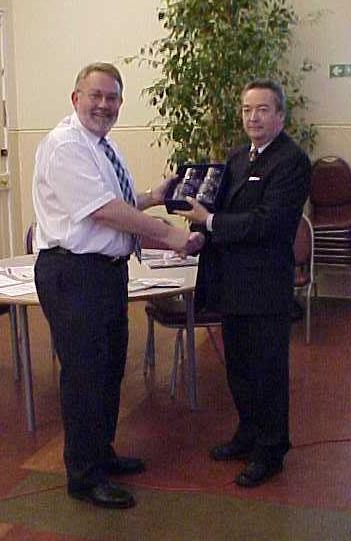
Richard thanked Fraser for his talk and presented him with a small token of the Branch’s appreciation.

10.0     ANY OTHER BUSINESS

Remember next week is European Week for Health and Safety at Work – make yourself known.

11.0     DATE OF NEXT MEETINGS

11.2            BRANCH MEETING 

December 12: Managing Occupational Road Risk: Roger Bibbings: RoSPA

11.2            PROPOSED DISTRICT MEETING -

Thurs 7th November: A systematic approach to managing asbestos: Douglas Collins

11.3            IOSH NATIONAL AGM:

Members were reminded that this was open to all members and they were encouraged to attend even if not going to the seminar in the day or the dinner in the evening.  Murrayfield: 4pm: Friday 15th November.

12                CLOSURE

Richard thanked all for attending and encouraged members to mingle over a cup of tea.

Max Bancroft, MRSC

Branch Secretary


BRANCH EDUCATION DEVELOPMENT ADVISER MEETING

LEICESTER 19 September 2002

Summary of Meeting


Brain Stone:  Revised NEBOSH General Certificate

·                Redesigned around HSG 65 with emphasis on risk

·                Award by QCA, Level 3

·                Unifies and marries with NTO standards

·                Examinable from December 2002

·                Can sit within 6 months  - single paper

·                Resit can only pass, no credit and distinction marks

·                New environmental issues within Unit 12 will not be examinable until after March 2003

·                >87 tuition hours

Passport Scheme - IOSH - Safety Pass Alliance

·                Provides Health & Safety assurance for clients

·                Contractors

·                Offices - practical health & safety training

·                Allows access to passport - controlled environments


Background:   - Industry demands

                        - Government revitalising health & safety

                        - SPA collaboration, food and drink, electrical federation, petrol forecast

            - National emphasis from government to increase health & safety in smaller companies

            - Increase contractors

                        - Increase health & safety legislation

Elementary Level        - basic, a bit lower than IOSH Working Safely

                                    - Core day + 1 sector of specific issue

                                    - Sectors 1) Food & Drink, 2) Engineering, 3) Micro Electronics, 4) Other

Course provider attends familiarisation training.

Core                 - Appropriate to al industries

                        - Syllabus meets required health & safety

                        - Approved by IOSH & SPA

- Covers: Legal Framework, Safe Systems of Work, Fire, Accidents, COSHH,         

                Manual Handling, Noise, Risk Assessment.

Sector Specific             - Course provider to have 2 years minimum experience and NEBOSH  

                                       Certificate

                                    - Standard set of material to be purchased by course provider

                                    - Assessment at end of each module (7)

                                    - Pass mark set at 80%

                                    - Expiry time of 3 years

Hazel Harvey - Professional  Development & Membership Issues

Expected review of membership structure by 2005

Debate on getting rid of TechSP - most of delegates voted  that there was  a need to keep this level of grade or something similar.


Designation  of letters to apply  to TechSP grade  - 10 for 8 against

Caroline Welsh - CPD

NVQ

·                New standards available around January next  year (2003)

·                Cannot register for new Level 4

·                Competence - combination of knowledge skills and experience

·                No changes to membership until 2005

·                Whole review of membership routes

·                Employment National Training organisation replaced by Sector Skills Councils

·                New standards - not divided by level of organisation but by competence level of the individual.

·                Corporate  affairs reviewing all Membership issues by 2005

Level 5:            Health & safety strategic Management  

Level 4:            Covers core requirements , 13 units, CD-ROM  / website

Level 3:            Health & Safety for people at work

                        NEBOSH certificate will also meet these standards

* All Assessors should be at level above competence assessed

Review of CPD Scheme

Review of Fellowship criteria - refection of eminence

Lifelong learning in the pursuit of excellence

Liz Young

BEDA Edinburgh Branch

Back to top of the page

Hosted by www.Geocities.ws

1