6.2 CONSTRUCTION R McLean
Roddy gave details about the Working at Heights seminar 17 May and distributed leaflets. Mention was made of the Scaffolding Training Package addressing the recently introduced Guidance and the requirement for Scaffolders to be harnessed to their place of work when higher than four meters from the ground. Copies of three recently introduced Information Sheets were tabled - Manual Handling Blocks, Tower Scaffolds and Circular Saw.
6.3 ENVIRONMENT J Smith
Jan gave some detail of recently introduced legislation and will provide detail. All information though is available on SEPA website available to members on the 'Net'
6.4 FIRE RISK MANAGEMENT D Sinclair
The following website may be of interest to those looking for fire risk management information. 'Firenet' was initially developed as a Special Interest Network (SIN) for the United Kingdom Fire Service to provide a source for other British fire fighters on the Internet, however due to popular demand this has now taken on some of the international sites. It is the best 'Fire Site' recently found: http://www.fire.org.uk/
6.5 OFFSHORE T Boyd
A little 'Get your own back' if you get your mobile phone stolen. Should you get your phone stolen, you can phone your service provided give then the phone serial number and they can then block all calls. The serial number is unique and available by key in the following to display the 15 digit *#06# record and keep safe.
6.6 HEALTHCARE W Scott-Smith
7.0 MEMBERS ITEMS
7.1 Annual General Meeting. The Chairman reminded the members that the next meeting was the AGM and then stressed the importance of member involvement. The Branch belongs and is run for the members and requires people to take part both in the meetings and the administration. There are spaces available on the executive Committee and all Principal Offices have to stand down. The president will be in attendance, there is an interest speaker to talk about the Millennium Link Grand Union Canal and there is a free buffet. What else could there be? All Specialist Groups will have representatives elected at the AGM.
7.2 Technical Enquiries. IOSH now subscribes to EUinteractive.com which gives access to EU information, which is up-dated every 24 hours. Access to articles, white papers, green papers etc and 50% discount of full text versions of Statutory Instruments. Richard Jones is Head of Technical Affairs at Headquarters and also accessible to the Membership.
7.3 June Meeting. There is considerable interest in the Manual Handling Regulations and the Code of practice. The Institute of Occupational Medicine has been tasked by the HSE to revisit the Guidance and regulations and asked the Branch for assistance. The meeting in June will be a workshop run by the IOM and seeking views and expertise from members on manual handling.
| 8.0 GUEST SPEAKER
The Guest Speaker was introduced by Jan Smith as Dr Paula Woolmer from SEPA and was invited to address the members. CONSTRUCTION ON CONTAMINATED LAND Dr Paula Woolgar was introduced as the SEPA specialist involved in the Contaminated Land Regulations, which are strict on remediation requirements. Paula then stated that she had difficulty in preparing what she hoped would be an overview for the audience as she realised the breadth of need from the assembled group. |
|
What is Contaminated Land?
The term "Contaminated" can take on many different meanings depending on the different circumstances and there isn't an easy answer to the question as it varies when you consider it from either a planning or a regulatory stance.
Planning (PAN 33) regards contaminated sites as a site where the presence or suspected presence of contaminants is an obstacle to development. The contaminated land regime (Part IIA) defines contaminated land as that which currently represents an unacceptable risk to human health or the wider environment. Only a limited proportion of land with chemical contamination will represent Part IIA statutorily contaminated land - varying with what deposits can be got at or can get into a watercourse.
Why is Contaminated Land of concern?
Contaminated land can be of concern due to the potential risks to human health and the wider environment - e.g. water systems or ecosystems. The concern may be of financial implications - reduced land value and the need to fund remediation of the land. There are legal liabilities, which place a requirement to take action or suffer potential prosecution.
Contaminated land construction issues
This can generate risks to workers and general public during the construction activity in many forms including gas and explosion risks.
There can be risks to end-users or to the current users.
Risks to the environment and there may be additional risks associated with construction work arising from dusts, run-off etc.
Financial and legal liabilities provide drivers to ensure that the risks are addressed, it being better to deal with contaminated land issues at the construction phase rather than later.
Risks to human health
Consider the hazards associated with the known or suspected contaminated substances. There is a need to assess exposure routes for different users of the site.
Evaluate whether the amount exposed to poses a risk to health - some guidelines are available but there is a need to assess whether they are appropriate.
Risks can arise from single exposure (acute) for the workers, or prolonged exposure (chronic) for those using the site afterwards
Hazards
Consider all substances likely to be present (some site profiles available from past uses).
Identify hazards = corrosive, carcinogenic, toxic, asphyxiant, fire, explosion, radioactive.
Exposure
Inhalation of gases, vapours and dusts
Ingestion of contaminated materials through direct intake, drinking contaminated water, uptake into the food chain.
Skin and eye contact with contaminated materials
Risks to construction workers
These may differ from risks to members of the public, current and future site residents.
Typical exposure routes include: -
Rubbing eyes or skin with dirty hands or gloves, breathing in contaminated dusts, vapours or gases touching food or drinks with dirty hands getting contaminated materials onto skin and even wearing the same dirty gloves all day spreading the contaminant all over the site
Also need to be alert to explosion (spark proof tools and activities) and asphyxiation hazards (beware confined spaces)
Assessment and management of risks
Ask to see the results of the environmental risk assessment. Determine what substances are likely to be present. Do a COSHH assessment (may be one already available). Use PPE (overalls, chemical resistant footwear, eye protection, respiratory protection, and gloves). Adopt decontamination procedures - provide washing facilities and clean eating area. Use hand held monitors for gases, vapours to monitor situation.
What is Part IIA?
Provides the legislative framework for the identification and remediation of contaminated land.
Comprises of: - Part IIA EPA 1990, inserted by section 57 of EA 1995.
Circular 1/2000, containing statutory guidance SSI 178, The Contaminated Land (Scotland) Regulations 2000
Part IIA Does =
- Address historical contaminated land, which is causing harm or pollution in current use.
- Adopt a risk-based definition of contaminated land
- Requires the polluter to pay where they can be found
Part IIA Does Not =
- Rely on standards to define contaminated land
- Apply to all land with chemical contamination - only that posing a risk
- Make land suitable for new use - planning system does this
- Currently apply to radioactive contamination of land
- Impose unreasonable remediation requirements
Why is Part IIA Significant?
It provides a mechanism for requiring the remediation of land identified as contaminated.
Those responsible for causing or knowingly permitting contamination, are responsible for remediation and where these cannot be found, responsibility passes to owners/occupiers.
Given that there may be a requirement to undertake remediation, it is best to ensure that it is carried out during the construction phase
Role of Local Authorities
Duty
- Inspect their areas to identify contaminated land and to designate special sites
- Ensure remediation of land identified as contaminated
- Maintain public registers for contaminated land
Power
- Recover the cost of remediation
Role of SEPA
Duty
- Ensure remediation of special sites
- Maintain public register for special sites
- Prepare reports on the state of contaminated land in Scotland
Power
- To provide site specific guidance to local authorities on contaminated land
- To recover the costs of remediation undertaken itself
SEPA's involvement with Contaminated Land
Limited direct involvement with contaminated land, the main emphasis is preventing creation of such land
Regulate industries and the disposal of wastes so that future land contamination is prevented
When consulted by planning authorities, provide comment in line with legislative duties
Ensure through licensing that land remediation does not have an environmental impact
Secure the remediation of contaminated land, which is designated as special site under Part IIA
Concluding remarks
- Be alert to land contamination issues when acquiring and divesting land - terms of transaction can impact liability
- Make sue risks to workers addressed during investigation and clean up activities
- Make sure that risks to all receptors (humans & the wider environment) are addressed during development so that it is not identified as being statutorily contaminated
- Address any environmental impacts associated with remediation
Further information sources
Contaminated land section on SEPA's web site = www.sepa.org.uk
CIRIA Report 132 - a guide for safe working on contaminated land
Environment Agency R&D Publication 66 - Guidance for the safe development of housing on land affected by contamination.
HSE Protection of workers and the general public during development of contaminated land
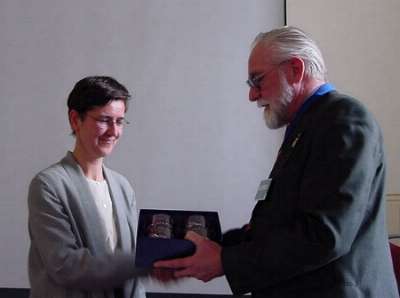
The Chairman voiced a Vote of Thanks and a small token of the Members appreciation was offered - the members responded warmly.
9.0 DATE OF NEXT MEETING
Members were reminded that the next meeting had been set at:
Meet the President and the Members whilst enjoying a free buffet starting at 1230
10.0 CLOSURE The Chairman thanked all for their attendance and contribution and bade them a safe journey homeward; then closed the meting with the invitation to have tea and then mingle.
Christopher E White MBE, FIOSH,RSP Edinburgh Branch Secretary Brian W Pill FIOSH,RSP Branch Chairman