| Sketching Trees |
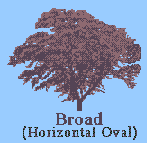
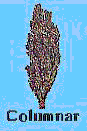
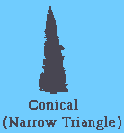
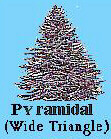
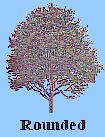
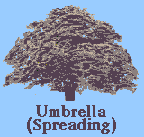
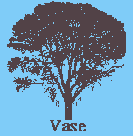
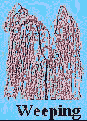
| Shown below are some typical tree shapes. They also show how texture can be used to indicate the branches. Also notice that you can't see the actual branches of the limbs higher up in the trees. |
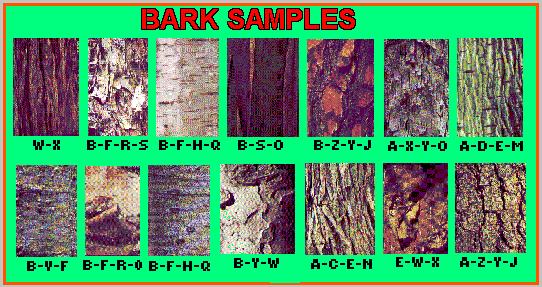
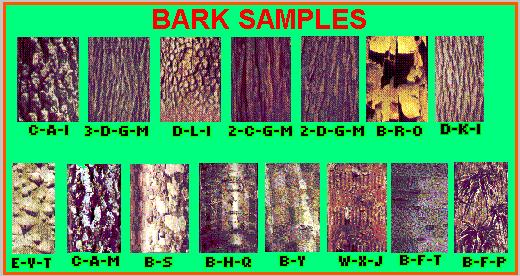
| �� Once you have the shape of a tree, the next thing that you must realized is that tree bark is not brown except in cartoons. Below are some examples of various kinds of tree bark. You might not paint them in such detail, but they give you an idea of the different types of tree bark. |
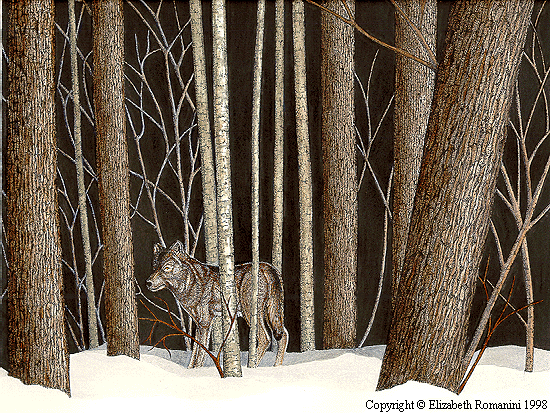
| �� Below is a sketch I found of tree bark. You have both birch and some other bark shown, but I think the wolf is a bit lame. |
 |
 |
 |
 |
 |
 |
 |
 |
 |
 |
 |
 |
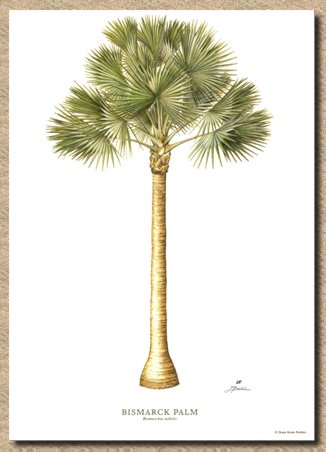
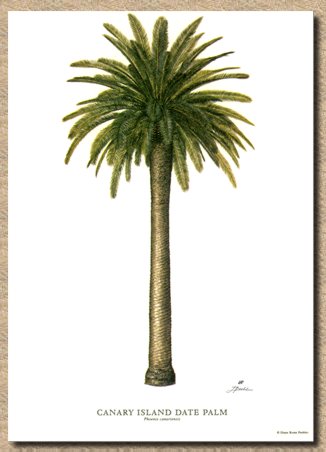
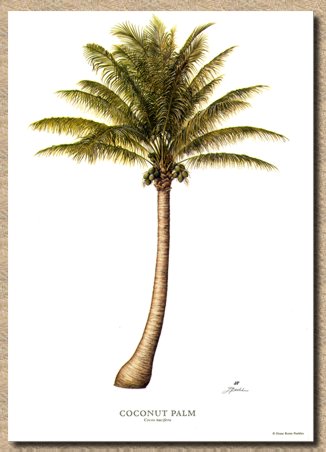
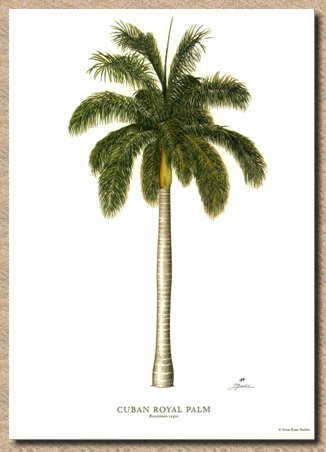
| The trees above are all trees found in temperate climates. Some examples of palm trees are shown below. |
 |
 |
 |
 |
| The music is "Mrs. Robinson" by Simon & Garfunkel |
| Another good site to view tree bark is http://www.fhsu.edu/biology/ thomasson/treebark.htm. An artist might wish to frame a painting with a few large trees in the foreground. Knowing how the bark would look |
| would be important. Just click on the link to the right. |
 |
 |
| An artist should not neglect the possibility of painting trees in the fall or in the winter. In the fall trees present a riot of color, and the stark, bare trees of winter against the white of newly-fallen snow can present a striking scene. |
 |