Implementing changes
By Edwin ebreo
Many companies fail to successfully implement change because they ignored some of the critical requirements in managing it.
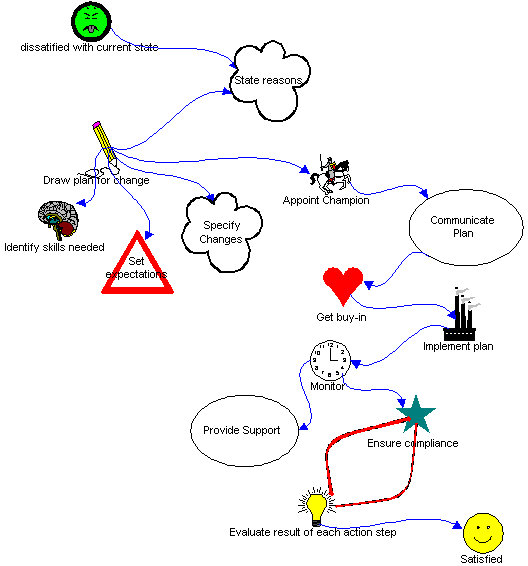
When effecting changes in the organization, managers are dealing with people with mindsets and comfort zones that were built overtime. People tend to resist change because they do not want to step out of these comfort zones--they like to stay in an environment they are comfortable with. There are a number of things that need to be taken in to mind to help people accept and overcome the pain of change:
A Clear Road Map – A vague change process is a doomed change process. People like to know (1)why the current state needs changing, (2)what to change, (3)how change shall be effected and (4) what the benefits are of implementing change.
A Communication Plan - From the start and as the change process progress, people are threading unfamiliar grounds. Without proper guidance people may feel lost and revert to the things they are accustomed to. Regular and rigorous communication therefore is essential in keeping the people on tab of what's going on.
Organizational and Individual buy-in – Buy-in is a powerful thing, it takes people out of analysis or skepticism and causes commitment-- the emotional resolve and see a task through to completion. Without it, change initiatives are doomed from the start.
A Change Agent – Organizational change management requires a facilitator, one who is accountable for seeing the initiative through. He should be directly in charge of all the requirements mentioned in this paper
A Support System – Organizational change requires people to unlearn the old stuff and learn the new stuff. This is perhaps the most uncomfortable part of this effort. Without the necessary support, people will be reluctant to use the new tools or undergo the new process.
Incubation Period – When I was in College, I was a member of the schools dance troupe. Our dance instructor do not allow us to wear new shoes on performance nights. If we have new shoes, we are required to wear them during practice to sort of "break-in" the thing. Change rarely happens overnight, this is perhaps the most ignored fact in several change initiatives. In the organization's hurry to effect changes, they set impossible deadlines that causes people to panic and cause costly mistakes. This creates the perception that change is impossible, whereas in fact, only the timeframe usually is. People will need time to assimilate new roles and learn the new things so that they can develop some degree of familiarity become more comfortable of the new way of doing things.
Application: Change in Role from Account Executive to Product Specialist
Taking into mind all the lessons from what was mentioned in the overview, I suggest that we consider the following:
Road Map
Communicate why there is need to shift methodology from account management to product management.
Clarify the distinctions between the two and explain why product management could be the more suitable model for our company in our current situation.
Explain what the new expectations are and how their performance will be measured.
Discuss the rewards for successfully implementing change and the implication of non-compliance.
Communication Plan
We need to draft a communication plan indicating what should be communicated at given points during the change process.
Buy-in
We should put in place a plan aimed at getting organizational and individual buy-in to the new process. I suggest that the following be considered
Focus Group Discussion to provide opportunity for the individuals concerned to air whatever apprehensions they may have about the move.
Performance-based incentive scheme.
Change Agent
Identify someone in the organization to oversee the change process.
We may also need to have the team go through a paradigm shifting exercise that will help them embrace change.
Support System
Although, all of the above maybe considered change support system, the affected party should be provided tools to do the new job correctly, hence;
Product management process should be established
Key Result Areas and Competency requirements should be identified
Training should be provided.