 |
|
|
|
|
|
|
|
|
|
|
|
|
|
|
|
|
|
|
|
|
|
|
|
|
|
|
|
|
|
|
|
|
|
YSR CARBS/JETTING |
|
|
|
This is a hard subject to talk about without creating an issue with other tuners. I�ll tell you my problems and maybe you can learn from them too. After Joe stripped the bike of all street stuff, he had a hard time adjusting the carb. Luckily he had a spare carb so we could test a couple of jets at a time. |
|
|
|
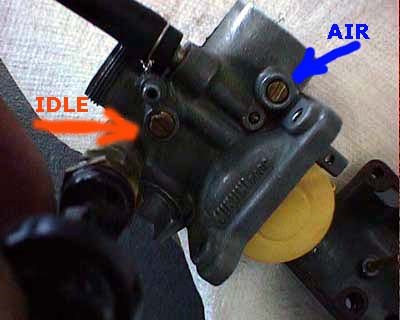
KDLE SCREW / AIR SCREW (adjusting your idle) |
|
|
|
 |
|
|
|
|
My bike was tuned by DP Racing and these screws were adjusted properly for my bike. However, I find myself adjust the idle when changing between pipes or jets. Jason Weltch, a racer at Prairie City says it best: "Small jetting tip: To check to see if your pilot jet and air screw are adjusted right.. Warm up the motor and let it idle as low as possible while still running smooth. From idle, whack the throttle wide open then let it close completely. Listen to the motor. If it bogs right when you whack the throttle open, then revs up, turn the air screw in 1/2 turn then try again. Do this until it revs up crisply. After the motor revs up, listen to it revving back down. If the revs drop quickly, and the motor starts to bog, and/or die, then you're too rich on the air screw, back it out 1/4 turn at a time. If after you let the throttle off the motor tends to run on and on while revving down very slowly, you're too lean and need to turn the air screw in 1/4 turn at a time. You want the revs to come up from idle quickly and smoothly, then drop back down to idle the same way. If you turn the air screw all the way in and it still needs to go further, then you will need a larger pilot jet. The opposite is also true: if you are backing the screw out so far that it darn near falls out, you will need a smaller pilot jet. Stock and Supersport bikes should rarely ever need to deviate from the stock pilot of 17.5! On cold or extremely cool days, you may benefit by putting a #20 pilot in. Aftermarket carbs can be tuned the same way, but I'm not familiar with what sizes should necessary. NOTE: This is all done in the pits, you ARE NOT RIDING the bike to check this!" |
|
|
|
|
|
|
CARB SCHEMATIC |
|
|
|
|
|
SQUID TIP |
|
|
|
|
|
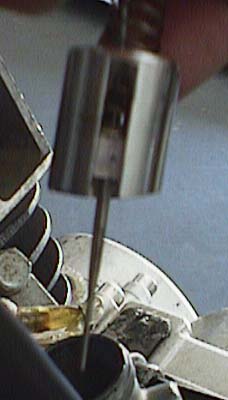
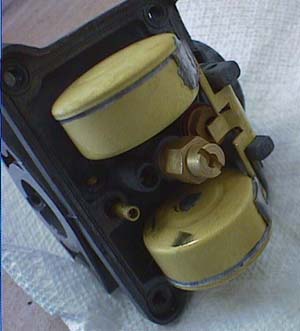
CHANGE YOUR JET/ ADJUST YOUR NEEDLE JET |
|
|
|
An easy task but intimidating if you've never done it before.
Click the images on the right to see the process.
Why do you need to do this? To find the answer please read John Lassak's brief artlcle about two stroke tuning because you might as well try to max the power out of these little bore engines. |
|
|
|
 |
|
|
|
 |
|
|
|
|
|
|
|
|
|
CARB 1 (98 main DynoJet) |
|
|
|
The symptoms: It would hesitate when you open the throttle up and stay open. We tried to adjust the airscrews and it did not help.
Solution: The problem I had was an air leak. You need to replace both crank seals and make sure the seals on your top end are good. If you don�t you could run into problems where you run to lean and cause major engine damage. Gaskets are cheap. Replace them ASAP. |
|
|
|
CARB 2 (96 main DynoJet) |
|
|
The symptom: The engine would not run. It kept on dying. We thought the carb was bad so we switched the Jet to Carb 1 and had the same problem.
Solution: The jet was a manufacturing defect. It did not have a hole. I called Calamari who replaced it.
We never got the engine to run properly. The symptoms of Carb 1 were correctable, if we knew how to diagnose the problem. We gave up and took it to Dave Perez who immediately diagnosed the problem of Carb1. |
|
|
|
Dave Perez (DP Racing) to the Rescue |
|
|
|
A sticky throttle or throttle cable would cause a poor revving motor. He checked the throttle cable to see if it any kinks. He routed it so it would the wire in the tube would slide smoothly. He found a cracked throttle tube but it was not the problem. (I tried to order a stock throttle from Calamari but they were out of stock. I opted getting a � turn throttle. More on this later.) If you got a stock one, check it because these crack real easily. But this was not the problem.
Next on the agenda was to look for air leaks in the engine. Before he tore down the top end, he visually inspected and listened to see if the head, cylinder and intake gaskets were leaking. He took apart the top end to see if the gaskets had cracks. If you don�t know the history of your engine then some people try to save money by re-using old gaskets. Important: do not re-use old gaskets. They�re cheap and you might run into more expensive problems down the road.
I learn by watching. It seemed easy as I watched him remove the pipe nut and 4 screws from the top of the head. The Head came off easy because the gasket between these is a metal copper gasket. However, he did have problems prying the cylinder from the engine. Important: spray a light coat of copper silicone on the gaskets that connect the cylinder to the engine. So next time you have to replace your piston rings you should not have to use a rubber mallet. Note: when using a rubber mallet tap in an upward motion to jar the cylinder from the engine.
He then inspected the head gasket, cylinder gaskets and the intake gasket attached to the carb. Any rips or tears in these gaskets would create an rpm that would rev to the moon without coming down. No problems here. Note: before reinstalling �new� gaskets, scrape the old excess gaskets off with an X-acto knife. If you used the copper silicone spray before you should not have any to scrape off. Remember to angle the blade to avoid scraping or scratching the metal off the cylinder.
Last on the list he had to dismantle the bottom end to check the crank gaskets. If these leak then it would pull air through the engine that would cause the revving problem. Walla, both left and right seals were shot. After replacing these and putting the top end together my motor ran like new. |
|
|
|
READ YOUR PLUG |
|
|
|
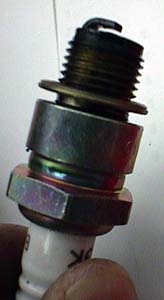
Okay now that you've got my bike running...how do I check if the engine is running too lean or too rich? Running rich is not bad--you'll just foul the plug and loose potential power from unburnt fuel. If you run too lean, then it could lead to major engine damage. See my piston story. It know that sounds silly but unfortuantly YSRs do not come with all the fancy gadets that relays information like modern day race bikes. Fear not, YSR owners, you can simply pull the spark plug and understand what is actually happening to your engine. Before you pull the plug do a "plug chop" where riding the bike and you are in tached out in 5th gear and you hit your kill switch. See the links about reading sparkplugs on my Tech/Equip page. |
|
|
 |
|
|
|
|