| The Ecomimicry Project |
The Ecomimicry Project worked creatively with the knowledge of artists and designers in Western Australia and the Carpathian nations to design landscapes, buildings and artworks that may foster sustainability or environmental awareness. Ecomimicry involves mimicking local animals and plants (or their ecological settings) to produce sustainable, eco-friendly, socially-responsible designs of landscapes, technologies and artworks. The Project had two study areas. The Great Southern coastal region of Western Australia and the Carpathian Mountain region of Europe. The project was recently featured on the ABC Radio National show By Design The final designs that emerged in the course of the project from 2006 to 2008 are presented in a book to titled Wild Design. For 2009-10, it is hoped a new area of study will emerge to carry on worldwide studies in ecomimicry. To date, Ecomimicry workshops have been offered at various art centres and universities at Western Australia and the Carpathians, but artists and conservationists from around the world also contributed their ideas via electronic means. ECOMIMICRY DESIGNS The brief was wide open--a product, a service, a landscape, an artwork, an agricultural setting; just as long as it was inspired by a Great Southern or Carpathian Mountain animal or plant or takes account of the local landscape in these regions. This invoked the possibility of involvement from a plethora of disciplines: art and architecture, agriculture and forestry, ecology and biology, design and engineering, town planning and resource management. Some of the inspiring organisms and landscapes can be found at the websites below |
 |
 |
| Project Coordinator |
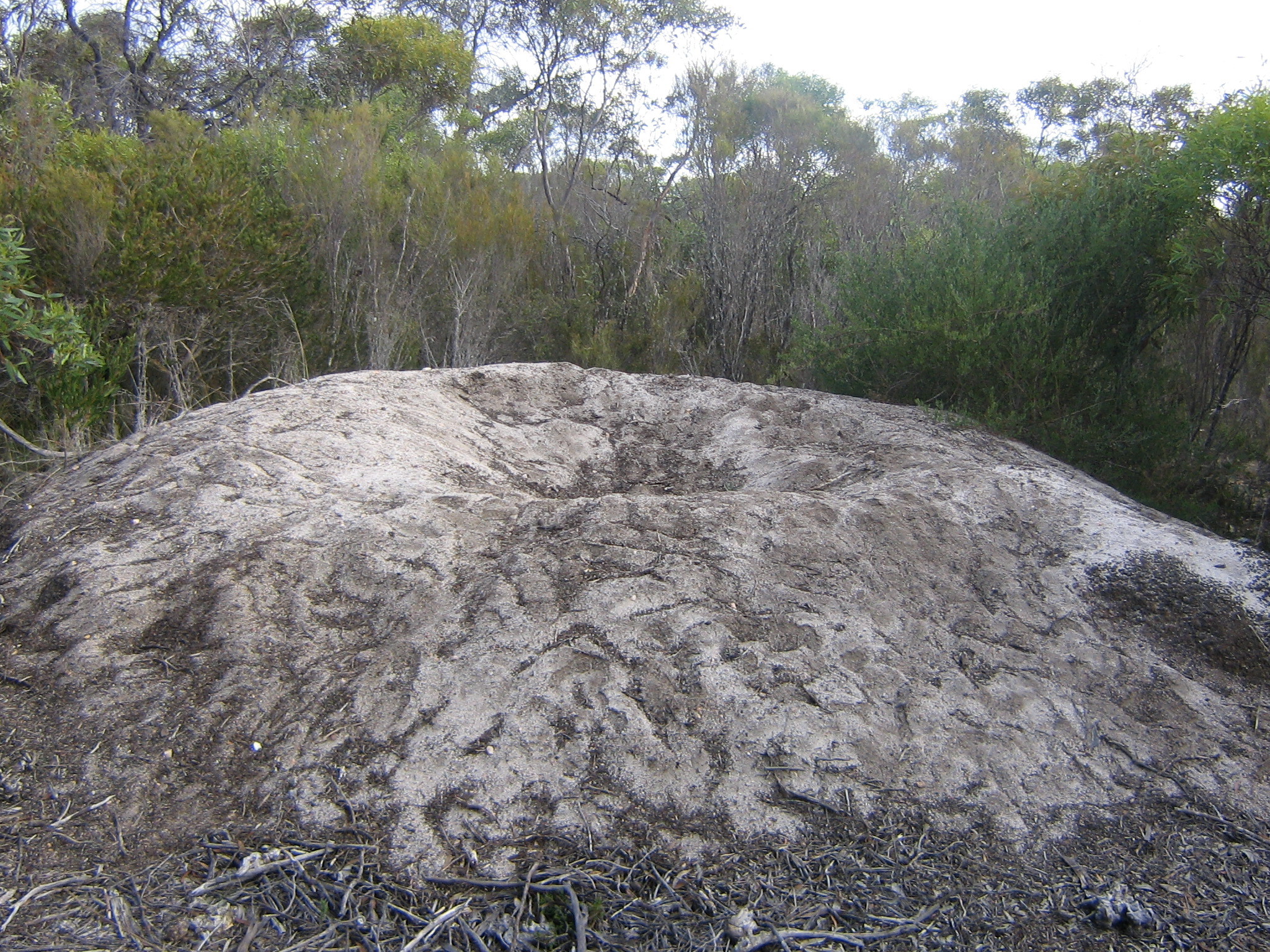
| A Giant Malee Fowl nest: Could this giant five metre bird nest in Western Australia inspire your next design? |
| Dr. Alan Marshall |
| The term Ecomimicry alludes to ecofriendliness in design whilst also suggesting that the interactive ecology of nature should inspire design ideas rather than just one organism. This project did not require strict adherence to the second of these aspects and even the first can be interpreted in an imaginative way. |
| Alan Marshall is a research fellow working in the Sustaining Gondwana Initiative at Curtin University of Technology, Perth, Australia. His books include: Wild Design (North Atlantic Books) The Unity of Nature (Imperial College Press) Dangerous Dawn: The New Nuclear Age (Friends of the Earth, Australia) Lancewood,( Indra Publishers) |
 |
| in Western Australia and the Carpathian Mountains |
| Ecomimicry is basically a process of innovation. It is similar to biomimicry or biomimetics but is more careful to produce designs that serve the local environment and community rather than the global marketplace or the military-industrial complex. It is design that serves the ecology and the people, not power, prestige or profit. |
| The Project has a global element and a local element. The global element invited designers, new and established, to submit bio-inspired designs based on the wildlife and landscapes of the Great Southern region or the Carpathian Mountain region. The local element involves assembling together designers, biologists and conservationists into workshops. All are welcome to contact the Project Coordinator for more information Whilst Ecomimicry is a novel way of implementing bio-inspired innovations, it draws intellectual srength from the likes of permaculture, analogue forestry, biomimetics and a host of other disciplines, from the organismal scale to the landscape scale. Ecomimicry is also a great medium for environmental education, teaching students about technical sustainability challenges and the flora and fauna of their local wildlife at the same time. An experimental education program of ecomimicry has been applied to different levels of education byu various staff of Curtin University of Technology. For more information: -check theoretical approach: The theory and practice of ecomimicry -check "About the coordinator" |
 |
 |
| As part of this project, Alan Marshall spent 1 year at Presov University, near the Slovakian part of the Carpathian Mountain range. |
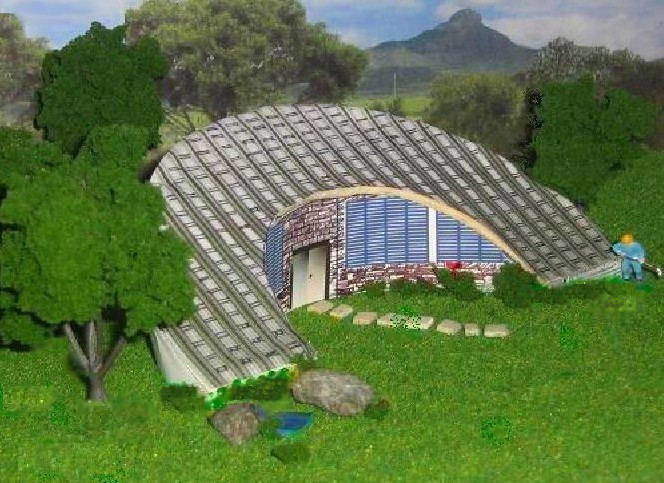
| The heliotropic house, portrayed above, is designed to capture as much solar light as possible. |