ACT LOCALLY      THINK GLOBALLY

     
Campaign Objectives

to support Local Councils in environmental initiatives and to provide them with the relevant information when they require it to make the urban environment more human oriented, greener and accessible.


Even before Local Councils were set up in Malta, ECO was already planning how such institutions could be instrumental to improve the urban environment which is the place where the majority of people spend their days.

When the 67 Local Councils were set up in 1993, ECO made it a point to meet each and every one of them to propose a number of ecologically friendly initiatives that could be adopted by each council.  These included:

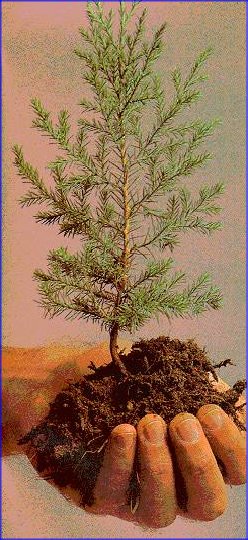
  • + 1 baby = + 1 tree  which consists of planting a tree for every baby born in the locality.
  • the introduction of pedestrian zones in the city centres. These consist of areas closed to cars and other traffic thus allowing pedestrians to wander freely, reduce pollution in the city centre and thus provide an area of socialisation for residents. In many cases this would be the square in front of the village church.  ECO suggested that pedestrian zones be introduced either for 24 hours or for a few hours a day like Republic Street in Valletta.
  • the planting of indigenous trees in each locality.  These include the balluta, cipress and gharghar, amongst others.
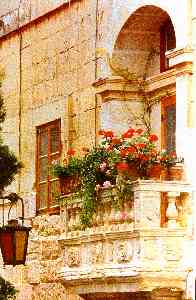
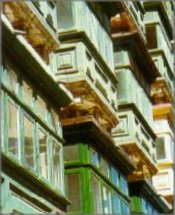
  • The organisation of a national and local competition so people place Flowers in Balconies                                                                     
  • To utilise unused historical sites, especially shelters, by transforming them into cultural museums of the locality    
  • To involve pensioners in activities to embellish the locality e.g. taking care of gardening in roundabouts, small parks etc. . .                                                                                            


  • In 1994 a summit was organised specifically for the Local Councils with the objective of discussing their role in environmental initiatives.  As a result of this summit several councils started working on a regional level to deal with problems common within the region                                                                                    
  • to carry out a sustainable development exercise that would result in a plan for their locality dealing mainly with landuse                                                                            
  • ECO proposed that bicycle lanes be introduced, that clean ups in valleys and beaches be organised, that the village character be retained through the conversion of old houses and their protection by proposing them for listing by the Planning Authority.
  • Ecological lighting was also one of the suggestions whereby councils were advised to use energy saving lamps (and solar energy when possible), not to use globes (and other lighting that creates light pollution), and to ensure adequate lighting in the locality to maximize safety.  


  • ECO proposed that the Council keeps an eye on air pollution mainly from traffic and industry. In this case, professional consultation is necessary especially if there is industry close to households.                       
  • Local Councils were also asked to encourage their residents to participate in the separation of waste scheme  to promote recycling.
  • With regards to the rehabilitation of quarries, ECO suggested that these could be used for agriculture, the disposal of construction waste, turned into bird reserves or simply landscaped for public parks.
  • During the year 2001 ECO met all local councils to explain the EuroMed programme and worked with particular councils on various issues.


ECO, The Malta Ecological Foundation, P.O. Box 322, Valletta CMR 01, Malta.
Fax: +356 338780 Email: [email protected]


Hosted by www.Geocities.ws

1