Welcome to

Electronics and Communication Engg Dept.

Swami Vivekananda Institute of Technology

( Affiliated to Jawaharlal Nehru Technological university)

Mahbub College Campus, Patny Center, Secunderabad – 500 003

Phone: 2771 17629, 9866544437 Fax: 040-27802469


AN OVERVIEW of the Past and the present

Swami Vivekananda Institute of Technology is located in the heart of the city, at Patny center, Secunderabad, and is well connected to all parts of the city by public transport system. The sprawling campus houses all modern facilities, state-of-the-art infrastructure, library, computer lab, comparable to the best.

Patny or Patny circle is a commercial hub in Secunderabad, Andhra Pradesh, India.

There was a famous landmark called as Patny Motors. The historic Mahbub college is also located in this hub. Initially founded in 1862 by

Late Mr. Somasundaram Mudaliar as a public school for primary education, a first in those days. This was also the place where Swami Vivekananda addressed a large gathering in 1893. There is also a
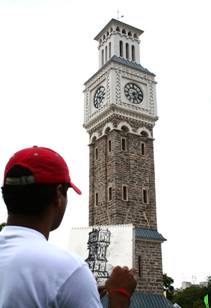
Clock Tower


A Historical Landmark near Mahbub College

post graduate college name after Swami Vivekananda in the same campus.

The school also conducts Yoga classes in the morning. A play school along with a new vocational college have been opened recently.

The area is a major commercial and shopping area with a beeline of clothing store which specially cater to women Secunderabad including CMR. Kalaniketan and Chandana Brothers The Udipi restaurants Taj Mahal and Kamat are popular here. Ananda Bhavan is another hotel of repute. Recent additions include Hotel Minerva Grand, Taj Belsons and Taj Tristar. The Secunderabad Telephone Exchange and the General Post Office are located here. Manju cinema situated right next to the Taj Mahal hotel is a convenient place for the locals to catch the latest Telugu and Hindi blockbusters.

Swapnalok complex, one of the earliest commercial complexes along with the Minerva complex provide excellent choices for the shoppers. A lot of shops right across these two complexes sell the Kolhapuri variety of chappals.

Unhurried formality, gentle manner,gracious respect and the Nawabi style are the hallmarks of Hyderabad, something that no city can imitate!


A Moment of History

A glance into the past reveals the historical significance of Mahbub College under the aegis of which the engineering courses are offered.


Founded in 1862 by Late Mr. Somasundaram Mudaliar,

the first public school for primary education has been a witness to the turn of two centuries.


Started as a primary school, Mahbub College has advanced, towards its goal of imparting knowledge and now the 143 year old institution supports the cause of Engineering Education.


A unique institution that houses three heritage sites : Excerpt from THE HINDU : Sunday, Jun 04, 2006


From a list of 20 structures identified in the city by the Hyderabad Urban Development Authority (HUDA), the Government has issued orders notifying 14 as Heritage Buildings. These buildings are in addition to the 137 buildings and nine precincts notified earlier.

The latest list of heritage structures includes a number of structures in Secunderabad, which is celebrating its 200th year.

The hoary Mahbub College, once a seat of English education, itself accounts for three buildings –

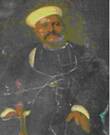
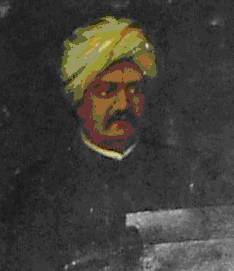
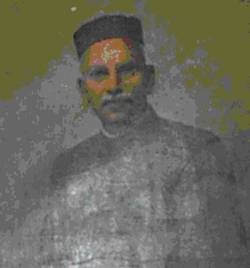
P. Ramachandra Pillai Memorial Hall, C. V. Padma Rao Memorial Hall and Muthiala Raman Memorial Hall (Mahbub College).

P. Ramachandra Pillai


Devan Bahadur C. V. Padma Rao

Rai Saheb Musthiala Ramanna

The other Secunderabad monuments include - Old Jail Complex (Monda Market), Wesley Church Complex (Secunderabad) and St. Mary's Presbytery (St. Anns School)

St. George's Grammar School Complex (Abids), Mr. Krishna Reddy's Building (Mehdipatnam), Bhoiguda Kamaan (Mangalhaat), IAS Officers Association Building (Greenlands), Mitti ka Sher, Nampally Sarai, Sheik Faiz ki Kamaan (Yakuthpura) and Ghode ki Qabar (Pan Mandi).

The HUDA Vice-Chairman had reported 20 additional buildings for notification as additional Heritage Buildings and after taking the opinion of Heritage Conservation Committee, newspaper notifications were issued inviting public objections and suggestions.

After receipt of objections/suggestions and consideration of the same, it was proposed to declare only 16 buildings as Heritage Buildings, the order noted. However, the Government, which also received objections and requests on consideration, decided to declare only 14 buildings as Heritage Buildings, it said.


Also, it is the only venue in Hyderabad where Swami Vivekananda has addressed a large gathering in 1893. It is to commemorate the spiritual icon of our country, the Engineering college is named after him. The arch erected to mark the great man's visit, stands like a rock, showcasing our institutions undying penchant to spread the light of knowledge.  


A page from the life of Swami Vivekananda


In Mysore, Swamiji got to know Diwan Seshadri Iyre and also the Maharaja of Mysore. The Swamiji's discourse in Sanskrit at a gathering of scholars deeply impressed the Maharaja. One day he questioned the Swamiji as to his future plans. "India is the land of many religions and schools of philosophy. The Western world has progressed in science. Human welfare is possible only by a reconciliation of the two. Therefore, I want to go to America in order to propagate Vedanta," said Swamiji. The Maharaja said, "Then I shall bear all the expenses of the visit." Swamiji thanked the Maharaja for his offer and promised him that he would make use of it when he needed it, and took leave of him.

Swami ji next visited Ramanad. Bhaskara Setupati was the ruler of Ramanad at that time. He discussed with Swamiji the problems that the country was facing. The prince treated him with great respect. "You should attend the Conference of World Religions in America. I shall bear all your travel expenses," said the ruler. Assuring the prince that he would give serious thought to his suggestion, Swamiji went to Rameshwaram and from there he finally reached Kanyakumari. He swam to a rock and sat on it. Surrounded there by the sea, he reflected on the state of affairs in India. The thought of the poverty of the masses in this country made him miserable. He decided that unless casteism was rooted out, there could be no salvation for his countrymen. He concluded that his first task was to go to Western countries and expose the spiritual values of India. He would then return to awaken his own slumbering land.

It was in Madras that the little lamp that appeared in Bengal's Narendra became the blazing light of all India as Vivekananda. It was there that pressure mounted on him to go to America. The fame he won in Madras travelled to Hyderabad. Thousands gathered at the meeting addressed by him there. it was the first ever public meeting addressed by Swamiji. After he returned to Madras from Hyderabad, he started making preparations for his tour abroad. Contributions towards his travel expenses poured in from all parts of the country. But he kept with him only as much money as he needed for the journey. He returned the rest of the money to the donors. The ship set sail from the Bombay harbour on 31st May, 1893.

Swamiji reached the city of Chicago in the middle of July. On his way he touched at the ports of Colombo, Singapore, Hongkong and Tokyo. He chose a hotel for his stay. He made enquiries about the opening of the Conference of World Religions. It was still three months away. How was he to stay so long in a strange place? The money he had was fast disappearing. Meanwhile, an international fair was going on. Swamiji was wandering in the premises of the fair. Just then he spotted a Maharaja from India. He approached the Maharaja. But the Maharaja turned away with a wry face.

Since Chicago was a big city and very expensive, Swamiji moved to the nearby city of Boston. On the way he met a lady. She was from Boston. She was amazed at Swamiji's strange attire, his magnificent physique, and his bright eyes. She decided that he was no ordinary man. She begged Swamiji to be her guest. He agreed. Occasionally he addressed meetings at small clubs. The subject of his talk was Indian Culture and the Hindu Dharma. Gradually many scholars became his friends. One of them was John Henry Wright. He was professor of Greek at Harvard University. He was greatly impressed by Swamiji's scholarship. The delegates to the Conference of World Religions had to submit their letters of introduction to the organisers. But Swamiji had lost his letter of introduction. Wright himself wrote the letter of introduction, in which he called Swamiji "A scholar who surpasses all of us professors."


A brief biography of Swami Vivekananda

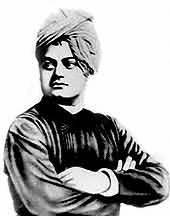
Swami Vivekananda (Jan 12, 1863 - July 4, 1902) is considered one of the most famous and influential spiritual leaders of the Hindu religion. He is considered by many as an icon for his fearless courage, his positive exhortations to the youth, and his broad outlook to social problems.

Swami Vivekananda was born Narendranath Dutta, son of a well-known lawyer in Calcutta, Biswanath Dutta, and a very intelligent and pious lady, Bhuvaneswari Devi, in the year 1863. Biswanath often had scholarly discussions with his clients and friends on politics, religion and society. He would invite Narendranath to join in these discussions. Narendra, not in the embarrassed, would say whatever he thought was right, advancing also arguments, in support of his stand. Some of Biswanath's friends resented Naren's presence among them, more so because he had the audacity to talk about matters concerning adults. Biswanath, however, encouraged him. Naren would say: "Point out where I'm wrong, but why should you object to my independent thinking?"

Naren learnt the Epics and Puranas from his mother, who was a good story-teller. He also inherited her memory among other qualities. He, in fact, owed much to her as he used to say later. Naren was all-round. He could sing, was good at sports, had a ready wit, his range of knowledge was extensive, had a rational frame of mind and he loved to help people . He was a natural leader. He was much sought after by the people because of his various accomplishments.

Naren passed Entrance Examination from the Metropolitan Institute and F.A. and B.A. Examinations from the General Assembly's Institution (now Scottish Church College). Hastie, Principal of the College, was highly impressed by Naren's philosophical insight. It was from Hastie that he first heard of Sri Ramakrishna.

As a student of Philosophy, the question of God was very much his mind. Was there a God ? If there was a God, what was He like ? What were man's relations with Him ? Did He create this world which was so full of anomalies ? He discussed these questions with many, but no one could give him satisfactory answers. He looked to persons who could say they had seen God, but found none. Meanwhile, Keshab Sen had become the head of the Brahmo Movement. He was a great orator and many young people, attracted by his oratory, enrolled as members of the Brahmo Samaj. Naren also did the same. For some time he was satisfied with what the Brahmo Samaj taught him, but soon he began to feel it did not quite touch the core of the matter, so far as religion was concerned. A relation of his used to advise him to visit Ramakrishna at Dakshineswar, who, he said, would be able to remove all his doubts about religion. He happened to meet Ramakrishna at the house of a neighbour, but there is nothing on record about the impression that he created on Naren's mind. He, however, invited Naren to visit him at Dakshineswar some day. As the days passed, Naren began to grow restless about the various riddles that religion presented to him. He particularly wanted to meet a person who could talk about God with the authority of personal experience. Finally, he went to Ramakrishna one day and asked him straightaway if he had seen God. He said he had, and if Naren so wished, he could even show God to him. This naturally took Naren by surprise. But he did not know what to make of it, for though his simplicity and love of God impressed Naren, his idiosyncrasies made him suspect if Ramakrishna was not a 'monomaniac'. He began to watch him from close quarters and after a long time he was left in no doubt that Ramakrishna was an extraordinary man. He was the only man he had so far met who had completely mastered himself. Then, he was also the best illustration of every religious truth he preached. Naren loved and admired Ramakrishna but never surrendered his independence of judgment. Interestingly, Ramakrishna himself did not demand it of him, or of any other of his disciples. Nevertheless, Naren gradually came to accept Ramakrishna as his master. He became famous as Swami Vivekananda, when he became the chief disciple of Sri Ramakrishna Paramahamsa. He studied philosophy at the Scottish Church College, Calcutta.

But Vivekananda is also renowned as a thinker in his own right. One of his most important contributions was to demonstrate how Advaitin thinking is not merely philosophically far-reaching, but how it also has social, even political, consequences. One important lesson he claimed to receive from Ramakrishna was that "Jiva is Shiva " (each individual is divinity itself). This became his Mantra, and he coined the concept of daridra narayana seva - the service of God in and through (poor)human beings. If there truly is the unity of Brahman underlying all phenomena, then on what basis do we regard ourselves as better or worse, or even as better-off or worse-off, than others? - This was the question he posed to himself. Ultimately, he concluded that these distinctions fade into nothingness in the light of the oneness that the devotee experiences in Moksha. What arises then is compassion for those "individuals" who remain unaware of this oneness and a determination to help them.

His books (compiled from lectures given around the world) on the four Yogas are very influential and still seen as fundamental texts for anyone interested in the Hindu practice of Yoga.

Swami Vivekananda belonged to that branch of Vedanta that held that no-one can be truly free until all of us are. Even the desire for personal salvation has to be given up, and only tireless work for the salvation of others is the true mark of the enlightened person.

However, Vivekananda also pleaded for a strict separation between religion and government ("church and state"). Although social customs had been formed in the past with religious sanction, it was not now the business of religion to interfere with matters such as marriage, inheritance and so on. The ideal society would be a mixture of Brahmin knowledge, Kshatriya culture, Vaisya efficiency and the egalitarian Shudra ethos. Domination by any one led to different sorts of lopsided societies. Vivekananda was a socialist at heart, but he did not feel that religion should be used forcefully to bring about an ideal socialist society, since this was something that would evolve naturally by individualistic change when the conditions were right.

Vivekananda is best remembered as the man who "stole the show" at the 1893 World Parliament of Religions in Chicago, where he earned wild applause for beginning his address with the famous words, "Sisters and brothers of America." This event marks the beginning of western interest in Hinduism not as merely an exotic eastern oddity, but as a vital religious and philosophical tradition that might actually have something important to teach the west. Within a few years of the Parliament, he had started Vedantic centres in New York and London, lectured at major universities and generally kindled western interest in Hinduism. After this, he returned to India. He started Sri Ramakrishna Math and Mission founded on the principle of Atmano Mokshartham Jagad-hitaya cha (for one's own salvation and for the welfare of the World). This institution is now one of the greatest monastic orders of Hindu society in India. He was only 39 years old when he passed away.

Teachings

    1. My ideal, indeed, can be put into a few words, and that is to preach unto mankind their divinity, and how to make it manifest in every movement of life.
    2. Religion is the manifestation of the divinity already in man.
    3. Religion is the idea which is raising the brute unto man, and man unto God.
    4. The secret of religion lies not in theories but in practice. To be good and do good - that is the whole of religion.
    5. Man is higher than all animals, than all angels; none is greater than man.
    6. One may gain political and social independence, but if one is a slave to his passions and desires, one cannot feel the pure joy of real freedom.
    7. Look at the wall. Did the wall ever tell a lie? It is always the wall. Man tells a lie and becomes a god, too.
    8. After so much austerity, I have understood this as the real truth - God is present in every jiva; there is no other God besides that. 'Who serves jiva, serves God indeed.'
    9. Cut out the word help from your mind. You cannot help; it is blasphemy! You worship. When you give a morsel of food to a dog, you worship the dog as God. He is all, and is in all.
    10. Unselfishness is God. One may live on a throne, in a palace, and be perfectly unselfish; and then he is in God. Another may live in a hut and wear rags, and have nothing in the world; yet if he is selfish, he is intensely merged in the world.
    11. All nations have attained greatness by paying proper respect to women. That country and that nation which do not respect women have never become great, nor will ever be in future.
    12. With five hundred men, ... the conquest of India might take fifty years: with as many women, not more than a few weeks.
    13. Religion and religion alone is the life of India, and when that goes, India will die, in spite of politics, in spite of social reforms, in spite of Kubera's wealth poured upon the head of every one of her children.
    14. Before flooding India with socialistic or political ideas, first deluge the land with spiritual ideas.
    15. We want to lead mankind to the place where there is neither the Vedas, nor the Bible, nor the Koran; yet this has to be done by harmonizing the Vedas, the Bible, and the Koran.
    16. Mankind ought to be taught that religions are but the varied expressions of THE RELIGION, which is Oneness, so that each may choose the path that suits him best.
    17. Who will give the world light? Sacrifice in the past has been the Law, it will be, alas, for ages to come. The earth's bravest and best will have to sacrifice themselves for the good of many, for the welfare of all.
    18. Truth, purity, and unselfishness - whenever these are present, there is no power below or above the sun to crush the possessor thereof. Equipped with these, one individual is able to face the whole universe in opposition.
    19. Everything can be sacrificed for truth, but truth cannot be sacrificed for anything.
    20. The highest ideal is eternal and entire self-abnegation, where there is no 'I', but is Thou'.
    21. All expansion is life, all contraction is death.
    22. All love is expansion, all selfishness is contraction. Love is therefore the only law of life. He who loves lives, he who is selfish is dying. Therefore love for love's sake, because it is law of life, just as you breathe to live.
    23. The national ideals of India are Renunciation and Service. Intensify her in those channels, and the rest will take care of itself.
    24. Good motives, sincerity, and infinite love can conquer the world. One single soul possessed of these virtues can destroy the dark designs of millions of hypocrites and brutes.
    25. Take up one idea. Make that one idea your life - think of it, dream of it, live on idea. Let the brain, muscles, nerves, every part of your body, be full of that idea, and just leave every other idea alone. This is the way to success.
    26. The world is the great gymnasium where we come to make ourselves strong.
    27. Feel like Christ and you will be a Christ; feel like Buddha and you will be a Buddha. It is feeling that is the life, the strength, the vitality, without which no amount of intellectual activity can reach God.
    28. The will is not free - it is a phenomenon bound by cause and effect - but there is something behind the will which is free.
    29. The more we come out and do good to others, the more our hearts will be purified, and God will be in them.
    30. There is nothing beyond God, and the sense enjoyments are simply something through which we are passing now in the hope of getting better things.
    31. The moment I have realized God sitting in the temple of every human body, the moment I stand in reverence before every human being and see God in him -- that moment I am free from bondage, everything that binds vanishes, and I am free.
    32. Our duty is to encourage every one in his struggle to live up to his own highest idea, and strive at the same time to make the ideal as near as possible to the Truth.
    33. That man has reached immortality who is disturbed by nothing material.
    34. You have to grow from the inside out. None can teach you, none can make you spiritual. There is no other teacher but your own soul.
    35. The goal of mankind is knowledge. . . . Now this knowledge is inherent in man. No knowledge comes from outside: it is all inside. What we say a man "knows," should, in strict psychological language, be what he "discovers" or "unveils"; what man "learns" is really what he discovers by taking the cover off his own soul, which is a mine of infinite knowledge.
    36. If money help a man to do good to others, it is of some value; but if not, it is simply a mass of evil, and the sooner it is got rid of, the better.
    37. All differences in this world are of degree, and not of kind, because oneness is the secret of everything.
    38. To devote your life to the good of all and to the happiness of all is religion. Whatever you do for your own sake is not religion.
    39. The greatest religion is to be true to your own nature. Have faith in yourselves!
    40. The spirit is the cause of all our thoughts and body-action, and everything, but it is untouched by good or evil, pleasure or pain, heat of cold, and all the dualism of nature, although it lends its light to everything.
    41. It is our own mental attitude which makes the world what it is for us. Our thought make things beautiful, our thoughts make things ugly. The whole world is in our own minds. Learn to see things in the proper light. First, believe in this world -- that there is meaning behind everything. Everything in the world is good, is holy and beautiful. If you see something evil, think that you are not understanding it in the right light. throw the burden on yourselves!
    42. In one word, this ideal is that you are divine.
    43. All the powers in the universe are already ours. It is we who have put our hands before our eyes and cry that it is dark.
    44. If faith in ourselves had been more extensively taught and practiced, I am sure a very large portion of the evils and miseries that we have would have vanished.
    45. Where can we go to find God if we cannot see Him in our own hearts and in every living being.
    46. The Vedanta teaches that Nirvana can be attained here and now, that we do not have to wait for death to reach it. Nirvana is the realization of the Self; and after having once known that, if only for an instant, never again can one be deluded by the mirage of personality.
    47. The Vedanta recognizes no sin it only recognizes error. And the greatest error, says the Vedanta is to say that you are weak, that you are a sinner, a miserable creature, and that you have no power and you cannot do this and that.
    48. Never think there is anything impossible for the soul. It is the greatest heresy to think so. If there is sin, this is the only sin - to say that you are weak, or others are weak.
    49. Truth can be stated in a thousand different ways, yet each one can be true.


A letter written by Vivekananda when he was in Hyderabad

To Shri Alasinga Perumal

C/o Babu Madhusudan Chattopadhyaya Superintending Engineer

KHARTABAD, HYDERABAD,

11th February, 1893.

DEAR ALASINGA,

Your friend, the young graduate, came to receive me at the station, so also a Bengali gentleman. At present I am living with the Bengali gentleman; tomorrow I go to live with your young friend for a few days, and then I see the different sights here, and in a few days you may expect me at Madras. For I am very sorry to tell you that I cannot go back at present to Rajputana. It is so very dreadfully hot here already. I do not know how hot it would be at Rajputana, and I cannot bear heat at all. So the next thing, I would do, would be to go back to Bangalore and then to Ootacamund to pass the summer there. My brain boils in heat.

So all my plans have been dashed to the ground. That is why I wanted to hurry off from Madras early. In that case I would have months left in my hands to seek out for somebody amongst our northern princes to send me over to America. But alas, it is now too late. First, I cannot wander about in this heat — I would die. Secondly, my fast friends in Rajputana would keep me bound down to their sides if they get hold of me and would not let me go over to Europe. So my plan was to get hold of some new person without my friends' knowledge. But this delay at Madras has dashed all my hopes to the ground, and with a deep sigh I give it up, and the Lord's will be done! However, you may be almost sure that I shall see you in a few days for a day or two in Madras and then go to Bangalore and thence to Ootacamund to see "if" the M—Maharaja sends me up. "If" — because you see I cannot be sure of any promise of a Dakshini (southern) Raja. They are not Rajputs. A Rajput would rather die than break his promise. However, man learns as he lives, and experience is the greatest teacher in the world.

"Thy will be done on earth as it is in heaven, for Thine is the glory and the kingdom for ever and ever." My compliments to you all.

Yours etc.,

SACHCHIDANANDA.

(Swamiji used to call himself such in those days.)

Other names used by Vivekananda were : Narendra, Naren, Vividishananda and Sachchidananda


Hosted by www.Geocities.ws

1