
Buckinghamshire Mind
a Mental Health charity
OUR FEATURE ARTICLE:

Swings & Roundabouts
ALSO IN THIS
ISSUE
· Protecting
Vulnerable Adults
·
Psychology
for Social Skills
·
Social
Integration
IMPORTANT - PLEASE READ
The End Is Nigh!
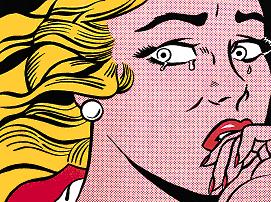
Protecting Vulnerable Adults - A Difficult Balancing Act
by
Mark Sampson
There are only a handful things in this world that get me seething with anger,
one of which is the exploitation of vulnerable adults.
In the mental health arena, for me, vulnerable adults break down into two
main categories:
1) Those whose
mental illness is acute to the extent that it severely clouds their judgement.
2) Those people who,
along with mental illness, also have a learning disability, who are sometimes
lacking a comprehensive understanding of the consequences of certain actions.
There are those people out there who will see such people as easy
targets, exploiting them sexually or financially for their own gain. In terms
of financial abuse, the cynic in me can't help thinking that sometimes pushy
salesmen and credit companies DELIBERATELY seek out such people because they
know that they're easy targets.
Yet I admit I am in conflict with myself as to what is the right thing to
do. Yes there are unscrupulous people out their who will take advantage but, in
order to protect these vulnerable people, is it really right to wrap them in
cotton wool and lock them away from “the big bad world”? I so desperately want
to see these people protected, but the liberal in me strongly believes they
deserve the right to function as regular members of society, and not to be denied
the rights that other members of the public have in terms of sexual lifestyle,
access to loans and credit facilities, etc.
Often, if the person's capacity to consent is extremely limited, they
will either be placed in a hospital or home or looked after by a relative or
friend and, understandably, will have a more limited amount of independence.
Yet, it is those that fall slightly outside this category who are most at risk.
Their condition might not be severe enough for them to lose their independence,
but their judgement may still be impaired to such a significant extent that
they can get themselves into a great deal of trouble. And due to lack of
funding in the Mental Health System, means that this is happening more than
ever.
Yet this is not the only area where vulnerable adults are mistreated.
Sometimes in residential homes you get one or two control freaks working there,
people who have so little power in their own personal lives that they like to
go into jobs where they can control and order about other people. The blatant
lack of respect these people show for the those they are paid to care for has
at times horrified me.
It should be worth noting, however, that these kind of staff are,
thankfully, in the minority and definitely not representative of the average
residential worker.
It should also be noted that, if we wrap vulnerable adults up in too much
cotton wool, we risk stunting their development as people. Let’s face it we all
hate making mistakes, but while the process can be a painful one, it can
sometimes be an invaluable educational experience, making us a little bit wiser
about the world around us.
But, that being said, if we can clearly see the more corrupt elements of
society trying to take advantage of the vulnerable, we shouldn’t just sit back
and let them get on with it. The relevant people need to be notified and the
vulnerable adult needs to be made fully aware of what the abuser’s real agenda
is.
So what is the best way to protect those vulnerable adults living
independently? I think, on the whole, the best thing to do is ensure these vulnerable
people have access to a good social network (if that is something they would
like). Quite often, those people who are the most exploited are the loners who
don't have people around them who can pick up on the warning signs.
Yes, in this magazine we regularly extol the virtues of day centres (and
why wouldn't we, they've worked for us?!), and now is no exception, but they
are merely one of many options available. Things for people to get involved
with also include (but are not limited to): voluntary work (if the person is
not in paid employment), churches (as long as they're not too pushy) and activity
clubs (bowling, rambling, fishing, etc).
Psychology For Social Skills
by
Paul Nelson
It seems like an
eternity, but it’s probably a few years ago that I was introduced to a plain
talking man who was able to clear up a few mysteries in my life. He was to be
my psychologist for the next few months, and at my request helped me out with
some pointers about social interaction (traditionally a very weak card of mine)
and referred me on to a dietician for help with appetite control.
My previous
experience of psychologists “helping” me was a bewilderment of flip charts and
flow diagrams and some primate noises establishing that he, the psychologist,
was the top dog in the room. All very unhelpful.
But Keith, bless
him, came straight to the point and delivered the goods on how normal social
interactions go and why I felt left out and how I could be left in more!
First, I found
that I was a “space maker”, someone who makes room for other people by taking
up less and less room himself. A space maker is a victim and we preferred to
have equality because that’s where real communication can begin.
Keith made
repeated efforts to get me to open conversations, be the first to speak; and I
was shocked to find how difficult that still was for me.
I learned that I
was too polite for my own good and needed to be more aggressive in the right
way. I needed to butt into conversations more because that is what people do.
It was a blessing to have the world of psychology made simple for me and
presented plainly so I could understand and make use of it.
He explained how,
when three people are together, one always feels left out and that is normal.
And how people like to be together but aren’t very good at it. A lot of the
exclusion I felt at parties and other social gatherings was apparently due to
unawareness and ignorance on the part of the normal talkers. Apparently only a
tiny minority of humans are actively malevolent, which was different from how I
had been reading it. Most of the bad stuff arises from lack of awareness
instead of indifference or malevolence.
All this may seem
straightforward to some of my readers, but it was news to me and has made a big
difference for the better in my life.
If I’m the third
man I’m aware it’s not personal and feel better about it. I’m better at
“butting into” the conversation. I’m probably still too polite but am working
on it. I am getting better at initiating conversations with people I know, but
still find strangers difficult.
This approach to
psychology has helped me greatly and I am grateful to Keith Butler for his
“made simple” approach.
I wish I’d had
access to this kind of information and this outlook on it when I was a teenager
failing to socialise.
Obviously other
factors have also been at work but this has been an education and a healing for
my past and for my future.
Social Integration
by
Adam Makeham
But that doesn’t
make social integration a bad thing in itself. I personally would like very
much to be able to integrate with the rest of society, and too some degree I
have achieved this. Yet it has taken me a long time, especially as there is so
little in the way of opportunities in this respect.
If you are in
full-time paid employment, then you are to a degree interacting with the rest
of society. However, for those of us not able to hold down such a job, social
integration is a lot more difficult.
The most popular
place for society to congregate is the pub. Yet this can prove to be very
expensive for the person on benefits. And it times it can be a very noisy and
claustrophobic environment, which is not always helpful if you have problems
with anxiety.
Coffee-shops,
which are increasing in popularity, offer a far more relaxed environment, but
they often work out even more expensive than the pubs do!
Another factor
that goes against us in realising the goal of social integration is the stigma
of mental illness. Some people are less willing to engage with you if they know
you have such issues. Sometimes this can be down to the misapprehension that
you’re dangerous, other times it can be down to them viewing you they as a
“down and out” because you can’t hold down a job.
So is there no
way we can promote social inclusion? Well, as a matter of fact yes - there is!
I have an idea – The Universal Drop-In! You see a lot of day-centres around now
are exclusively for people with specific kinds of needs e.g. mental illness,
old age, learning disabilities, physical disabilities, etc. These services are
extremely useful and must keep going at all costs as it is very helpful to be
able to share your experiences with people in similar situations. The problem
is though that these clubs do not enable you to interact with the rest of
society.
There need to be
drop-in clubs where people from ALL walks of life can attend. Because
loneliness is not just something experienced by people with mental illness, it
can affect everyone from the single parent to the university graduate to the
retired police constable.
There are already
some “Universal Drop-Ins” in existence, but these are not very well-known about
and often are only open once or twice a week for a few hours at a time. We need
a bit more than this, we need drop-ins where people can come and go as they
please without any pressure.
Sadly, I am the
first to acknowledge that the odds are against this ever happening because it
will not be seen as financially viable by the people who have the power to make
it happen, as they themselves have very little money to work with.
Yet, in the words
of Martin Luther King, I HAVE A DREAM! A dream that one day, local
organisations and churches, driven by a sense of community spirit, will team
together to make such a service possible. Sadly for now, that’s all it is – a
dream. But nevertheless I live in hope.
Swings and Roundabouts
by
Eve Chaloner
It is with
sadness that I write this article, as it will be the last one I submit for our
well written and well read magazine The Eccentric Times.
It seems such a
shame that the magazine will be coming to an end soon. The Eccentric Times team
has always tried to help by getting important information across to people not
only around Bucks, but all across the country. All of the people contributing
have had their own points of view and experience, from being in the Mental
Health system and living with a mental illness. But now we that, if we continue
much longer, we realise we run the danger of repeating ourselves and running
out of steam.
In the
complicated world of mental health, it can be very baffling to understand what
is going on. You may (sometimes) be given support when you are in great need,
but as soon as you start to make a little progress, all of this can be taken
away from you because the people providing the support come to the incorrect
conclusion that you can stand on your own two feet. The problem is that they
don’t delve deep enough to get the whole picture. For someone like me this can
be disconcerting because, while it can appear that I’m starting to get my life
together, there are still a great deal of issues under the surface that still
need addressing.
I have been
taking anti-depressants for quite a while now and as a result have been to see
GPs quite a few times over the years. Yet, when I tell GPs that I need help,
they don’t take my requests seriously just because I haven’t harmed myself or
anyone else around me!
So, by their
rationale, the fact that I wish I hadn’t been born, the fact I get severely
depressed, the fact that I don’t feel I can function properly without outside
help and the fact I have poor self-esteem all count for nothing. Big deal!
I would like to
have a nice life just like anybody else, but I feel that I can’t get to that
stage until I sort these issues out. But because I keep it all inside, rather
than scream and shout in public places like some do, my needs are the ones that
get overlooked.
I’ve had to fight
long and hard for the support I get now, but sometime in the near future that
support will be completely withdrawn. As a result of this, my life will slowly
go back to the way it was before and my problems will eventually get as bad as
they had been previously.
Before I got the
support I have now, my flat was in a terrible state. But now I have, with help,
managed to get my flat tidy to the extent that it is now a much more pleasant
place to live again. But now that this help is being withdrawn it will
inevitably revert back to the mess it was in before. But you see, my place
represents my life, when my flat’s in a mess my head’s in a mess. Just when it
felt like I’m getting back on my feet BANG! WHALLOP! the support is being taken away. Now by the
looks of it I will be going back to the way I have been all my life. Like most
people in the Mental Health System, I feel like I am going round in circles.
.
Tranquilized
Tim

Eligibility Criteria
Whenever new
people meet me, one of the first things they say after a few minutes of conversation is "you
need help". I respond by telling them that I am fully aware of this but am
unable to get any due to a little thing called "eligibility
criteria". These people then say that they were just using it as a figure
of speech and then take the opportunity to make their excuses and get away from
me as quickly as possible.
So what is
eligibility criteria? It's basically the checklist the mental health system has
to ensure you have a mental illness. Pinning down a definition of "mental
illness" that everyone agrees on can be very tricky. To the majority of
us, the term means " any of various psychiatric disorders or diseases,
usually characterized by impairment of thought, mood, or behaviour” (courtesy of
The American Heritage Science Dictionary), or in laymans terms, to the person
suffering the affliction, "flipping 'eck, me brain's gone all
skew-whiff!"
Yet this is not
so clear cut in the mental health system, where general experience suggests
that it is adaptable on a person to person basis to ensure that the individuals
own specific set of needs DON’T qualify.
Sometimes your
assessors will try and pin the blame on other factors for your issues and do
things like search your head for subtly protruding objects such as knives.
To add weight
to your case it might be advisable to go around making clucking noises and
intermittently shouting out "I'm a chicken!" Yet this itself is not
even 100% guaranteed to work as there is also government legislation in place
to protect your right to be a chicken, if that is the lifestyle you so wish to
choose for yourself.
Also being a
chicken can affect your entitlement to sickness benefits, as these are
generally only restricted to humans. Mind you, this unfair balance may soon be
addressed, as the recent spate of "means tested" assessments strive
to ensure that ALL creatures with mental health issues will not have access to them.
If you
wish to contact us you can do so at the following address:
The Eccentric Times
Buckinghamshire Mind (Wings)
Aylesbury
HP20 2RQ
E-mail: [email protected]
We may even include your letter in our next issue,
but please note that letters may be edited for the sake of space and clarity.
Please can you also mention where you saw the magazine.
Mailing List
If you wish to be added to
our postal or internet mailing list then please contact us on one of the above
addresses.
We would like to thank
Buckinghamshire Mind
The Eccentric Times Roll of Honour
The Eccentric Times Team
Mark Sampson - Editor
Paul Nelson - Deputy Editor
Danya Day – Chief Motivator
Adam Makeham - Public Relations Officer
Eve Chaloner – Researcher
Neil McMillan
A Message
From
Tranquilized Tim
HEY
BUSTER!
Want to see back issues of our magazine?
Want to
see profiles and pictures of the Eccentric Times team?
Want to
see Adam in his Elvis costume?
Then visit the Eccentric Times WEBSITE:
www.geocities.com/eccentrictimes