Prof: Leonardo Mendoza

On a Friday night / Saturday morning
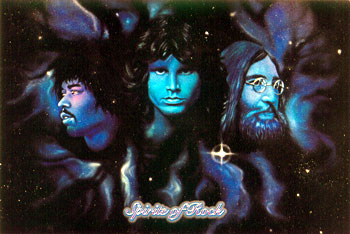

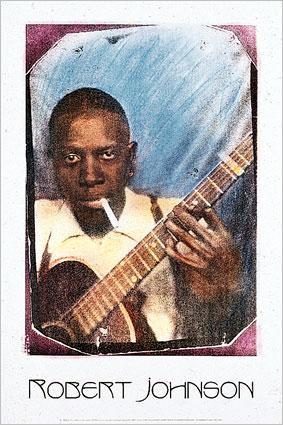

Rock music (Rock and Roll) grew out of the American Country and Blues musical traditions. From its beginnings as the music of youth and rebellion Rock has constantly evolved. Some aspects remained cutting-edge and dangerous while others have gained widespread mainstream acceptance. It splinters and fragments, co-opts and combines, and it does so on any number of different fronts and all at the same time. Rock is such a vague term that could potentially describe thousands of artists, thus creating a large and meaningless category.
I have collected information of the precursors of rocks, in as broad a scope as possible, in order to give you an idea of how to start interpreting the sociological origins and effects of the various American styles. I know it's a LOT to read, but I really hope you can gain something from it. Those of you who grew up listening to some of the styles mentioned will enjoy learning a bit� have fun.
WHERE IT ALL STARTED�..
Ok, the first thing first; these styles are the precursors of modern music. Note how they are almost parents to the next genre, since American music evolved in a continuous united family.
Gospel music is music from the black church, usually southern but not necessarily. As the African slaves came to America, they found their only comfort in the church, a place that offered them some hope of a life afterwards. They expressed their happiness, sadness, hopes, and sufferings through their songs. Gospel music is rhythmic, emotional and powerful, and it was a major influence in the origins of the Blues and Jazz and therefore all the R&B and Rock and Roll that grew out of that. Everyone from Ray Charles to James Brown to Aretha Franklin came up on Gospel. After this genere came THE BLUES. Read here an in-depth analysis on Blues Music .
Jazz is a uniquely American invention. Largely African American in origins, it grew out of the blues. During the beginning of the 20th century blues progressions and scales were co-opted by urban dance bands. These early styles of jazz include ragtime, dixie-land and swing. Jazz as a music emphasizes improvisation and virtuosity and therefore has a scholarly and critical respect that other forms of popular music lack.
In theoretical terms the genre is generally marked by intricate, propulsive rhythms, polyphonic ensemble playing, improvisatory, virtuosic solos, melodic freedom, and a harmonic idiom ranging from simple diatonicism through chromaticism to atonality. (I include this because one or two of you might actually be interested in the 'mechanics' of music, and maybe you want to compare it to Korean tonalities and scales- by the way, Can anyone teach me some basic Korean musicology? I'm real interested in it..)
Because jazz was largely a black and lower class phenomenon it was largely ignored by mainstream America for some time. However jazz gained a wider audience when white orchestras adapted or imitated it, and became a "legitimate entertainment" (read, "commercially profitable"), in the late 1930s when Benny Goodman led racially mixed groups in concerts at Carnegie Hall. Jazz has been around nearly a century and as a term now encompasses a myriad of styles and subgenres. The dancey swinging sounds of Glenn Miller's or Benny Goodman's big band, the frenetic and chordal sounds of Charlie Parker's seminal be-bop, the mellow bluesy improvisations of Miles Davis' "Cool" period, the rock and eastern influenced experiments of the Mahivishnu Orchestra, and the smooth soul groove of Roy Ayers' Ubiquity recordings: All this and more is jazz
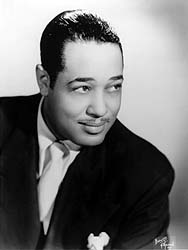
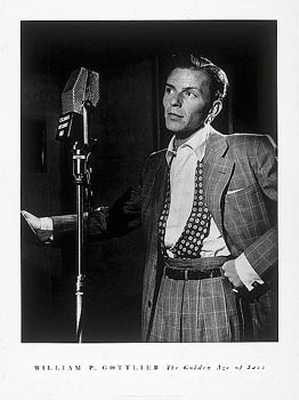
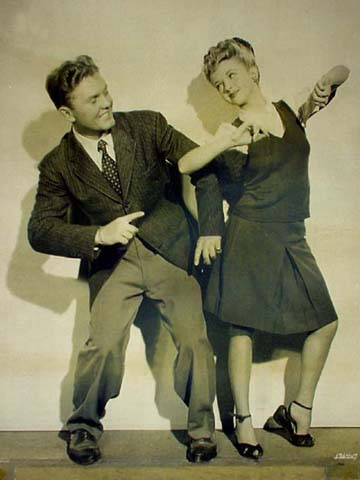
Swing grew out of New Orleans and Dixieland Jazz. It took those styles, put them in Big Bands, and gave them set arrangements. It is an upbeat and dancey style of Jazz. Swing was around for at least a decade, in the form of artists like Louis Armstrong, before Benny Goodman brought it mainstream popularity in 1936. Major players include Armstrong, Goodman, Tommy Dorsey and Glenn Mille. You've seen swing dancing in the movies, and I've see it in Korean dance halls, by people who apparently spend a considerable amount of time learning how to dance it.
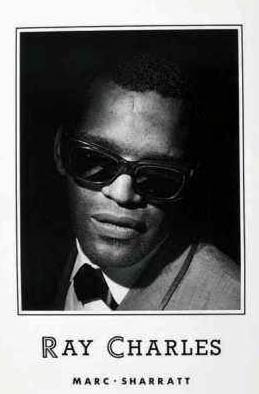
R&B, a style of Jump-Blues-based, backbeat-heavy music of the late '40s and early '50s (think classic Ray Charles and Fats Domino) evolved into Rock and Roll. Meanwhile, those that didn't go rock went Soul, then Funk, then Urban, Since R&B is another umbrella term, anything from George Clinton to Whitney Houston to Donald Byrd could fit here.
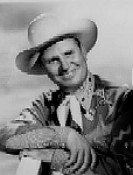
Country music happened when Southern American poor whites, mainly of Scots-Irish heritage, mixed their traditional folk music with the dynamic and powerful sounds of the Blues that the poor blacks around them were playing. "The Singing Brakeman" Jimmie Rodgers and The Carter Family are often cited as the first major Country musicians, and Hank Williams was the first Country musician to become a full-blown popstar. Country music birthed rockabilly, which, in the person of Elvis Presley, was instrumental in birthing Rock and Roll, which was Rockabilly combined with Blues. Like all major American genres, Country music is now a description for many different styles, from the barroom Funk of Honky Tonk to the Jazzy Big Band sound of Western Swing to the electric sound of Country Rock to the slickly produced, pop-influenced sound of Contemporary Commercial Country, which just happens to be my personal favorite style of music. If any of you are interested in learning about it, I will gladly supply you with info on how to enjoy this most excellent of ALL American music styles (I'm slightly biased, being from the south).
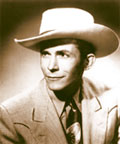
Rockabilly was a crucial precursor to Rock and Roll, and it was basically invented by Elvis Presley and Sun Records guru Sam Phillips in 1954 with Elvis' first single, and overnight success, "That's All Right, Mama," in which the singer, exasperated with a long and unproductive day of recording, decided off-the-cuff to launch into a raw, spirited, and playfully hillbilly rendition of a song by black Blues singer Arthur "Big Boy" Crudup. At Sun, Presley and Phillips defined the sound that continues to typify Rockabilly today, in which a band usually consisting of guitar, drums, and upright bass plays a hybrid of Country and rhythmic Blues while a (preferably eccentric) singer, whose voice is usually recorded with "slapback" echo, belts it out into the mic.
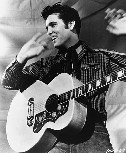
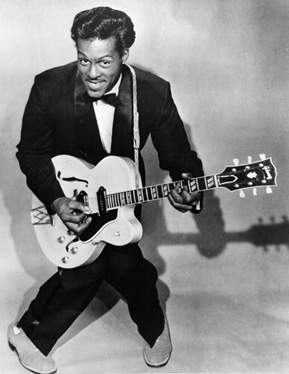
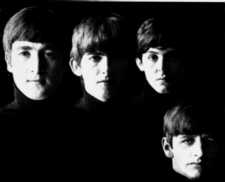
Early Rock & Roll combined the influences of rockabilly and jumping R&B into a new, exciting musical genre that quickly took over the world. The Beatles, (British, but America embraced them) Chuck Berry, Bill Haley and the Comets, Buddy Holly, Bo Diddley, Little Richard and later Jerry Lee Lewis all cranked out sweaty, visceral, classic, early Rock & Roll.
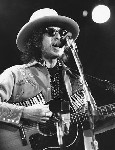
Classic Rock is an umbrella term that basically describes the best (and most played ) work of white hard guitar rock bands from the 60s and 70s, Led Zeppelin, Lynyrd Skynyrd, Bad Company, and the like. It basically was a Social statement (more info on page 3). A great factor in the formation of CLassic Rock were the Festivals-Woodstock being the most famous. If you want to learn more about those festivals, click here.
Folk is also an integral part of this movement. It grew out of social needs. often it interweaves genres.It is a difficult style to define, but you can click here for an in-depth article on the social relevance of folk music.
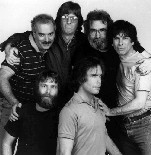
The first Surf rock single belongs to guitar virtuoso Dick Dale, whose "Let's Go Trippin" set the instrumental mold - reverby and cascading guitar washes over propulsively simple rock beats - that many surf rock bands, from the Ventures to the Surfaris, were to follow. Jan and Dean and especially the Beach Boys took Surf to the next level, wrapping the style around skillfully written pop songs sung in gorgeous, complex harmonies.
Soul can be said to encompass almost all R&B made after the '60s, but we confine it to '60s and some '70s stuff. Three major sounds dominated Soul over that time. They are Motown, Stax and Philly-soul. Soul continues to this day. It is really broad.
Motown
Motown is essentially R&B put out by the Motown record label, a label that, in the 60s and 70s, released a stunning string of Soul-Pop releases by artists like Martha and the Vandellas, The Four Tops, The Supremes, Smokey Robinson, Marvin Gaye, and Stevie Wonder. The Motown recipe involved underpinning insistent, engaging Soul with carefully crafted songwriting, innovative and addictively poppy arrangements, and a mannered, urbane presentation. It is the precursor of modern black music.
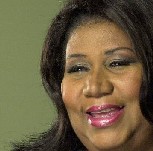
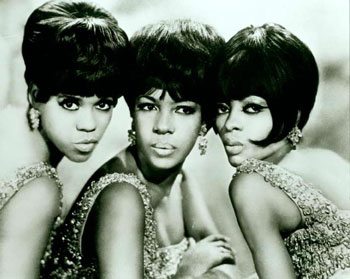
Funk took Soul and worked it on overdrive, adding Rock textures and focusing on one highly accentuated (but repetitive) groove. Stax and Motown were funky but James Brown, with his ultra-tight minimalist groove, and Sly Stone, with his upbeat, psychedelic Soul, get the credit for inventing the Funk. Those cats ran things until George Clinton and his Parliament/ Funkadelic outer-space army fused their sounds with Hendrixian guitars and Zappaesque concepts and comedy.
Hard Rock is a very big term. Essentially, Hard Rock is loud, semi-distorted, guitar based Rock and Roll. It is neither as improvistional as Blues or Psychedelic Rock nor as fast and aggressive as either Metal or Punk. Aerosmith, Van Halen, Thin Lizzy and Bad Company are but a few examples of the multiplicity of Hard Rock acts out there. Bon Jovi is my favorite band of this bunch.
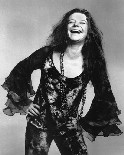
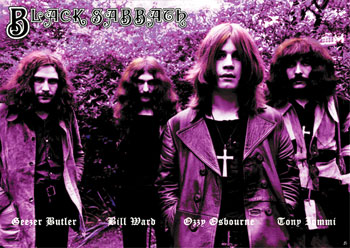
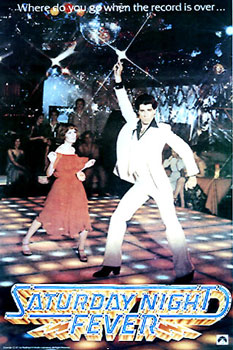
Disco took the groove-heavy Funk sound and emphasized the groove even more. Whereas Funk could be slow or fast and album or concept oriented, this stuff is all roughly the same bpm and is meant for the dancefloor. Disco got huge in the late '70s and crossed over into Pop and even Rock. Bigtime disco names are KC and the Sunshine Band, Donna Summer, and the Village People, but everyone from the Stones to Rod Stewart tried their hand at it. By the way, everyone who loved disco now denies it, since it is considered VERY uncool.. that's why John Travolta disappeared for almost 20 years!
Punk Rock emerged nearly simultaneously in both New York with the Ramones and London with the Sex Pistols. These pioneering bands, rising out of the ashes of Garage rockers like the Stooges and the MC5, Glamsters like the New York Dolls, and the minimalism of the Velvet Underground, were loud, fast and in your face.
Rock and Roll had become bloated on ego and excess (both personally and artistically) and Punk drained the fluid right out of that mangled corpse, leaving only the essentials. 3 chord riffs, loud and fast beats and angry lyrics scared the establishment and titillated the youth much as early Rock and Roll had done.
Punk flirted with mainstream success only briefly in the States and soon fizzled in the UK as well. What was left stayed underground, growing and subdividing until the term Punk is now not much more descriptive than is the term Rock. It's important because it influeced current trends.
80's rock developed as an answer to the hard hitting often over the top 70s back street movements. Disco was the most visible style, and Rock was considered to have died. But the spirit lingered in bands like the Rolling Stones, Bruce Springsteen, etc. In the 80's, when Disco fizzled out like a bad firecracker, guitar-driven Rock came back into mainstream, spearheaded by bands like Bon Jovi, Huey Lewis and the News, Def Leppard, and The Police.
I was a teenager during that time, so next to Country, it is my favorite style of music, my very own rebelliousness towards my parents..(just ask my mom)