
Discuss the concept of ‘praxis’, the usefulness of its meaning and intended applications within the learning or administrative / leadership environment of an organisation.
Introduction
This paper has been structured into 3 parts. The 1st part will define the concept of ‘praxis’ and the definition given by academics in this subject. The 2nd part will explain and showcase its application within the learning and leadership environment of one organisation that I admire; the Outward Bound School. To bridge this understanding of praxis and its meaning I will describe the work undertaken by the co-founder, Kurt Hahn, an educator whose concept and views in developing the youth is still practised today. The last part, integrates my understanding of praxis and its influence on my experiences. I am a product of Kurt Hahn’s philosophies and my values would also have been sharpened and influenced through the influence of his methodology in developing a whole person. As a comparison against what is not praxis, I will feature an example of an environment that does not except, elements of praxis, when imparting specific modes of learning.
Concept of ‘praxis’
Peter’s 1976, provided a few broad definition about education. I intend to highlight his overviews as it shows a stark similarity towards the ideals that Kurt Hahn wholly believed, in his pioneering effort in building schools that bucked the trends of conventional educational system during the period of 1920’s and the Outward Bound Schools that were built using his educational ideals. Peter’s view, enscapulated the processes of education as:
|
Training |
|
Instruction and learning by experience |
|
Teaching and the learning of principles |
|
The transmission of critical thought |
|
Conversation and the whole person |
Peters also added that the tasks or processes are relative to the achievements of the learner. The fundamental task of the teacher, consists in the employment of various "tools" or methods to get the learning process going. This is in stark similarity to the methodologies practised by Kurt Hahn, who incorporated adventure learning and craftsmanship, in the Gordonston school that he spearheaded in Scotland. Peters strongly viewed that to learn something is to succeed in some aspects. The achievement must be that of the learner. In retrospect to explain, the meaning of ‘parxis’ I will site examples against a learning environment where, this concept will be viewed as a hindrance and liability. I will feature this experience in the preceding paragraphs.
The elements and the 4 features inherent in the practitioner of ‘Praxis’ would entail the following;
 With the
definition of praxis, explained, I will now feature an educator whom I hold in
very high esteem. Kurt Hahn’s contribution towards educating the youth in
Gordonston school bucked the trend of conventional educational system seen in
England in 1930’s. The essence of praxis, in application is clearly seen in
the development of this school established in Scotland and a similar school
built in Germany, Salem, before the outbreak of the 2nd world war.
This same application is also seen in the Outwards Bounds schools that were
built later.
With the
definition of praxis, explained, I will now feature an educator whom I hold in
very high esteem. Kurt Hahn’s contribution towards educating the youth in
Gordonston school bucked the trend of conventional educational system seen in
England in 1930’s. The essence of praxis, in application is clearly seen in
the development of this school established in Scotland and a similar school
built in Germany, Salem, before the outbreak of the 2nd world war.
This same application is also seen in the Outwards Bounds schools that were
built later.
 Gordonston
school
Gordonston
school
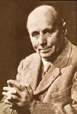
Kurt Hahn’s views and its application in Gordonston school
Kurt Hahn, grew up and studied in Germany as a youth. His tertiary education was attained in Oxford. Practitioner of ‘praxis’ will fulfil, all 4 elements of the definition that was given earlier. Kurt Hahn’s experiences in Nazi Germany and as an allied seamen fighting for the allied forces in world war II became the condiment for the development of adventure learning that were incorporated into the conventional educational system. As an allied seamen he was baffled by the hardiness of the seamen and the fishermen off the coast of Scotland, whilst, the seamen whom he fought alongside were less resilient to the terror of war and the might of nature. His tertiary education in Oxford and his experiences led, to the fusion of educational methodologies that is still being practised today in adventure learning. In his paper that was delivered in 1936, Education and Peace, the foundations of modern society, he wrote about the experience of the Gordonston schools and how it can lead to the formation of a humane society. This paper profoundly moved me, quote;
"Patriotism does not become diluted, on the contrary, it grows up stronger and nobler by including the love for humanity. I have no respect for the tribal fervour that extols one’s own virtues and blinds one to the virtues of thy neighbour" unquote.
Kurt Hahn was Jewish, and it was an era of the Zionist movement and the formation of Israel. His views were not clouded with parochial insensitivity, but all embracing objective of developing young people who will become more humane and in the process build a humane society. In the context of Gordonston school he had over 70 students and between them they came from 5 different countries. When his methodologies were questioned by reporters, he replied; to have a future Arab king sailing in the same boat with a Jewish boy, battling the gales off the coast of Scotland, will one day bring about an opportunity for peace and understanding when views differs. These were profound political considerations that were well ahead of its time.
Ethically, the schools personified, moral obligations and considerations. Kurt Hahn, could have made these schools exclusive for just the rich and the elite. Instead, the grading fees, were tailored to the incomes of the parents. The stadium that the school used was opened to the young people of Morayshire, where the school was located. Even when his life was at stake he remained true to his ideals. In Salem, Germany, when Hitler, emerged as the leader of Germany advocating Nazism, Kurt Hahn, wrote an open letter, asking members of the alumni, of Salem to break away with the SS military regime. In 1933, this act of criticism in an open letter to Hitler led to his imprisonment; his life only to be saved through the intervention of world leaders at that time. It showed his tenacity, to stand up and account for his ideals even at the cost of an imminent death.
Application of Praxis in the context of an organisation
The above example featuring Kurt Hahn and his role in developing young people through experiences that incorporate elements of adventure and reflection, in my opinion shows an application of "praxis". I attended the Outward Bound School’s 21 days program as a young cadet officer in 1990. As part of the officer cadet’s course, we were required to complete this mandatory program at OBS. At the start of this program, as participants we had to relinquish what ever money we had and undertake an oath that we will abide by the rules. In the land expedition, I met army officers in a remote Island, from whom I borrowed $10, to buy cakes and snacks for my group. I remembered munching away half a cake in glee. When we completed the 21 days program, we had to undertake the same oath to affirm that we had abided by the rules before we were allowed to sign on the log book and accept the OBS badge of achievement. In a group of 50 Officer cadets and Police scholars, 3 cadets did not take this oath. I was one of them and we were hauled away to the warden’s office after that. We had since completed 7 months of our Officer’s Cadets program and I had laid my officer’s rank on the line and it did not matter as I was not about to lie. This was a profound experience for me. We knew that we will be kicked out of Officers Cadet school due to one moment of indiscretion. We were not kicked out, instead, we had a very concerned warden who hauled in the instructors and evaluated our actions that we confessed. The warden insisted that we sign the log book and I was given the prized badge which I carried in my wallet in years to come. I had spent 21 days in outward bound school, their credo, "To serve, to strive and not to yield" became my personal mission statement as well.
The experiences in the Outward Bound school is in direct contrast to my experiences as a recruit undergoing 3 month of basic military training at the Infantry Training school as a recruit. Here, there were no opportunities for reflection, but blind fearful, acceptance of the military regime. In moments of frustrations, it felt like we were interned. We were indoctrinated with the national slogans and for the 3 months the training methodology was instrumental. There were little moments to self reflect and this has been carefully orchestrated to mould our minds. Even drill conducted at midday over and over again, had an agenda. To engram mentally explicit acquiescent to commands given by our officers. The intention that we will react instinctively when an order is barked without due reflection. Is in the military’s interest for young recruits to be a practitioner of ‘praxis’? Apparently not as a soldier thinking twice before, he shoots is more of liability then an asset.
Conclusion
The concept of praxis though complex, must satisfy the 4 features indicated in the definition by Aristotle. It must have an element of purposeful human conduct, guided by actions morals and emotions. The experiences of Kurt Hahn and his work in education speaks for itself and is a testimony. Kurt Hahn’s values and his academic credentials would have laid the foundations for a praxis practitioner to support his views with social science, facts and data, using them to make hypothesis, propelling his views on educating the young men. The application of praxis, is also dependent upon the stance taken by the recipient’s of such concepts. In the 1930’s to Hitler, his views were not acceptable at all. They countered Nazism and for that Kurt Hahn was placed in prison. Praxis as an application in the context of the society or organisations requires ethical, moral and political considerations with the firm focus in creating an environment for purposeful conduct. This will have been vividly depicted in the work and contributions of Kurt Hahn.

Reference:
4. KurtHahn.org:
A Web Site Devoted to the Life and Works of ...
Kurthahn.org is devoted to the life and work of educator Kurt Hahn.
...
http://www.kurthahn.org/
catastrophe
http://www.roundsquare.org/aboutus/hahn.htm
