 |
|
|
|
|
|
|
|
|
|
|
|
|
|
|
|
|
|
|
|
|
|
|
|
|
|
|
|
|
|
|
|
|
|
|
|
|
|
East-PAC |
|
|
|
East Piedmont Armor Club |
|
|
|
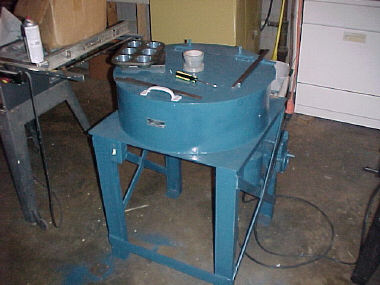
The track for the 1/6 scale T34-85 model were made using a spin casting machine.The process is a simple one and is designed to make many parts using a white metal or zinc alloy with a silicon mold designed for high temp applications.
The size of the mold, (9 to 15 inches in diameter)
the size of the parts will determine how many parts can be made with each throw (spin cycle) The thickness of the mold is between 1 and 3 inches typically.
The masters are laid in the mold in such a fashion so that the molten metal is poured into the center of the mold from the top and the metal is forced to the outside edge of the mold filling the mold cavity. The metal is generally poured into the spinning mold and allow to spin from 30 to 90 seconds. Once the mold table has stopped spinning the mold is removed and emptied. As you can see the parts can be turned out quite quickly. Hundreds of small pieces can be made in an afternoon.
|
|
|
|
 |
|
|
|
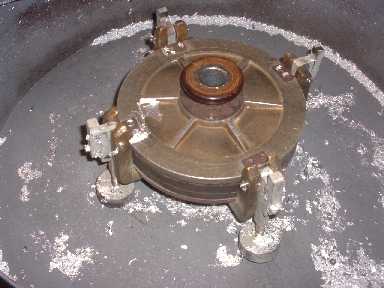
The spin casting machine shown is a simple abeit older unit with a reversing motor and flyweights for the platen pressure. This unit was bought, rewired and refurbished for use in making parts for our models. |
|
|
|
|
|
 |
|
|
|
 |
|
|
|
|
|
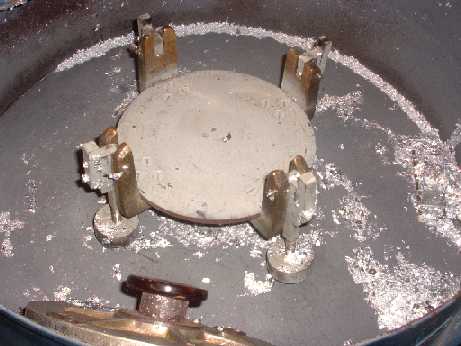
In the picture above you can see the interior of the spin casting machine. A simple flyweight system is employed to press down on the top plate when the unit spins. You see the excess metal along the sides of the tub, this caused by overfilling of the mold or not enough pressure applied to the top plate during the spin. |
|
|
|
 |
|
|
|
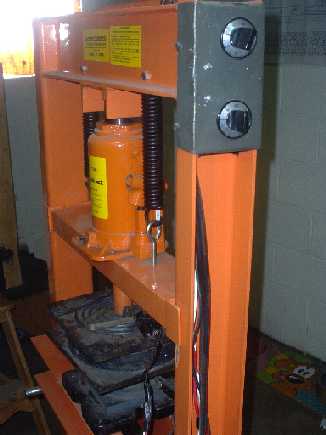
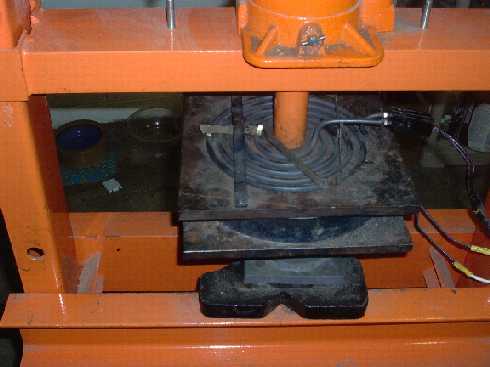
The press used to compress and vulicanize the silicon mold is a standard 20 ton H-Press with two heating elements and switches for each installed.
You can see the switches installed on the side rail in the picture on the left.
In the picture below you can see the mold compression ring assembly with the heating element installed on top.
The elements do not get red hot but rather set on a low setting and allowed to heat the mold ring assembly to about 350 degrees. |
|
|
|
|
|
 |
|
|
|
|
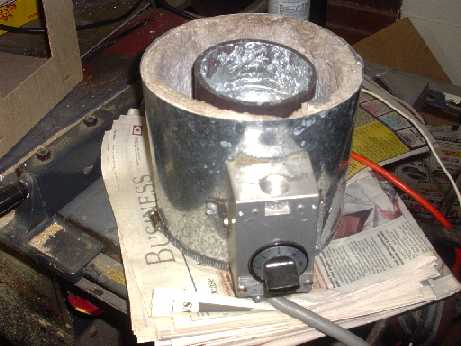
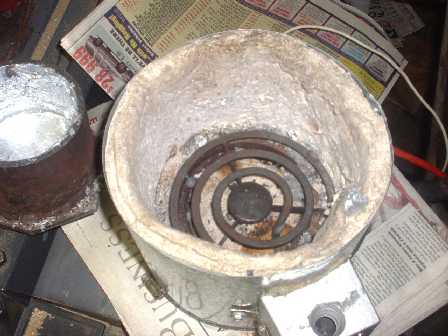
In the picture below you can see the heating pot used to melt the metal for pouring. The melting temps depend on the metal being used. The zinc alloy we used for tracks has a melting point of about 775 degrees F and a good pouring temp of about 850F. A different pot is used for other type of metals. The melting pot is actually a piece of heavy steel pipe with a flat plate welded on the bottom. A steel ladle is used to dip the metal from the pot. |
|
|
|
|
|
 |
|
|
|
|
|
|
 |
|
|
|
|
|
The heating element used is a standard stove top burner with a stove switch to control the heat. The casing is a 8 inch ventilation duct cut to size. It is mounted onto a 1 inch thick steel disk and the insulation is a ceramic material used in the repair of a firebox in a home heating furnace.
Generally a pot of metal is ready for pour in about 30 minutes from start to finish. Needless to say the paper isn't under the unit when in operation. |
|
|
|
The silicon molds are general priced by the inch, a 9 by 1 inch mold typically cost about $30.00. The molds have a limited life depending on the temp of the metal being poured and the size of the parts being cast.
For our tracks we were able to place 4 links in the mold, each mold lasted for about 50 throws before the heat destroys the mold. We experienced roughly a 10 to 15% loss of pieces due incomplete pours or to other problems. We could make a complete set of tracks in a afternoon. |
|
|
|
Under Construction!!!!!! |
|
|
|
Take me back to the main page |
|
|
|
Copyright J.R Bates 2004 |
|