| Smoke Units |
| Click here to return to home page. |
| All Copyrights Reserved 2008 JR Bates |
| EAST PAC Eastern Piedmont Armor Club |
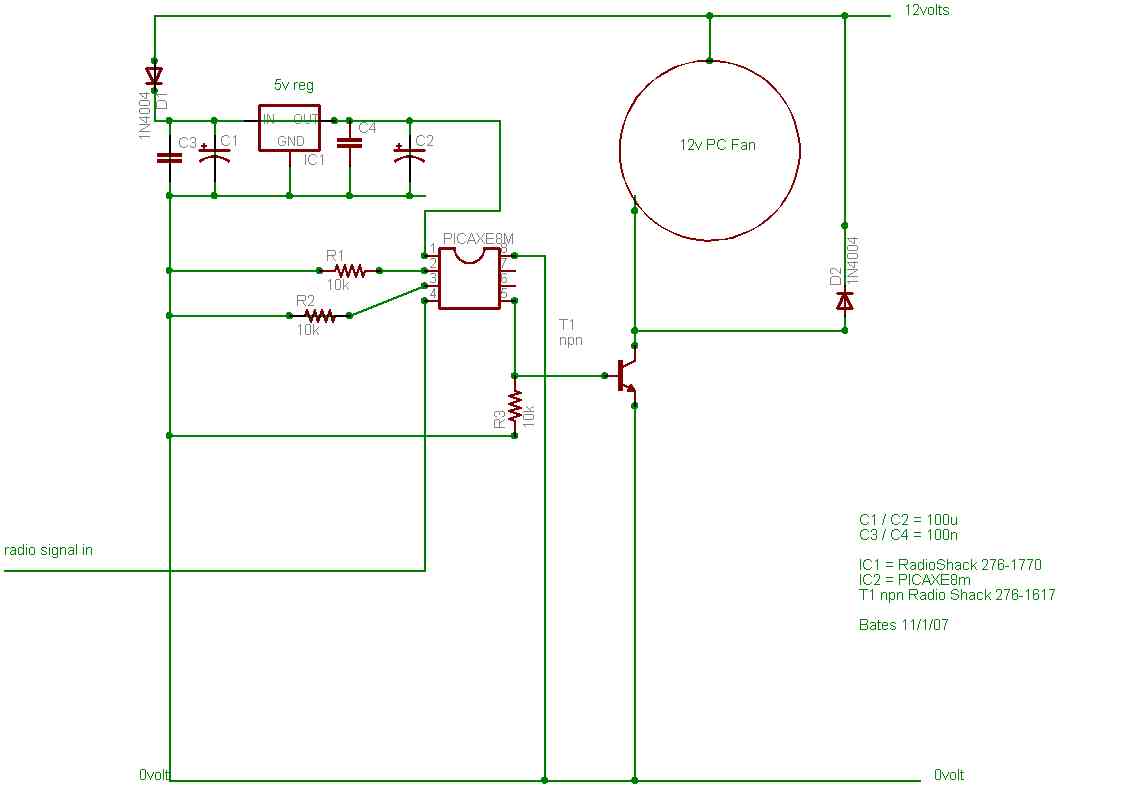
| Smoke spewing out from the mufflers is always a good effect. We used a couple of different methods for doing this on some of our T34's. The Choices There are a few ways of doing this. The first is to use a heating element immersed into a oil bath. The second is to use a water mister fog unit. Both ideas have their merits and drawbacks. Let's start with heating element type. The railroad and boat crowd have used the electric heating element idea for years. The element is typically wound around or placed against a wick which is based into a small pool of oil based fuel. The element is allowed to get just hot enough to produce a blanket of smoke. You have two choices, you can allow the smoke to simply waft from the mufflers or force the smoke out via fan. The non-fan method will produce some smoke from the mufflers but not in a realistic manner we typically strive for. The forced air method is better as we can make the fan turn at different speeds to allow puffing of smoke when at idle or increase in volume when moving the model. We can achieve this by using a PICAXE chip. The PICAXE is a simple microprocessor that easily allows for fan control via the input signals from the RC transmitter. These chips are cheap and easily programmed with a home computer. They are now available in the USA. You can also use a ultrasonic misting unit. These misters are normally used with Halloween bowls or around plants in a small arean and filled with water as the "fuel". For a while, little water fountains using a mister units were the rage and easy to find in about any craft store. Now in days the units are not so easy to find. But the units are available on the internet for about 20 dollars or so. The pros and cons of each unit Each type of unit has its best features and also have drawbacks. The oil filled unit of course means you will need to deal with a flamable fluid being carried around. You will also need to be concerned with keeping the wick damp with fuel to prevent burnout of the heating element. There of course are power requirements for the element. Typically 12 volts will be more than enough to handle the heating chores. Finally, many folks complain of the smell released from the burning of oil. While the burnt oil smell can add immensily to the overall effect, its not too good of a idea to run the model inside. The good side of using oil is that the smoke will typically have a greyish cast more commonly seen with diesel motors. The smoke can be qute a bit thicker than than that from a water misting unit. The real smoke will also tend to rise as compared to that of a mister unit that drops to the ground pretty quickly. Some have suggested the use of a special fogger liquid fuel blended to offer the same effects of the traditional light oil mix. I myself have not tried any of this special blend but another member James Miller is working with a electric unit now and will let me know how it goes. The water misting unit uses only water. The unit can work at 12 volts but the output is very little. I use 24 volts for my tank so the power requirements are not an issue for my model. The smoke or actually heavy mist is white only. The mist will tend to hug the hull on its way to the ground when at idle. The unit is needs to be mounted as close to the mufflers as possible to provide for a better flow of smoke. Piping needs to be set up so that no water can condensate in the line thus plugging it. The smoke is water vapor, hence no smell. Some have suggested using a bit of food coloring in the water for a more darker smoke. Others have suggested that using food coloring will lead to a bit of discoloring to items around the muffler area of the tank. The fan circuit The fan motor circuit will make the difference for our models regardless of the type of smoke generator you use. With the PICAXE chip we can easily move the smoke when we desire. |
 |
| Program for PICAXE 8M Stick control for smoke fan unit Main: pulsin 3,1,w1 if w1=>145 and w1=<160 then goto np pwmout 2, 99 , 500 goto main np: pwmout 2,0,0 pause 900 pmwout 2,99,500 pause 900 goto main |
| The program for the PICAXE chip is simple. I used a 8m chip. The program simply looks at the input 3 which is tied to the signal wire from the radio. (Remember the ground or common wire needs to connect between the pic microprocessor and receiver unit to operate correctly) The chip converts information coming from the receiver and assigns the info as numbers 100 to 200. With 150 being the middle of the stick travel. I use a small margin of about 15 to keep the fan from coming on too quickly. If the transmitter stick stays in the middle postion then the program moves to the subroutine NP. The subroutine NP tells the PICAXE tosend a PWM signal to the fan motor. In this case it is turn power off, pause for a second or so, then turn the power on full, then wait a second and return to main program. This pause or delay allows for a puffing effect during idle. If the stick is moved up or down for foward or reverse the fan motor is told to go to full power causing the smoke to spew from the mufflers in a heavy manner. The delay time for the puffing effect can be easily changed to suit your model. You can also just program the PICAXE to simply puff the smoke without regards to the stick position on the radio. Either way, the effect is good. |
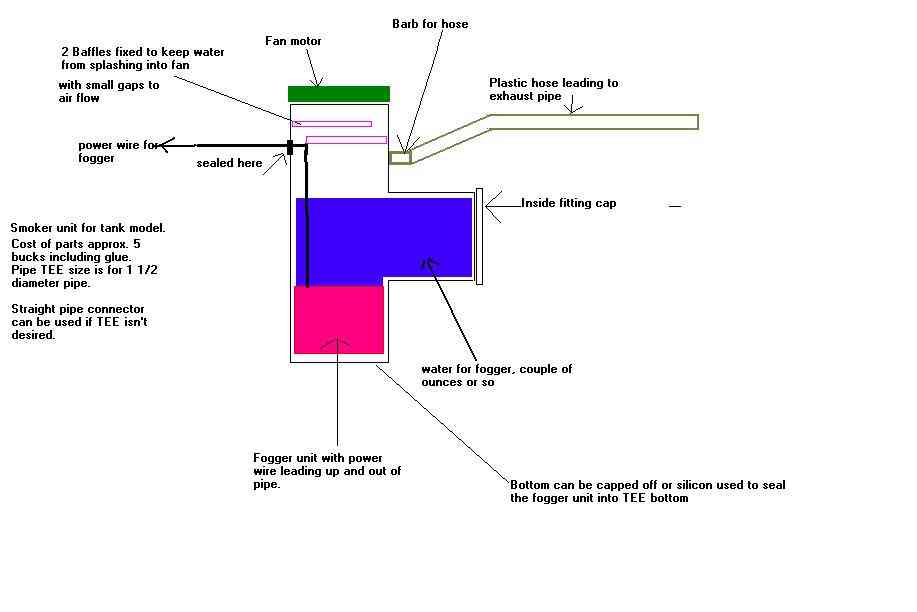
| The picture above is a drawing for the smoker. Nothing more than a PVC plumbing tee. The ultrasonic misting unit is installed in the bottom of the tee and sealed. The plastic hoses leading to the mufflers should be short and lead upwards for the condensation to fall back into holding tank. The hose should be 1/2 inch or so. |
 |
| A short video of the mister smoke unit once installed and running. The smoke isn't heavy as you would think. When I shot this video the lighting conditions weren't the best and I really hadn't give the smoker unit a few minuted to warm up. Click here for Smoke video |
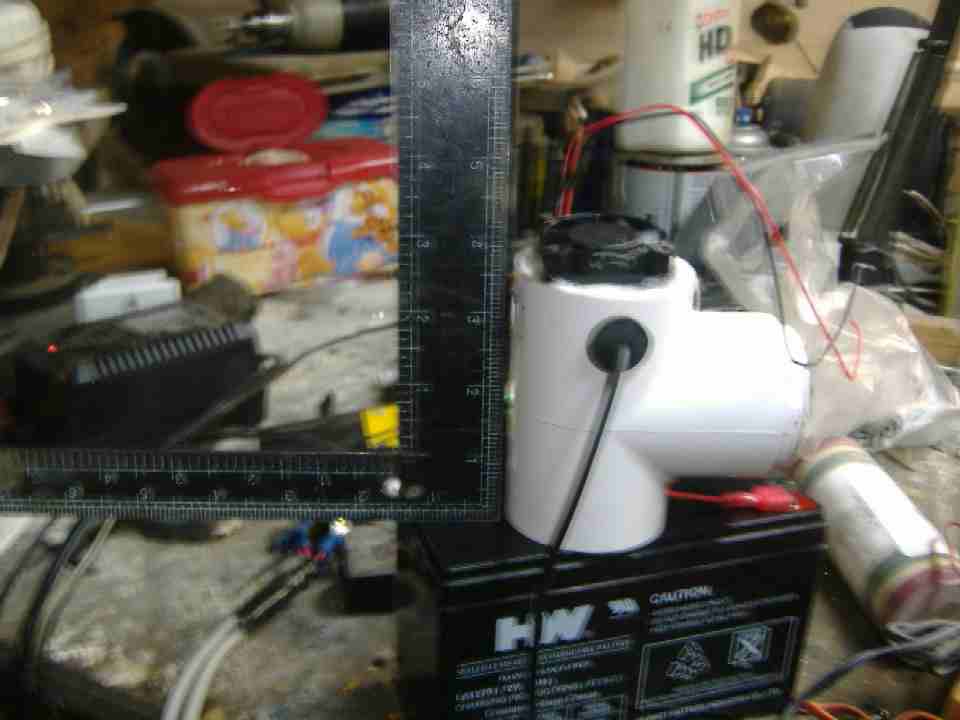 |
| The assembled smoke unit |
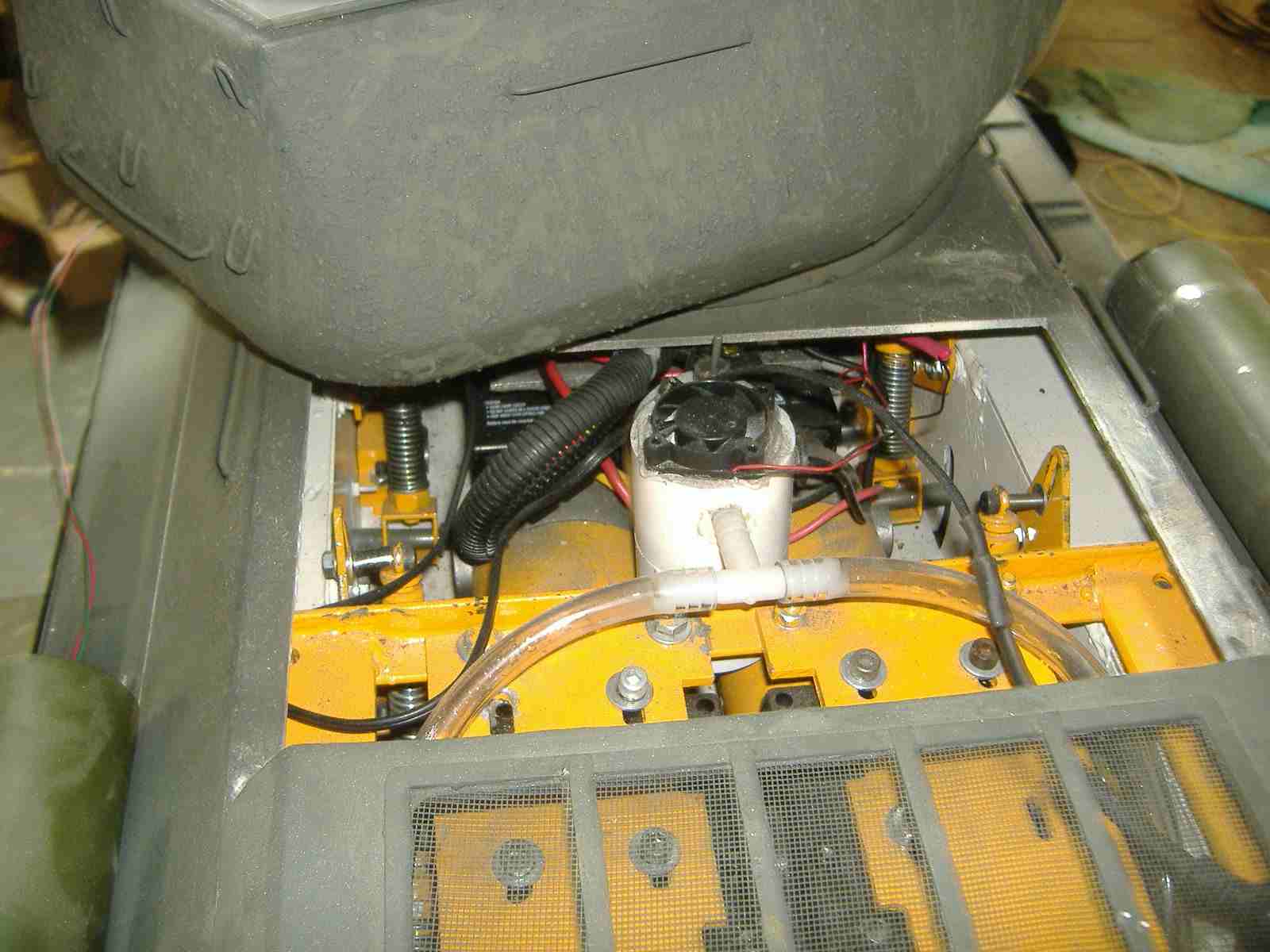 |
| The smoker unit installed for testing on the T34-85 model. Since this time, I have made a few changes. The unit now sits just behind the motors against the back hull plate. The tee connection was removed and I drilled a second hole into the PVC chamber for the second muffler. The tee fitting caused the smoke to leave one muffler much more so than the other. The other hole was drilled 180 degress from the first hole. Short hose lengths rule with the mister type of units. The longer length tends to allow the vapor to condensate in the hoses which cause a backup. The exhaust hoses should also slope as much as possible back to the PVC chamber to allow any condensate build to fall back into the chamber. I positioned my unit so that I used only 4 inches of hose. |