
One specific group within the higher end of the middling sort was that of the clergy. For religious conversional purposes the clergy and her family were to be literate in order to be able to read (aloud) the bible and other religious manuscripts. In general, �clergymen�s families�were more literate than the average for their social class, and the wife�s facility in self-expression was apt to be matched by her husband�s ability to edit and publish her manuscripts.�3 Religious manuscripts, such as spiritual diaries or commentaries on prayer, bible stories, saints� lives and examination of the Divine, were acceptable if a woman absolutely felt she needed to go beyond her sex�s expectations (and limitations) and write either to publish or merely for her own benefit.
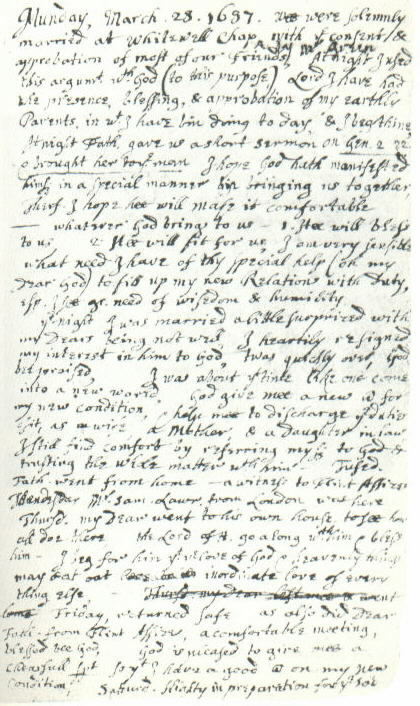
Based on more secular diary entries by both the Countess of Warwick of the aristocracy and Elizabeth Walker of the middling sort, they ran their lives in very similar ways. They both educated their children, would sew and read, entertain guests and perform devotional routines. The main difference �appeared to lie in the scale of their responsibilities [versus] the nature of their duties.�6 This is a good example of how much more similar the middling sort of woman was to her aristocratic counterpart in opposition to a woman of lower class status. This illustrates the distinct difference in educational patterns that cut through social and economic levels of women. The difference between the middling sort and her aristocratic superior is grayer versus the black and white difference between the lower ranks of women and their more privileged sisters. In the end, however there was enough distinctive difference, obviously in regards to the amount of money afforded to the two separate classes, to have a big impact on how much each group of women was educated. Women of the middling sorts spent less time in school and usually did not learn as much or as long in the home, with or without a private tutor.
2 Wheale, 49.
3 Mary Prior. Women in English Society 1500-1800. (London and New York: Methuen, 1985). 189.
4 Prior, 185.
5 Olwen Hufton. The Prospect Before Her. (New York: Alfred A. Knopf, 1995). 428.
6 Prior, 191.