Hend
My life in
Last week the Public Affairs Foundation hosted a workshop on its Citizen Report Card, an event I’ve been looking forward to since I arrived in Bangalore. I will not bore you with the details of this. The most important part, from my perspective, was the “field visit” the organizers and participants conducted on Wednesday, the third day of the conference.
This was my first venture into what is called “the field” in developmentese. Now, let it be known once again that I really don’t like that term; it makes a person’s home sound like a laboratory case study. But nonetheless, I made my way into the field for the first time, as I paired up with one of our senior economists to take a group of participants to the slum of Annasandrapalya on the outskirts of the city. We were asked to conduct something of a mock survey on public services, so that the participants could test out our method of collecting info before they tried it in their respective countries.
I had wanted to go with another group to a rural area further out, but the slum visit turned out to be a pretty valuable experience. I was expecting the place to be a lot poorer, actually. Coming from Boston, almost the entire city of Bangalore seems like a slum to me. Don’t read this the wrong way. It’s just that in the U.S., a neighborhood characterized by clumps of misplaced trash, torn up sidewalks and roads, daily power outages, and incomes under $5,000 a year can be called a slum without anyone’s objection. This is just a reflection of the relative nature of poverty and wealth.
The slum didn’t look that much different from a regular Bangalore neighborhood except for two critical factors: the housing and the amount of garbage out in the open. The houses were very small and close together, much more so than any other place I’d seen, and they generally looked dilapidated on the outside. The people in the slum, however, looked pretty much just as clean and healthy as any other Bangaloreans. And to my surprise we walked by a couple of houses that had the TV on inside. So my guess was that these people aren’t really dramatically poorer than the rest of the city (if I weren’t so busy/lazy I could verify this with some real numbers). Rents in Bangalore are out of control in some cases, so government-controlled housing is especially desirable. Often, I’m told, individuals secure a low-rent slum accommodation, rent it out for a higher figure, and go live somewhere else… kind of like what my sister’s old landlady did with her rent-controlled two bedroom in the Upper East Side of Manhattan. So the slums of Bangalore, a booming Indian city, don’t compare to those of a poorer city like Calcutta, Mother Teresa’s former laboratory case study. Once again, relative.
About the garbage, it was everywhere. The rest of the city is pretty bad in terms of litter – the culture of holding on to a piece of trash until you find a waste bin is relatively absent – but this problem is compounded in that particular slum because garbage collection is infrequent. The majority of the people we interviewed complained about this. Near the place where we parked the cars there was a giant concrete receptacle for the neighborhood to dump its garbage, but the thing gets filled fast, so people often end up dumping it in the general vicinity. The result is that there’s more garbage on the ground than in the actual container. This is good news if you’re a hungry stray animal, but otherwise it just stinks (ha).
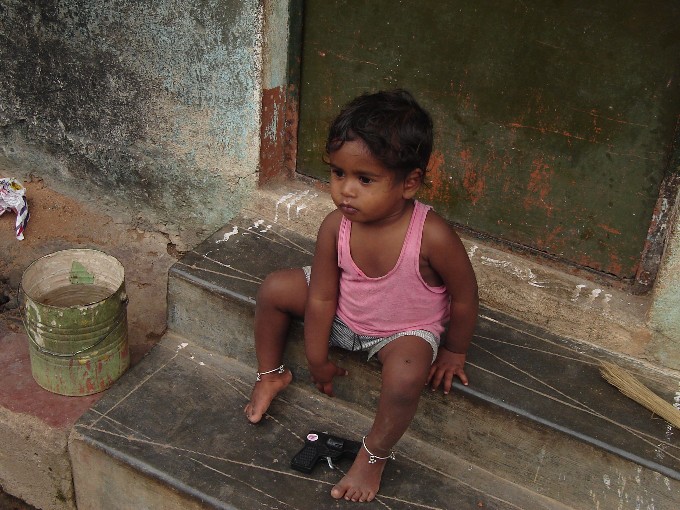
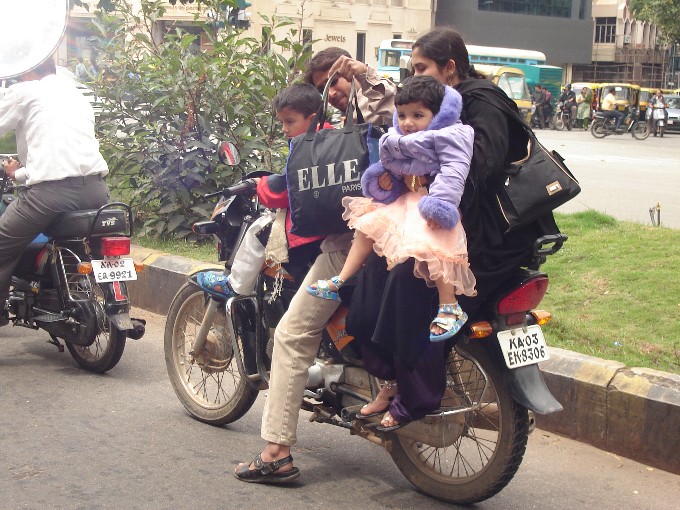
I got some good photos of the workshop (including the field visits) and posted them here. Unfortunately my camera stopped working halfway through the conference so I missed out on a lot of good photo opportunities. But check out the one I got of the glassy eyed little boy reaching for his toy gun. That and the photo of the four people on the motorbike that I took during my first week have to be my best shots so far.
cornucopiamustpaycornucopiamustpaycornucopiamustpaycornucopiamustpaycornucopiamustpaycornucopiamustpay
The night after the field visits, I read the news online before going to bed. One of the first headlines I saw was: India “untouchable” president dies. I almost choked on my Dark Fantasy gourmet chocolate biscuit. India had an untouchable president? I had no idea. His name was K.R. Narayanan, he served from 1997 to 2002, and he was, in fact, from the untouchable caste.
Like I have said already, the caste system is a non-factor in the arenas of government and everyday life in modern, urban India. The dalit caste, also known as the untouchables, were given protection under the Indian constitution at the point of the country’s independence, something like (I think) the U.S.’s policy of affirmative action. But it took me less than a month to realize that even among some very well-educated, progressive people here, the attitudes and beliefs associated with the principles of caste still exist. I have seen a grown man cry discussing this, and it has indirectly given me loads of journal-quality stories which have been painful to collect. And I am convinced that the legacy of the caste system, coupled with that of imperialism, is what dictates how some individuals here treat servants, drivers, and pencil-pushing interns. From the point of view of an American, who happens to be a Bahá’í (the faith that won’t even let you kiss another person’s hand as a gesture of servitude), it is just weird when the Public Affairs Center doorman salutes me in the morning like I’m Eisenhower.
What this all means is that a brilliant, capable dalit boy can grow up to be the most powerful man in the country, but still not be allowed to enter certain homes and temples. India is dealing with this memory, kind of like how the U.S. is dealing with the memory of black WWII veterans sitting in the back of a bus, behind the blonde-haired Nazis they defeated and captured. I just hope my grandchildren actually believe me when I tell them this was the way the world used to be.
mushmushedpotatoesaremyfavoritemushmushedpotatoesaremyfavoritemushmushedpotatoesaremyfavorite
South Indians are generally very dark-skinned people, but since I’ve been here I’ve seen a lot of people with completely pale skin. At first I thought these people were just albinos, and because I was now in a place where people have brown skin I was just noticing them more. But I’ve seen so many of these people that I figured it had to be something else. Finally I asked someone in my office, and he told me about a skin condition called leucoderma, a disease I have never heard of (and neither has Microsoft Word). Leucoderma is a as-yet-unexplained condition whereby melanin is slowly destroyed, resulting in more and more pale patches until a person has lost all his/her color. I don’t know if this is unique or more frequent in Indians, but I am pretty well traveled and have never seen this before.
savemeagrapefruitsavemeagrapefruitsavemeagrapefruitsavemeagrapefruitsavemeagrapefruitsavemeagrapefruit
In Bangalore, as well as other parts of the country, families draw elegant designs outside the doors of their houses in chalk. When I originally asked someone about this, he told me that the lines were intended to confuse and misdirect ants on their way into the house… or in other words, that I should ask someone else for the real answer. That second person told me that it was simply a cultural practice intended to beautify the entrance into the home. She also told me that it has no religious origin, which was kind of surprising because Indian and Hindu culture are so intertwined that they are sometimes indistinguishable.
But there’s a related practice that does, supposedly, have some religious significance. This is the mark of three parallel horizontal lines which can be found on the back of auto rickshaw, the bottom of someone’s forehead, the entrance to a home, or wherever else. As it has been explained to me, the three lines represent the trinity of the main Hindu gods: Vishnu, Shiva, and Brahma (I think), which many people believe are the original reflections of God’s single essence.
One day I walked by one of these symbols on my neighbor’s door and I stopped in my tracks, because what I was looking at was almost identical to the Bahá’í “ring symbol”, one of the most common images in our faith. Just take a look at this and tell me I’m not crazy.
howdoyoueataturkeynoseriouslyimaskingforrealhowdoyoueataturkeynoseriouslyimaskingforreal
Enjoy your Thanksgiving, my favorite American holiday. A couple weeks ago I did a Google search in a pathetic attempt to find some group of Americans celebrating it here, but it was no use. It’s possible that they don’t have a single Turkey in this city, but if they do, I just might have to kill it and eat it. My makeshift Thanksgiving will probably involve my eating some grilled chicken and checking espn.com for football scores. Regardless, this Thanksgiving can not be as bad as the one I spent in London in 2000, when I nearly cried after the hotel caterers in charge of dinner served pureed cauliflower in place of mashed potatoes. They might not have turkey in India, but at least they have black pepper. And if you don’t get that joke, you have never been to England.