Tue Oct 5, 5:11 PM ET White House - AP Cabinet & State
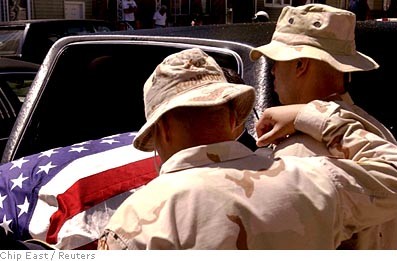
WASHINGTON - The number of U.S. troops wounded in Iraq increased by 198 over the past week, raising the total since the war began in March 2003 to 7,730, the Pentagon said Tuesday.
That is within the range of weekly increases reported over the past two months, which have varied from about 110 to 226 in one of the most intense periods of insurgent violence this year.
The Pentagon also announced that a member of the Rhode Island Army National Guard was killed Oct. 3 in Taji, Iraq. Sgt. Christopher S. Potts, 38, of Tiverton, R.I., was hit by small arms fire while manning a traffic control post. He was with the 1st Battalion, 103rd Field Artillery Regiment.
Potts was the third Army National Guard soldier to have been killed in Iraq this month, along with one active-duty soldier. National Guard and Reserve soldiers represent more than 40 percent of the 137,000 U.S. troops in Iraq.
Thirteen of the 80 U.S. troops who died in Iraq in September were members of the National Guard or Reserve.

By Scott Johnson and Babak Dehghanpisheh
Newsweek
Sixteen months after the war's supposed end, Iraq's insurgency is spreading. Each successful demand by kidnappers has spawned more hostage-takings�to make Philippine troops go home, to stop Turkish truckers from hauling supplies into Iraq, to extort fat ransom payments from Kuwaitis. The few relief groups that remain in Iraq are talking seriously about leaving. U.S. forces have effectively ceded entire cities to the insurgents, and much of the country elsewhere is a battleground. Last week the total number of U.S. war dead in Iraq passed the 1,000 mark, reaching 1,007 by the end of Saturday.
U.S. forces are working frantically to train Iraqis for the thankless job of maintaining public order. The aim is to boost Iraqi security forces from 95,000 to 200,000 by sometime next year. Then, using a mixture of force and diplomacy, the Americans plan to retake cities and install credible local forces. That's the hope, anyway. But the quality of new recruits is debatable. During recent street demonstrations in Najaf, police opened fire on crowds, killing and injuring dozens. The insurgents, meanwhile, are recruiting, too. Defense Secretary Donald Rumsfeld once referred to America's foes in Iraq as "dead-enders," then the Pentagon maintained they probably numbered 5,000, and now senior military officials talk about "dozens of regional cells" that could call upon as many as 20,000 fighters.
Yet U.S. officials publicly insist that Iraq will somehow hold national elections before the end of January. The appointed council currently acting as Iraq's government under interim Prime Minister Ayad Allawi is to be replaced by an elected constitutional assembly�if the vote takes place. "I presume the election will be delayed," says the Iraqi Interior Ministry's chief spokesman, Sabah Kadhim. A senior Iraqi official sees no chance of January elections: "I'm convinced that it's not going to happen. It's just not realistic. How is it going to happen?" Some Iraqis worry that America will stick to its schedule despite all obstacles. "The Americans have created a series of fictional dates and events in order to delude themselves," says Ghassan Atiyya, director of the independent Iraq Foundation for Development and Democracy, who recently met with Allawi and American representatives to discuss the January agenda. "Badly prepared elections, rather than healing wounds, will open them."
America has its own Election Day to worry about. For U.S. troops in Iraq, one especially sore point is the stateside public's obsession with the candidates' decades-old military service. "Stop talking about Vietnam," says one U.S. official who has spent time in the Sunni Triangle. "People should be debating this war, not that one." His point was not that America ought to walk away from Iraq. Hardly any U.S. personnel would call that a sane suggestion. But there's widespread agreement that Washington needs to rethink its objectives, and quickly. "We're dealing with a population that hovers between bare tolerance and outright hostility," says a senior U.S. diplomat in Baghdad. "This idea of a functioning democracy here is crazy. We thought that there would be a reprieve after sovereignty, but all hell is breaking loose."
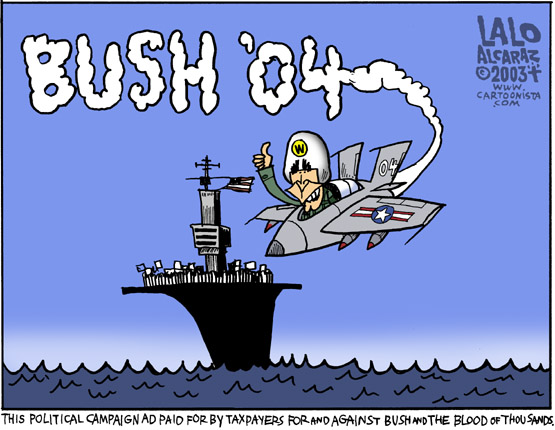
It's not only that U.S. casualty figures keep climbing. American counterinsurgency experts are noticing some disturbing trends in those statistics. The Defense Department counted 87 attacks per day on U.S. forces in August�the worst monthly average since Bush's flight-suited visit to the USS Abraham Lincoln in May 2003.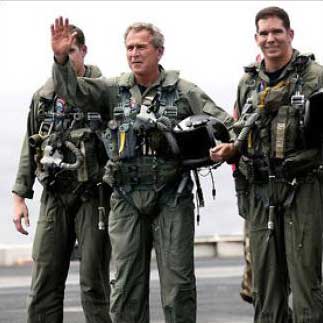 Preliminary analysis of the July and August numbers also suggests that U.S. troops are being attacked across a wider area of Iraq than ever before. And the number of gunshot casualties apparently took a huge jump in August. Until then, explosive devices and shrapnel were the primary cause of combat injuries, typical of a "phase two" insurgency, where sudden ambushes are the rule. (Phase one is the recruitment phase, with most actions confined to sabotage. That's how things started in Iraq.) Bullet wounds would mean the insurgents are standing and fighting�a step up to phase three.
Another ominous sign is the growing number of towns that U.S. troops simply avoid. A senior Defense official objects to calling them "no-go areas." "We could go into them any time we wanted," he argues. The preferred term is "insurgent enclaves." They're spreading. Counterinsurgency experts call it the "inkblot strategy": take control of several towns or villages and expand outward until the areas merge. The first city lost to the insurgents was Fallujah, in April. Now the list includes the Sunni Triangle cities of Ar Ramadi, Baqubah and Samarra, where power shifted back and forth between the insurgents and American-backed leaders last week. "There is no security force there [in Fallujah], no local government," says a senior U.S. military official in Baghdad. "We would get attacked constantly. Forget about it."
U.S. military planners only wish they could. "What we see is a classic progression," says Andrew Krepinevich, author of the highly respected study "The Army and Vietnam." "What we also see is that the U.S. military is not trained or organized to fight insurgencies. That was the deliberate choice after Vietnam. Now we look to be paying the price." Americans aren't safe even on the outskirts of a city like Fallujah. Early last week a suicide bomber rammed his vehicle into two U.S. Humvees nine miles north of town on the four-lane concrete bypass called Highway 10. Seven Americans died. It was one of the deadliest blows against U.S. forces since June, when Iraqis formally resumed control of their government.
As much as ordinary Iraqis may hate the insurgents, they blame the Americans for creating the whole mess. Three months ago Iraqi troops and U.S.-dominated "multinational forces" pulled out of Samarra, and insurgents took over the place immediately. "The day the MNF left, people celebrated in the streets," says Kadhim, the Interior spokesman. "But that same day, vans arrived in town and started shooting. They came from Fallujah and other places and they started blowing up houses." Local elders begged Allawi's government to send help. "The leaders of the tribes come to see us and they say, 'Really, we are scared, we don't like these people'," Kadhim continues. "But we just don't have the forces at the moment to help them." Last week negotiators reached a tentative peace deal, but it's not likely to survive long. The Iraqi National Guard is the only homegrown security force that people respect, and all available ING personnel are deployed elsewhere.
Will Iraq's troubles get even worse? "The insurgency can certainly sustain what it's doing for a while," says a senior U.S. military official. Many educated Iraqis aren't waiting to find out. Applicants mobbed the courtyard of the Baghdad passport office last week, desperate for a chance to escape. Police fired shots in the air, trying to control the crowd. "Every day there is shooting, gunfire, people killed, headaches for lack of sleep," said Huda Hussein, 34, a Ph.D. in computer science who has spent the past year and a half looking for work. "I want to go to a calm place for a while." It's too bad for Iraq�and for America�that the insurgents don't share that wish.
With John Barry in Washington
� 2004 Newsweek, Inc.
Hack's Target
Other Priorities

By David H. Hackworth
�Nobody had a telephone number, for crying out loud,� says Brig. Gen. Janis Karpinski, then commanding general of the 800th Military Police Brigade, who was in Kuwait preparing to bring her unit home after running the military prisons in Iraq.
Military stupidity at its finest, or senior male brass who chose to shrug and look the other way?
Karpinski believes the latter. �Reports of assault ... were mostly not investigated because commanders had other priorities,� Karpinski says. �The attitude of Lt. Gen. Ricardo Sanchez,� then the ground commander in Iraq, �permeated the entire chain of command: The women asked to be here, so now let them take what comes with the territory.�
According to Karpinski, Brig. Gen. Michael J. Diamond, then commander of the 377th Theater Support Command in Kuwait, followed Sanchez�s lead and refused to take any proactive steps toward stopping the rapes.
�When I tried to discuss the gravity of the situation with him, he responded, �It�s not always easy being me, you know,� � Karpinski says. �My recommendations for some easily implemented actions to reduce this serious problem fell on deaf ears.�
It�s an essential priority of a leader, from corporal to four-star general, to look after the troops. In today�s military � like it or not � that includes females as well as males. And in relatively safe Kuwait, Karpinski notes, women were frequently assaulted on the way to the latrines. There were no lights near any of their facilities, so women were doubly easy targets in the dark of night.
�I reminded BG Diamond he was in Kuwait, not the middle of Iraq,� Karpinski told me, �and there was no excuse for not lighting up the walkways to the showers and latrines. He said he had other priorities, and he didn�t want to call attention to the locations of the facilities.�
Meanwhile, the male latrines were well-marked and well-lighted.
�A female soldier coming off night shift took a shower and was standing at the sink brushing her teeth,� Karpinski says. �A male soldier entered the tent brandishing a long blade knife. He had a scarf ... over his head. He threatened her, and she tried to run. Another female soldier heard her scream and nearly bumped into the would-be attacker as he was running out of the tent. They actually cornered him, but CID (military cops) released him the next day because the intended victim was not certain she could identify him.�
�I told BG Diamond to post notices everywhere alerting women to this attack and reminding them to take a buddy everywhere after dark. He refused. He once again didn't want to call attention to the attack! These were male soldiers attacking female soldiers.�
Only after abused soldiers started calling home and contacting the press, their parents and Congress, did the secretary of defense finally appoint a Sexual Assault Task Force last February to �undertake a 90-day review of all sexual assault policies and programs.�
The Pentagon report � wrapped up in thousands of words of butt-covering politically correct double talk � contains sentences like the following: �It must develop performance metrics and establish an evaluation framework for regular review and quality improvement.� And probably nothing much will come out of this exercise in bureaucracy except the creation of yet another costly, ineffectual head shed. But it does confirm that in the past two years alone, there were more than 2,100 sexual assaults throughout the U.S. military.
Karpinski says: �There were countless such situations all over the theater of operations � Iraq and Kuwait � because female soldiers didn�t have a voice, individually or collectively. Even as a general I didn�t have a voice with Sanchez, so I know what the soldiers were facing. Sanchez did not want to hear about female soldier requirements and/or issues.�
Of course, this problem would go away in a drill-sergeant minute if the guys wearing eagles and stars had the proper incentive - such as promotions based on who has the lowest rape numbers.
-- Eilhys England contributed to this column