 |
|
|
|
|
|
|
|
|
|
|
|
|
|
|
|
|
|
|
|
|
|
|
|
|
|
|
|
|
|
|
|
|
|
|
|
|
|
|
|
|
|
|
|
|
|
|
|
|
|
|
|
|
|
|
|
|
|
|
|
|
|
|
|
|
|
|
|
|
|
|
|
|
|
|
|
|
|
|
|
|
|
|
|
|
|
|
|
|
|
|
|
|
|
|
|
|
|
|
|
|
|
|
|
|
|
|
|
|
|
|
|
|
|
|
|
|
|
|
|
|
|
|
|
|
|
|
|
|
|
|
|
|
|
|
|
|
|
|
|
|
|
|
|
|
|
|
|
|
|
|
|
|
|
|
|
|
|
|
|
|
|
|
|
|
|
|
|
 |
|
|
|
 |
|
|
|
 |
|
|
A part of the |
|
|
|
|
|
|
Welcome! Fort Richardson was originally established in 1866 as a replacement for Fort Belknap to defend frontier settlers and a mail station on the Butterfield Overland Stage Line (1858 - 1861) against Indian raids. The 6th Cavalry first set up camp near Jacksboro, Texas, in December 1866 and was soon joined by their commander, Maj. Samuel H. Starr. Later the company moved to Buffalo Springs, about 20 miles north in early 1867, but because that location proved very unhealthy, it was abandoned before the year was out. The present site, as seen in this tour, was established on Lost Creek, a tributary of the Trinity River, in late 1867 and is located about 1/2 mile southwest of present-day Jacksboro. The fort was named for General Israel Bush "Fighting Dick" Richardson, who was mortally wounded in 1862 at the Battle of Antietam during the Civil War. |
|
|
|
Officers' Quarters |
|
|
|
 |
|
|
|
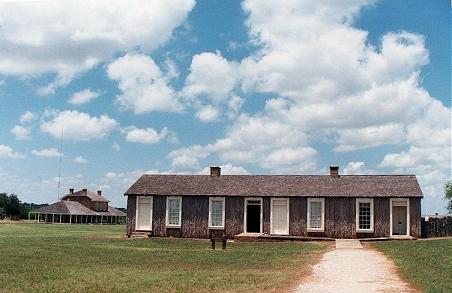
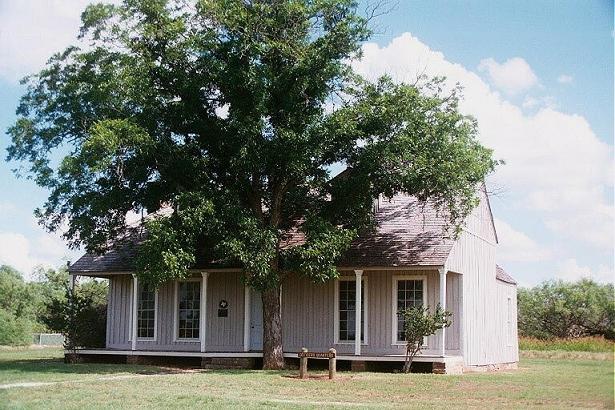
Our first stop is some restored officers' quarters, a picket house, about 3/10 of a mile after the entrance gate to Fort Richardson State Park. By 1872, 10 officers' quarters had been built. This structure is now an informative interpretive center which details the history of the fort and displays some of the fort's artifacts. The restored post hospital is off to the left. One other surviving officers' quarters (built of cottonwood lumber) is to the east of here. |
|
|
|
 |
|
|
|
Front of officers' quarters constructed with cottonwood lumber |
|
|
|
 |
|
|
|
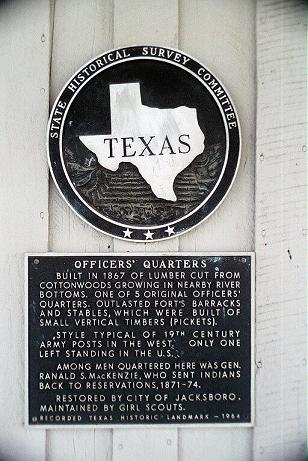
The State Historical Marker placed in 1964 states:
Officers' Quarters
"Built in 1867 of lumber cut from cottonwoods growing in nearby river bottoms. One of 5 original officers' quarters. Outlasted fort's barracks and stables, which were built of small vertical timbers (pickets).
Style typical of 19th century army posts in the West. Only one left standing in the U.S.
Among men quartered here was Gen. Ranald S. Mackenzie, who sent Indians back to reservation, 1871 - 1874.
Restored by city of Jacksboro. Maintained by Girl Scouts." |
|
|
|
|
|
 |
|
|
|
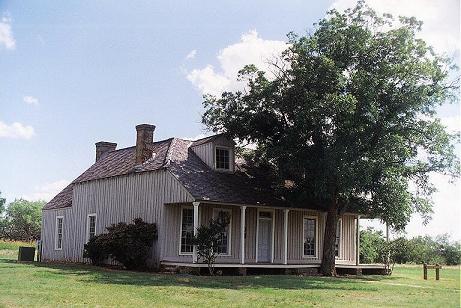
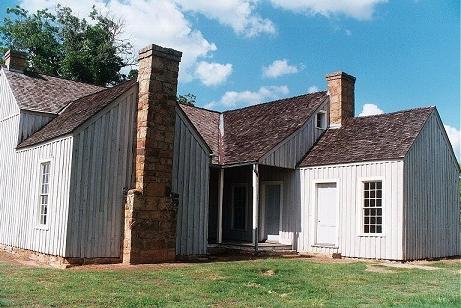
A view of the officers' quarters from the left. |
|
|
|
 |
|
|
|
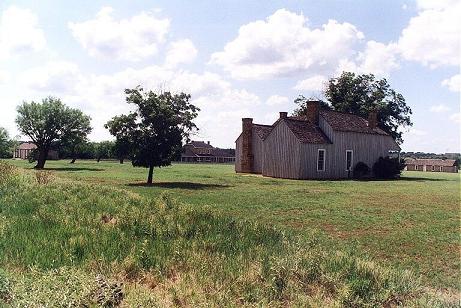
Now go around to the back. Note the faint traces of the foundations of the officers' quarters' kitchen in the grassy area to the center right. |
|
|
|
 |
|
|
|
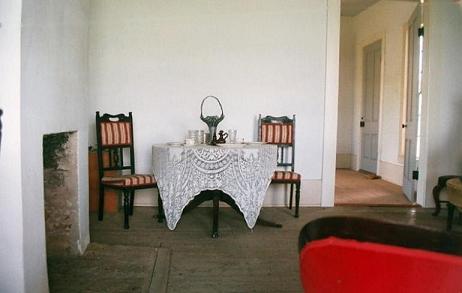
Here is a view of the parlor with period furniture as seen through the window. |
|
|
|
 |
|
|
|
This is another look at the officers' quarters from behind. Here you can see the layout of the fort:
Far left: Officers' Quarters
Middle: Post Hospital
Far right: Enlisted Men's barracks
Middle area: Parade Ground |
|
|
|
 |
|
|
|
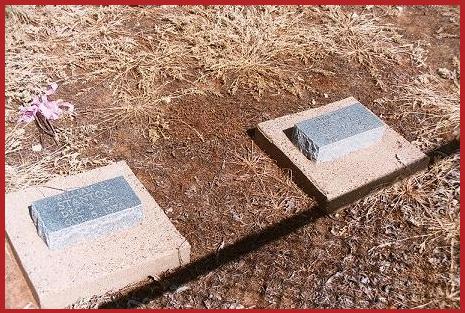
Turning around, behind the officers' quarters, you will see a small cemetery containing two childrens' graves:
Left: William E. Stanton Right: Robert F. Stanton
Dec. 3, 1871 Aug. 27, 1873
Oct. 5, 1874 Oct. 19, 1874
The markers were originally made of sandstone but an anonymous person replaced them with blue granite headstones. Not visible in the picture is a low sandstone wall that surrounds the graves. The shadow of a 4-foot high chain link fence, which has no gate, can be seen. The boys were the children of teamster, Robley Stanton, who hauled grain to Fort Richardson and surrounding communities. In a letter dated September 14, 1968, 75 year old Allie Mae Stanton Worley, the boys' sister wrote, "My grandfather was Francis Edlow Taylor, an officer at Fort Richardson. My grandmother was Martha Richardson Taylor." Mrs. Worley went on to say that the Taylors had resided in the officers' quarters with their daughter Julia Alice Taylor Stanton and her husband Robley Romelus Stanton along with their two sons, William Edlow Stanton and Robert Francis Stanton. The couple lost their first two children to whooping cough exactly two weeks apart. Martha Taylor, the children's grandmother evidently decided to have the two grandchildren buried nearby so she could care for their graves.
"Tending the forgotten Mystery of graves solved century later", Lois Paschal, Times Record News,Wichita, TX, 12/24/2002. |
|
|
|
Cavalry Post Hospital |
|
|
|
 |
|
|
|
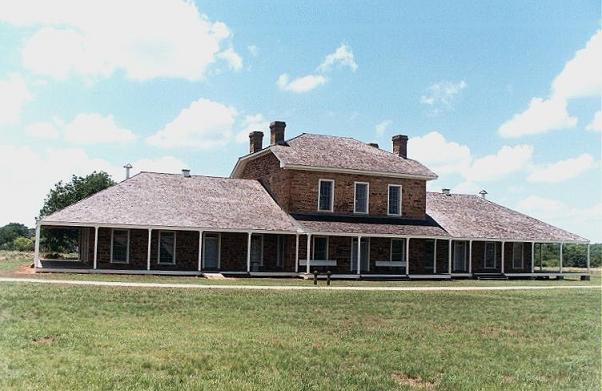
This is the front entrance to the Cavalry Post Hospital built in 1867. It was inspected by William Tecumseh Sherman in May 1871. His inspection was in progress when word arrived that the Warren Wagon Train had been massacred 24 miles northwest, a point Sherman and his party had passed by the previous day! The Indian killers were later found at Fort Sill, Indian Territory (Oklahoma) and were brought back to stand trial in Jacksboro, the first time Indians were ever tried in the white man's court of law in North Texas. |
|
|
|
 |
|
|
|
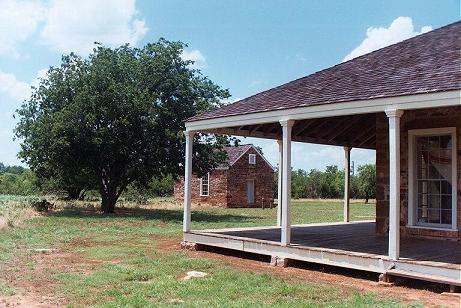
This view of the left wing of the old post hospital features a broad veranda, 12 feet wide running around the entire structure to help provide cooling from the hot sun. Seen through the veranda is the post morgue at the back of the hospital. |
|
|
|
 |
|
|
|
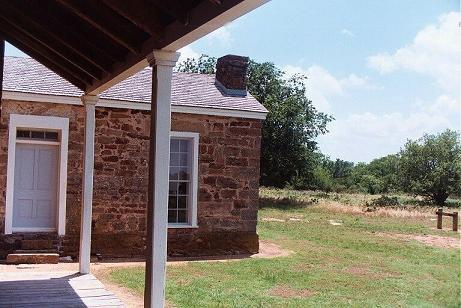
Here is a view of the back of the post hospital. Notice the meticulous work in putting together the native sandstone quarried near the fort. |
|
|
|
 |
|
|
Now let's peek inside through the windows! |
|
|
|
|
|
|
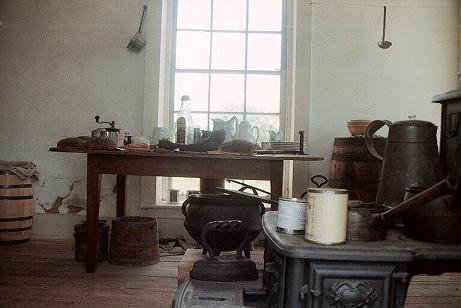
This is the area where food was prepared. The hospital boasted a 12 by 14 foot kitchen and a 6 by 8 foot pantry. Typical food consisted of beef, hardtack, baked bread, bean soup, potatoes, coffee and fresh vegetables (especially important for soldiers suffering from scurvy) if the harvest from the post garden was successful. |
|
|
|
 |
|
|
|
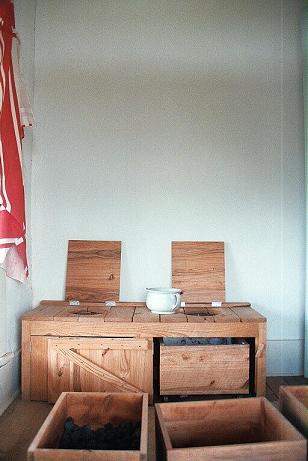
Each ward of the hospital had bathroom facilities at one end. The washroom contained a bathtub and wash basins, whereas the privy had airtight closet stools. Notice the commode here. Trays below the seats were pulled out and dumped outside, usually by a detail of prisoners from the guardhouse. The double seated closet was designed by a sanitation engineer so that diatomaceous earth and charcoal mixtures thrown on the wastes would absorb moisture and odors. This was a vast improvement over the usual outdoor facilities! |
|
|
|
|
|
 |
|
|
|
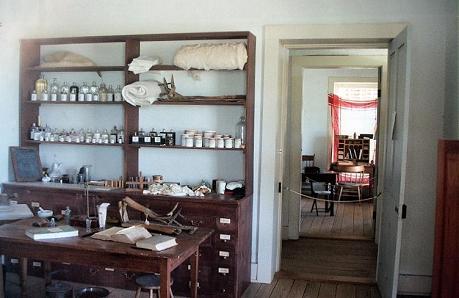
Now it's a peek at the dispensary. The physician went there to go over his prescriptions and the dietary orders with the steward. Here he kept the rudimentary medicines of the day, things such as Extract of Belladonnae, Cupri Sulfate, Brominium, Zinci Sulphas, Argenti Nitras, etc. For soldiers with scorbutus (scurvy), the doctor would prescribe citric acid 5 times a day and pickles with meals. Quinine was prescribed for malarial illnesses; leg wounds received dressings with "cerate resinae". These were a far cry from the antibiotics and modern medicine of today but they represented the most advanced medical care for the 1870's. |
|
|
|
The Morgue |
|
|
|
 |
|
|
|
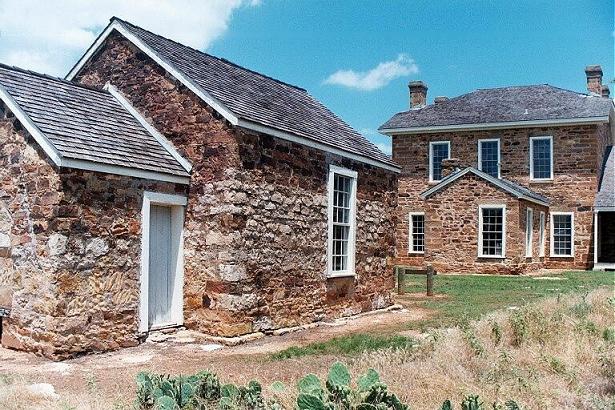
This is a view of the morgue at the rear of the hospital. Originally the hospital planned to use the upstairs portion of the hospital for a dead room, however the narrow 45 degree angle stairs and the hot climate made it necessary to build a picket and canvas morgue behind the hospital. Later this was replaced in the summer of 1875 with a 15 by 18 foot stone morgue making it the last building to be erected at Fort Richardson. Like the hospital, it was constructed with native sandstone. |
|
|
|
 |
|
|
|
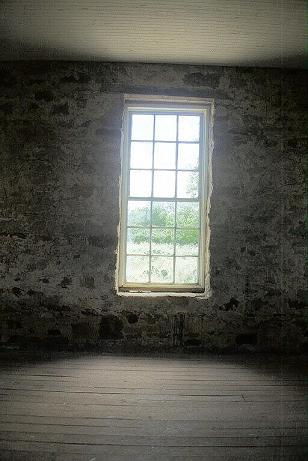
This is what the inside of the morgue looks like today. The window overlooks fields of dry cacti. The morgue stands as a grim reminder of the hardships soldiers had to face in frontier Texas. |
|
|
|
|
|
Kitchen
(Enlisted Men's Barracks) |
|
|
|
|
|
 |
|
|
Now we proceed north along
the edge of the parade
ground... |
|
|
|
|
|
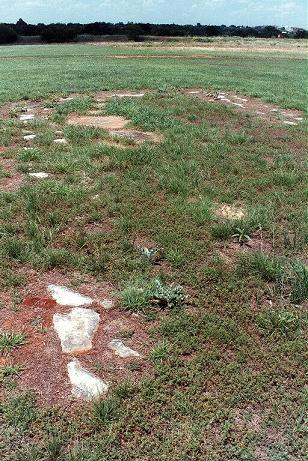
The bare foundations are all that is left of the kitchen, that was used to prepare food for the enlisted men. Typical Sunday fare for the company was: |
|
|
|
|
|
Breakfast:
* Boiled Beef
or Pork
* Hardtack
* Coffee |
|
Dinner:
* Roast Beef
* Gravy
* Baked
Potatoes
* Coffee |
Supper:
* Baked Bread
* Coffee |
|
|
|
|
|
|
Post Bakery |
|
|
|
 |
|
|
|
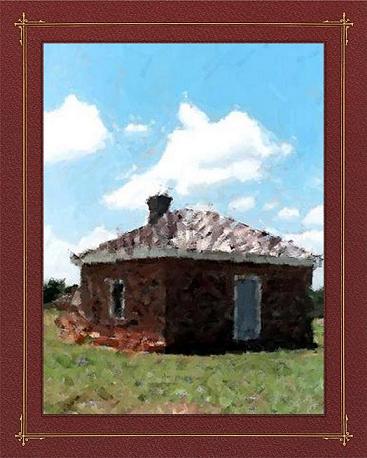
This is an artistic rendering of the post bakery. The bakery was constructed of blocks of sandstone and measures 26 by 26 feet. It was built with a stone floor, a shingled roof and two windows with a 14 by 14 foot brick oven built into the back wall. The bakery was capable of producing up to 400 loaves of bread every 12 hours. |
|
|
|
|
|
 |
|
|
|
|
|
Actual photograph. Artistic rendering was obtained through use of Microsoft Picture It! (R) Photo 2002 |
|
|
|
|
|
 |
|
|
|
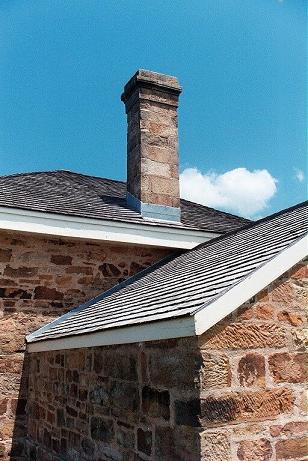
Notice the beautiful symmetry in the bakery's roof and chimney at the rear of the structure. |
|
|
|
The Guardhouse |
|
|
|
 |
|
|
|
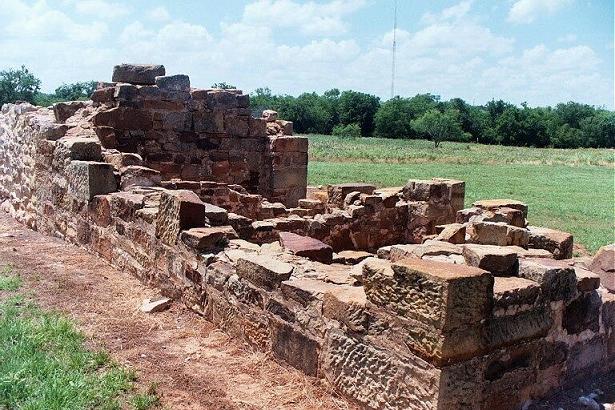
The guardhouse was used to punish soldiers for infractions of the military code. This structure housed a central picket guard room (13 ft. x 24 ft.), picket prison room (12 ft. x 24 ft.), and four stone cells (4 1/2 ft. x 8 ft.). Bathroom facilities included an open tub which was used in the picket prison room, and 4 buckets, one for each cell. This is a view of the four cells looking southwestward. The picket prison room and central guard room, long since decayed, were located to the rear of the cells shown here. |
|
|
|
 |
|
|
|
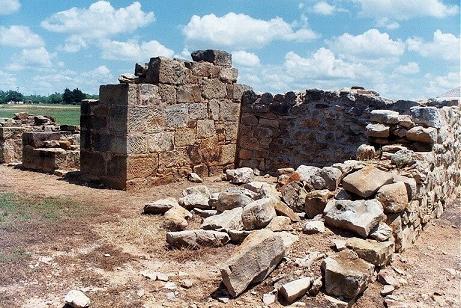
This is another view of the remains of the guardhouse looking to the southeast. |
|
|
|
 |
|
|
|
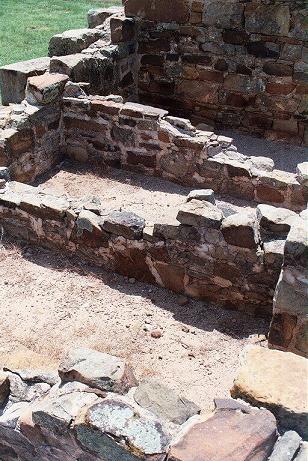
This is a view looking downward at three of the four prison cells. The ventilation for these cells was provided by 12 by 18 inch gratings placed in openings made in the outside wall to the left. Entrances to the cells can be seen on the right. Notice how narrow the cells are. These cramped spaces would definitely discourage future misconduct on the part of imprisoned soldiers! |
|
|
|
|
|
Magazine |
|
|
|
 |
|
|
|
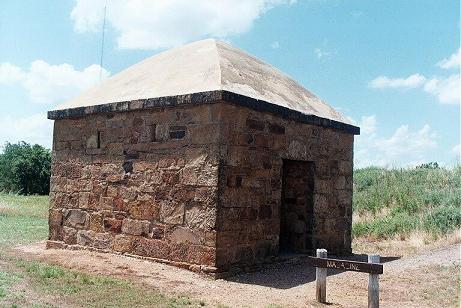
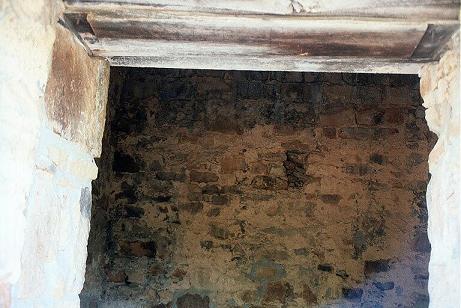
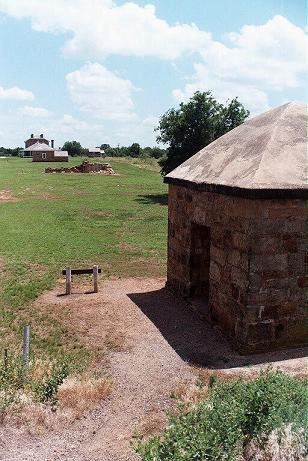
At the northwest corner of the fort is the old magazine, located about 200 feet north of the guardhouse. It is an 18 by 16 foot sandstone structure with double walls each 18 inches thick. If you look carefully at the left wall above, you will see small offset windows, which provided ventilation to the magazine. The structure is crowned with a nearly fireproof stone vault roof that was covered with cement, gravel and a small amount of tar. |
|
|
|
 |
|
|
|
This is the entrance to the magazine. Notice the weathered wooden doorpost. |
|
|
|
 |
|
|
An old elevated railway bed runs past the fort. This is the view obtained by looking south past the magazine. In the distance you can see the remains of the guardhouse, the bakery, the hospital and the morgue. |
|
|
|
|
|
|
Ruins |
|
|
|
 |
|
|
|
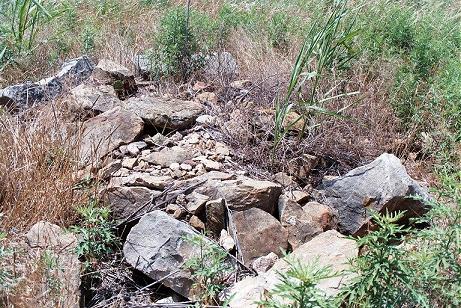
All that remains of the quartermaster shops is this rubble from the walls. The shops were erected after April 1871 as additional space for the quartermaster. |
|
|
|
 |
|
|
|
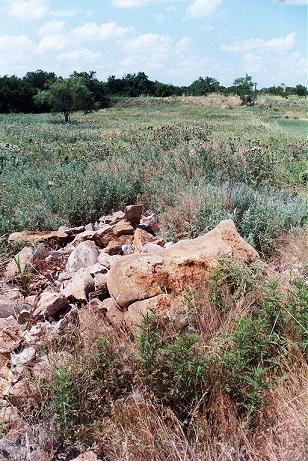
These are the ruins of the sutler's store or post trader, located about 50 feet behind the ruins of the guardhouse. |
|
|
|
|
|
Commissary |
|
|
|
 |
|
|
|
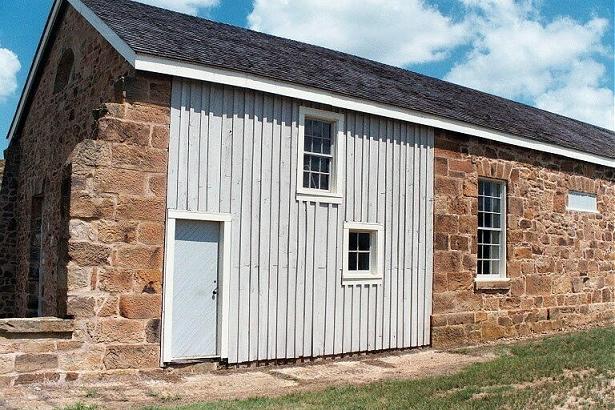
Here is a view of the restored half of The quartermaster's storeroom and commissary building. This building was originally two separate sandstone structures, each 60 x 24 feet, stood end to end. When they were completed in February 1868, there was a 20 foot space between them which was intended to become an arched entranceway to the fort. However masons, carpenters, plasterers and laborers hired by the quartermaster built a frame structure flush with the two stone buildings the following year to make one long building. The commissary sergeant used the upper story of the frame structure, shown above, as his office and sleeping quarters while the downstairs area was used as a storeroom. |
|
|
|
 |
|
|
|
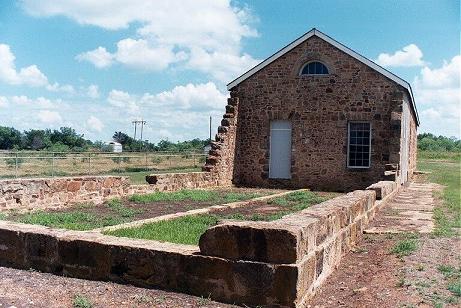
These restored foundations and partial walls are all that is left of the quartermaster's storeroom. Notice the two entrances seen as slots in the walls and the half moon and rectangular windows which were to originally look out on the arched entryway to the post. |
|
|
|
 |
|
|
|
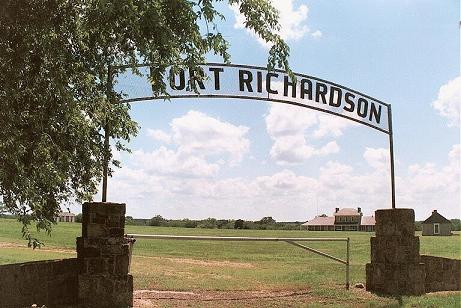
This is the old entrance to the fort located at the northeast corner of the parade ground near the commissary. |
|
|
|
 |
|
|
|
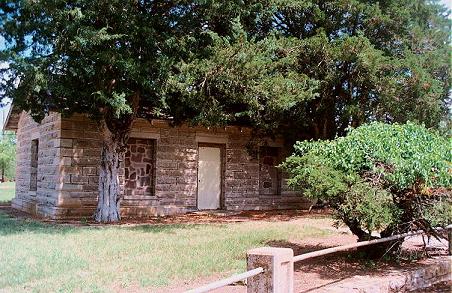
Unidentified stone building bordering the parade ground on the eastern end |
|
|
|
Enlisted Men's Barracks |
|
|
|
 |
|
|
|
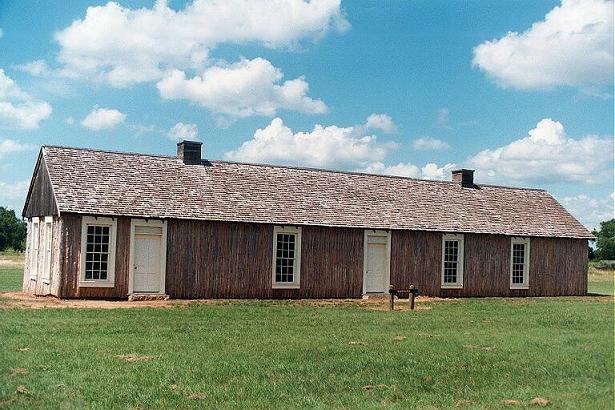
This is a restored barracks, on the north side of the parade ground. As one of ten structures, it along with the rest was built in the picket style. Most of the barracks were 85 x 25 feet (a couple were smaller) and had shingle roofs and wooden floors with kitchens and mess halls located about 25 feet behind each barracks. These building were originally designed to hold from 34 to 80 men, but it was not uncommon to have 100 or more soldiers crowded into them. |
|
|
|
 |
|
|
|
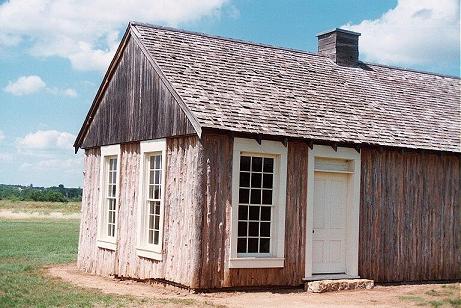
Here's a closer look at the west end of the barracks. Small rooms were partitioned at the end of the barracks for the sergeant's quarters. Notice the chimney. In the winter time, two large wood stoves provided heat to the soldiers. |
|
|
|
 |
|
|
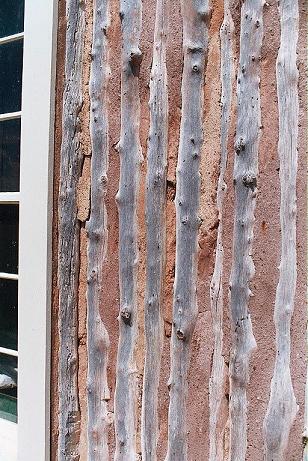
Notice the details of the picket construction. The workers cut thousands of pickets (or logs) and put them, sticking straight up, in trenches 1 foot wide and 1 foot deep with the trenches dug in the shape of a rectangle. Then they drove these pickets into place and used four extra large logs to form the corners of the structure. Next the workers ran a long piece of lumber from one corner to the other and nailed all the pickets to that board to keep them in place. Then they chinked the gaps in the walls with chips and plastered them with mud and twigs. When the green logs dried and warped however, the chinking fell out leaving the men inside exposed to the cold winds of winter and the heat of summer. |
|
|
|
|
|
|
 |
|
|
Again
let's
peek through
the window... |
|
|
|
|
|
|
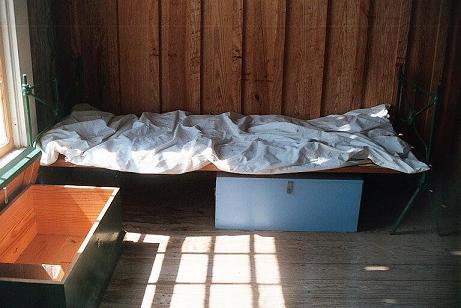
An unkempt bed for the sergeant! Notice the wood floors and foot lockers for storing personal effects. The enlisted men, unlike the sergeant, slept on wooden bunks that were only 4 by 6 1/2 feet with two men sleeping below and two above. What cramped quarters indeed! The soldiers used mattresses consisting of double bedsacks filled with hay which were supposed to be made up fresh every month. |
|
|
|
 |
|
|
|
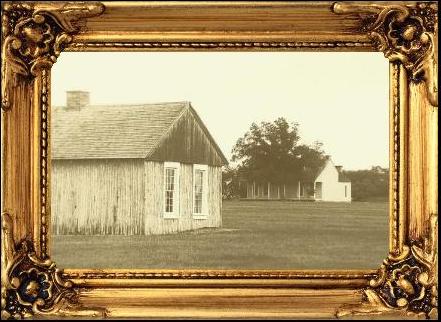
Here is a view of the barracks with the officers' quarters built out of cottonwood lumber in the background, as they might have appeared in a photograph taken in the 1870's. |
|
|
|
 |
|
|
|
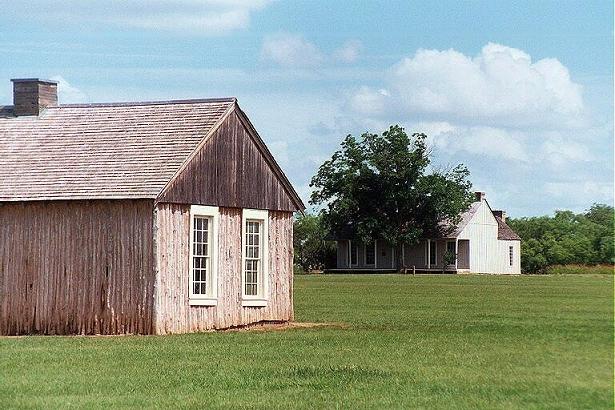
Here is the modern version of the above picture. Note how lush the grass on the parade ground looks. In the 1870's, the parade ground would have been dusty bare ground in the hot dry summer and a mud hole after the spring rains. |
|
|
|
 |
|
|
|
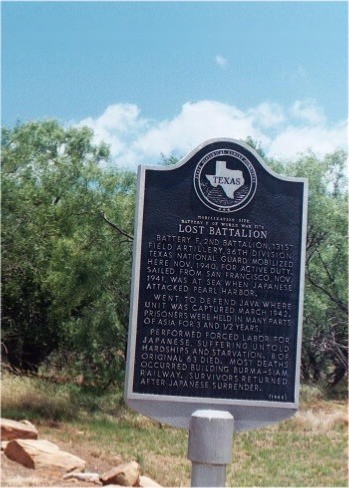
Back to where we first started the tour (the restored picket officers' quarters), we find the history of the fort did not end at its abandonment in 1878. The fort was used off and on by the Texas National Guard up until World War II. It was here that the famed "Lost Battalion" trained for war. The state historical marker which was placed here in 1968 reads:
"Battery F, 2nd Battalion, 131st Field Artillery, 36th Division, Texas National Guard mobilized here Nov. 1940, for active duty. Sailed from San Francisco, Nov. 1941, was at sea when Japanese attacked Pearl Harbor.
Went to defend Java where unit was captured March 1942. Prisoners in many parts of Asia for 3 and 1/2 years.
Performed forced labor for Japanese, suffering untold hardships and starvation. 8 of original 63 died. Most deaths occurred building Burma-Siam Railway. Survivors returned after Japanese surrender." |
|
|
|
|
|
We now look at the some other sites within the state
park that were not originally part of Fort Richardson... |
|
|
|
Chicago, Rock Island and Texas Railway |
|
|
|
 |
|
|
|
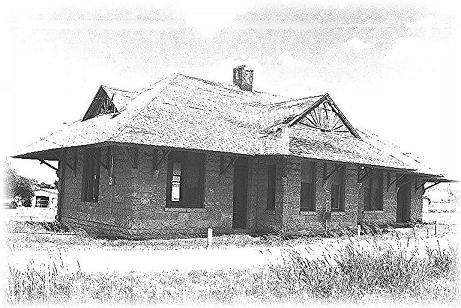
On August 24, 1898, the Chicago, Rock Island and Texas Railway reached Jacksboro. The railroad brought additional growth and provided much needed access to regions outside the county. The photo (made to look like a news-paper photo from the turn of the century) shows Jacksboro's first railroad depot, also built in 1898. |
|
|
|
 |
|
|
|
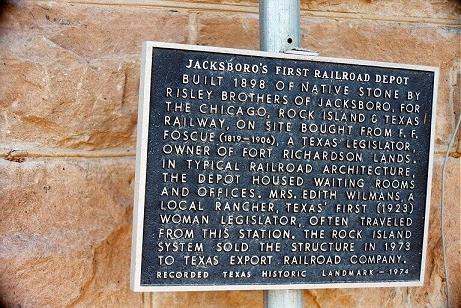
The historical marker, placed in 1974, clearly describes the history of the depot. |
|
|
|
 |
|
|
|
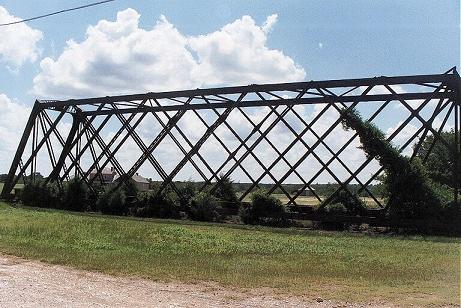
Here is what appears to be an old iron railroad bridge just across from the depot. Maybe it crossed Lost Creek as part of the Chicago, Rock Island and Texas Railway.The railroad bed is all that remains of the railway today, since it was abandoned and removed years ago. Perhaps this bridge is a silent testimony of that past era. |
|
|
|
Quarry Lake |
|
|
|
 |
|
|
|
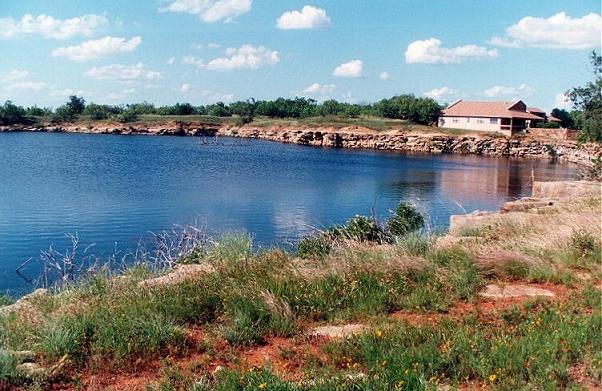
When exiting the park, be sure to stop and view Quarry Lake. The park headquarters and store are located to the right above the lake. The lake was formed long after Fort Richardson was closed, when a rock quarry filled with water. |
|
|
|
 |
|
|
|
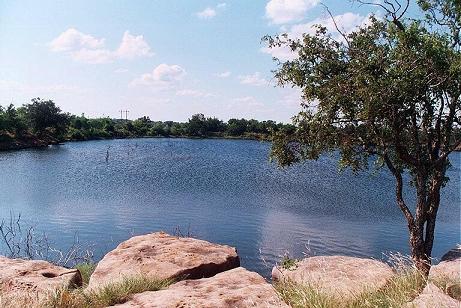
Another view of Quarry Lake. Seven acres in size, the lake is periodically stocked with catfish, bass and trout. |
|
|
|
In 1874, Colonel Ranald Mackenzie defeated the Comanches and Kiowas in the Battle of Palo Duro Canyon and by 1875, the frontier had moved westward. Northern Texas was relatively secure from Indian attacks and as a result troops were no longer needed at Fort Richardson. On March 29, 1878, orders were issued to abandon the fort. On May 23rd, the troops marched off to Fort Griffin and Fort Richardson was left deserted. |
|
|
|
Sources: |
|
|
|
Morning Rounds: Fort Richardson Hospital, December 19, 1871, Arlinda D. Abbott and Jerry M. Sullivan, Texas Parks and Wildlife Dept., Austin, TX, N/D. |
|
|
|
Sentinel of the Southern Plains: Fort Richardson and the Northwest Texas Frontier, 1866 - 1878, Allen Lee Hamilton, Texas Christian University Press, Fort Worth, 1988. |
|
|
|
"Tending the forgotten Mystery of graves solved century later", Lois Paschal, Times Record News,Wichita, TX, 12/24/2002. |
|
|
|
A mighty fortress is our God,
A bulkark never failing;
Our helper he, amid the flood
Of mortal ills prevailing:
For still our ancient foe
Doth seek to work us woe;
His craft and power are great,
And armed with cruel hate,
On Earth is not his equal.
Did we in our own strength confide,
Our striving would be losing;
Were not the right Man on our side,
The Man of God's own choosing:
Dost ask who that may be?
Christ Jesus, it is he;
Lord Almighty, his name,
From age to age the same,
And he must win the battle.
-Martin Luther, 1529 A.D. |
|
|
|
Virtual tour created by David W. Astwood. All rights reserved. Photographs displayed on this page are the property of the author. Email: [email protected] |
|
|
|
Home |
|
|
|
 |
|
|
|