 |
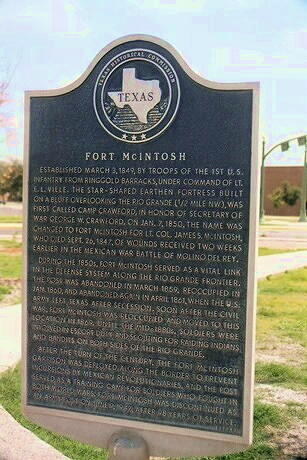
| Historical Marker erected by the Texas Historical Commission: "Established March 3, 1849, by troops of the 1st U.S. infantry from Ringgold Barracks under the command of Lt. E.L. Viele, the star-shaped earthen fortress built on a bluff overlooking the Rio Grande (1/2 mile NW), was first called Camp Crawford, in honor of secretary of war George W. Crawford, on January 7, 1850. The name was changed to Fort McIntosh for Lt. Col. James S. McIntosh, who died September 26, 1847 of wounds received two weeks earlier in the Mexican War battle of Molino Del Rey. During the 1850's, Fort McIntosh served as a vital link in the defense system along the Rio Grande frontier. The post was abandoned in March 1859, reoccupied in January 1860, and abandoned again in April 1861 when the U.S. army left Texas after secession. Soon after the Civil War, Fort McIntosh was reoccupied and moved to this location in 1869. Until the mid 1880's, soldiers were involved in escort duty and scouting for raiding Indians and bandits on both sides of the Rio Grande. After the turn of the century, the Fort McIntosh garrison was deployed along the border to prevent incursions by Mexican revolutionaries and the post served as a training camp for soldiers who fought in both World Wars. Fort McIntosh was discontinued as an army post on June 9, 1947, after 98 years of service." |
 |
 |
| Welcome to Old Fort McIntosh located in Laredo, Texas! The fort can be found at what is now Laredo Community College (LCC), located at the west end of Washington St. near the banks of the Rio Grande. This post was established in 1848 just after the Mexican War and was in use until just after World War II when the property was turned over to the city of Laredo. Though a community college occupies the grounds now, many of the old buildings still remain, providing a fascinating glimpse into the life of a frontier river fort! |
| Under Construction! |
 |
| xLet's start our walking tour of Fort McIntosh! |
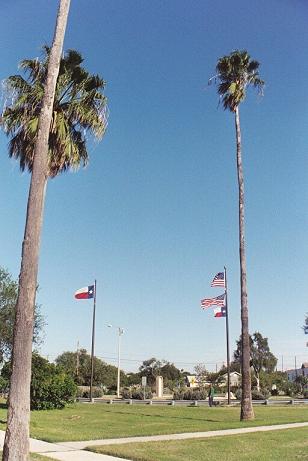
| Tall palm trees and four flags fly near the historical marker. The nearest flag has 34 stars, representing the 34 states in the union when the fort was first established. |
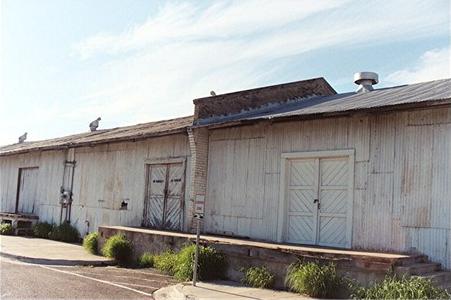 |
| A short distance to the north lies the post warehouse. After the fort closed, it was then used as a garage and physical plant for the college. It now stands vacant. |
| xNow let's proceed toward the river xto the end of the parade ground... |
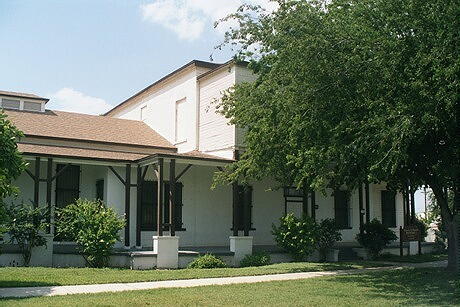 |
| The second post hospital, first opened in 1895, is situated right across the street from the historical marker. The college now uses the structure as a music and dance building. |
 |
| This building functioned as the post guardhouse and was built in 1886. It is now the extension of the Children's Museum for LCC. |
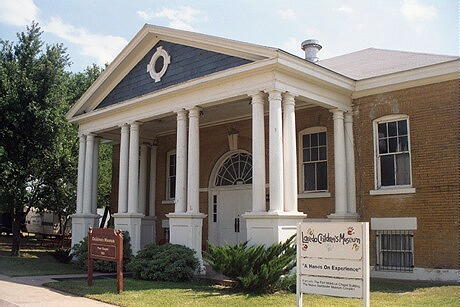 |
| The Fort McIntosh Post Chapel was built in 1910 and now serves as the main building for the Children's Museum at LCC. It is located on Sheridan Rd. A placque on the building reads: "Nuevo Santander Museum Complex Housed in four old Fort McIntosh buildings...Established in 1976" |
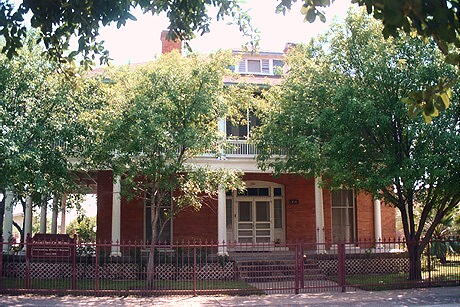 |
| Commanding Officer's Quarters |
| This brick building housed the commanding officer of the fort after it was erected in 1885. It is now home to the president of the LCC. |
 |
 |
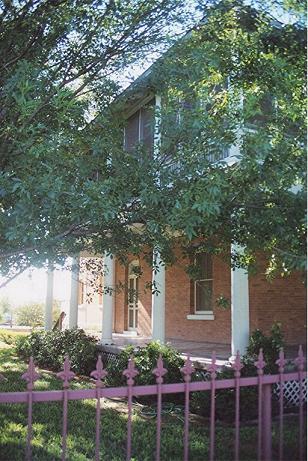
| Here is the veranda surrounding the house. Notice the white columns which are indicative of the style used in the late 1800s. |
| Here is the side view of the CO's Quarters. Notice the style of the chimneys |
| xDid you know xthat Lt. Egbert Ludovicus xViele, the founder and xcommanding officer of Fort xMcIntosh in 1849, later went xon to design Central Park in xNew York City? x-The Handbook of Texas Online |
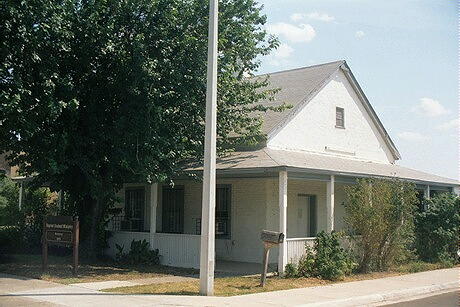 |
| Post Bakery |
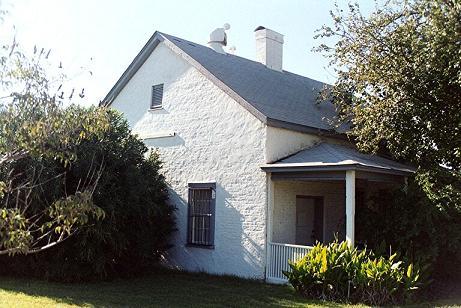
| Above: The bakery shown here was originally built in 1879. It now houses the Baptist Student Ministry on the campus of LCC. Below: Here is the other side of the bakery. Since it was made of brick, the building has lasted the harsh march of time better than a comparable wooden structure. |
 |
 |
 |
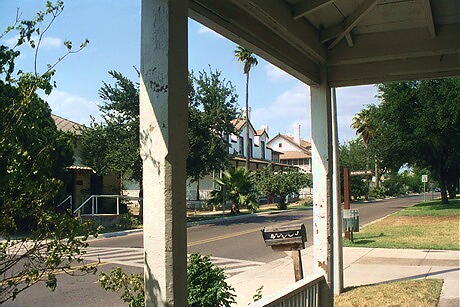
| Here is a view of officers' row from the porch of the bakery Officers Quarters (built 1880) Company Storehouse (built 1868) Old post road named Lamar Rd. |
 |
|
|
 |
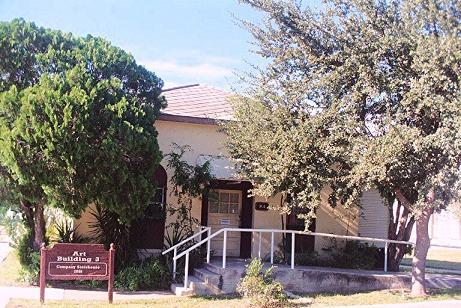
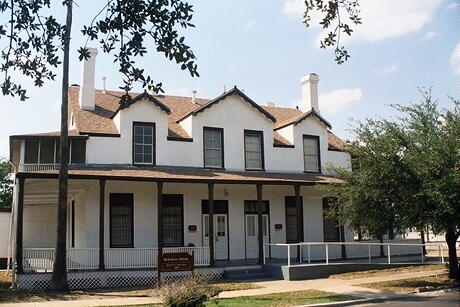
| Here is a close-up view of the company storehouse, one of the oldest surviving buildings of the fort. It is now used for art classes. |
 |
| These officer's quarters were built in 1880 to house lower ranking officers. The building is now an athletic dormitory for the college. |
 |
| Here are some other beautifully designed officer's quarters built also the same year. These too are an athletic dorm. |
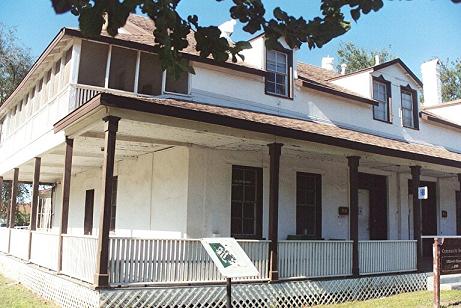 |
| Here are additional officer's quarters, also built in 1880. They are now the Community Services Building. |
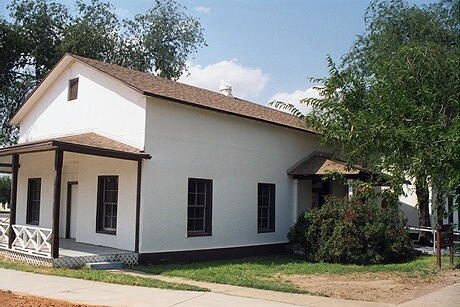 |
| This building served as the first Post Hospital. It was established in 1868. The office of Research and Planning for LCC occupies the quarters now. |
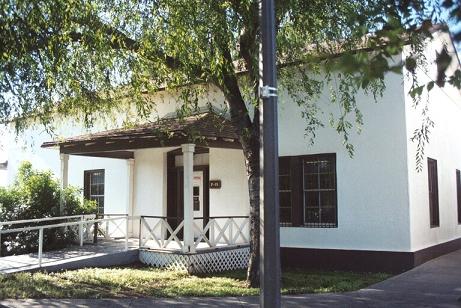 |
| Here is a view of the old hospital from the opposite side |
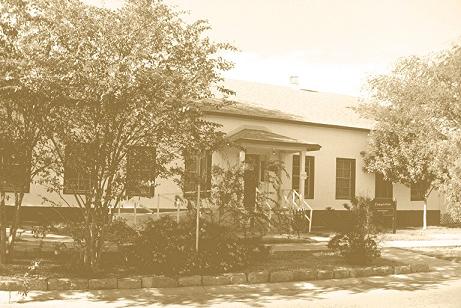 |
| Here's the 2nd wing of the old Post Hospital. |
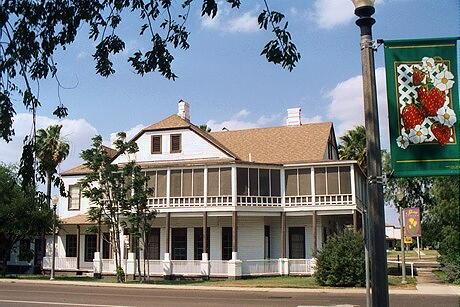 |
| Another elaborate post building lies at the corner of Sherman and Lamar Road These officers quarters were built ca. 1885 and are now used as a studio for music and dance at the college (note the colorful spring banner on the right). |
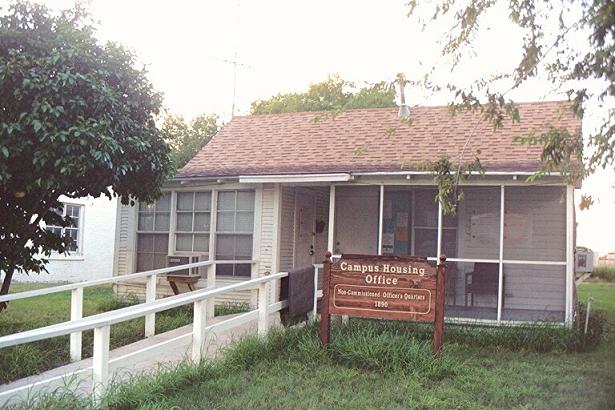 |
| The Campus Housing Office now occupies the Non-Commissioned Officers Quarters shown here. This building was erected in 1890. |
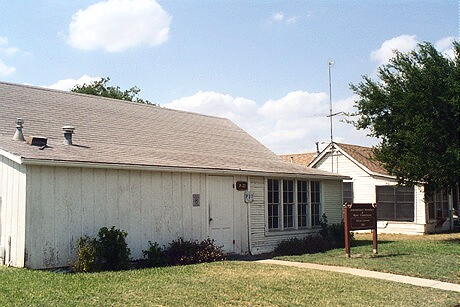 |
| Now look at some dilapidated Officers Quarters that were built in 1890. This building now serves as office for the International Boundary and Water Commission on the LCC Campus |
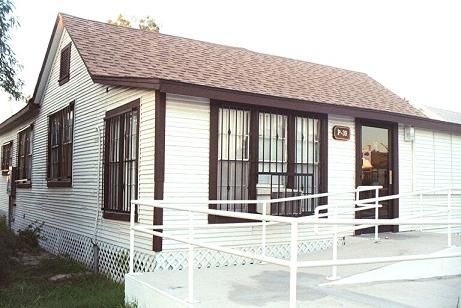 |
| At this point we see the Non-Commissioned Officers Quarters built ca. 1890 now used by the Texas Workforce Center, South Texas Workforce Development Board. |
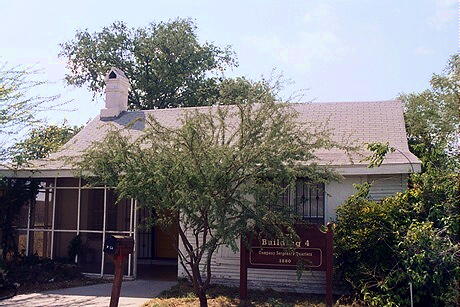 |
| This historic building was built in 1880 to house the company sergeant. It is now an art department office for the college |
 |
| Old Post Hospital |
![[History]](http://us.yimg.com/i/ligans/cb/smtdih.gif) |
| Most Beautiful Officers Quarters at Ft. McIntosh |
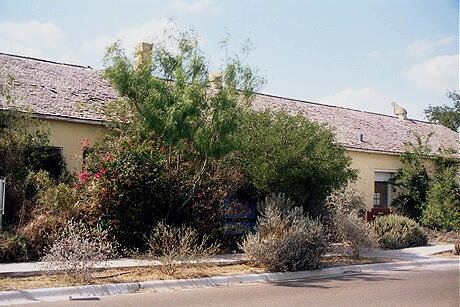
| Now obscured by vegetation, the building you see is one of the oldest at Ft. McIntosh. It was built in 1868, only 3 years after the Civil War ended at Appomattox Courthouse. It served as the Quartermaster's Storehouse. this long building is now Art Building 1 for LCC |
 |
| Quartermaster's Storehouse |
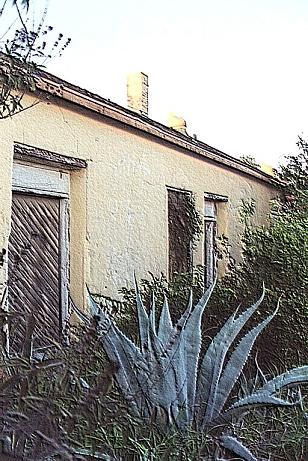
| Artistic rendering of the walls and boarded up windows of the Quartermaster's Storehouse |
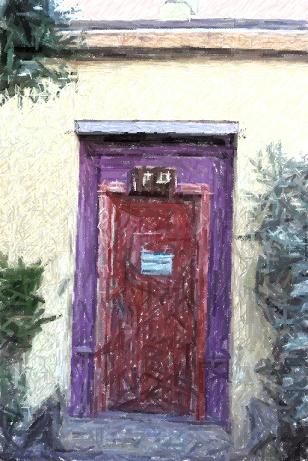 |
| A close-up of the doorway to the Quartermaster's Storehouse |