| XXX |
| xxx |
| XXX |
| What kids Do when they Write: Process |
 |
 |
| It is possible to tease apart the various stages of the writing/creating process and line them up in a chart. However, the temptation then, is to think of the writing process as a linear sequence of steps.
The writing process involves more than just following directions the way a child might create a Lego structure using the charts that come in the box. When children engage in real writing, they use the blocks of language to create something entirely new that has never been said in that same exact way before. They take familiar blocks of langauage and explore new ways to use them. When they realize that the blocks they are most familiar with are insufficient to meet the need, they experiment with new building blocks and fit them into the structure. All along the way, they are comparing their imagined structure with what their hands have made. Periodically their assessment leads them to rifle through the pile of Lego�s again to find just the right piece. Sometimes they look at packaged instructions to see how the �experts� have solved a particular construction problem. They might dismantle a section and begin again. If there are a couple of children working side by side, they will comment to each other, �I know what you can use there� or �it�s cool how you did that�. Frequently they call to brother, or sister, or mom, or dad, �Hey, look what I�m making��. If they are particularly stumped, they might ask for help. Or they will set the project aside for a while to come back later. And then, when they are satisfied that the last block is in place, the creation is usually displayed where it can be shared with others. |
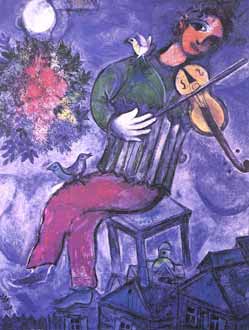
| If I create from the heart, nearly everything works; if from the head almost nothing. Marc Chagall |
 |
| Whether landscaping the yard, designing and building a house, painting a mural, or choreographing a dance, everyone uses a similar process when they engage in a creative endeavor. Writing, for young and old alike, is engagement in a recurssive creative process. |
 |
| It�s not just kids...And its not just writing |
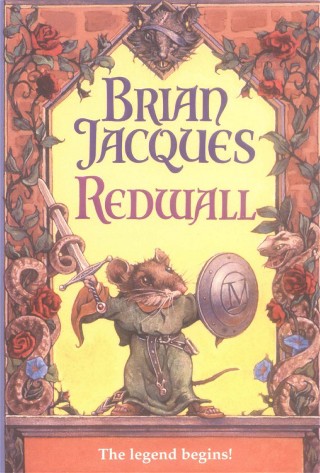
| Paint. That's the magic word. Paint pictures with words. That's the greatest advice I can give anybody. Paint the pictures with words. The picture will appear in the imagination so the person reading it can say, "I can see that" Brian Jacques, author of Redwall series talking about writing @ his website |
 |
| First there is a time of reflection and collecting ideas. (Prewriting) |
| Then the creator transfers these into a concrete form that others can view... but it isn't final... (Drafting) |
| The fledgling creation is adjusted, reshaped and ammended until the creator is satisfied that the creation sufficiently communicates what they want to express
(Revising) |
| Then, the artist/writer/designer is ready to to let the world see what he/she has made. (Publishing) |
|
|
|
| Don't miss the forest, for the trees |
 |
| Some writers prefer to do use drafting as a strategy for pre-writing. This kind of writer engages in the two phases simulataneously. Other writers focus on one section of their writing at a time, especially when they are involved in big projects. They cycle each section through serveral drafts to near completion in turns. And then they work on putting the pieces together before publication. Other writers jump around between the phases of writing leaving various sections at different drafting stages. Sometimes writers begin by working on the end of their story, sometimes the middle. Awareness of these differences makes the writing process a tool for improving writing, instead of a slave. |
| Pre-Write |
|
| 1st Draft |
| Revise |
| Edit |
| Publish |
|
| PREWRITING: up to 85% of time
spent writing preparing, rehearsing, imagining, collecting ideas, daydreaming, puttering around, note making , title writing, lead-writing, narrowing subject, spotting audience, choosing a form, reading, using writing for all of the above, using drawing/sketching for all of above, brainstorming , discovering what I know & what I wonder, journaling, thinking about: character, plot, conflict, setting, talking to self or others, reflecting on the patterns emerging, read writing models, choosing a genre, forming questions and looking for answers through all of this |
| DRAFTING: as little as 1%
of total time is spent writing first draft: first attempt at giving that prewriting some form , drafting, initial execution, reading my pre-writing, reading my writing as I write, choosing words quickly, transferring what is in my head to paper, attending to meaning ideas, may not attend to spelling and usage, creating a "SLOPPY COPY" |
| REVISING: up to 85% of time, depending on writer making meaning clear, organizing differently, choosing more specific words, improving sentence sense (by rearranging words and considering the relationship betweeen words) , reformulating paragraphs, adding, taking away, moving, molding, reshaping, reading work aloud to others, talking with others, reading and re-reading writing, conferencing with peers and teacher, read writing models, reworking to make meaning appropriate for audience and purpose, creating MULTIPLE DRAFTS |
| PUBLISHING: formatting, final proof-reading, presenting, distributing, celebrating, reflecting on what you've learned |
| EDITING: variable, depending on writer and number of previous drafts making meaning clear by conforming to conventions of spelling usage, grammar, sharing with a proof-reader, polishing, creating a FINAL DRAFT |
| Things Writers do during 5 Stages of Writing |
|
| Everyone is Different |
|
|
| progression cycle pyramid |
| Before presenting his/her work, the artist/designer/writer applies attention to details that have been overlooked to this point. (Editing) |
|
|
| Murray (1983), Spandel (2005), Tompkins (1993)Tchudi & Mitchell (1999) |
|
|
|
|
 |