Florence is where the Medicis hail from. They were one of those famous ruling dynasty families like the Hearsts, the Caesars or the Bushes. Medici means doctor. The Medicis were originally governmental appointees of the Pope, and their staus became upgraded as the Holy Roman Empire grew. At the height of the Renaissance, Lorenzo the Magnifcent (Il Magnifico) was head of the family. He recognized the outstanding skill of a young Michelangelo and brought him into the Medici palace to work for them and hang out with the scholars he regularly brought around to converse with. One of Il Magnifico's sons became a Cardinal and, eventually, the Pope (Leo X). The other succeeded him as Florence's ruler and mucked that up good and proper. He was so bad, the populace turned to a religious zealot named Savonrola who ousted the Medici family and called for "The Bonfire of the Vanities," a nasty public display where much of Florence's art and non-religious literature was burned. After Savonrola was excommunicated from the church, he was burned at the stake on the very same spot. Florence became a republic.
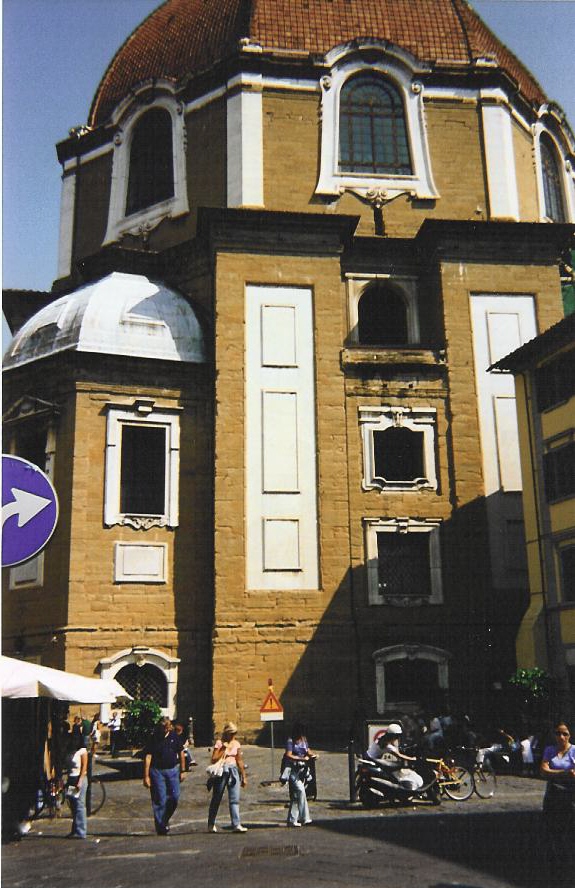
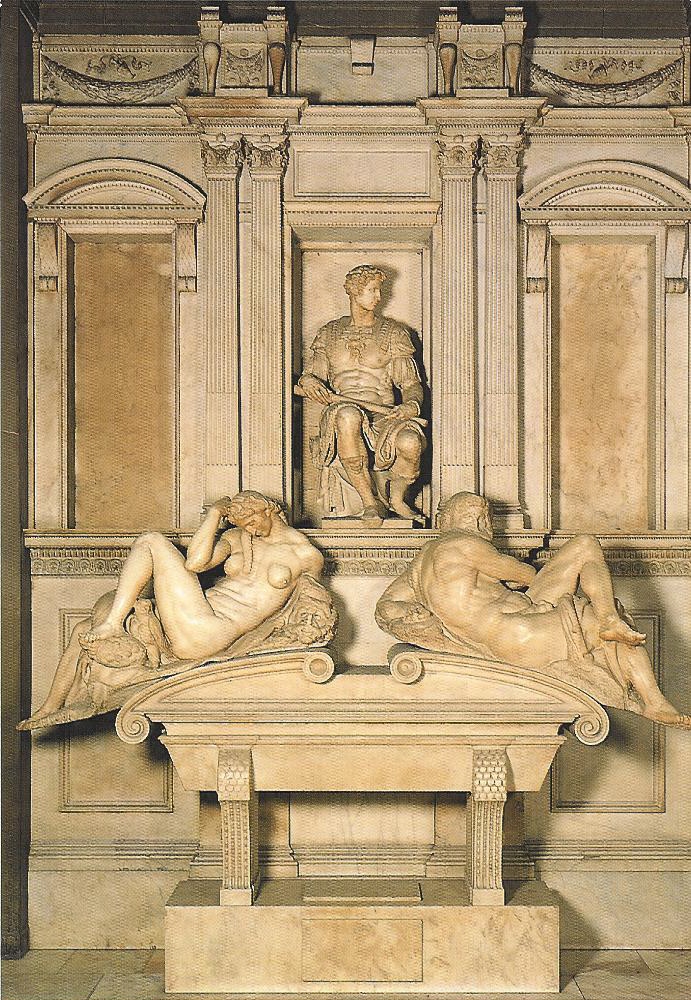
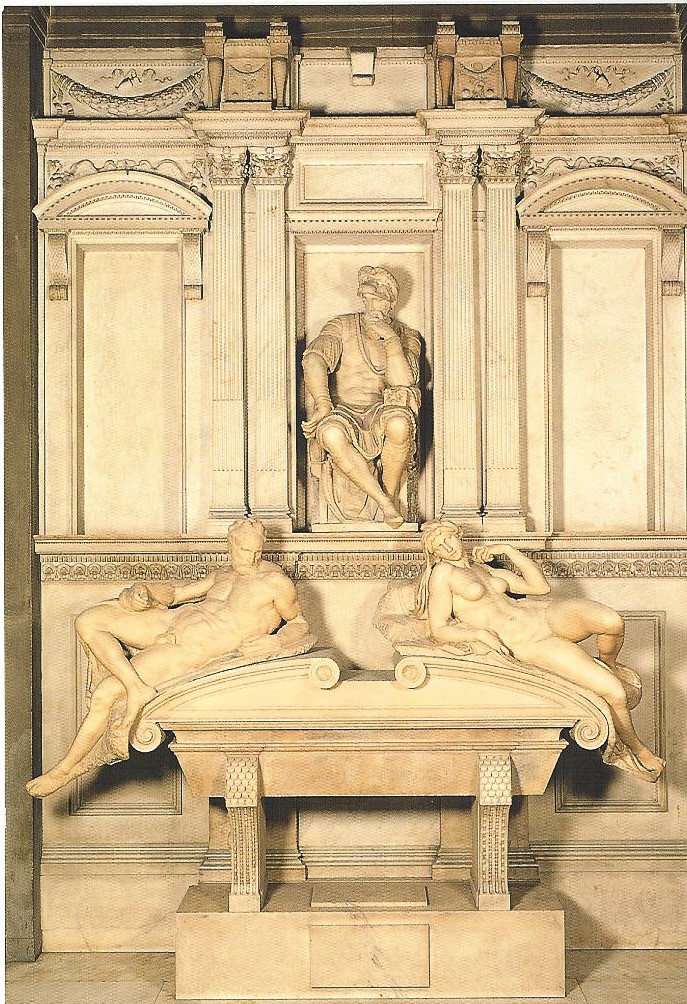
The Medici line dwindled away and by 1743, was completely gone. In their wake, they left the artwork that their fortune funded and several monuments to themselves. One of these is the first place we visited, the Medici Chapel. Originally intended to hold the entire family in grand marble wall-tombs topped with statues of the tombs� occupants, it was never completed in that regard. Several tombs were finished in this way, but most of the family is buried in an unadorned cellar room, marked only by simple plaques. The Chapel as it was originally intended, though, is a huge and wonderful thing to behold, gradually being finished over the centuries by various interested parties. This was all well and good as Jess and I took the audio-guided tour, but then we wandered (or were, rather "directed") into the "New Sacristy" designed entirely by Michelangelo, including two wall-tombs mounted by sculptures of the deceased. This was the room Michelangelo actually worked in and you can even see some of his handwriting and doodles on some of the walls, preserved behind plexi-glass. I've read about these works, but didn't realize this is where they were, so it was a nice surprise. Pictures do these things little justice for their size. In person, you can also see the little chisel-marks in the stone that wasn't outright polished. 500 years old, this stuff is. |