| History of the Appaloosa Breed |
| The Neemepoo Nation, mistakenly called Nez Perce by French explorers, originally bred the colored horses known as Appaloosas. They bred the horses to be hardy, strong, agile, and intelligent by culling the inferior horses. |
| When white settlers discoverd the Northwest Palouse region, they called the spotted horse they saw "Paluse horse" or " A Palouse horse." The name was shortened to " Appaloosa" when the ApHC registry was formed in 1938. |
| Under the leadership of Chief Joseph, an entire band of Neemepoo men, women, and children fled the U.S. Calvary and headed towards Canada. Their Appaloosa horses helped them out-maneuver the Calvary for four months and carried them over 1200 miles. The end was just 40 miles from the Canadian border and with the loss of many Neemepoo people. Chief Joseph decided to " Fight no more forever. " He surrendered to the U.S. Calvory in 1877. The original Appaloosa horse was lost when the Neemepoo lost their land and culture to the U.S. government. The U.S. Calvary killed the majority of the Appaloosa horse, and farmers bred the remaining few to draft horses, race horses, and stock horses. The color remained present, but most horses lost their original elegance, versatility, endurance, gentle tempermant, or agility of the Neemepoo Appaloosas. |
| Appaloosa numbers have grown over the years. While the coloration has remained, the horse's build has changed more toward the stock-horse type. Today the ApHC has 31,500 members and has registerd about 618,000 horses. |
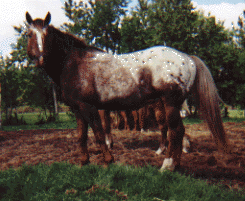
| Frost- white specks with a dark background |
| Blanket- white without dark spots over the hips |
| Marble- spots of similar size all over the body |
| Snowflake- spots all over the body with spotting dominant over the hips |
| Leopard- white with dark, egg-shaped spots over the loins and hips |
| Noncharacteristic- no colored coat patterns |
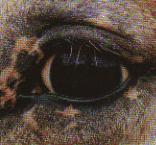
| White Sclera is the white area encirling the dark pupil of the horse's eye and is easily visible. Appaloosa eyes are similar to human eyes in apperance. |
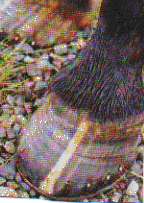
| Striped Hooves, light or dark vertical stripes are commonly seen on Appaloosa's hooves. Appaloosas are noted for their strong hooves that are less likely to chip because of their original breeding for rocky terrain. |
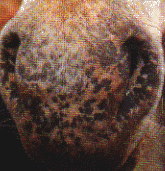
| Mottled Skin, the skin of the Appaloosa is mottled (speckled or blotchy pattern of pigmented and nonpigmented skin) on the muzzle, eyelids, and under the tail. |
| The Appaloosa often has a sparse mane and tail that is less likely to snag on brush. |
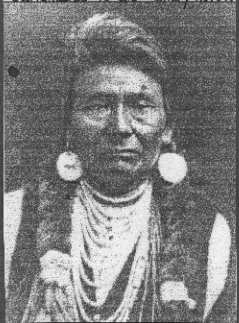 |
| Chief Joseph |
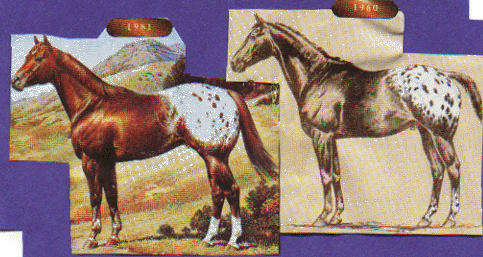 |
| 1960 |
| 1981 |
 |
 |
 |
 |
 |
 |
 |
|
 |
 |