| Woodworking |
| I have been making things out of wood since I was five. I had access to all of my father's tools in his woodshop when I was growing up, both in the US and in Pakistan. I self-taught myself how to use them, while making plenty of mistakes along the way (trying to plane through the nail stuck in a piece of wood was not a good thing...I cannot replicate the expression on my father's face when he saw the nick in the blade. But he said nothing, and sharpened it, and I never did that again!). As a hobbyist-woodworker, I have built a dozen shelving systems, innumerable toys and boxes of various types, two or three tables, rolling tool carts, a nice workbench, a watchmaker's bench, and have done a couple of wood carvings. PAST WOODWORKING PROJECTS: THE WORKBENCH: |
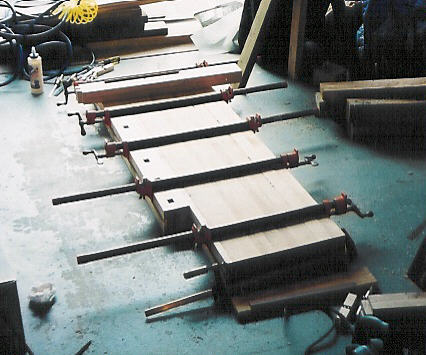 |
| As you can see, I opted to use Titebond II (my favourite wood glue) in the bench's construction due to the fact that the garage is often damp, and there would be no question about the ability of the workbench to hold together in any temperature and humidity level if I used Titebond II (though my father told me that was overkill). This project also gave me an excuse to buy more pipe clamps. Now I have around twelve. |
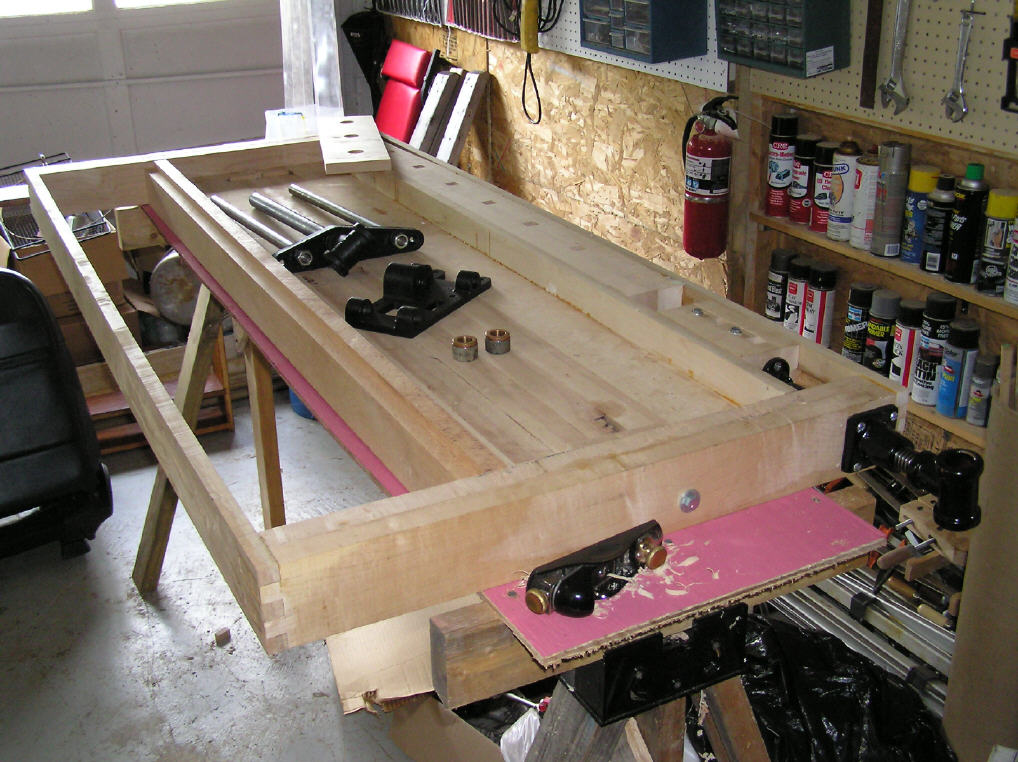 |
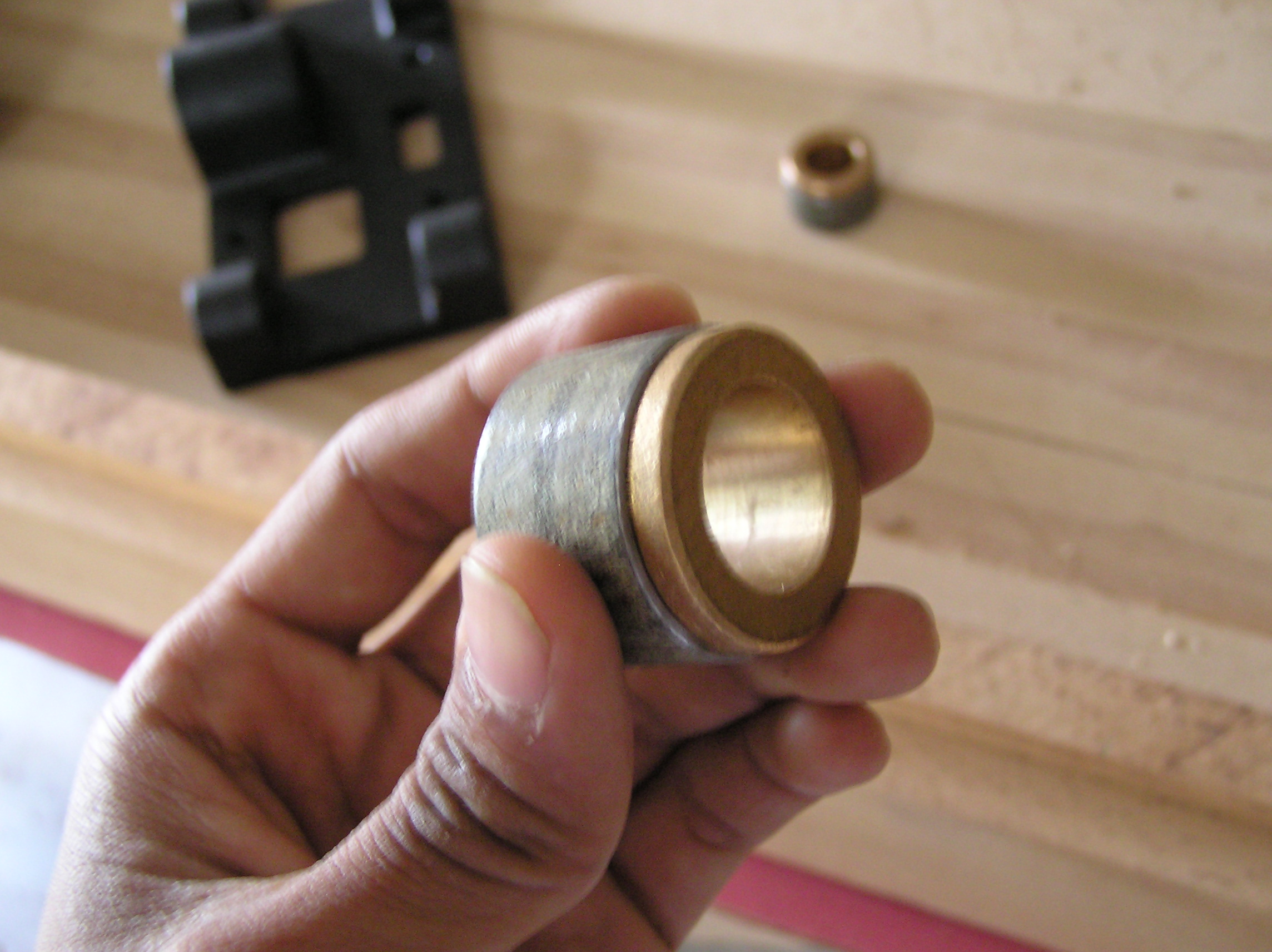
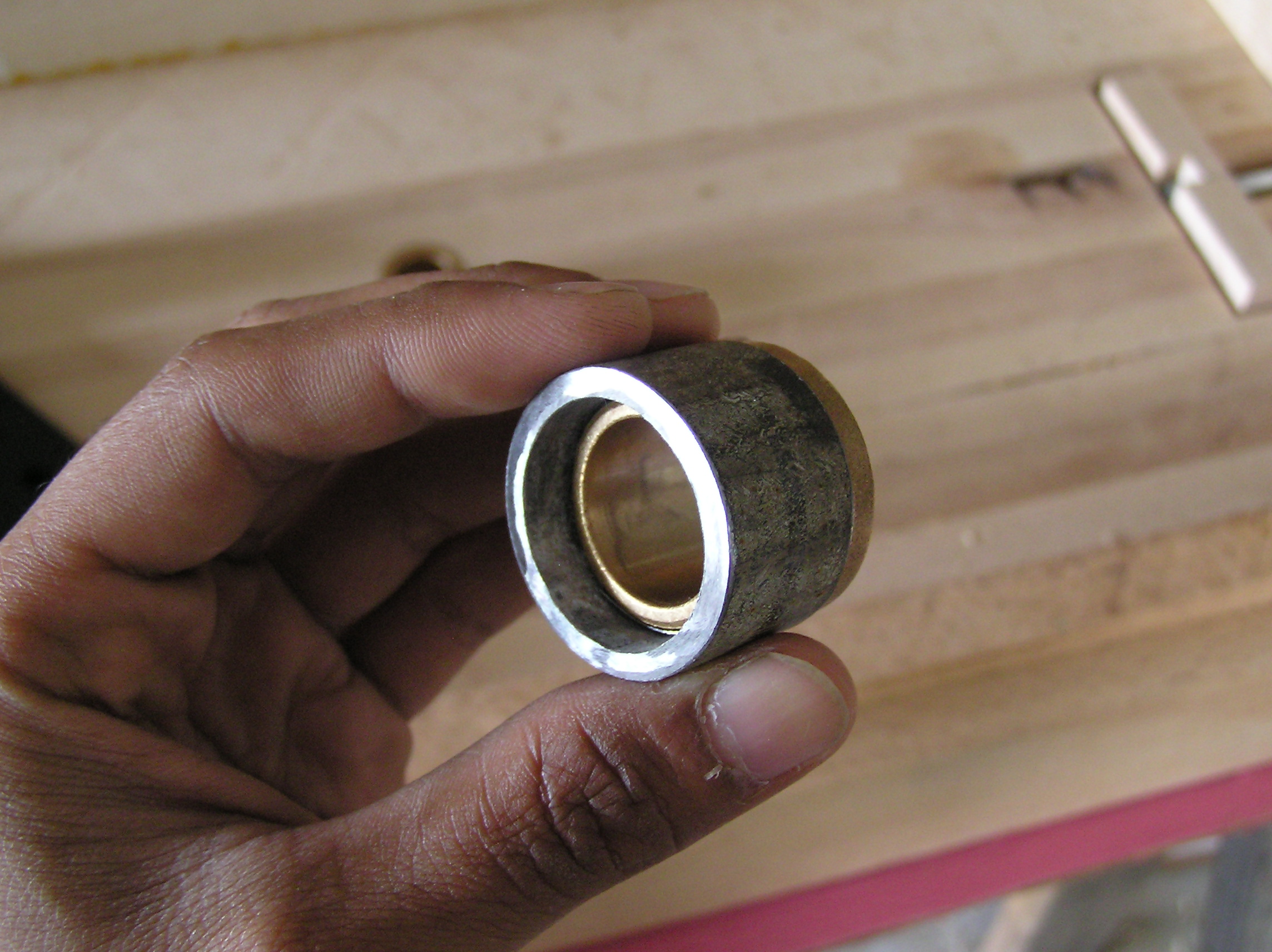
| This vise, which I got from Garrett-Wade, and appears to be Eastern European in manufacture, lacked bushings for the guide rods. So I made them. I ordered two 3/4" int. dia. flanged, oil-impregnated bronze bushings from McMaster Carr, scrounged some 1" int. dia. steel pipe from my father's junk pile, and this is what I came up with. You can see them on the bench and in further detail below. |
| I found, upon checking the diameter of the guide rods with a caliper, that they were nominally over 3/4" in diameter, and the bushings were four thousandths undersize. Well, I chucked the bushings into my lathe and bored them nine thousandths over and presto, perfect sliding fit. I then cut two 1" lengths off the steel pipe (bushing housings) , ground the ends parallel to within 0.01", and deburred them. With a 0.6" x 0.007" coil of steel shim doubled once over itself and wrapped around the bushings, the bushings were a tight friction fit in the steel housings: |
 |
 |
| Continued on Page 2 |

|