Trapping Beaver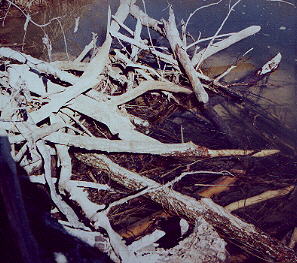 1.Finding Flat Tails:
In my neck of the woods (southern Oklahoma), it is no big challenge because we are literally overrun with them. Here in "Indian Territories", most of the beaver lodges are made over channels formed in the bank. I usually start by looking for necessities of life for the beaver (such as water, food, shelter, etc.) Now, everyone knows what beavers eat right? Yes, that's right, trees. But what kind of trees? Where I am from, the beaver seem to prefer willow bark. But I have heard of them cutting cottonwoods, cedar, and even treated yellow pine deck posts. Whether or not they actually eat all these woods, I am not sure of. They seem to cut the trees down to get at the tree's upper braches, stripping them of the outer bark. They then use the peeled sticks and some mud to make their lodges (note the picture on the upper right hand corner.) Beavers also eat certain kinds of aquatic plants to supplement their diet. Beaver leave behind many "signs" for the trapper. The biggest being their lodge but also the "slides" made from exiting and entering the water. They leave castor mounds (daubs of mud and sticks that the beaver uses to leave it's "scent" on), and tell tale signs such as peeled sticks floating in the water near the slides or channels. A trapper in my area can find an abundance of beaver trapping opportunities by talking to farmers and ranchers. They usually are very glad to have them removed. So get out there and find some beaver this summer and fall, to trap in the winter! You'll be glad you did.
 2.The Scented "Slide" Set:
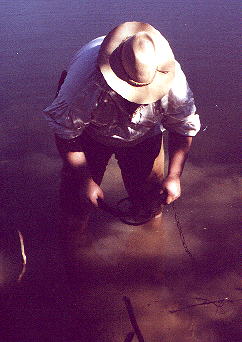
I start by cutting a 4 to 5 foot stake out of a small, straight green tree. Entering the water just a little ways down from the slide so as not to put much of my scent at the slide, I then make a small "shelf" by scooping away the mud in about 4-5 inches of water.I then set my stake as deep as I can in at least 4 feet of water, and set my trap (I use a #5 Bridger) in the shelf taking care to bed it firmly in place and slightly off to one side. I now set a "drowner stake" just out a little way from the trap stake. This causes the beaver to tangle itself in deep water and drown. After placing the drowning stake, I then take some branches and sticks to funnel the beaver towards a scented stick placed in the bank and sticking upwards over the trap. I use a castor based beaver "medicine" to scent the stick then exit the water where I entered it.
 3.The Castor Mound Set:
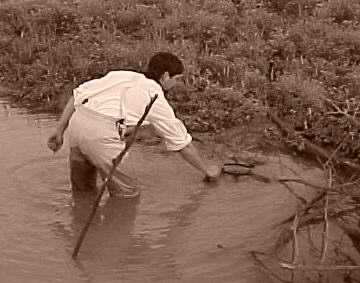
I think that the best way to start this set is to enter the water a little ways down from the site of the set. Beaver make small mounds of mud to leave their scent on. This mound is what we are trying to reproduce. It is also very effective to use an existing mound that the local beaver has already made. Anyway, make a shallow shelf where the trap will be bedded and make a small mound out of the mud you remove from the shelf and place it about 6-8 inches from the bank. Place a glob (about the size of a red bean) of your beaver "medicine" on top of the mound. Now return to the shelf and bed the trap there making sure to leave it set to one side just a bit. I use a drowning stake so the beaver will wrap the long chain around it and drown.
1.Finding Flat Tails:2.The Scented "Slide" Set:3.The Castor Mound Set: