
 |
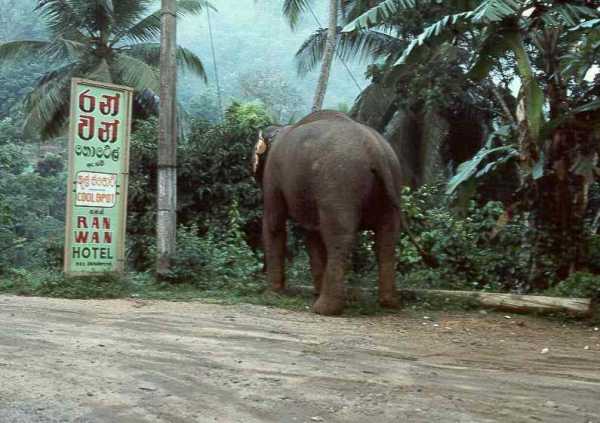
It is estimated that there are about three thousand
wild elephants in Sri Lanka, with another, perhaps five hundred in captivity.
Early part of this century, there were some 10,000 elephants distributed
all over the island, but first the big game hunters, and later the rapidly
expanding human habitats caused these numbers to dwindle rapidly. Today
these remaining wild elephants are confined mostly to protected National
Wild Life Parks in the south and the east.
|
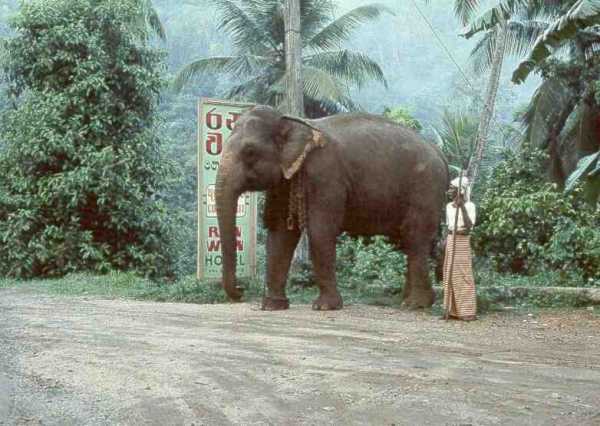 |
The Sri Lankan elephant, which is the same sub-species
as the Indian (Asian) elephant is somewhat smaller than the well known
African elephant. The most prominent difference, perhaps is the much smaller
size of the ears. The average full grown Sri Lankan male elephant can weigh
up to 12,000 pounds and reach a height of 11 to 12 feet at shoulder. The
females are smaller. It is also considered that the Asian elephant is much
easier to tame than the African elephant, a fact that may have contributed
to the rapid demise of this species.
|
 |
The gestation period for elephants is 18 to
20 months, one of the longest in the animal kingdom. The weight of the
average new born baby elephant is about 200 lbs. (Some Baby !!) The female
elephant can reproduce every four to six years and can give birth to the
same number of offsprings. Because of their very inefficient digestive
system, an elephant needs to consume about 300 hundred pounds of vegetable
matter, grasses, fresh leaves, and fruits, and drink about 30 gallons of
water per day. About half the food intake is passed through as undigested
matter.
|
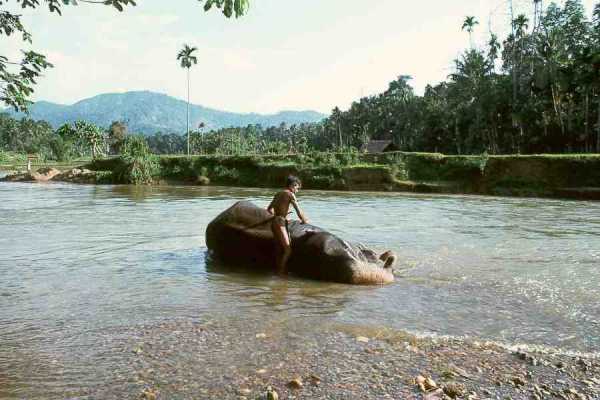 |
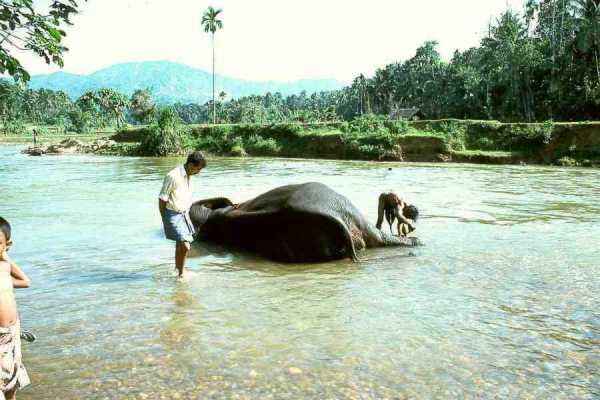
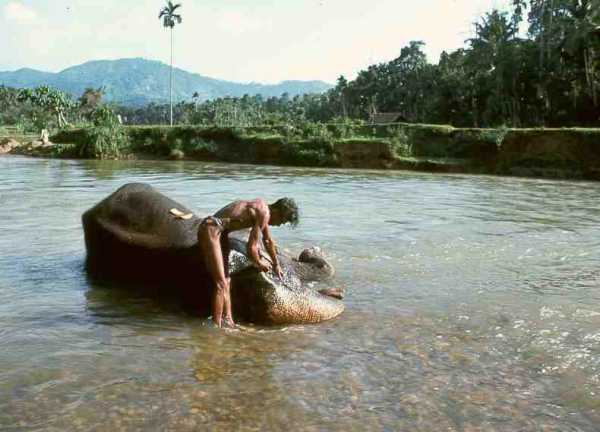
Local rivers and streams. A popular tourist
spot to see these playful animals is the Mahaveli River near Katugasthota
in the hill country near Kandy. (Mahanuwara). (The series of pictures appearing
here were taken at Gal Oya, on the Matale - Elkaduwa Road near Ukuwela.)
|
 |
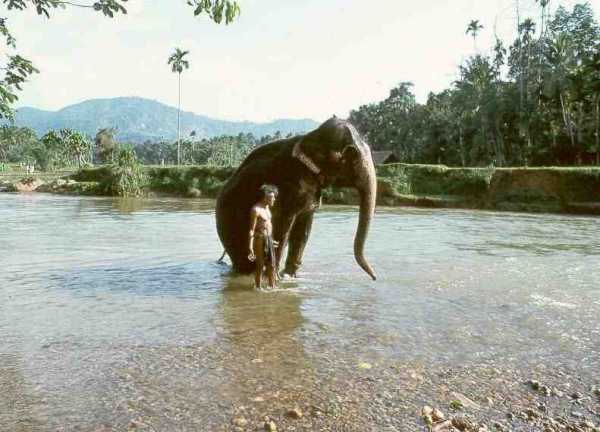
The relationship between the elephant and it's
handler (mahout) is indeed very profound. There are many stories about
how elephants take revenge for mistreatment and how they stand by their
friend and caretaker if they are treated well. A good elephant and a good
mahout stay together their whole life, always taking care of each other.
The mahout, at the end of a hard day, will always make sure that the elephant
is well settled in with enough food and water, before he will sit down
to have his own evening meal.
|
 |
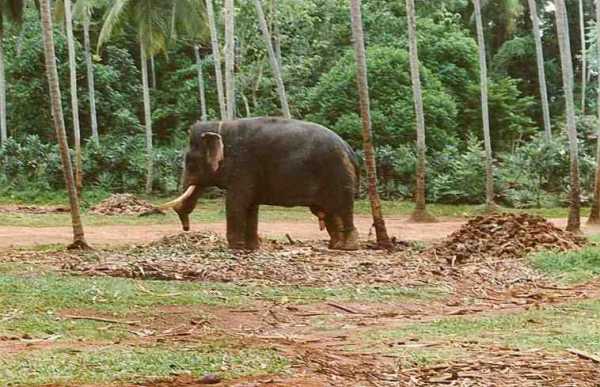
Working with and controlling an elephant is
hard work, and it is not uncommon for the mahouts to have a few pints (or
more like few coconut shells full) of the local home brew (ra) at the end
of the day to loosen up. More often than not, mahout will get a little
too loosened, and it is the responsibility of the elephant to make sure
that they both get home safe, a responsibility the elephant takes very
seriously indeed.
|
 |
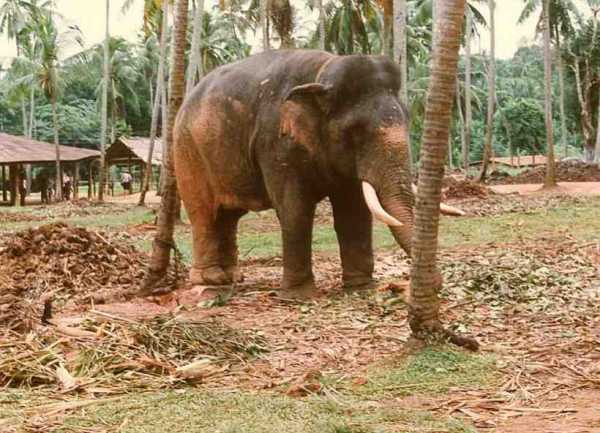
The elephant population in Sri Lanka, like in many other tropical countries, is dwindling at an alarming rate. In the early part of the century big game hunters "bagged" many of these magnificent beasts for their valuable tusks and to satisfy their manly egos. Now, the endless ethnic conflict in the north and east, with their left over land mines, and poachers, slowly but surely are, driving the remaining few thousands of elephants into extinction. The unceasing destruction of their habitat by the ever increasing human population is not helping matters either. |
 |
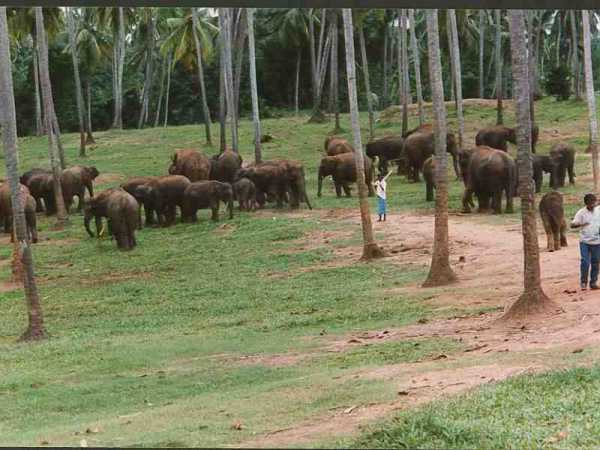
The orphanage for elephants at Pinnawela was
established by the Department of National Zoological Gardens in 1975. Pinnawela
is a small town situated on the Kegalle-Rambukkana road, 13 km. from Kegalle
Town. Kegalle is on the main Colombo-Kandy road. The orphanage started
as a place to house young elephants who found themselves separated and
lost from their herds, and abandoned by their parents when they fall into
pits or ravines, orphaned by poachers who hunt down and kill these magnificent
animals, or hurt otherwise.
|
 |
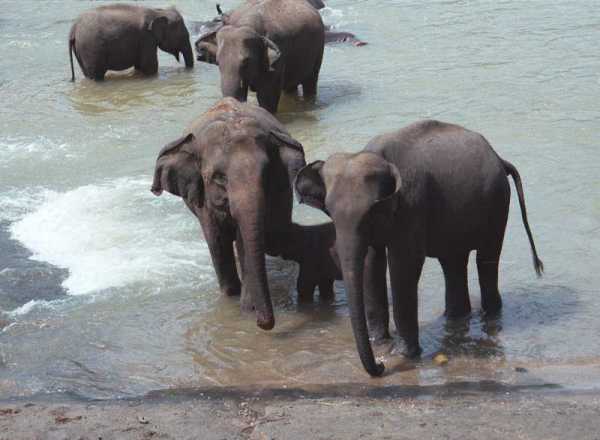
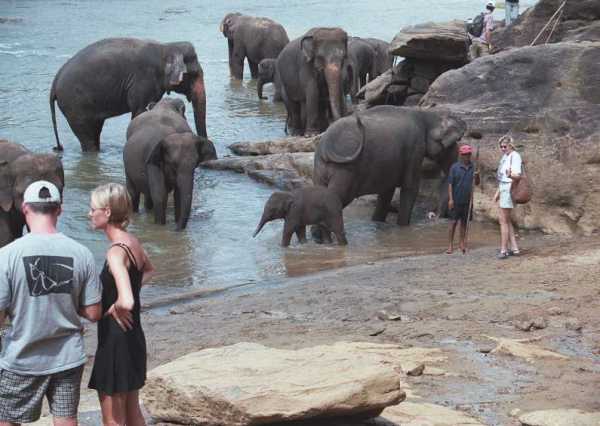
Twice a day, morning and evening, the elephants
at Pinnawela get to have a two-hour long leisurely bath at the nearby river.
There is very little in the way of food that the elephants can gather from
the park. Every day massive amounts of vegetable matter, jak, coconut,
kitul, tamarind, and grasses, are brought to the park from nearby woodlands.
Each elephant gets about 175 pounds of food per day, with unlimited amount
of water from the river.
|
 |
Elephants have always enjoyed a revered place
in Sri Lanka's history. Some of the early sculptures, like the moonstones
at old cities of Anuradhapura and Polonnaruwa feature elephants in various
poses. The ancient kings who ruled these cities used elephants for their
daily travel, and elephants were used exclusively to go to war. Buddhist
Temples, and Hindu Kovils used elephants to carry sacred objects during
parades. Even today, a majestic male elephant carries the Tooth Relic of
Lord Buddha during the Kandy Esala Perahara.
|
 |
Even the names given to these magnificent beasts
reflect this love between elephant and man. The tusker that carries the
Tooth Relic of Lord Buddha during the Kandy Esala Perahara has traditionally
been named "Raja" ( King.) . His mate of course will be naturally named
"Rani" (Queen). The first pair to become parents to a bonny baby elephant
at the Pinnawela Elephant Orphanage were named Vijaya, and Kumari (princess).
Vijaya, legend says, was the forefather of the Sinhala nation.
|
|
One of the three bee-eaters found in the island
(one a migrant) this resident bird is widly distributed both in the wet
and drt zones. It feeds on insects, the favourite being the dragon files
which it catches on the wing performing aerial acrobatics that will make
the finest air ace blush. This super specimen was seen at Diganwala in
the Yala National Park.
|

