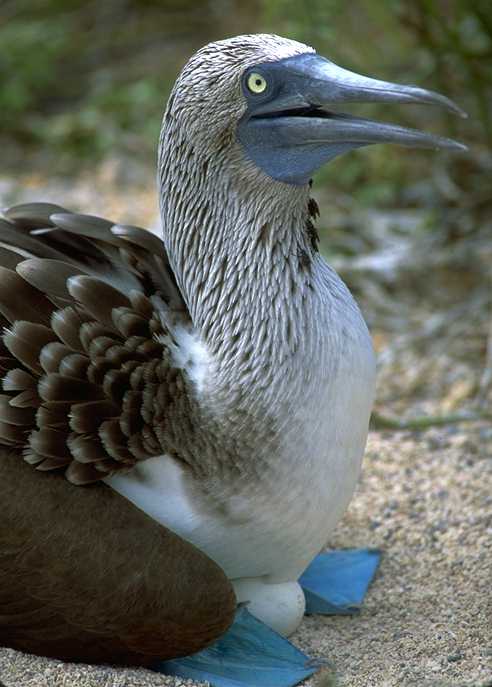
Seabirds face a multitude of threats, both on land and at sea. As a result of those threats, 72 of the world's approximately 315 seabird species are classified as threatened and a further 27 as near-threatened. The current revision being undertaken by BirdLife International lists 99 species. Not only are these irreplaceable birds global assets, they are also reliable ecological indicators of the health of the environment in which they live. Conserving seabirds will contribute to marine conservation in general and to conserving the world's biodiversity.
Currently, the most critical conservation problem facing seabirds globally is thought to be the mortality caused by longline fisheries as albatrosses and petrels swallow baited hooks and drown. As many as half a dozen species, including one of the world's largest flying birds, the Wandering Albatross, may be threatened with extinction by longlining because reproductive rates are low in these species and cannot compensate for this additional mortality. Therefore the Programme's first project has been an investigation into mortality caused by longline fisheries, with funding received from the Royal Society for the Protection of Birds, BirdLife International's National Partner in the United Kingdom..
There is a certain irony in the fact that longlining has increased since international protest reduced seine-netting of tuna (because of the concomitant death of thousands of dolphins) and largely eliminated pelagic drift-netting (which caused millions of birds to drown each year). Yet this very fact shows that when protests and pressure are sufficient, the necessary action can be taken. In the case of longlining it should not be necessary to ban the technique. It is a more environmentally sound way of catching fish than the indiscriminate nets of trawlers. Some very effective measures to reduce bird bycatch have been developed. These measures are relatively insignificant in cost and do not impact too heavily on the fishing activities.
|