|
WEB PAGE OF PADIYIL VINOD SIVADASAN |
|
|
|
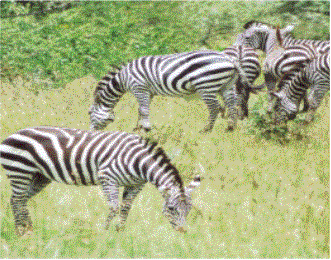
| Zebra
The zebra is the African version of the horse. Male wt 250 kg, ht 127-140 cm; female wt 220 kg, ht slightly shorter than male. There is no gender difference in their color; background white to buff color; striping varies geographically and individually. Juvenile coat is longer with brown stripes. Habitat: From southeastern Sudan to South Africa and west to
Angola, in Somali-Masai Arid Zone, Southern Savanna, and South West Arid
Zone. The zebra is one of the most numerous and successful large
herbivores, adapted to a broad range of grassland habitats. Zebras often
intermingle with other animals, most commonly the wilderbeest but also
with topi and hartebeest .The zebra is active mostly in daylight, spending nights preferably on short pasture relatively safe from ambush. Zebras graze individually an hour or so at a time at night but move about very little. Resting zebras often steep soundly, but at least one herd member remains standing and alert. Mass movements between pastures and sleeping grounds, and to water at midday, are also peaks of social activity. Social system: Harem masters have exclusive mating rights with 2 to 6 mares. Harems are so stable that mares remain associated for life; their foals gain added protection from the family stallion's readiness to defend his wives and offspring against all threats to their survival and his reproductive success. Home ranges can be as small as 30 km square in the best habitat, to over 600 km square in migratory populations. Harem ownership is about as safe as territory ownership: respected as long as the family stallion is fit enough to assert his rights. Colts leave their families on their own initiative usually between 2 and 3 years to join a bachelor herd, there to remain until mature and ready to start a harem at 5 years. Bachelor herds include 2 to 15 males, are usually led by a young adult, and are quite stable, with a rank order based simply on age. Reproduction: Foals born in most months but a definite annual birth/mating peak early in the rains (Dec.-Jan. in East Africa). Mares in good condition conceive during the following "foal heat"; others reproduce at 2-year intervals. First foals at 3 to 3.5 years. Gestation period is 11 to 13 months. A mare labors lying on her side, while the herd remains nearby and the stallion stands watch. Foals weigh approximately 31-33 kg, are able to stand within 15 minutes and suckle in an hour. The mother keeps all other zebras away for several days, but once the foal is imprinted on her, she allows other herd members to contact it; its sibling can establish close ties through mutual social grooming. However, the place closest to its mother is taken by the newborn |
African elephant [Loxodonta
africana
|
HOME www.geocities.com/drvinsi