|

|
What is heroin?
Heroin is an
illegal, highly addictive drug. It is both the most abused and the most
rapidly acting of the opiates. Heroin is processed from morphine, a
naturally occurring substance extracted from the seed pod of certain
varieties of poppy plants. It is typically sold as a white or brownish
powder or as the black sticky substance known on the streets as "black
tar heroin." Although purer heroin is becoming more common, most
street heroin is "cut" with other drugs or with substances such
as sugar, starch, powdered milk, or quinine. Street heroin can also be cut
with strychnine or other poisons. Because heroin abusers do not know the
actual strength of the drug or its true contents, they are at risk of
overdose or death. Heroin also poses special problems because of the
transmission of HIV and other diseases that can occur from sharing needles
or other injection equipment.
What is the scope of heroin
use in the United States?
According to the
1998 National Household Survey on Drug Abuse, which may actually
underestimate illicit opiate (heroin) use, an estimated 2.4 million people
had used heroin at some time in their lives, and nearly 130,000 of them
reported using it within the month preceding the survey. The survey report
estimates that there were 81,000 new heroin users in 1997. A large
proportion of these recent new users were smoking, snorting, or sniffing
heroin, and most (87 percent) were under age 26. In 1992, only 61 percent
were younger than 26.
The 1998 Drug Abuse Warning Network (DAWN), which collects data on
drug-related hospital emergency department (ED)
episodes from 21 metropolitan areas, estimates that 14 percent of all
drug-related ED episodes involved heroin.
Even more alarming is the fact that between 1991 and 1996, heroin-related ED
episodes more than doubled (from 35,898 to 73,846). Among youths aged 12 to
17, heroin-related episodes nearly quadrupled.
NIDA's Community
Epidemiology Work Group (CEWG), which provides information about the
nature and patterns of drug use in 21 cities, reported in its December 1999
publication that heroin was mentioned most often as the primary drug of
abuse in drug abuse treatment admissions in Baltimore, Boston, Los Angeles,
Newark, New York, and San Francisco.
How is heroin used?
Heroin is usually
injected, sniffed/snorted, or smoked. Typically, a heroin abuser may inject
up to four times a day. Intravenous injection provides the greatest
intensity and most rapid onset of euphoria (7 to 8 seconds), while
intramuscular injection produces a relatively slow onset of euphoria (5 to
8 minutes). When heroin is sniffed or smoked, peak effects are usually felt
within 10 to 15 minutes. Although smoking and sniffing heroin do not
produce a "rush" as quickly or as intensely as intravenous
injection, NIDA researchers have confirmed that all three forms of heroin
administration are addictive.
|
|
|
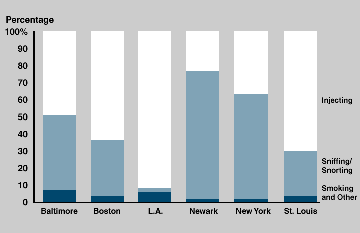
Source:
Community Epidemiology Work Group, NIDA, December 1999
|
Injection continues to be the predominant method of heroin use among
addicted users seeking treatment; however, researchers have observed a
shift in heroin use patterns, from injection to sniffing and smoking. In
fact, sniffing/snorting heroin is now the most widely reported means of
taking heroin among users admitted for drug treatment in Newark,
Chicago, and New
York.
With the shift in heroin abuse patterns comes an even more diverse group
of users. Older users (over 30) continue to be one of the largest user
groups in most national data. However, the increase continues in new, young
users across the country who are being lured by inexpensive, high-purity
heroin that can be sniffed or smoked instead of injected. Heroin has also
been appearing in more affluent communities.
|
|
|