ROOT CANAL TREATMENT
What is a Root Canal?
To know about a root canal we have to understand the basic structure of the tooth.
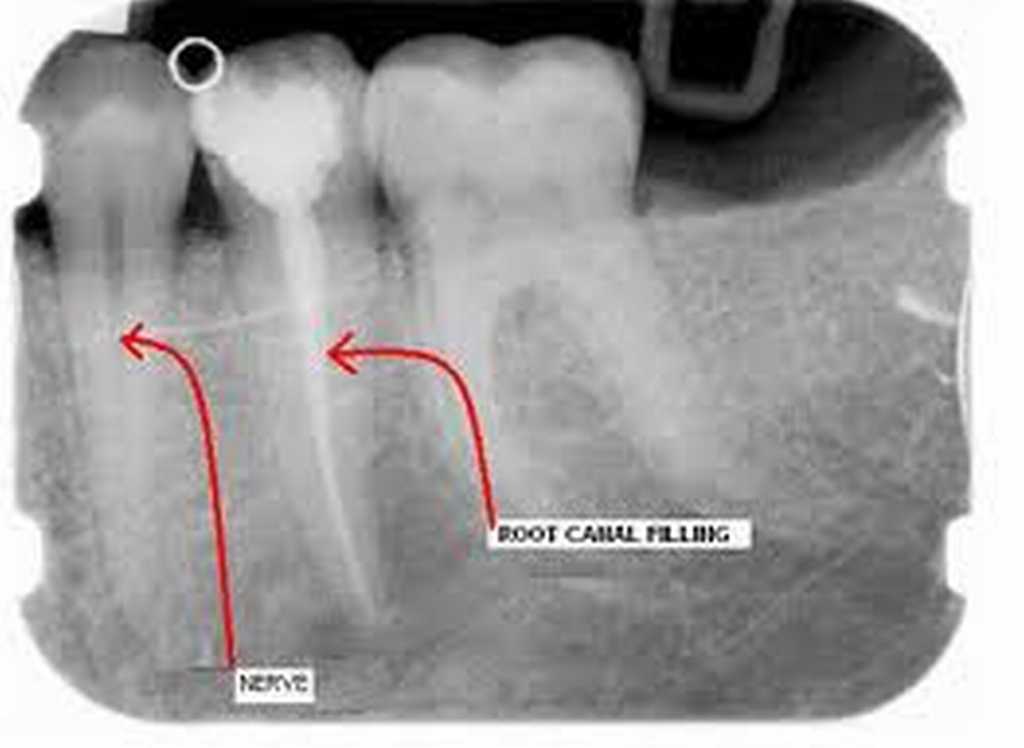
The portion of the tooth seen in the oral cavity is called the crown of the tooth and portion which is anchored within the jaw bone is called the root. Depending on the size location and function a tooth may have one or more roots. The tooth has this inner core of soft tissue called pulp. The pulp comprises of all the nerves and blood vessels, which keep the tooth alive. In the crown, the pulp is present within a chamber called pulp chamber and it extends into the root via a narrow tapering canal called root canal. The blood vessels and nerves, which travel through this canal, leave the tooth through a small opening present in the lower end of the tooth ultimately joining with the other major blood vessels and nerves running within the jawbone.
How does the pulp get infected?
Sometimes the pulp inside your tooth becomes inflamed or infected. This can be caused by deep decay, repeated dental procedures on the tooth, a crack or chip in the tooth, or a blow to the tooth .The most common cause is tooth decay.
What happens when a pulp gets infected?
Tooth decay if left untreated spreads into the substance of the tooth ultimately infecting the pulp. Once the pulp becomes infected with more bacteria than it can handle, it begins to degenerate. As with any infection there is formation of pus, which tends to get accumulated at the tip of the roots within the jawbone, forming a "pus-pocket" called an abscess. This abscess not only causes pain and swelling but also affects the jawbone.
What is a root canal treatment?
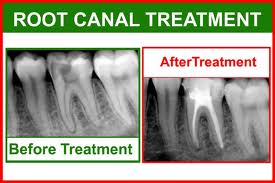
Root canal is the treatment in which the infected pulp is removed from the tooth and the space occupied by it is cleaned and filled with a special filling material. Even though the pulp has been removed from the inside of the tooth, the tooth is still embedded in a living jaw structure. The root canal tooth will not feel hot or cold. However the tooth would still retain normal sensation to touch or pressure.
Why is a root canal treatment done?
For years, teeth with diseased or injured pulps were removed to prevent or to treat the consequences mentioned above. Today, root canal treatment has given dentists a safe way to save teeth. Based on the results obtained so far it is safe to say that more than 90% of endodontic cases respond to root canal treatment. If carried out.
How is the root canal treatment done?
Contrary to popular belief root canal treatment is not painful .It is carried out under local anesthesia which makes the tooth numb. Only after the dentist has confirmed that the patient has no pain will he /she begin the treatment. The duration of the treatment depends on the amount of infection present. The treatment can be completed in a single appointment or may require more than three appointments.
Root Canal Treatment
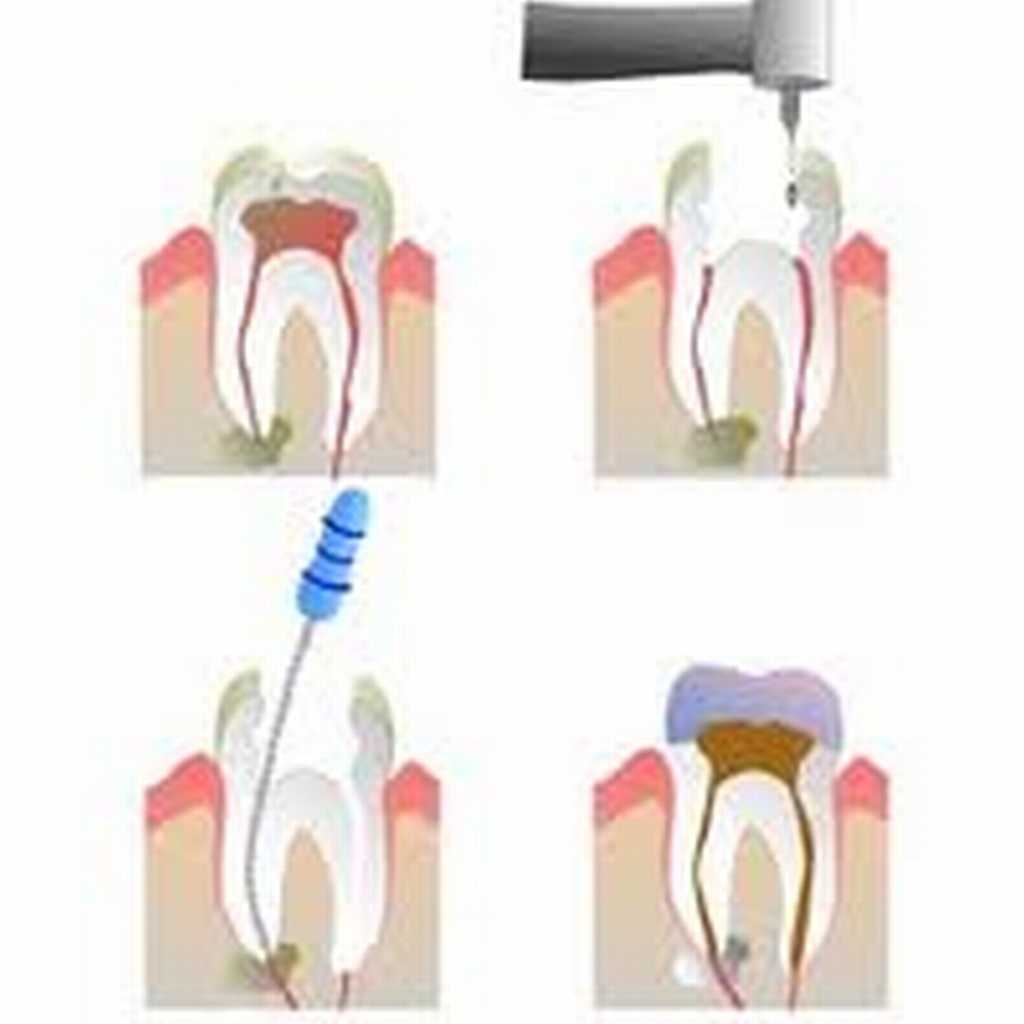
Root canal treatment has three steps:
1. Access opening: This is the first step where an opening is created in order to reach the infected pulp area using a dental drill. After the access is gained, the infected contents of the pulp chamber are carefully removed using special instruments. An anterior tooth has only root where as a posterior tooth may have more than three roots. There fore it is necessary to remove the infected pulp from all the root canals present in a single tooth.
2. Biomechanical preparation: In this step the hollow space which once contained the infected pulp is cleaned and shaped. Cleaning is usually done with the help of saline water and thin dental files. These files are moved along the surface of the root canal making it large and smooth. This procedure not only removes traces of bacteria from the root canal, but also makes the root canal more receptive to the filling that is to follow.
3. Obturation: Once the canals have been cleaned with the files, the canals are filled with a special filling material. The purpose of this filling material is to seal the canals and prevent future infections inside the tooth.
After the canals have been filled, the tooth is covered by a crown. This protects the now fragile tooth from fracture. It is important that the crown be placed soon after the root canal is finished otherwise once the tooth fractures, saving the tooth becomes near impossible.
Root Canal Treatment of Milk Tooth
Is Root Canal Treatment of Milk Tooth necessary?
There was a time when countless milk teeth were extracted stating that they are just "temporary tooth" or "milk teeth know ,anyhow it is going to fall" and for so many other reasons. But the milk teeth are there for a specific purpose. Each and every milk teeth has to stay for a particular period of time. The change in dietary habits have resulted in a lot of milk teeth getting decayed at an earlier stage than before. These milk teeth have to be preserved whenever possible. They are the natural SPACE MAINTAINERS which are there to preserve the space for permanent teeth. Whenever a milk tooth is decayed badly, where a normal filling cannot be placed root canal treatment has to be considered before removal of tooth is considered.
How many sittings it will require to perform root canal treatment for a milk tooth?
It can be performed in single as well as multiple sittings. The pediatric dentist will decide the best method depending upon the situation.
Is the procedure painful?
No, it is not painful. If necessary the pediatric dentist can anesthetize the tooth and carry out the procedure.
After root canal treatment will the milk tooth will fall on its own?
Yes, after root canal treatment the tooth is almost like a natural tooth. It will fall on its own.
After root canal treatment is follow up necessary?
Yes, after root canal treatment the tooth has to be monitored atleast once in every six months.
Is there any way to prevent this?
Yes, and the only way is to detect tooth decay early and treat it. If we detect tooth decay early we can save the tooth by a normal filling. It is better not to wait until pain develops, because once pain develops then preserving the tooth needs extensive treatment like root canal treatment. Hence it is always better to start the FIRST DENTAL VISIT when the first milk tooth erupts into the mouth (between 8-12 months of age). If the first dental visit has taken place at this stage one can completely prevent tooth decay if the parents strictly follow the pediatric dentists instructions.