Chapter 4
English Legacies, American
Facts of Life: Colonial Society in the 1600s
Trade
n No coherent policy until
1650s
n 1660: Navigation acts passed
n Board of Trade created
n Focus on colonial trade
n Mercantilism
n Economic philosophy behind England�s trade
policy
n Object to increase a nation�s wealth in gold
and silver
n Key was to create a favorable balance of
trade
nFavored merchants and manufacturers
n Goal for mother country to
be self- sufficient
n Colonies reduced dependence
on foreign countries
n Navigation acts
n Colonies exist for mother country�s benefit
n Trade must be in English vessels
n Trade must go through certain English ports
n Some colonial goods labeled �enumerated
articles�
Mercantilism
in the South
nGeographic Regions in
Colonies
nSouthern
nMiddle
nNew England
nDiffered due to geography
nTobacco most profitable
�enumerated article�
nSoutherners dependent on
manufactured goods
Tobacco�s
Luster Lost
nSoutherners enjoyed monopoly
nOver planting leads to
falling prices in 1660s
nPlanters evade Navigation
Acts
nSmuggling common and
�respectable�
The
Tidewater
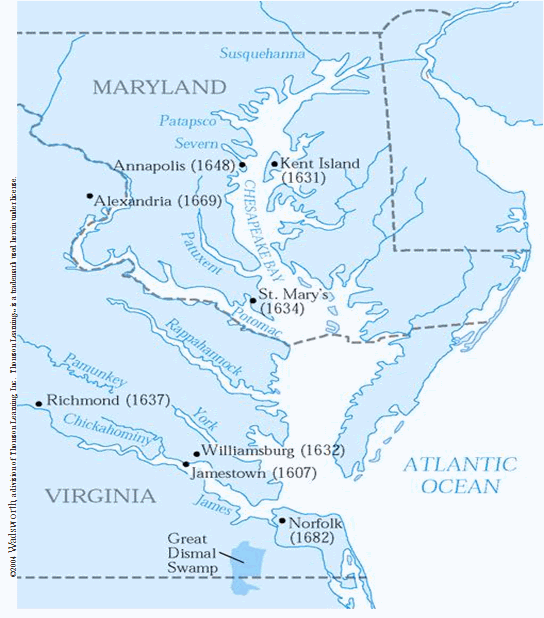
nChesapeake: huge estuary fed
by smaller ones
nAllowed small ships to come
inland
nArea of oldest plantations
nWorked by white servants and black slaves
nOwed by few hundred planter families
nTobacco agents
nShips provided variety of merchandise
nArrival took on carnival atmosphere
n
The First
Family of Virginia
nSix in seven Virginians were
indebted class
nGovernor Berkeley part of
planter class
nCarried on trade with
Indians
nPiedmont settlers see
Indians as enemies
nPiedmont settlers want more
done to stop Indians
Bacon�s
Rebellion
nPiedmont settlement leads to
conflict with Indians
nBerkley's stockades ineffective
nNathaniel Bacon Leads
Piedmont Settlers against Oconeechee
nLed force to Jamestown
nTemporarily gains control of colonial
government
nBacon governed Virginia October 1676
nBacon dies; revolt ends
nBerkeley fired by Charles II
nConflict continues between classes
A Land
Without Cities
nTidewater dependence on
Imports
nCities do not develop
nUrban middle class does not develop
nColonists want to live in
European style
nImport goods from Europe
nPlanters copied English country gentry
nOften educate sons in England
nNot as rich as English gentry
nTypically in debt
South
Carolina
nDominated by small
landowning elite
nGrew rice and indigo year
round
nArea prone to mosquito-borne
disease
nMalaria and yellow fever
nUpper class withdrew to
Charleston
New
England
nPrimarily English
nPuritans
nGeography
nCold long winters with short growing season
nLower disease rate
nHigher infant survival rate
nRocky soils
nGlacial moraine
nRequired intensive labor to clear land
nHouseholds servants and
slaves
n
The Need
for Coin
nNew England Crops
nGrain, squash, beans, orchards, nuts, and
livestock
nShipwrights
nMerchants, fishermen, and whalers
nSuccessful builders of ships
nCommerce
nYankee traders
nCompeted with Britain
Yankee
Traders
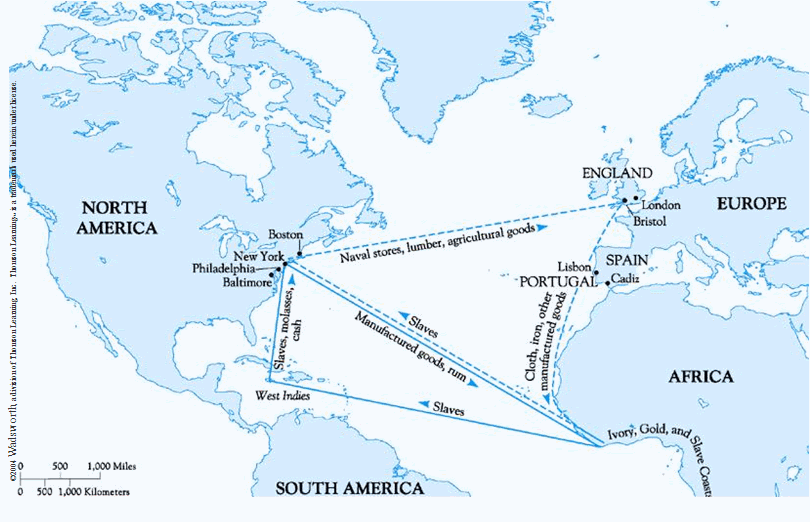
nTriangle trade routes
nRum from New England to west Africa
nSlaves from Africa to West Indies
nSugar or molasses from West Indies to
colonies
nOther trade
nProduce and livestock to West Indies
nTobacco to Britain
n�Coasters� (more common)
The
Dominion of New England
nJames I attempted to combine
New England into single colony
nEdmund Andros
nEnded with the Glorious
Revolution of 1688
nInspired popular revolts in colonies
nCalverts of Maryland
nWilliam and Mary
nRestored colonial charters
nMassachusetts became a royal colony
Witchcraft
nTwo pubescent girls begin
accusations
nReverend Samuel Parish
nTituba
nBelief in witchcraft common
nPact with Satan
nTens of thousands witches accused since
Reformation
nVulnerable members of
society mostly accused
n130 charged, 114 tried, 19 hanged
nFinally ended by
Massachusetts governor
nCotton Mather
The Middle
Colonies
nGeography
nRich soil,
long-growing season, deep rivers
nEconomy
nTrade
relatively independent of England
nReligious
diversity produced tolerance
nEthnic: mostlyEnglish, with Africans, Jews,
French, Germans
Discussion
Questions
nWhat is mercantilism? How
did it play a part in the life of the early colonies? Does it exist today?
nExamine triangular trade.
Who benefited the most from it? Who the least? Why was it such a substantial
part of the colonial economy?
nWhat was Bacon�s Rebellion?
What were its causes, and how is it representative of a growing social problem
in the colonies?
nWhat were the reasons,
causes, and results of the Salem witchcraft trials?