| Tutorials |
| Dog Body Language |
 |
 |

|
| Since dogs don't speak a fluent language (and no, barking does not count as a fluent language), they communicate to each other via body language (yes, I see the joke, you crazy people. Body language isn't just for flirting, you know). You'd be surprised at the vast assortment of expressions dogs can use to show just about any mood: from moving the ears to the tail posture, and even the frequency of a growl or whimper. Pay close attention to the entire body of a dog when you come across one. If you just pay attention to say, the head, sloped ears could mean fear, but can also just mean the dog is being suspicious. Not paying attention to the whole body of the dog can result in misunderstanding what its mood really is. So let's take a look at the many expressions of a dog. |
 |
| Perhaps the most commonly talked about body language of all dogs is dominance, or a dog's rank against the others. Most dogs live in groups, or packs, and their stance determines who leads and who follows. A total dominant dog: |
 |
| Stands stiff and tall. |
| The ears are erect (straight). |
|
| The tail stands vertically; sometimes it's also curled. |
|
| May slightly bully around a submissive dog. |
|
 |
| Relaxed: |
| Tail points down (but is not tucked). |
|
| Rests sphinx-like or on its side. |
|
| May wag tail; the farther it drops down, the more relaxed the dog is. |
|
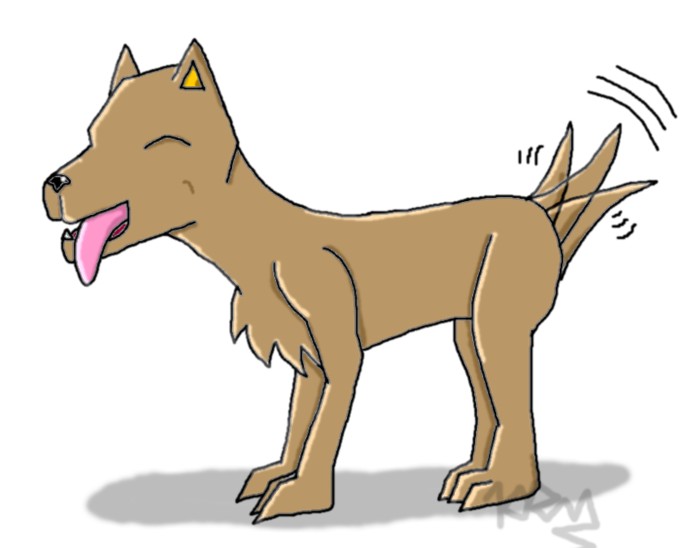 |
| Happy/friendly: |
| Wagging tail. Lolling (hanging) tongue. |
|
|
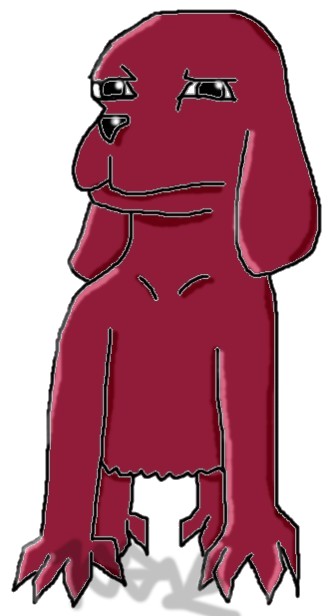 |
| Curious: |
| Pulled back ears (not really applicable to long-eared dogs). Squinty eyes Cocked head (cocked means turned) If the dog senses danger, the tail will point parallel to the ground. |
|
|
|
|
| Playful: |
| High and wagging tail May frolic around & dance, or bow by lowering the front of its body. |
|
|
 |
| Fear: |
| The dog attempts to look as small as possible Ears are flattened Tail most likely is tucked between the legs Possible arched back May whimper or give barks of fear |
|
|
|
|
|
| Defensive: |
| Flattened ears (rest of expression doesn't really matter too much). |
|
 |
| Active Submission: |
| This expression shows one dog is accepting another as more dominant: |
| Lowered body Drawn back ears & lips Tail is placed down Muzzle often points to the more dominant one May have back arched; the more arched it is, and the more the tail is tucked, means more submission |
|
|
|
|
|
| Passive Submission: |
| Rolls on back and exposes belly & throat Paws are drawn in Whimpering may follow *NOTE: This pose can often be mistaken when the dog wants to be petted. If you're dog appears to be in passive submission but is not whimpering, then it is simply wanting some love. |
| Agression: |
| Snarling |
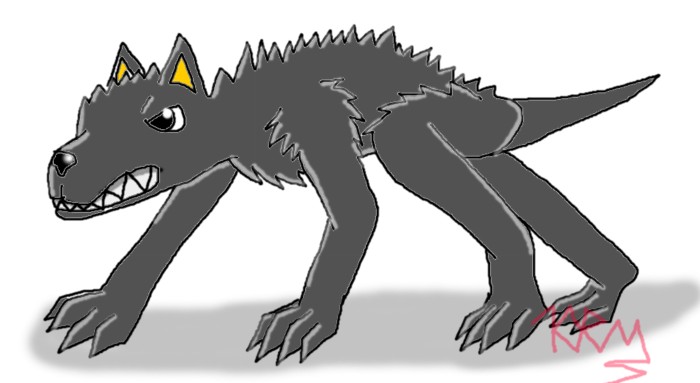
| Anger: |
| Erect ears Bristled fur May curl lips to show incisors/teeth May also arch back, lash out, or snarl |
| Hunting: |
| The dog is tensed, so the tail points out parallel to the ground |
| Tension: |
| Tail points straight out May crouch, as if ready to spring |
 |
|
|
|
|
|
|
|
|
|
|
|
 |
|
|
|
|
|
|
|
|
|
|
|
|