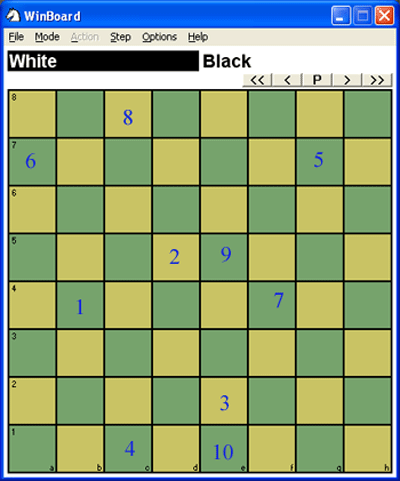
given a name. In order to record a chess move we need to write the piece we move
and the square where it is being moved.

x-- capture. Ex: BxN -- Bishop captures Knight.
0-0 -- short castle, Kingside castle.
0-0-0 -- long castle, Queenside castle.
+ -- check
e.p. -- en passant capture (not necessary).
# -- checkmate
In the initial position White King is located on e1.
Let's say White moves a pawn in front of the King 2 squares ahead then the move is e4.
If Black moves the kingside Knight out towards the center on e5 and d5 the move would be: Nf6
Moving a Bishop from the leftmost lower corner to the topmost upper corner is
Bh8 or Ba1-h8 in extended notation (to and from squares).