 |
|
|
|
|
|
|
|
|
|
|
|
|
|
|
|
|
|
|
|
|
|
|
|
|
|
|
|
|
|
|
|
|
|
|
| Joe Rabe |
|
|
|
Thomas More |
|
|
|
 |
|
|
|
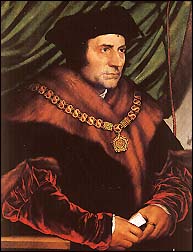
Thomas More, son of John and Agnes, was born on February 7, 1477.(1)� As a boy, Thomas went to St. Anthony?s School on the north side of Threadneedle Street which ?commonly presented the best scholars.?(2)� He lived in a moderately rich community as ?there were many fair houses for wealthy? people to live in.(3)� From his grade school, More was sent to the household of Archbishop John Morton.(4)� At Lambeth Palace, he was taught higher societal manners as thought of then as a great way of starting oneself on a high ranking career path.(5)� Due to Archbishop Morton?s suggestion, Thomas More (right) was sent to Oxford University in 1492, and was faced with the decision of clergyman or to study law.(6)� Ultimately his father made the decision to send him into law and sent Thomas down the path to greatness.(7) |
|
|
|
|
|
In his preparation for the four Inns of Court, Thomas began to climb his way through the eight Inns of Chancery.(8)� These were basically centers in which youth were trained for the first time in law.� They listened in on court cases, and later were ?questioned on what they heard and the difficulties [of the case] were discussed.?� More made his first entrance into the world of parliament during Henry VII?s reign on January 20, 1504.(9)� His appointment to the parliament house shows his overall growing popularity and his rising fame amongst the legal scholars.(10)� During this time, one Jane Colt and Thomas More were wed towards the end of 1504 or the beginning of 1505, and they would eventually go on to have a total of four children: Elizabeth, Margaret, Cecily, and John.(11)� The eventual ascension of Thomas More onto London?s law scene occurred when he became the City Lawyer; symbolizing his growing ?prestige as a lawyer and a Latinist.?(12)� The death of his wife, Jane, and his remarriage to Alice, the widow of John Middleton, continued his advancement up the hierarchy in London.(13) |
|
|
|
A court case based on the powers between church and state paved the way for the rising problem that would ultimately lead Thomas to his death.� This case, involving Richard Hunne, dealt with the death of his son.(14)� After the burial, ?the priest claimed the child?s christening robe as a mortuary, a customary gift due to the priest from the estate of the deceased.?(15) Hunne refused this mortuary based on the fact that infants, according to law, could not own property.(16)� Eventually, the priest sued him in an ecclesiastical court for what he claimed belonged to him, and won the ruling.(17) Hunne was eventually found hung in prison- whether it is by murder or suicide, and soon William Horsley was brought to court on murder charges against Hunne.(18)� Both sides strongly fought about this case, including More who believed Hunne to be a blasphemer and deserved what he got, but this case would come back later in More?s life as it signified ?the anti-clerical atmosphere? of the church, and ?prompted Parliament to act? in a matter of church versus state.(19) |
|
|
|
 |
|
|
|
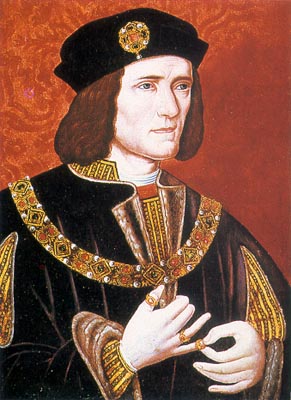
The rapid rise of heresy in England and More?s ascension to Lord Chancellor, lead to a full on collision between faith and government, or Thomas More and Henry VII (left).� More, while much earlier in his political career, wrote Utopia and essentially condemned the revival of heretics in England and the need for them to be ?locked up and put to work.?(20)� As the heresy in England grew, More noticed the wrongdoings in Henry and hoped he would ?move to repent and right his errors.?(21)� Henry?s strong will to commence in a divorce made Thomas uneasy in his high position, yet he remained fiercely loyal to the King.(22)� Eventually, Henry proclaimed himself ?Supreme Head? of the church of England, and almost immediately More thought to offer up his resignation to the King.(23)� The resignation however would not be accepted and he knew he would be forced to continue on in his duties.(24)� Thomas More could see that this combination of church and state ?was bound to fall in the hands of those who cared nothing for divine inspiration and everything to political expediency.?(25)� More?s beloved church would eventually become only a political bully, interested in gaining England?s mass cooperation in what the King wanted.� More realized he had no real power to enforce in this new scheme, and he could not battle heresy because in a sense he could not openly disobey his King.(26)�� Yet the continued tyrannical use of power by the King would ultimately lead to his ?delivering up of the Great Seal,? and his resignation, and in his letter, he stated that if he remained in office he would ?be obliged to act against his conscience, or incur the King?s anger- as he already has done though his refusing to take part against the clergy.? (27)� After this bold move, More knew that his political career, money, and power was gone and he was forced to retire in Chelsea. (28)� |
|
|
|
|
|
From the Kings point of view, we see an overall concern for the timing of More?s resignation and the effects it could have on his delicate situation with the bishops and people of England.(29)� From the people of England?s perspective, the resignation of such a high ranking and well thought of man in opposition to the king?s wishes would make Henry lose some of his political power.(30)� Also, if Thomas had left before the king had been able to pass the ?Submission of the Clergy,? he might have been forced to stiffen the spines of some of the wavering bishops.?(31)� But because of the passing of the Submission and the overall lack of fortitude and alliance of the bishops he would have no problems with letting More go at such a time.(32)� Also, due to Henry?s evil and spiteful attitudes it would have been quite a moral victory to see his most dangerous and powerful advisor ?admit defeat and hand over the emblem of his office.?(33) |
|
|
|
After More?s resignation he wrote a letter to his friend Erasmus essentially outlining his retirement from office and his intentions for the future.� In this letter, which Thomas expected to be published, he essentially outlined that he wanted no trouble from the king and that the King could expect no trouble in return.(34)� He would not try to form a conspiracy to overthrow the King; instead he ?simply wanted to die in peace.? (35) More also spoke loyalty and greatly on behalf of the King, and explained that his health was deteriorating.(36)� But as time passed and More?s conscience got the better of him, he began to write exclusively about the dangers and ever increasing heresy in the land.(37)� These books ranged form A Dialogue Concerning Heresies to Confutation, yet these books were not intended to boost him into an openly rebellious position against the King. (38)� Eventually, a zealous Nun of Kent included More?s name on her bill of attainder to cause More to agree with her agenda against the King, and More was forced back onto the political stage.(39)� |
|
|
|
On March 23, 1534 Parliament passed the Act of Succession essentially proclaiming the English church separate from Rome, with Parliament as its absolute ruling power, and thus causing citizens to take an oath of faithfulness to Henry and his future family.(40)� The ideas from the Hunne case had reemerged in More?s life as the church and state had finally been combined into one powerful group.� Men were dispatched throughout the city to ask and record each person?s oath of loyalty to the King, and More knowing he eventually would be asked, knew what he would have to do.(41)� The choice simply came down to loyalty to the King or loyalty to God and the Pope.� Summoned to the Lambeth on April 13th, he stated that his ?own conscience would not allow him to swear,? and thus on April 17th he was admitted to the Tower. (42)��� Even his own daughter Margaret wrote to her father asking him to swear the oath and thus come home.(43)� In |
|
|
|
response, More wrote a heartfelt letter refusing even to his own daughter, like to all others, his reasons for denying the oath and said that his biggest fear was in his abandonment of his family not his own death.(44)� |
|
|
|
 |
|
|
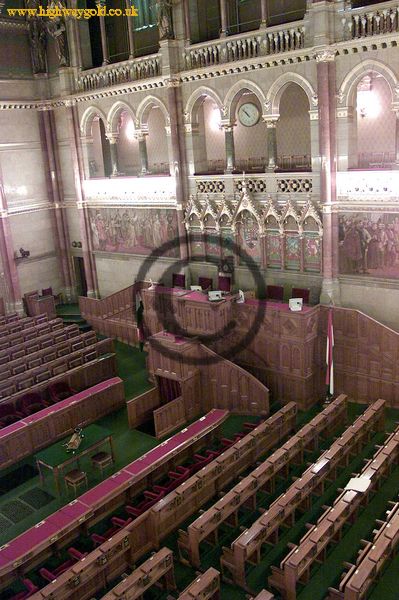
| Soon, More was brought to court (above) on four cases of high treason.(45)� More responded to three of the accusations at length and it was easily understood by everyone in the court that due to More?s law based background the court would stand no chance of convicting him on these charges.� But despite his best efforts, the testimony by Master Riche condemned him, unjustly, of perjury charges.(46)� More?s last defense was to appeal to the court as to whether this ?was the intent of the law.?(47)� He stated that ?he could not believe that so many worthy bishops, so many honorable personages, and so many other worshipful, virtuous, wise, and well-learned men as at the making of that law were in the Parliament assembled, ever meant to have any man punished by death in whom there could be found no malice.?(48)� Nonetheless, his speeches had no effect on the council as he was found guilty. ��� |
|
|
| One reporter named Edward Hall published in his Chronicle ?the 6th day of July was Sir Thomas More beheaded for the like treason before rehearsed, which as you have heard was for denying the King?s Majesty?s Supremacy.?(49)� This reporter represented a faction of the population who were fervent in stamping out heresy and opposition to the King?s policy.(50)� His articles convey his lack of sympathy with writings such as ?his head was stricken off and had no more harm? in him.(51)� Thomas More was one of a rebellious few in a whole society of assimilation. |
|
|
| �An unruly mob gathered to see his execution as many gathered only to hear his final words.(52)� Thomas was forced to keep it short as he pronounced that ?he died the King?s good servant but God?s first.(53)� His famous quote ?Wait till I put my beard aside, for that hath done no treason,? was muttered as he situated himself for death.(54)� He was executed when he was fifty-seven years old on July 6, 1535 at Tower Hill and his body was buried in the Church of St. Peter-ad-vincula.(55)��� In 1886, More was beatified by pope Leo XIII, and eventually canonized by Pope Pius the XI in 1935, and he is the patron saint of Statesmen.(56) |
|
|
|
 |
|
|
All Pictures from |
|
|
|
|
|
Google images |
|
|
|
|
| � |
|
|
|
|